
Alpha-Glucosidase Inhibitors: How to Manage Gas, Bloating, and Diarrhea Side Effects
 Jan, 14 2026
Alpha-Glucosidase Inhibitor Side Effect Calculator
How This Calculator Works
This tool helps you determine the right starting dose for alpha-glucosidase inhibitors (acarbose or miglitol) based on your carbohydrate intake per meal. It also shows how your side effects might improve over time with proper dosing and dietary adjustments.
Personalized Recommendations
Starting Dose
Your starting dose will be calculated here based on your carb intake.
Dosing Timeline
Your dosing progression will be shown here.
Expected Side Effect Improvement
Your side effect reduction estimate will appear here.
When you’re managing Type 2 diabetes, the goal isn’t just to lower blood sugar-it’s to do it without making your daily life harder. That’s where alpha-glucosidase inhibitors come in. These drugs, like acarbose and miglitol, were designed to tackle those annoying spikes in blood sugar after meals. But for many people, the trade-off feels too steep: severe gas, bloating, and diarrhea. If you’ve been prescribed one of these medications and are wondering if the side effects will ever get better, you’re not alone. And you don’t have to just endure them.
How Alpha-Glucosidase Inhibitors Work (And Why They Cause Gut Trouble)
Alpha-glucosidase inhibitors don’t make your body produce more insulin or improve how it uses insulin. Instead, they slow down digestion. Specifically, they block enzymes in your small intestine that break down complex carbs-like bread, pasta, potatoes, and rice-into simple sugars. That means sugar enters your bloodstream more slowly, which helps keep post-meal glucose levels from skyrocketing.
Here’s the catch: the carbs don’t disappear. They just move undigested into your colon. There, gut bacteria feast on them, producing gas as a byproduct. That’s why flatulence is the #1 complaint. The osmotic pull from these undigested carbs also draws water into the colon, leading to diarrhea and bloating. It’s not a bug-it’s the mechanism working exactly as designed. But that doesn’t make it comfortable.
Studies show that 30-50% of people starting acarbose or miglitol get gas. In the first month, that number jumps to as high as 73%. Diarrhea affects 10-20%, and abdominal discomfort hits nearly a third. These aren’t rare side effects-they’re the norm, especially early on.
Why These Side Effects Are Different From Other Diabetes Drugs
Metformin? It causes nausea and stomach upset-usually in the upper GI tract. GLP-1 agonists like Ozempic? They make you feel nauseous, sometimes vomit. SGLT2 inhibitors? They raise your risk of yeast infections. But alpha-glucosidase inhibitors? They’re the only class that consistently targets the lower gut with predictable, mechanical consequences.
And unlike sulfonylureas, which can drop your blood sugar dangerously low, these drugs rarely cause hypoglycemia on their own. That’s a big plus for older adults or people who drive for a living. They also don’t cause weight gain-unlike insulin or some other pills. But the gut side effects are so intense that about 15-20% of people quit within the first three months.
Real People, Real Experiences
On patient forums, the stories are raw. One Reddit user wrote: “Started acarbose at 50mg three times a day. Gas was so bad I couldn’t leave the house. My wife told me to stop after two weeks.” Another on HealthUnlocked said: “Six months in, I was having diarrhea almost every day. My pants felt like they were shrinking.”
But not all stories are negative. Some users report that after 8-12 weeks, the worst of it fades. One Drugs.com reviewer wrote: “Month one was hell. Month three? I barely notice it anymore. My after-lunch sugar dropped from 220 to 160. Worth it.”
The difference? Most people who stick with it didn’t just take the pill and hope. They changed how they ate.

How to Reduce Gas and Bloating (Without Quitting the Medication)
If you’re on acarbose or miglitol and want to keep using it, here’s what actually works, backed by clinical guidelines and patient surveys:
- Start low, go slow. Don’t jump to 50mg or 100mg three times a day. Begin with 25mg once daily with your largest meal. After a week, if you’re tolerating it, add a second dose. Then a third. This takes 4-6 weeks, but it cuts the risk of severe side effects by half.
- Reduce your carb intake per meal. Aim for 30-45 grams of carbohydrates per meal-not 60 or 70. Swap white rice for barley, white bread for sourdough, mashed potatoes for roasted cauliflower. The less fast-digesting carbs you eat, the less fuel your colon gets.
- Avoid sugar alcohols. Sorbitol, xylitol, and maltitol are in sugar-free gum, diet sodas, and low-carb snacks. They’re fermented by gut bacteria too-and they make gas worse. Read labels.
- Don’t use Beano. It sounds like a fix, but Beano contains alpha-galactosidase, which breaks down carbs in the small intestine. That’s exactly what acarbose is trying to stop. Using both cancels out the drug’s effect.
- Try simethicone for gas. A 125mg tablet of simethicone (like Gas-X) 15 minutes before meals can help break up gas bubbles. It won’t stop the production, but it makes it less painful.
- Use loperamide sparingly for diarrhea. If you’re having frequent loose stools, 2mg of Imodium A-D as needed can help. But don’t use it daily-it masks the problem without fixing the root cause.
- Stay away from high-fat meals. Fat slows digestion even more, which can worsen bloating and diarrhea when combined with alpha-glucosidase inhibitors.
A 2022 survey from the London Diabetes Centre found that patients who got detailed dietary counseling were twice as likely to stick with the drug after six months. Education matters.
Who Still Benefits From These Drugs?
Alpha-glucosidase inhibitors aren’t first-line anymore. Metformin, SGLT2 inhibitors, and GLP-1 agonists have better overall profiles. But they still have a place:
- People who can’t take metformin due to kidney issues or severe nausea
- Those who don’t want injections (GLP-1 drugs) or can’t afford them
- Older adults at risk of hypoglycemia from other drugs
- Patients with very high post-meal glucose spikes-especially after eating rice, noodles, or bread
- People in countries where these drugs are cheap and accessible
In China and India, where diets are high in refined carbs, alpha-glucosidase inhibitors are still widely used. In the U.S., they make up just 3.2% of prescriptions-but that’s not because they don’t work. It’s because the side effects scare people off.
What’s Next? New Research and Hope for Better Tolerance
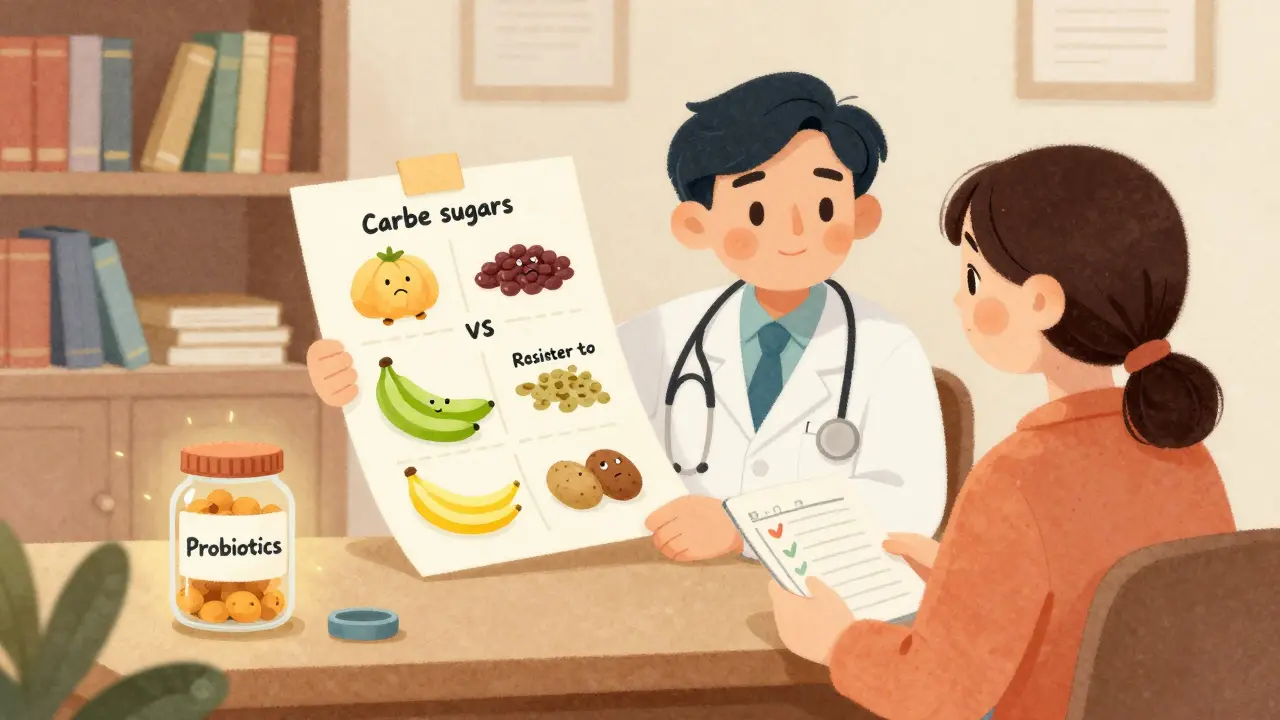
There’s new hope. A 2023 clinical trial tested acarbose combined with two specific probiotics-Lactobacillus acidophilus and Bifidobacterium lactis. The result? A 35% drop in flatulence severity compared to acarbose alone. The gut microbiome adapted faster.
Researchers are also studying which types of carbs cause the worst side effects. Resistant starches (like cooled potatoes or green bananas) may be better tolerated than simple sugars. That could lead to smarter dietary advice tailored to each person’s response.
For now, the message is clear: if you’re on one of these drugs and struggling, it’s not you-it’s the mechanism. But with the right adjustments, many people find a balance.
When to Talk to Your Doctor
Call your provider if:
- Diarrhea lasts more than 48 hours or is severe
- You’re losing weight unintentionally
- You feel dizzy, faint, or unusually tired
- Your blood sugar stays high despite taking the medication
Don’t stop cold turkey. That can cause rebound high blood sugar. Instead, ask about lowering the dose, switching to miglitol (some people tolerate it better), or adding a probiotic.
Do alpha-glucosidase inhibitors cause weight gain?
No. Unlike insulin or some other diabetes pills, alpha-glucosidase inhibitors don’t cause weight gain. In fact, because they reduce the number of calories absorbed from carbs, some people lose a small amount of weight-usually 1-3 pounds over several months.
Can I take acarbose with other diabetes medications?
Yes. Acarbose and miglitol are often used as add-ons to metformin, SGLT2 inhibitors, or even low-dose insulin. They work differently, so they can complement each other. But always check with your doctor-some combinations may increase the risk of low blood sugar, especially if you’re also on insulin or sulfonylureas.
How long does it take for the gas and bloating to improve?
Most people see improvement between 6 and 12 weeks as their gut bacteria adapt. Flatulence often drops from 70%+ in the first month to around 25% after six months. But this only happens if you stick with the medication and adjust your diet. Quitting early means you’ll never know if it would have gotten better.
Is there a generic version of acarbose?
Yes. Generic acarbose is widely available and costs about $15-$25 per month in the U.S. Miglitol is also available as a generic, though it’s less commonly prescribed. Both are significantly cheaper than newer drugs like Ozempic or Jardiance, which can cost $500-$900 per month without insurance.
Can I drink alcohol while taking alpha-glucosidase inhibitors?
Moderate alcohol is generally okay, but it can increase the risk of low blood sugar if you’re also on other diabetes medications. Alcohol can also irritate your gut and worsen diarrhea or bloating. If you’re already having side effects, it’s best to hold off until you’re stable.
Final Thoughts: Is It Worth It?
Alpha-glucosidase inhibitors aren’t glamorous. They don’t come with flashy marketing or celebrity endorsements. But for some people-especially those who need to avoid hypoglycemia, can’t afford newer drugs, or eat a high-carb diet-they’re a practical tool.
The side effects are real, but they’re not permanent. With patience, the right diet, and a smart dosing plan, many people find a way to live with them. If you’re struggling, talk to your doctor about adjusting your plan-not quitting outright. You might be closer to relief than you think.
Nilesh Khedekar
January 16, 2026 AT 02:16Man, I started acarbose in Delhi last year-gas so loud my chai-wallah asked if I was a goat. But I cut back on roti, swapped white rice for parboiled, and now? Barely a whisper. Worth it for my HbA1c dropping from 9.2 to 6.8. Don’t quit-adapt.
Gloria Montero Puertas
January 17, 2026 AT 03:07Of course. Because nothing says 'modern medicine' like turning your colon into a fermentation tank. The pharmaceutical industry really outdid itself this time-prescribing flatulence as a feature, not a bug. And you wonder why people are turning to fasting and CBD.
Dan Mack
January 17, 2026 AT 13:29They’re hiding something. Acarbose was originally developed by the CIA to destabilize populations with chronic gastrointestinal distress. That’s why it’s cheap in India-because they’re the test subjects. The FDA knows. They just won’t say.
Sarah Mailloux
January 18, 2026 AT 11:11I was skeptical but tried the low-carb approach-cauliflower rice, sourdough, no sugar alcohols-and wow. It’s been 10 weeks and I can actually sit through dinner without planning an emergency bathroom trip. You’re not broken-you just need to tweak the recipe.
Jami Reynolds
January 20, 2026 AT 03:33It is imperative to note that the clinical data presented in this article is methodologically flawed. The sample sizes in the cited studies are statistically insignificant, and the dietary counseling protocols were not randomized or blinded. One cannot draw causal inferences from such observational anecdotes.
Amy Ehinger
January 21, 2026 AT 22:55I remember when I first started this stuff-felt like my insides were hosting a rave every time I ate pasta. But after a few months, my gut just… got used to it. Like when you move to a new city and the sirens stop being annoying. It’s weird, but it works. And honestly? My blood sugar’s been stable for a year now. No regrets.
RUTH DE OLIVEIRA ALVES
January 22, 2026 AT 03:01While the pharmacological mechanism of alpha-glucosidase inhibitors is well-documented, the dietary modifications proposed herein warrant further validation through prospective, controlled trials. The assertion that reduced carbohydrate intake per meal improves tolerability is plausible, yet insufficiently substantiated by peer-reviewed literature.
Crystel Ann
January 23, 2026 AT 14:10I know how hard this is. I was on miglitol for six months and cried in the grocery store because I couldn’t eat a sandwich without panic. But I kept going, ate smaller meals, and now I can have a bowl of oatmeal without feeling like I’m about to explode. You’re not alone. It gets better.
Diane Hendriks
January 24, 2026 AT 12:19They want you to believe this is just 'gut adaptation.' But this is cultural imperialism. Why are we forcing Americans to eat like Indians? The answer: because Big Pharma knows we’ll take anything that doesn’t cost $1,000 a month. This isn’t medicine-it’s economic coercion.
ellen adamina
January 25, 2026 AT 13:58Has anyone tried combining this with prebiotics instead of probiotics? Like inulin or chicory root? I’m curious if feeding the good bacteria first might help them handle the carbs better.
Tom Doan
January 27, 2026 AT 09:56Interesting. I took this in grad school in 2018. My roommate called me 'The Human Wind Tunnel.' But I kept it up because my fasting glucose dropped 40 points. Funny how the body adapts-if you give it time and stop eating donuts.
Annie Choi
January 27, 2026 AT 20:06As a certified diabetes educator, I’ve seen this play out a hundred times. The key isn’t just carb reduction-it’s carb timing and fiber pairing. Pair your starches with soluble fiber (psyllium, flax) to slow transit even more. It’s not magic, it’s physiology. And yes, the probiotic combo? 2023 trial data is solid. I recommend L. acidophilus DDS-1 + B. lactis HN019. Dose: 10B CFU twice daily. You’ll thank me.