
Are generic drugs as safe as brands? Clinical evidence revealed
 Feb, 8 2026
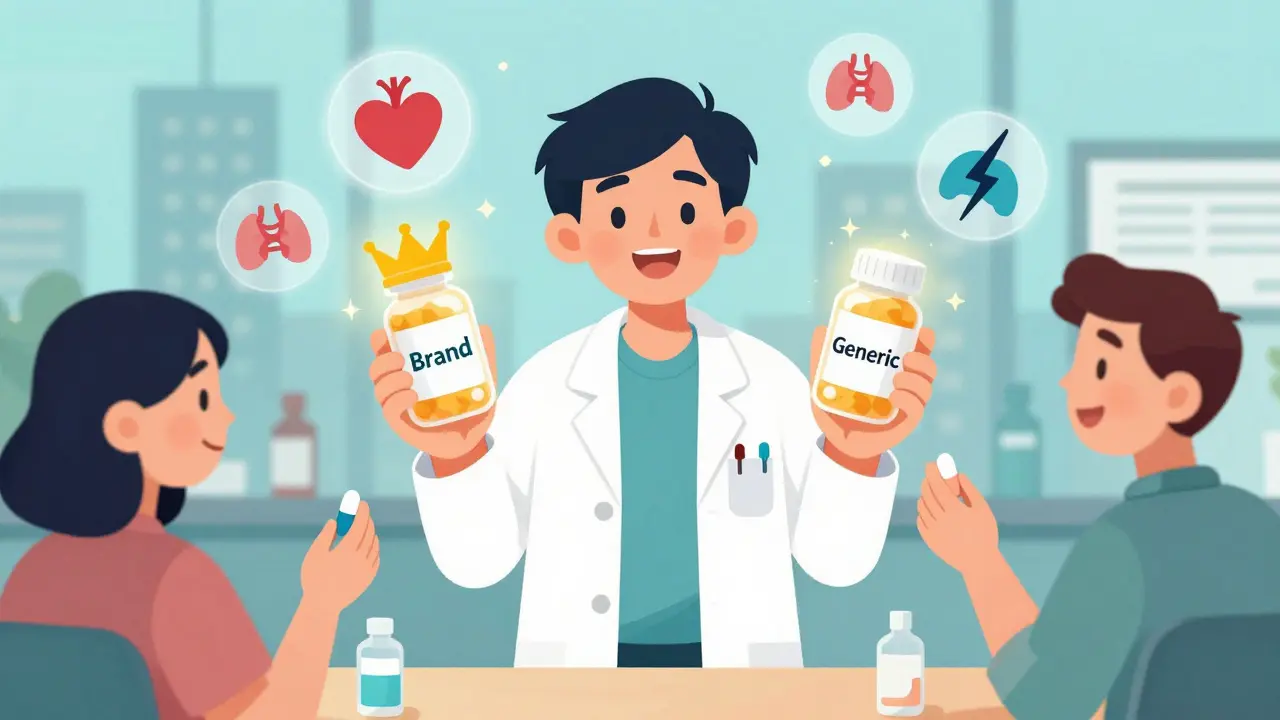
When you pick up a prescription, you might see two options: the brand-name drug you recognize, or a cheaper generic version. Many people wonder - is the generic just as safe? Does it work the same? The short answer is yes, generic drugs are just as safe and effective as brand-name drugs for the vast majority of people. But the full picture is more nuanced, and clinical evidence shows there are rare cases where differences matter.
What makes a generic drug the same?
A generic drug isn’t a copycat. It’s required by law to contain the exact same active ingredient, in the same strength, and delivered the same way - whether it’s a pill, injection, or inhaler. The U.S. Food and Drug Administration (FDA) and the European Medicines Agency (EMA) both demand proof that the generic performs identically in the body. This is called bioequivalence.
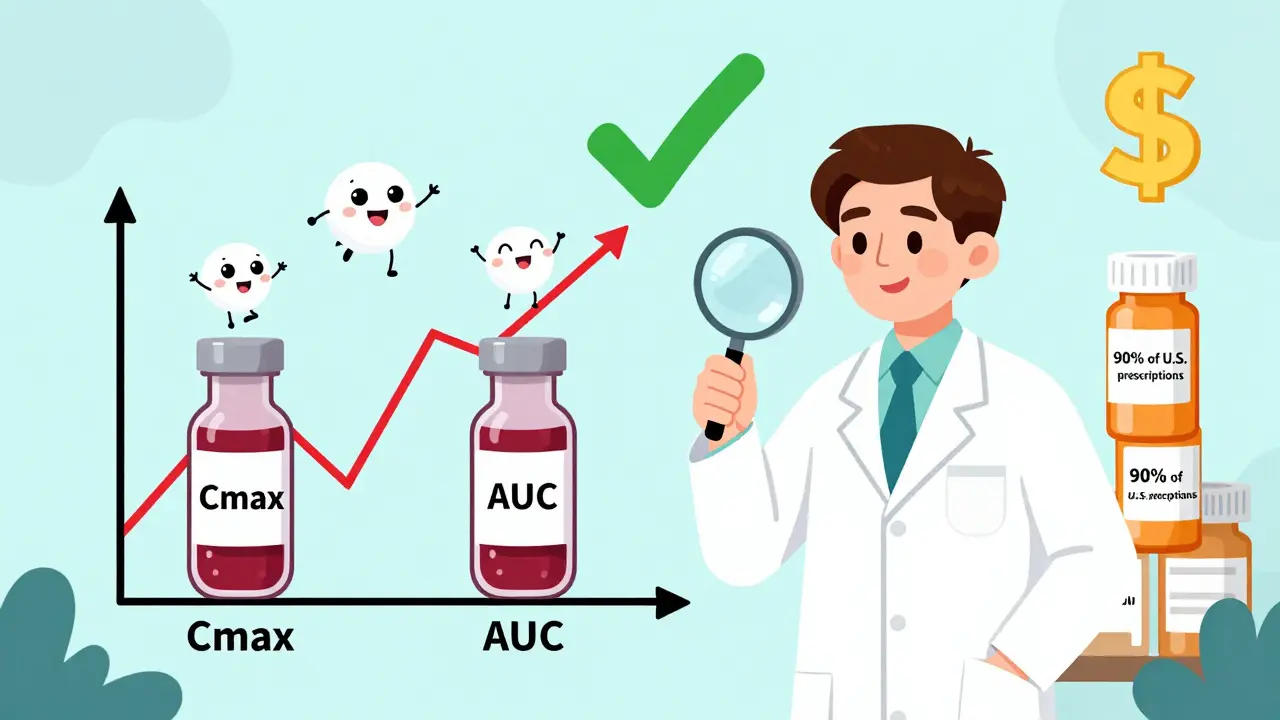
To prove it, manufacturers run tests measuring how much of the drug enters your bloodstream and how fast. Two key numbers are tracked: Cmax (the highest concentration reached) and AUC (the total amount absorbed over time). For a generic to be approved, these values must fall within 80% to 125% of the brand-name drug. That might sound loose, but it’s based on decades of data showing this range doesn’t affect treatment outcomes for most medications.
That’s why 90% of all prescriptions filled in the U.S. are generics. They cost 80-85% less. In 2023, generics made up 90.7% of prescriptions but only 18.3% of total drug spending. That’s billions saved every year.
What does the science say? Real-world data
One of the most comprehensive studies came from Austria, published in Nature Scientific Reports in 2020. Researchers tracked over 1.3 million people taking 17 different medications - from blood pressure pills to antidepressants. They compared outcomes between those on brand-name drugs versus generics. The results surprised many: generics were linked to fewer deaths in 10 of the 17 drugs. For heart attacks and strokes, the reduction was even more striking. People on generics had 40% fewer major cardiac events than those on brand-name versions.
How could that be? The study’s authors suggest it might be because generics are cheaper, so patients are more likely to take them consistently. Missing doses of blood pressure or cholesterol meds is a leading cause of preventable hospitalizations. If you can’t afford the brand, you skip pills. If you can afford the generic, you take them.
But not all studies show identical results. A 2017 Canadian study looked at over 136,000 older adults prescribed three common blood pressure drugs: losartan, valsartan, and candesartan. When generics entered the market, there was a small spike in adverse events - an 8% to 14% increase in the first month after switching. Why? Possibly because patients were suddenly switched without monitoring. Some may have had minor differences in how the drug dissolved or was absorbed.
The exceptions: When small differences matter
Not all drugs are created equal. Some medications have a narrow therapeutic index - meaning the difference between a dose that works and one that’s harmful is tiny. For these, even slight variations in absorption can cause problems.
Examples include:
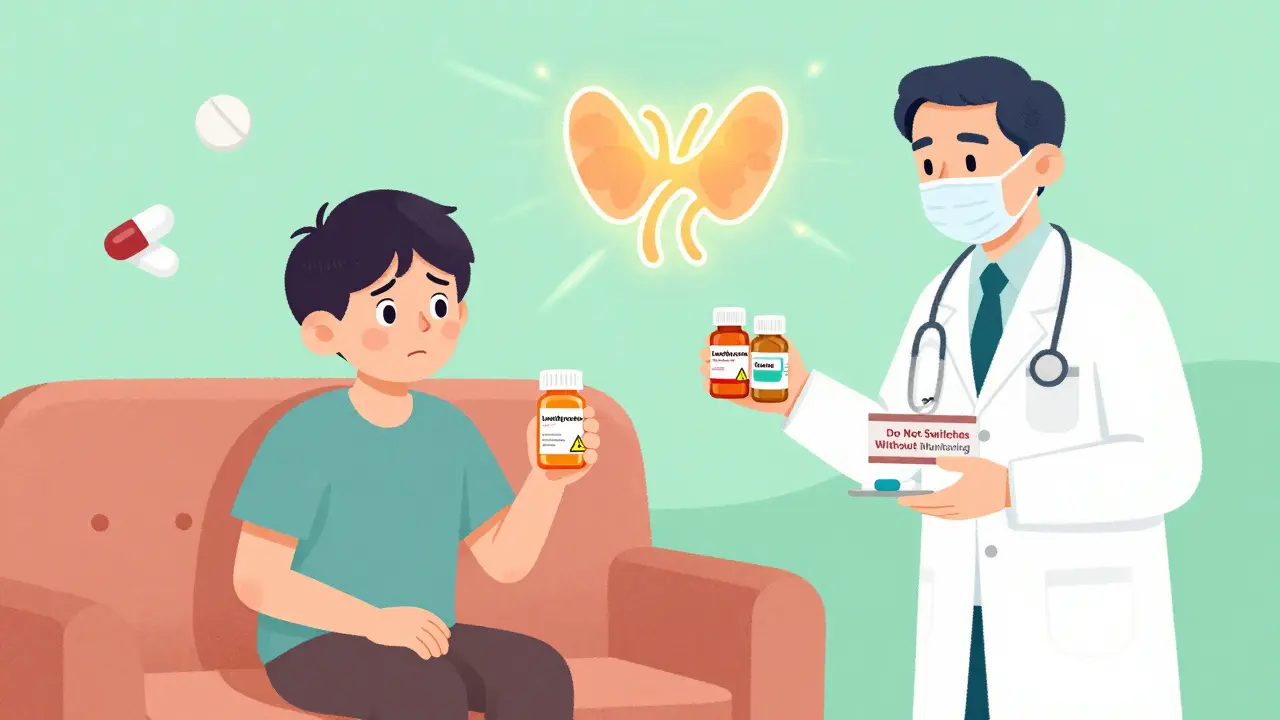
- Levothyroxine (for hypothyroidism): A change in absorption can throw off your TSH levels. One patient reported their TSH jumped from 1.2 to 8.7 after switching from Synthroid to a generic - a sign their thyroid wasn’t being controlled.
- Warfarin (a blood thinner): Too little and you risk clots; too much and you risk bleeding. Many doctors recommend sticking to one version - brand or generic - and not switching back and forth.
- Anti-seizure drugs like phenytoin or carbamazepine: Small changes can trigger breakthrough seizures.
These aren’t common, but they’re real. The American Thyroid Association advises patients on levothyroxine to avoid switching between brands and generics unless monitored by a doctor. The FDA acknowledges this risk and requires special labeling for these drugs.
Why do some people feel different on generics?
It’s not always the drug. Sometimes, it’s the filler.
Generics can use different inactive ingredients - things like dyes, preservatives, or binders. These don’t affect how the drug works, but they can cause side effects in sensitive people. A person allergic to a certain dye might get a rash from one generic but not another. Someone with celiac disease might react to cornstarch used as a filler.
Surveys show that about 11% of patients report feeling different after switching to a generic. For those on psychiatric meds or seizure drugs, that number jumps to 19-24%. But here’s the catch: 89% report no difference at all. And when researchers looked at actual adverse event reports filed with the FDA, there was no significant difference between generic and brand-name drugs per million prescriptions.
Placebo effect plays a role too. If you believe generics are inferior, your body might respond as if they are. Studies have shown that patients who are told they’re switching to a cheaper drug report more side effects - even if the pill is identical.
What do pharmacists and doctors say?
Most pharmacists can legally substitute a generic unless the doctor writes “Dispense as Written.” In fact, 50 U.S. states allow automatic substitution. But a 2021 study found only 43% of doctors routinely check the FDA’s Orange Book - the official list that rates therapeutic equivalence.
Pharmacists often hear concerns from patients: “This generic doesn’t work like my old pill.” In response, many now ask: “Did you notice a change in how you feel? Any new side effects?” They may recommend staying on the same manufacturer if a patient reports issues. Consistency matters more than brand vs. generic in these cases.
Doctors who specialize in thyroid disorders, neurology, or cardiology are more likely to avoid switching unless necessary. But for most conditions - high cholesterol, diabetes, depression, infections - the evidence is clear: generics work just as well.
What should you do?
If you’re on a medication with a narrow therapeutic index - like levothyroxine, warfarin, or an anti-seizure drug - stick with one version. Don’t switch unless your doctor approves it. If you notice changes in how you feel - fatigue, dizziness, mood shifts - get your levels checked.
For everything else - statins, blood pressure pills, antibiotics, acid reflux meds - generics are a safe, effective, and affordable choice. There’s no reason to pay extra if your insurance covers the generic.
Still unsure? Talk to your pharmacist. They can tell you which generic manufacturer makes your drug and whether others have reported issues. You can also ask your doctor to prescribe a specific brand if you’ve had a bad experience - though it might mean higher out-of-pocket costs.
The bottom line: For the vast majority of people, generic drugs are not just cheaper - they’re just as safe. The science supports it. Real-world data confirms it. And for millions, they’re the reason they can afford to stay healthy.
Are generic drugs FDA-approved like brand-name drugs?
Yes. Generic drugs must meet the same strict standards as brand-name drugs. The FDA requires them to have the same active ingredient, strength, dosage form, and route of administration. They must also prove bioequivalence through scientific testing. The FDA reviews every generic before it’s sold.
Why are generic drugs cheaper?
Generic manufacturers don’t have to repeat expensive clinical trials. Once a brand-name drug’s patent expires, other companies can produce the same active ingredient. Without the cost of research and marketing, generics can be sold for 80-85% less. Competition between multiple generic makers drives prices even lower.
Can I switch from a brand-name drug to a generic safely?
For most medications, yes. But if you’re taking a drug with a narrow therapeutic index - like levothyroxine, warfarin, or anti-seizure medicines - talk to your doctor first. Switching might require monitoring your blood levels. For common drugs like statins or blood pressure pills, switching is usually safe and often recommended.
Do generics have the same side effects as brand-name drugs?
The active ingredient causes the same side effects. But generics may use different inactive ingredients - like fillers or dyes - which can cause rare allergic reactions or intolerance. If you notice new side effects after switching, tell your doctor. It’s not always the drug - sometimes it’s the filler.
Why do some patients say generics don’t work as well?
A small number of patients report differences, especially with thyroid, seizure, or psychiatric drugs. This can be due to minor variations in how the drug is absorbed, changes in inactive ingredients, or psychological factors like expecting the generic to be weaker. In most cases, switching back to the original version resolves the issue. But for most people, there’s no difference at all.
Marie Fontaine
February 9, 2026 AT 22:38Chelsea Deflyss
February 11, 2026 AT 22:02Tori Thenazi
February 12, 2026 AT 15:28Lyle Whyatt
February 14, 2026 AT 11:11Ryan Vargas
February 15, 2026 AT 18:34THANGAVEL PARASAKTHI
February 15, 2026 AT 23:17Tricia O'Sullivan
February 16, 2026 AT 11:48Susan Kwan
February 17, 2026 AT 07:50Brandon Osborne
February 18, 2026 AT 21:16