
Audiometry Testing: Understanding Hearing Assessment and Decibel Levels
 Nov, 26 2025
Have you ever felt like people are mumbling, even when they’re speaking clearly? Or maybe you keep turning up the TV volume because conversations in noisy rooms feel like a puzzle you can’t solve? You’re not alone. Around 48 million Americans have some degree of hearing loss, and many don’t realize it until it’s already affecting their daily life. The first step to understanding what’s going on isn’t guessing-it’s audiometry testing.
What Exactly Is Audiometry Testing?
Audiometry testing is the gold standard for measuring how well you hear. It’s not a quick check-up. It’s a detailed, science-backed process that maps out your hearing sensitivity across different pitches and volumes. The goal? To find the softest sounds you can hear at each frequency, measured in decibels hearing level (dB HL).This isn’t just about volume. It’s about clarity. Two people might hear the same sound at the same loudness, but one might understand words while the other struggles. That’s why audiometry doesn’t stop at tones-it looks at speech too.
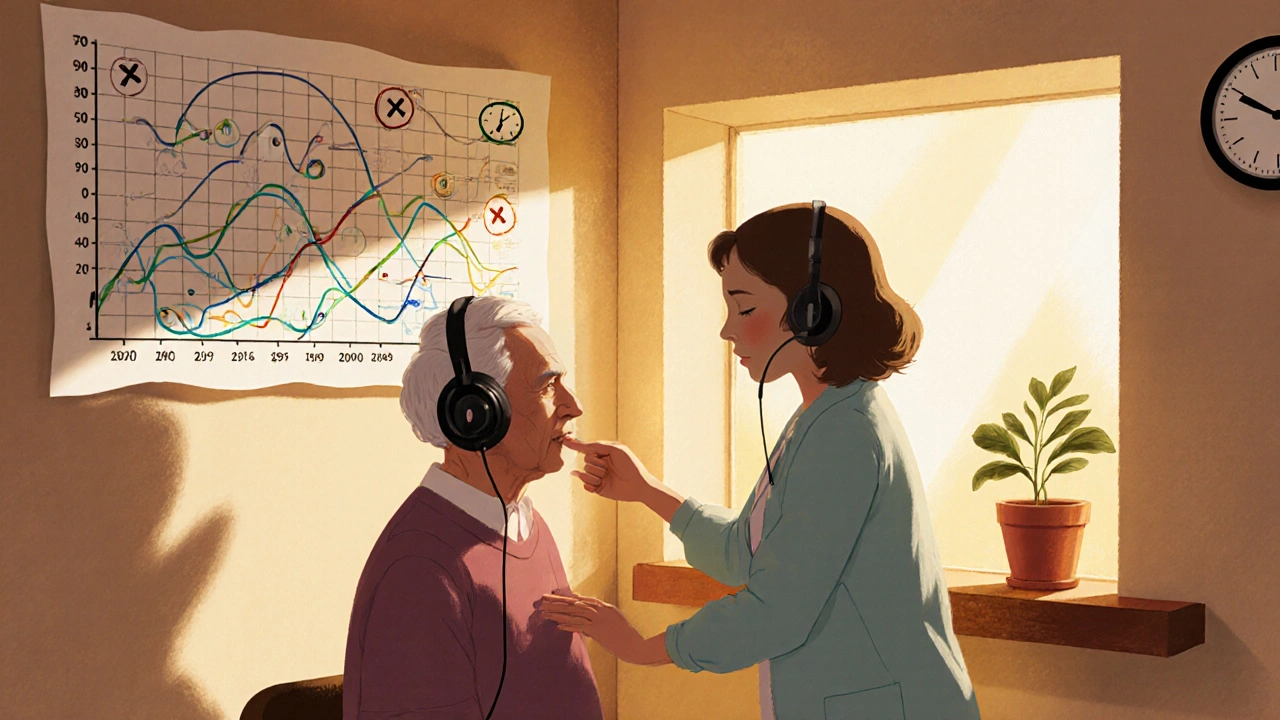
The test is done in a quiet, soundproof room. You wear headphones or ear inserts, and you’ll hear beeps, tones, and sometimes words. Every time you hear something, you signal-usually by pressing a button or raising your hand. The audiologist slowly lowers the volume until you no longer respond. Then they go back up just a little to find the exact point where you catch the sound half the time. That’s your threshold.
How Decibels Work in Hearing Tests
Decibels (dB) are the units used to measure sound intensity. In audiometry, 0 dB HL is the average softest sound a healthy young adult can hear. It’s not silence-it’s the baseline. Anything above that is louder.Here’s what the numbers mean in real life:
- 0-25 dB HL: Normal hearing. You hear whispers, leaves rustling, a clock ticking.
- 26-40 dB HL: Mild hearing loss. You miss soft speech, especially in background noise. Words like “s,” “th,” and “f” start to disappear.
- 41-55 dB HL: Moderate hearing loss. Conversations become hard without lip-reading or repetition. TV volume is too loud for others.
- 56-70 dB HL: Moderately severe. You need hearing aids. Phone calls are nearly impossible without them.
- 71-90 dB HL: Severe. Even shouting is hard to catch. Hearing aids help, but speech clarity drops.
- 91+ dB HL: Profound. You may only feel vibrations. Cochlear implants are often needed.
Most people with hearing loss fall into the mild to moderate range. But without testing, they think they’re just “getting older.” That’s why early detection matters.
Air Conduction vs. Bone Conduction: What’s the Difference?
Audiometry doesn’t just test your ears-it tests your hearing system. There are two main ways sound gets to your inner ear: through the air, and through the bone.Air conduction uses headphones. Sound travels through your outer ear, middle ear, and into the cochlea. This tells you how well your whole hearing pathway works.
Bone conduction uses a small device placed behind your ear on the mastoid bone. It vibrates directly into the skull, bypassing the outer and middle ear. If your bone conduction thresholds are better than your air conduction ones, that means something’s blocking sound in your ear canal or middle ear-like wax, fluid, or a damaged eardrum. That’s called conductive hearing loss.
If both air and bone conduction are equally poor, the problem is in your inner ear or auditory nerve. That’s sensorineural hearing loss, the most common type, often caused by aging, noise exposure, or genetics.
The gap between air and bone thresholds? If it’s 15 dB or more, it’s a clear sign of a conductive issue. Audiologists use this difference to pinpoint where the problem lies.
Speech Testing: More Than Just Beeps
Hearing tones is one thing. Understanding speech is another. That’s why every full audiometry test includes speech testing.Speech Reception Threshold (SRT) finds the quietest level at which you can repeat 50% of two-syllable words like “baseball” or “hotdog.” Your SRT should match your average pure-tone hearing level at 500, 1000, and 2000 Hz-within about 10 dB. If it doesn’t, something’s off. Maybe your brain isn’t processing sound correctly.
Speech Discrimination (Word Recognition) tests how clearly you understand words at a comfortable volume-usually 25-40 dB above your threshold. If you score below 80%, even with hearing aids, you’ll still struggle in noisy places. This tells the audiologist whether hearing aids will help-or if you need other support, like communication strategies or cochlear implants.
Some people have normal tone thresholds but terrible word recognition. That’s often linked to damage in the auditory nerve or brainstem, like from acoustic neuroma or early-stage dementia. Audiometry catches these red flags before they’re missed.
Tympanometry and ABR: The Hidden Tools
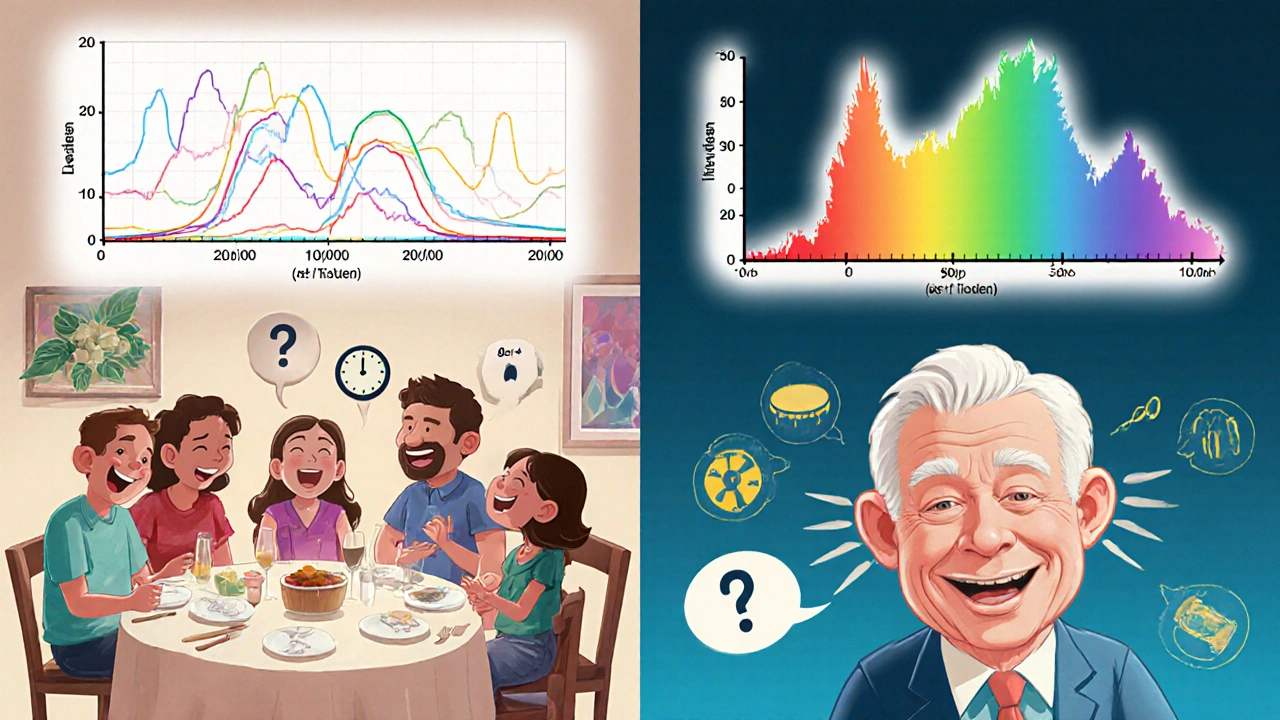
Audiometry isn’t just about what you hear. It’s also about what’s happening inside your ear.Tympanometry checks your eardrum’s movement. A small probe seals your ear canal and changes the air pressure. If your eardrum doesn’t move well, it could mean fluid behind the eardrum (common in kids with ear infections), a perforation, or a stiff middle ear bone. Results show up as a graph-type B means flat (fluid), type C means negative pressure (Eustachian tube issue), type A is normal.
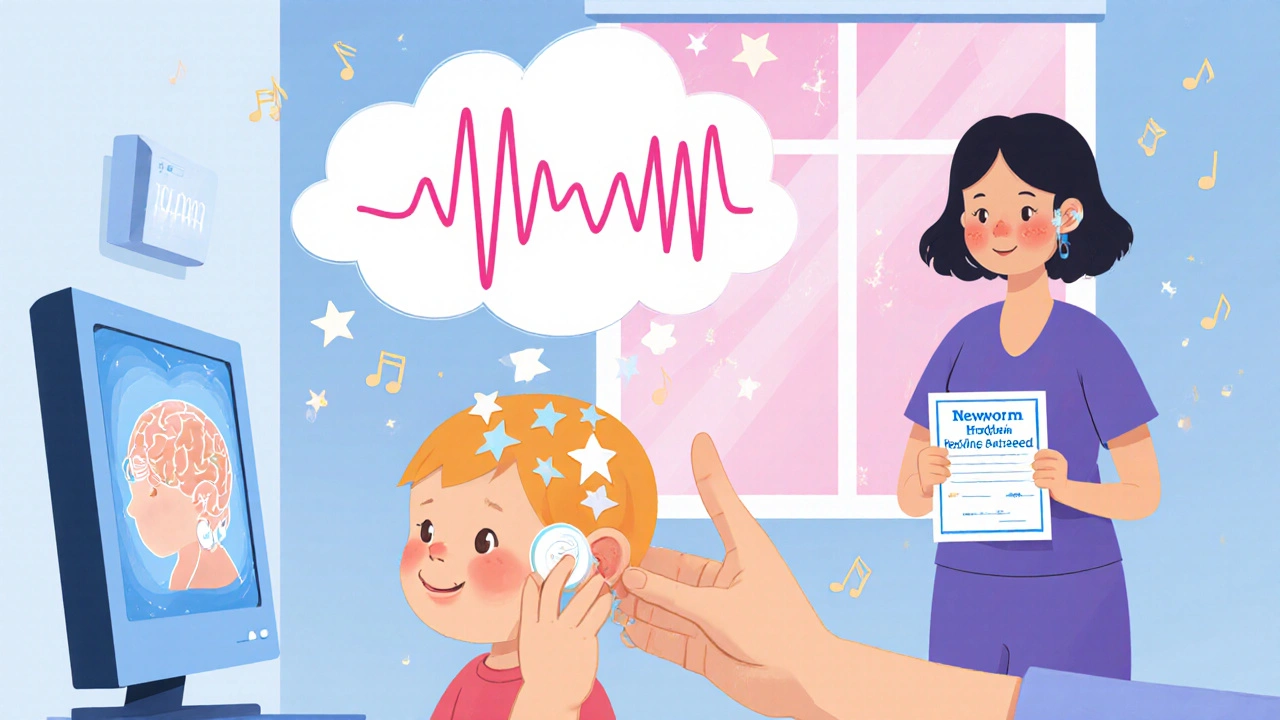
Auditory Brainstem Response (ABR) is used for babies, non-verbal adults, or when results are unclear. Electrodes on your scalp pick up electrical signals from your auditory nerve as you listen to clicks through earphones. No response needed from you. It’s perfect for newborns-most U.S. hospitals screen all babies before discharge, thanks to CDC guidelines. If a baby fails, they get a full ABR by three months. Early intervention can prevent language delays.
What Happens After the Test?
The test itself takes 20-45 minutes. But the real value comes after.You’ll get an audiogram-a graph that shows your hearing thresholds. Audiologists use standardized symbols: circles for your right ear (air), X’s for your left (air), brackets for right bone, and < for left bone. If you see a gap between air and bone lines, that’s conductive loss. If both lines dip together, it’s sensorineural.
A good audiologist won’t just hand you the paper. They’ll explain what the dips mean. They’ll tell you if your hearing loss is noise-induced (often steep at 4000 Hz), age-related (gradual across all frequencies), or something else. They’ll connect it to your life: “You’re missing high-pitched voices because your hearing dips at 3000-6000 Hz. That’s why kids and women sound muffled.”
If hearing aids are recommended, they’ll match them to your audiogram. A hearing aid isn’t just a volume knob-it’s a custom-tuned device. The audiologist programs it based on your exact thresholds so soft sounds become audible, and loud ones stay comfortable.
Common Misconceptions
People often think:- “I don’t need a test-I can hear fine.” But hearing and understanding are different. You might hear a voice but miss the words.
- “My hearing aid will fix everything.” Not true. If your speech discrimination is low, hearing aids help with volume, not clarity.
- “It’s just aging.” Hearing loss isn’t normal. It’s a medical condition. And it’s treatable.
- “I’ll know when it’s bad enough.” Most people wait 7-10 years before seeking help. By then, the brain has forgotten how to process speech.
Waiting makes rehabilitation harder. The sooner you test, the better your brain can adapt.
Who Needs Audiometry Testing?
You don’t need to wait for symptoms. Here’s who should get tested:- Anyone over 50-regular screening every 2-3 years.
- People exposed to loud noise-construction, music, factories, even loud headphones.
- Those with a family history of hearing loss.
- People taking ototoxic medications (like some chemotherapy drugs).
- Anyone who says “What?” more than twice in a conversation.
- Newborns-screened before leaving the hospital.
Even if you feel fine, a baseline test at 50 gives you a reference point. Future changes become obvious.
What to Expect During the Test
The process is painless, but it’s not always comfortable.You’ll sit in a quiet booth. The audiologist will explain each step. You’ll hear tones through headphones. You’ll press a button when you hear them. For bone conduction, they’ll place a small vibrator behind your ear. Some people find it odd-especially if you wear glasses. The vibration can feel like a buzz on your temple.
Speech testing is straightforward. You’ll repeat words like “dog,” “cup,” “ship.” No trick questions. Just listen and respond.
Most people finish in under 30 minutes. If you’re tired, the test can be paused. Don’t rush. Accuracy matters more than speed.
Why This Matters More Than Ever
Hearing loss isn’t just about missing conversations. It’s linked to loneliness, depression, cognitive decline, and even falls in older adults. Studies show people with untreated hearing loss are 24% more likely to develop dementia.But here’s the good news: hearing aids, cochlear implants, and communication strategies work. And they work best when started early.
Audiometry is the key. It’s not a one-time thing. It’s a roadmap. It tells you where you are, where you’re going, and how to get there.
If you’ve been avoiding the test because you think it’s “just hearing,” think again. It’s about staying connected-to family, to life, to the world around you.
How accurate is audiometry testing?
Audiometry is highly accurate when performed under controlled conditions using calibrated equipment. Standards from ANSI and ASHA require audiometers to be verified annually within ±3 dB of true thresholds. In skilled hands, results are reliable to within 5 dB. Factors like patient fatigue, improper masking, or background noise can reduce accuracy, which is why trained audiologists follow strict protocols.
Is audiometry testing painful?
No, audiometry is completely painless. You’ll hear tones and words through headphones or a bone vibrator. Some people find the bone conduction vibration slightly uncomfortable, especially if they wear glasses, but it’s not painful. There are no needles, no probes inside the ear canal during pure-tone testing.
How long does an audiometry test take?
A full diagnostic audiometry test usually takes 20 to 45 minutes. This includes air and bone conduction testing, speech recognition, and tympanometry. Screening tests (like those at pharmacies) take only 2-5 minutes but don’t give the full picture. For accurate diagnosis, the longer test is necessary.
Can I do audiometry testing at home?
Some apps and devices offer basic hearing screenings, but they’re not diagnostic. Home tests can’t control background noise, use calibrated equipment, or perform bone conduction or speech discrimination tests. The FDA allows tele-audiology for monitoring, but a full diagnostic test must be done in a certified clinic. If you suspect hearing loss, don’t rely on apps-see an audiologist.
What if my audiogram shows hearing loss?
Your audiologist will explain the type and degree of loss. If it’s conductive, they may refer you to an ENT for treatment like earwax removal or surgery. If it’s sensorineural, hearing aids are the most common solution. They’ll program them to match your exact thresholds. In severe cases, cochlear implants may be discussed. Early intervention improves outcomes significantly.
Do I need a referral to get an audiometry test?
No, you don’t need a referral. Audiologists are licensed healthcare professionals who can evaluate and treat hearing loss independently. Many clinics allow direct scheduling. Insurance often covers diagnostic testing if you have symptoms, but check your plan. Medicare does not cover routine hearing tests, but some supplemental plans do.
How often should I get my hearing tested?
If you’re over 50, get tested every two to three years. If you’re exposed to loud noise regularly-like at concerts, construction sites, or through headphones-get tested annually. If you already have hearing loss, annual checks help track progression and adjust hearing aids. Children with hearing loss or recurrent ear infections should be monitored as recommended by their audiologist.
If you’ve been putting off a hearing test, now is the time. Hearing loss doesn’t come with a warning sign-it creeps in slowly. But with audiometry, you can catch it early, understand it clearly, and take control before it affects your relationships, your confidence, or your brain.
Aishwarya Sivaraj
November 27, 2025 AT 22:23Audiometry saved my dad's life not just his hearing
He thought he was just getting old until he got tested and found out he had a tumor on his auditory nerve
Turns out the muffled voices weren't aging it was a growth pressing on the nerve
Early detection meant surgery before it spread
Don't wait for it to get worse you might be missing something way bigger than just trouble hearing
steve stofelano, jr.
November 28, 2025 AT 05:03It is with the utmost respect for the clinical rigor and ethical integrity of audiological science that I acknowledge the profound societal implications of widespread audiometric screening.
As a professional engaged in public health policy I have witnessed firsthand how untreated hearing loss correlates with diminished civic participation and increased social isolation among elderly populations.
The data is unequivocal and the intervention cost-effective.
Every community should prioritize access to diagnostic audiology as a fundamental component of geriatric care.
sharicka holloway
November 29, 2025 AT 21:19I work with seniors and I can tell you the biggest problem isn't the hearing loss it's the shame
People think asking for help means they're weak or broken
But the truth is hearing loss is as common as glasses
And just like you wouldn't wait until you can't read the road signs to get lenses you shouldn't wait until you're missing grandkids' birthdays to get tested
It's not a failure it's a fix
Edward Batchelder
November 30, 2025 AT 11:43Let me be very clear about this: hearing loss is not inevitable. It is not a natural consequence of aging. It is a preventable condition in many cases. Noise exposure is the number one cause. And yet, we still let our kids blast music through headphones for hours. We let construction workers go without proper protection. We ignore the warning signs because we are too busy. But here's the thing: your brain is not a machine that can be turned off and on. Once it forgets how to process speech, it's much harder to relearn. That's why testing isn't optional. It's essential. And if you're over 50, you owe it to yourself to have a baseline. Just like your cholesterol. Just like your eyes. Just like your bones. Your hearing matters. Don't wait until it's too late. Do it now. Today. Right now.
reshmi mahi
December 1, 2025 AT 09:29India has 150 million people with hearing loss and no one talks about it
We fix broken phones faster than we fix broken ears
My aunt got her first hearing aid at 72 after 15 years of yelling at the TV
Now she hears birds again
And yes it's embarrassing to admit you can't hear your own grandkids
But it's way more embarrassing to miss their first words forever
laura lauraa
December 1, 2025 AT 19:29How convenient that this article frames hearing loss as a personal responsibility rather than a systemic failure of healthcare access.
Let me ask you: how many people in this country can afford a $3,000 hearing aid without insurance?
How many have access to a certified audiologist within 100 miles?
How many are told by their primary care doctor that it's "just aging" and sent home?
This isn't about awareness. It's about equity.
And until we fix that, all these audiograms are just pretty graphs on paper for people who can afford to care.
Gayle Jenkins
December 3, 2025 AT 04:27You know what I love about this? It’s not just about the numbers on the chart-it’s about the moments you get back.
My mom didn’t realize she couldn’t hear the dog barking outside until she got her hearing aids.
Now she runs out every morning to let him in.
She says it’s the first time in years she’s felt connected to her own home.
That’s the real win.
Not the decibels.
Not the audiogram.
But the dog barking.
And the quiet joy of hearing it again.
Don’t wait for a crisis.
Get tested.
It’s not about fixing your ears.
It’s about fixing your life.
Kaleigh Scroger
December 3, 2025 AT 20:51I'm a speech pathologist and I've seen the same pattern for 20 years
People come in saying they hear fine but can't understand their grandkids
They think it's the kids mumbling or the TV too loud
But when we test them it's always the same high frequency drop at 3000-6000 Hz
That's where consonants like s t f th live
So they hear the voice but lose the words
And by the time they come in their brain has already started rewiring to compensate
That's why early testing matters
Not because you want to hear better
But because you want to understand better
And that's not just about ears
It's about staying human
Elizabeth Choi
December 5, 2025 AT 12:54Let’s be honest: audiometry is a market-driven tool disguised as medical science.
It creates a diagnostic category where none may have existed before.
How many people are being pathologized because they can’t hear a whisper at 15 dB?
Who decided that 0 dB HL is the universal baseline?
And why are we ignoring cultural differences in speech perception?
This isn’t health-it’s a product pipeline.
And you’re being sold a solution to a problem that was invented to sell it.
Darrel Smith
December 7, 2025 AT 09:34My brother waited 12 years to get his hearing tested because he thought he was just being stubborn
Then one day he missed his daughter say "I love you" because he thought she said "I love yogurt"
He cried for an hour
He got his hearing aids the next week
Now he hears every single word she says
And he never misses a bedtime hug
Don't be like my brother
Don't wait until your heart breaks because you couldn't hear love
Get tested
It's not expensive
It's not scary
It's not hard
It's just one appointment
And it could save your soul