
Automated Refills for Generic Medicines: How Online Pharmacies Make Chronic Care Easier
 Nov, 16 2025
Running out of your blood pressure or cholesterol pill shouldn’t be a surprise. But for millions of people taking daily medications for chronic conditions, it happens all the time. Forgetting to call the pharmacy, missing the refill window, or just being too busy-these small delays add up. And when you’re taking generic medicines for conditions like diabetes, hypertension, or thyroid disorders, missing even a few doses can mean bigger health risks down the road. That’s where automated refills come in. They’re not magic. But they’re one of the most practical, low-effort ways to stay on track with your meds-especially if you’re using generic drugs that you refill every 30 or 90 days.
How automated refills actually work
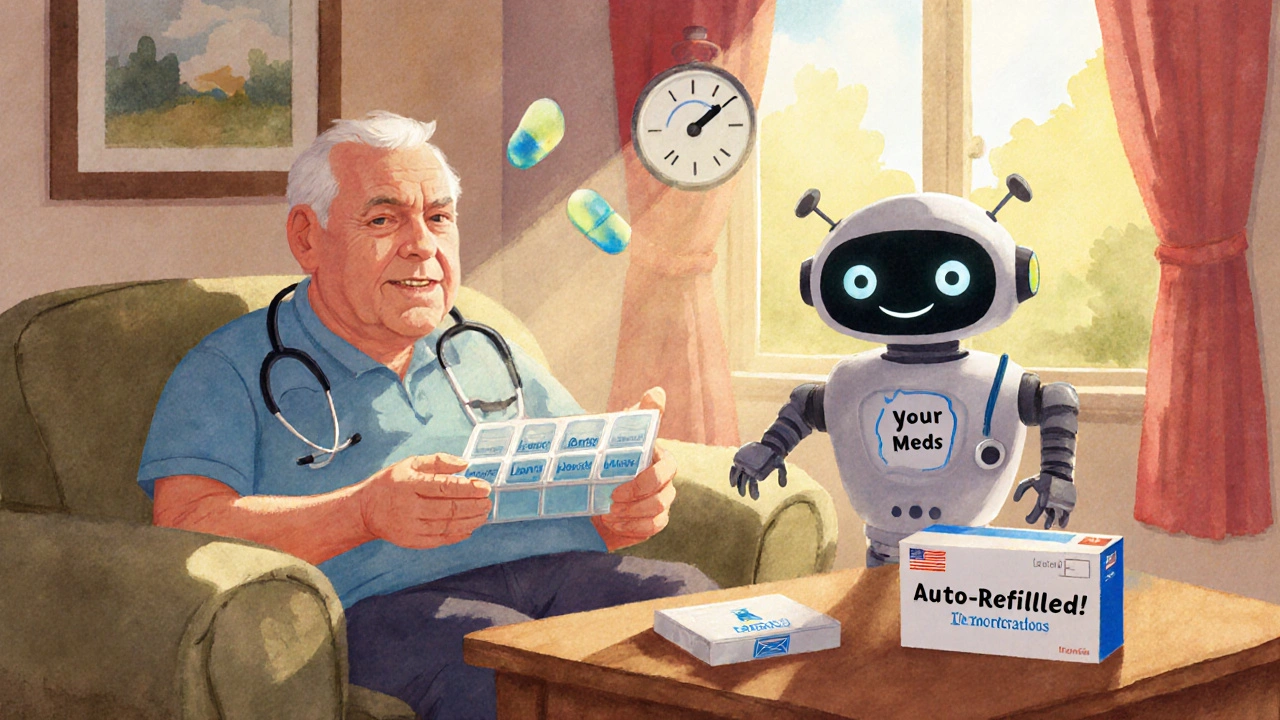
Automated refill systems don’t just remind you. They act. When you sign up, the pharmacy tracks your prescription schedule and automatically sends a refill request to your doctor’s office about 5 to 7 days before you run out. Once approved, your meds are ready for pickup or shipped to your door. No calls. No texts you forget to check. No more scrambling on day 28. This isn’t new. CVS, Walgreens, and other big chains started offering it by 2015. But today, it’s smarter. Systems now use your refill history to adjust timing. If you usually pick up your metformin on a Tuesday, the system learns that. If you miss a refill once, it might nudge you earlier next time. Some even sync with Apple Health or Google Fit to track your medication log alongside your steps or sleep data. For generic medicines-like lisinopril, atorvastatin, or levothyroxine-this is especially useful. These are often taken long-term, sometimes for life. They’re cheap, but not always memorable. Automated refills remove the mental load. You don’t have to remember when your last refill was. The pharmacy does.Why it works better than calling in refills
A 2016 study tracking over 100,000 Medicare patients found that automated refills improved adherence by 7.2% for statins, 6.8% for diabetes meds, and 3.9% for blood pressure drugs. That might sound small, but in real terms, it means thousands fewer hospital visits each year. People who used automated refills were less likely to run out, less likely to double-dose out of panic, and less likely to stop taking their meds altogether. Compare that to the old way: calling the pharmacy when you’re down to 5 pills. That’s stressful. You might wait a day or two because you’re busy. Or you forget. Or the pharmacy is out of stock. Or your doctor’s office is closed. Automated refills cut through all that. They turn a reactive task into a quiet, reliable system. And it’s not just about convenience. For people with memory issues, busy parents, or those managing multiple medications, this system is a lifeline. One user on Reddit shared how her father, who has early-stage dementia, hasn’t missed a single dose since enrolling in CVS’s auto-refill program. He doesn’t remember to call. But the pharmacy does.What you need to know before signing up
It sounds simple, but there are important steps-and risks-to be aware of. First, you have to opt in. You won’t be enrolled by accident. Pharmacies need your written or digital consent. You’ll usually do this through their website, app, or in-store. The process takes about 10 minutes. You’ll pick how you want to be notified: email, text, or phone call. You’ll also confirm your delivery address and payment method. Second, dosage changes are a blind spot. If your doctor increases your dose from 20 mg to 40 mg of lisinopril, the automated system won’t know-unless you tell them. There have been cases where patients received the old dosage even after a change. That’s why it’s critical to always confirm with your pharmacist when any med is adjusted. Ask: “Will this change affect my auto-refill?” Third, don’t assume it’s foolproof. If you stop taking a medication-say, because you switched to a different drug-the refill might keep coming. That’s waste. And cost. Always update your pharmacy if you discontinue a prescription. Some systems let you pause refills temporarily, but you have to do it yourself.
Amazon RxPass and other subscription models
There’s another way to think about automated refills: as a subscription. Amazon Pharmacy’s RxPass, launched in January 2023, offers 60 common generic medications for $5 a month to Prime members in 45 states. No copay. No insurance needed. Just pick your meds, and they’re shipped automatically every 30 days. This model flips the script. Instead of waiting for your insurance to approve a refill, you pay a flat fee. It’s not for everyone-but if you take 3 or more generics monthly, it often saves money. A 2025 JAMA Network Open study found RxPass users refilled their meds 18% more often than those using traditional insurance-based refills. Why? Because the barrier to refilling dropped to zero. Other pharmacies are catching on. CVS and Walgreens now offer similar flat-fee programs for select generics, especially for seniors on fixed incomes. The trend is clear: when cost and convenience are simplified, people take their meds.The hidden benefits for pharmacies and patients
Pharmacies love automated refills-not just because they’re easier to manage, but because they’re profitable. Staff spend 37% fewer hours chasing down refill requests. That means more time for patient counseling, checking for drug interactions, or helping older customers set up their accounts. For patients, the benefits go beyond adherence. There’s peace of mind. One survey found 73% of users said automated refills gave them “peace of mind” about their health. That’s not a small thing. Living with a chronic condition is stressful. Knowing your meds are covered reduces anxiety. Also, fewer trips to the pharmacy. If you’re elderly, disabled, or live far from a store, having meds delivered saves time, gas, and effort. One Medical reported that 78% of their patients who use delivery services also enroll in auto-refills. The two go hand-in-hand.Who shouldn’t use automated refills?
Not everyone benefits. If you’re on a medication that changes often-like antibiotics, painkillers, or mood stabilizers-auto-refills aren’t a good fit. These aren’t daily maintenance drugs. They’re short-term, variable, or require close monitoring. Also, if you’re uncomfortable with technology, you might feel left out. About 17% of seniors need help setting up auto-refills. But most pharmacies now offer in-person help. CVS, for example, has staff available during off-hours to walk you through the app. You don’t need to be tech-savvy to use it. And if you’re on Medicaid or a tight insurance plan, check your coverage first. Some plans already offer 90-day fills with free shipping. Auto-refill might not add value there.
How to get started
1. Check your pharmacy’s website-look for “Auto-Refill,” “Automatic Renewal,” or “Prescription Management.” 2. Log in to your account or create one if you don’t have one. 3. Select the medications you want to auto-refill. Stick to generics you take daily for chronic conditions. 4. Choose your notification method-text, email, or phone. 5. Confirm your delivery address and payment. 6. Call your pharmacy to confirm enrollment. Ask: “Will this affect my current prescription?” Do this once, and you’re set. No more reminders. No more missed doses. Just steady, reliable access to the meds you need.What’s next for automated refills?
The future is personal. By 2026, two-thirds of pharmacy automation systems will use AI to predict when you’re likely to miss a dose-not just based on schedule, but on your behavior. If you haven’t picked up your meds in 45 days, the system might call you directly. If you refill early every time, it might suggest a 90-day supply. Some pharmacies are even testing smart pill bottles that beep when you don’t open them. They sync with your auto-refill system. If you skip a dose, the pharmacy gets alerted. They might send a nurse to check on you. It sounds high-tech. But the goal is simple: keep you healthy without making you work harder.Final thought: It’s not about technology. It’s about care.
Automated refills aren’t about replacing pharmacists. They’re about giving pharmacists more time to care. When they’re not answering 20 refill calls a day, they can answer your real questions: “Is this side effect normal?” “Can I take this with my new supplement?” “Why does this pill look different?” For people on generic medicines, this system turns a chore into a quiet support system. It doesn’t cure anything. But it makes sure you don’t fall through the cracks.Do automated refills cost extra?
No. Most pharmacies offer auto-refills at no extra charge. You still pay your usual copay or out-of-pocket cost. Some subscription services like Amazon RxPass have a monthly fee, but that’s optional and separate from standard auto-refill programs.
Can I pause or cancel auto-refills anytime?
Yes. You can pause, cancel, or change your auto-refill settings at any time through your pharmacy’s app or website. You can also call the pharmacy directly. There’s no lock-in contract.
What if my doctor changes my dosage?
Always tell your pharmacist about any dosage change. Automated systems don’t automatically update based on doctor’s notes. If you don’t notify them, you might get the wrong dose. Ask: “Will this change be reflected in my auto-refill?”
Are automated refills safe with my personal data?
Yes. All major pharmacy systems follow HIPAA rules. Your prescription history, contact info, and payment details are encrypted and protected. You must give consent before enrollment, and you can request your data be deleted at any time.
Do I need insurance to use auto-refills?
No. Auto-refill is a service, not a payment plan. You can use it with or without insurance. If you’re paying cash, you’ll still get your meds automatically. Subscription services like RxPass don’t require insurance at all.
What if I move or change pharmacies?
Your auto-refill settings won’t transfer. You’ll need to re-enroll at your new pharmacy. Make sure to update your prescription transfer before your current refill runs out to avoid a gap in coverage.
Can I use auto-refills for non-generic medications?
Yes. While the system is most beneficial for generics, you can enroll any prescription that’s taken regularly. The real advantage is for low-cost, daily meds where forgetting has the biggest impact.
Deepali Singh
November 17, 2025 AT 05:47Used this for my mom’s levothyroxine for two years. She’s 78, lives alone, and once forgot to refill for 11 days. Didn’t even realize she was running low until she started feeling dizzy. Auto-refill saved her. No drama. No calls. Just pills showing up. I wish every pharmacy made this mandatory for chronic meds.
Sylvia Clarke
November 18, 2025 AT 22:05Let me get this straight - we’ve turned healthcare into a subscription box service, and people are calling it ‘innovation’? 🙄
Next thing you know, they’ll auto-ship insulin and call it ‘convenience.’
Don’t get me wrong - I’m thrilled my aunt doesn’t miss doses. But let’s not pretend this isn’t corporate efficiency dressed up as compassion. Pharmacies save 37% on labor? That’s not care - that’s cost-cutting with a smiley face. And don’t even get me started on Amazon RxPass. The same company that tracks your toilet paper habits now knows when you take your blood pressure meds. Cool. Real cool.
Jennifer Howard
November 19, 2025 AT 02:27While I appreciate the sentiment behind this article, I must express grave concern regarding the potential for systemic negligence inherent in automated refill protocols. The notion that a software algorithm, devoid of clinical judgment, may manage life-sustaining pharmaceutical regimens without human oversight is not merely irresponsible - it is a violation of the Hippocratic Oath’s foundational tenets. Moreover, the integration of such systems with consumer fitness trackers constitutes a flagrant breach of medical privacy under HIPAA, as it creates an unregulated data conduit between pharmaceutical entities and third-party biometric platforms. Furthermore, the normalization of this practice may inadvertently disincentivize patient autonomy, fostering a culture of passive compliance rather than informed engagement with one’s own health. I implore all readers to consider: if your medication is being managed by a bot, who is truly accountable when things go wrong? The pharmacist? The coder? The algorithm? Or, heaven forbid, you?
Abdul Mubeen
November 20, 2025 AT 12:03Automated refills? Sounds like a Trojan horse for mass surveillance. I’ve read reports - not conspiracy, actual peer-reviewed - that pharmacy data is being sold to insurance companies to adjust premiums based on refill patterns. If you refill your statin every 28 days? You’re ‘compliant’ - low risk. Miss one? Suddenly you’re a ‘non-adherent high-cost patient.’ And now they’re syncing with Apple Health? Next thing you know, your employer gets a report that you’re ‘medically predictable.’ This isn’t convenience. It’s behavioral profiling under the guise of care. And no, I’m not paranoid. I just read the fine print.
Georgia Green
November 21, 2025 AT 12:09Just wanted to add - if you’re on Medicaid or Medicare Advantage, check if your plan already does 90-day fills with free shipping. Some do. Auto-refill is great, but if you’re already getting free delivery every 3 months, you might not need it. Also, if you use a mail-order pharmacy, they often auto-refill by default - no setup needed. Just make sure your address is current. I once got my metformin sent to my old apartment because I forgot to update it. Took two weeks to get it fixed. 😅
Christina Abellar
November 23, 2025 AT 02:31My dad’s on six meds. Auto-refill cut his stress in half. No more frantic calls on day 27. He doesn’t have to remember anything. Just takes them. Simple. Beautiful.
Eva Vega
November 23, 2025 AT 16:47From a pharmacoeconomic standpoint, the implementation of automated refill systems represents a paradigmatic shift in medication adherence interventions. The reduction in non-adherence-related hospitalizations yields significant cost savings across the continuum of care, particularly within the Medicare Advantage population. Moreover, the integration of predictive analytics into refill scheduling aligns with the principles of value-based care delivery. However, one must remain cognizant of the potential for algorithmic bias in dose prediction models, particularly when extrapolating behavioral data from heterogeneous patient cohorts. Further longitudinal studies are warranted to assess long-term outcomes, particularly in populations with polypharmacy and cognitive impairment.
Matt Wells
November 25, 2025 AT 13:10One must question the ethical implications of delegating clinical responsibility to automated systems. The physician-patient relationship is not a transactional exchange of data points, nor should it be reduced to a logistical algorithm calibrated for corporate efficiency. While the convenience factor is undeniable, the erosion of human oversight - particularly in the context of chronic, life-altering conditions - constitutes a profound abdication of medical duty. The notion that a ‘smart pill bottle’ should alert a nurse to a missed dose is not innovation; it is institutional failure dressed in Silicon Valley jargon. We have become so enamored with automation that we have forgotten the very essence of care: presence, vigilance, and human accountability.