
Citrus Fruits and Calcium Channel Blockers: What You Need to Know
 Feb, 7 2026
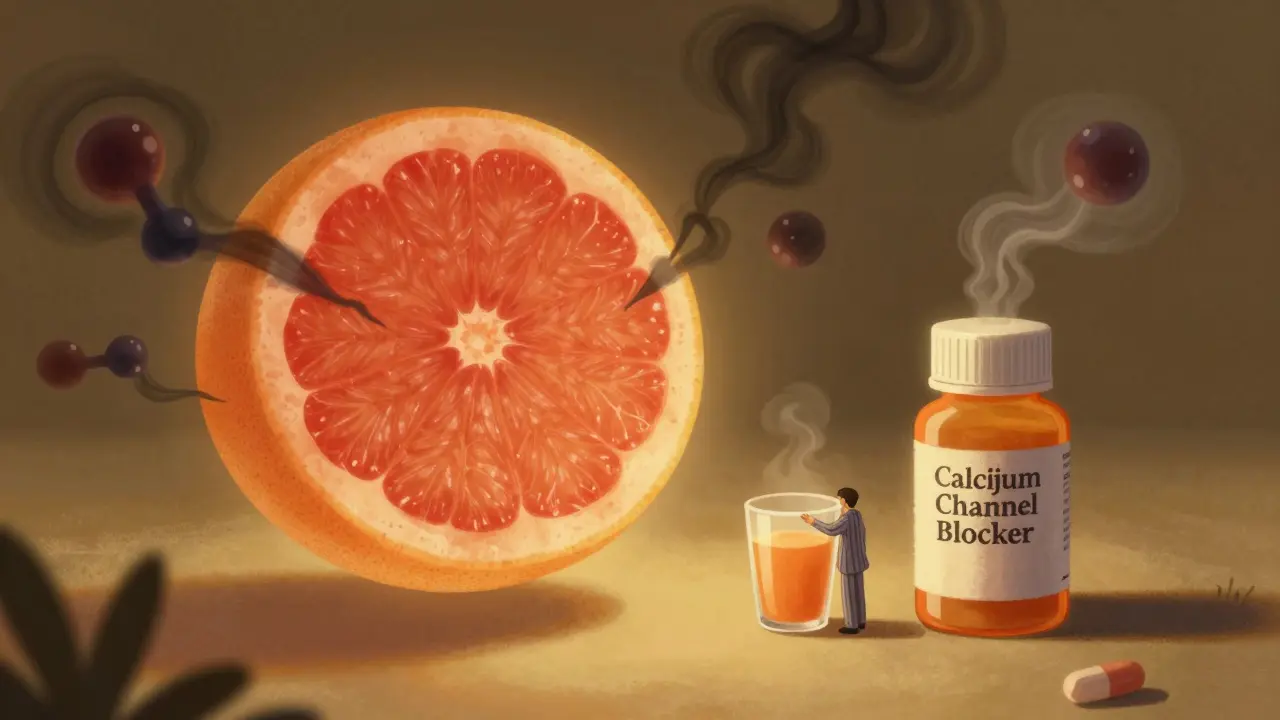
If you're taking a calcium channel blocker for high blood pressure, eating a grapefruit or drinking a glass of grapefruit juice might seem harmless. But it could be putting your health at serious risk. This isn't just a warning you hear once and forget. It’s a real, well-documented interaction that can turn a safe dose into a dangerous overdose - even if you eat the fruit hours before or after your pill.
Why Grapefruit Is Different from Other Citrus
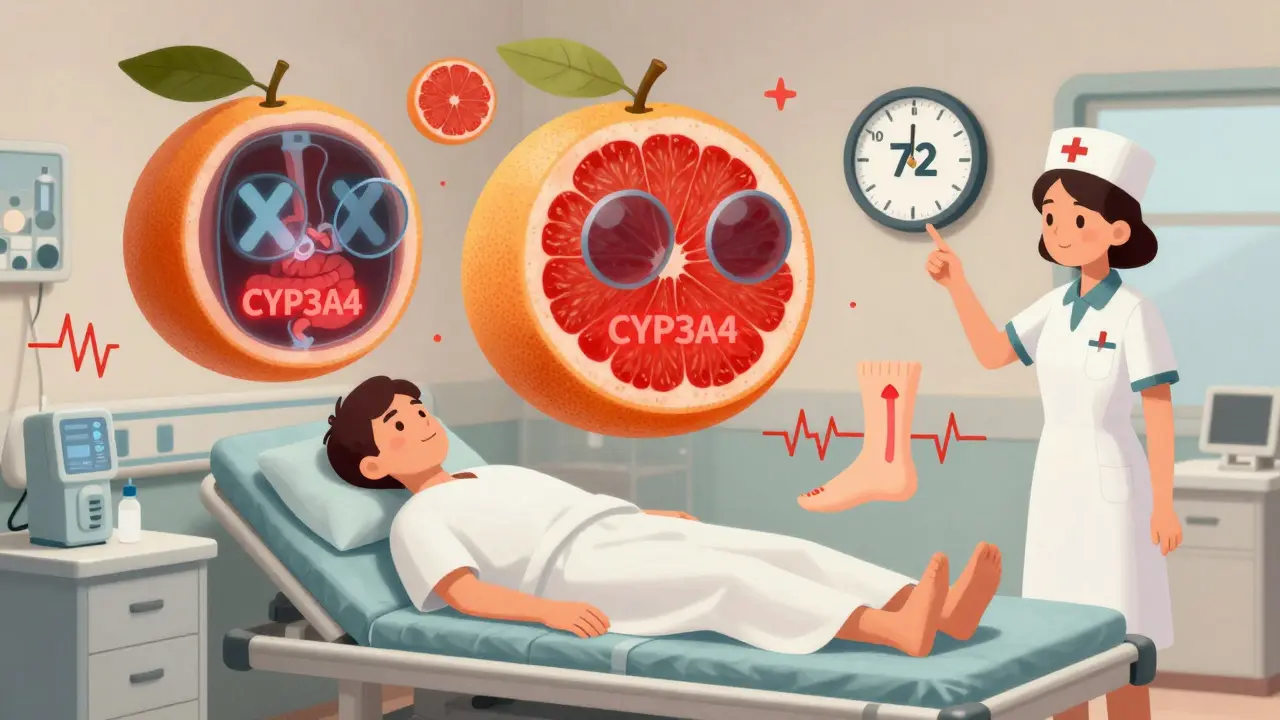
Not all citrus fruits behave the same way with medications. Oranges? Generally safe. Lemons? Low risk. But grapefruit? It’s in a league of its own. The problem isn’t the vitamin C or the sugar. It’s a group of chemicals called furanocoumarins, specifically 6',7'-dihydroxybergamottin and bergamottin. These compounds are found in very high amounts in grapefruit - up to 10 milligrams per 100 milliliters of juice - and they do something unusual: they permanently disable an enzyme in your gut called CYP3A4.This enzyme is your body’s natural detox system for many drugs. It breaks down medications like calcium channel blockers before they enter your bloodstream. When grapefruit shuts it down, your body absorbs way more of the drug than intended. A single 200ml glass of grapefruit juice can block CYP3A4 for up to 72 hours. That means even if you drink juice in the morning and take your pill at night, you’re still at risk.
Which Calcium Channel Blockers Are Most Affected?
Not all calcium channel blockers are created equal when it comes to grapefruit. Some are hit hard. Others barely notice. Here’s what the data shows:| Drug Name | Class | Grapefruit Interaction Risk | Estimated Bioavailability Increase |
|---|---|---|---|
| Felodipine | Dihydropyridine | Very High | 300%-500% |
| Nicardipine | Dihydropyridine | High | Up to 400% |
| Nimodipine | Dihydropyridine | High | Significant increase |
| Amlodipine | Dihydropyridine | Moderate | Up to 100% |
| Nifedipine | Dihydropyridine | Mild | Minimal increase |
| Verapamil | Non-dihydropyridine | Mild to Moderate | Variable |
| Diltiazem | Non-dihydropyridine | Mild | Low |
Felodipine is the worst offender. Studies show its blood levels can jump from 2.5 ng/mL to over 11.5 ng/mL after grapefruit juice - a more than fourfold increase. That’s not a minor bump. That’s like taking four pills instead of one. For older adults or people with heart conditions, this can mean dangerously low blood pressure, fainting, or even a fall that leads to a hip fracture.
What Happens When the Interaction Occurs?
You might not feel anything right away. But over time, the extra drug builds up. One study found that after just one day of grapefruit consumption, 35% of the calcium channel blocker remained unmetabolized in the body. By day four, a 60 mg dose could act like 140 mg. That’s not theoretical. It’s happening in real people.Common signs of too much calcium channel blocker include:
- Dizziness or lightheadedness, especially when standing up
- Swelling in the ankles or feet (peripheral edema)
- Flushing or feeling unusually warm
- Rapid heartbeat (reflex tachycardia)
- Extreme fatigue or confusion
One nurse practitioner, Amelie Hollier, shared a chilling case at a national conference: an elderly woman took her usual dose of a calcium channel blocker, had grapefruit juice with breakfast, and collapsed at home. She wasn’t overdosing on pills - she was overdosing on food. "An elderly lady will not be able to stand at this dose," she warned. That’s not an exaggeration. It’s a documented risk.
It’s Not Just Grapefruit Juice
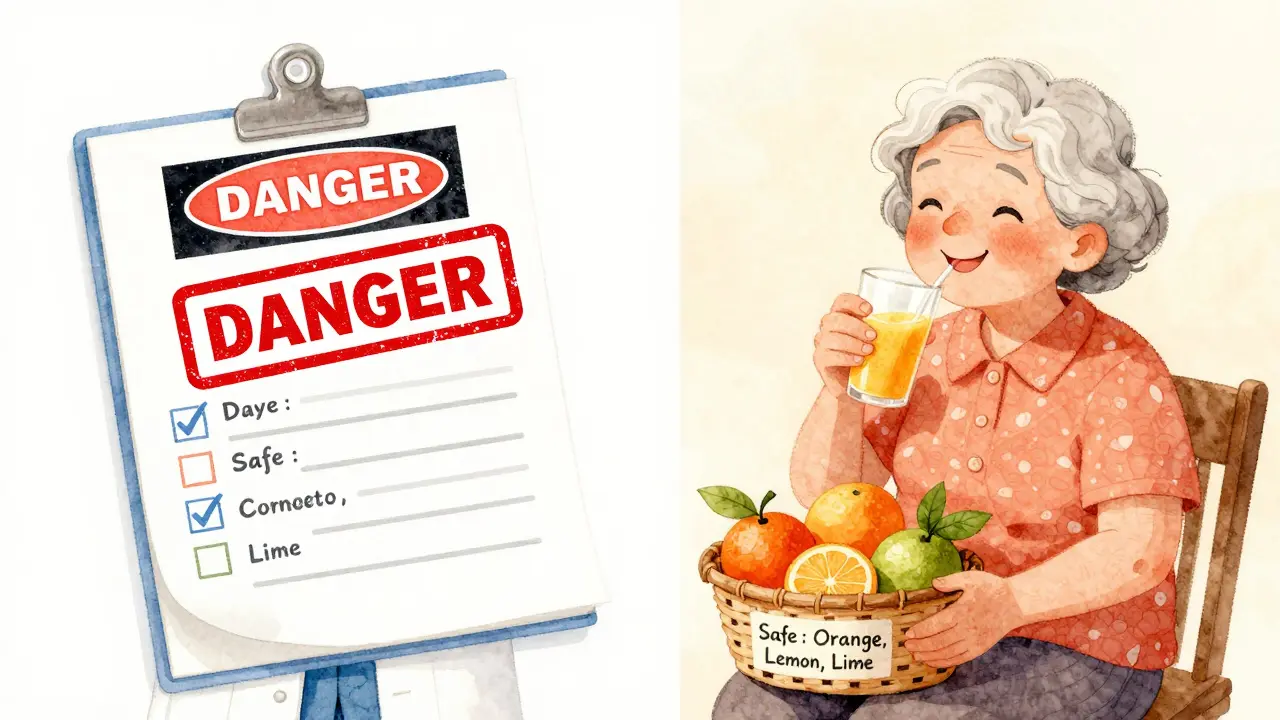
Many people think the problem is only with juice. But it’s not. Whole grapefruit, grapefruit segments, and even grapefruit-flavored sodas or candies can contain enough furanocoumarins to cause trouble. And it’s not just grapefruit. Seville oranges (sour oranges used in marmalade) and tangelos - hybrids of grapefruit and tangerine - also carry the same chemicals. Even orange juice made from Seville oranges can trigger the interaction.Regular sweet oranges? They’re safe. So are lemons, limes, and most other citrus. The difference? Their furanocoumarin levels are near zero. You can enjoy them without worry.
What Should You Do?
If you’re on a calcium channel blocker, here’s what to do:- Avoid grapefruit entirely. No exceptions. Not even once a week.
- Check your prescription label. Felodipine, nimodipine, and nicardipine all have black box warnings about grapefruit.
- Ask your pharmacist. Many people don’t realize their pharmacist can flag this risk during prescription filling.
- Read ingredient lists. Some energy drinks, supplements, and flavored waters contain grapefruit extract.
- Don’t assume timing helps. Taking your pill 12 hours after juice doesn’t prevent the interaction. The enzyme stays blocked for days.
What Are Your Alternatives?
If you love citrus and need blood pressure medication, you’re not out of options. Some calcium channel blockers are safer:- Amlodipine (Norvasc) - has a lower interaction risk than felodipine. Still, caution is advised.
But even better: switch to a different class of blood pressure meds that have no known interaction with grapefruit:
- ACE inhibitors - like lisinopril (Zestril)
- ARBs - like valsartan (Cozaar)
- Thiazide diuretics - like hydrochlorothiazide (Microzide)
- Some beta blockers - like metoprolol (Lopressor)
These alternatives work just as well for most people. Talk to your doctor. You don’t have to give up citrus forever - you just need a safer medication.
Why Is This Still a Problem?
You’d think this is common knowledge by now. But a 2022 survey found that only 37% of primary care doctors routinely ask patients about grapefruit use when prescribing calcium channel blockers. And 68% of patients had no idea this interaction even existed. That’s terrifying.Every year, an estimated 15,000 emergency room visits in the U.S. are tied to grapefruit-drug interactions. Most of them are preventable. The science has been clear since 1989. The warnings are on the labels. Yet, people keep eating grapefruit with their pills - because no one told them.
And it’s not just grapefruit. Other citrus fruits like Seville oranges are also risky. If your marmalade is made from sour oranges, it’s just as dangerous as grapefruit juice.
The Future: Safer Drugs on the Horizon
Researchers aren’t ignoring this. Two new extended-release versions of amlodipine are in Phase III clinical trials (NCT04567890 and NCT04567891). Early results show a 70% reduction in grapefruit interaction. That’s promising. But these drugs aren’t available yet. Until then, the rule stays the same: avoid grapefruit completely.Can I eat orange instead of grapefruit while on calcium channel blockers?
Yes, sweet oranges are safe. They contain almost no furanocoumarins, the chemicals that cause the interaction. Stick to regular oranges, tangerines, or clementines. Avoid Seville oranges, pomelos, and tangelos - they’re grapefruit hybrids and carry the same risk.
If I only have grapefruit once a week, is that okay?
No. The enzyme CYP3A4 in your gut stays blocked for up to 72 hours after grapefruit consumption. Even one glass a week can lead to dangerous drug buildup. It’s not about frequency - it’s about any exposure. The safest choice is zero.
Does grapefruit affect all calcium channel blockers the same way?
No. Felodipine, nicardipine, and nimodipine are hit hardest - with bioavailability increases of 300-500%. Amlodipine is affected too, but less severely. Verapamil and diltiazem have milder interactions. Still, no CCB is completely safe with grapefruit. Avoidance is the only reliable strategy.
I take my pill at night and drink grapefruit juice in the morning. Is that safe?
No. The enzyme inhibition lasts 72 hours. Timing doesn’t matter. The interaction isn’t about when you take the drug - it’s about whether the enzyme is working. Grapefruit disables it for days, so your body can’t break down the medication properly, no matter when you take it.
Are there any blood pressure meds that are safe with grapefruit?
Yes. ACE inhibitors like lisinopril, ARBs like valsartan, thiazide diuretics like hydrochlorothiazide, and some beta blockers like metoprolol have no known interaction with grapefruit. If you love citrus, talk to your doctor about switching to one of these classes.
Chima Ifeanyi
February 9, 2026 AT 00:28Let’s be real - this isn’t about grapefruit. It’s about systemic pharmaceutical negligence. The CYP3A4 enzyme inhibition isn’t some niche pharmacokinetic quirk; it’s a systemic failure of regulatory oversight. The FDA has known about this since the 90s, yet we still have patients on felodipine being handed prescriptions without a single verbal warning. That’s not incompetence - that’s institutionalized harm. The real villain isn’t the fruit. It’s the profit-driven model that prioritizes volume over vigilance. We’re treating patients like variables in a spreadsheet, not human beings with metabolic pathways.
And don’t get me started on how the industry markets these drugs like candy. Felodipine? Sold like it’s a vitamin. No one tells you that one glass of juice turns your 10mg dose into 50mg. That’s not a side effect. That’s pharmacological sabotage.
Elan Ricarte
February 9, 2026 AT 04:14Bro. I took felodipine for like 3 months. Dr. told me to ‘avoid citrus.’ So I switched to oranges. Then I got lazy. Ate a whole damn grapefruit one Sunday morning. Thought I was fine. Two days later? I passed out in the shower. Woke up on the bathroom floor with my wife screaming. ER doc said my BP was 78/45. I was lucky I didn’t crack my skull. Now? I don’t even look at grapefruit. It’s not a snack. It’s a silent assassin. And yeah - I know I’m lucky to be alive.
Stop acting like it’s a myth. This shit kills. Not ‘might.’ Does. Every. Single. Time.
Alex Ogle
February 10, 2026 AT 07:39Y’know, I used to work in a pharmacy. We had this one guy - mid-60s, retired mechanic, always had a smile. Took amlodipine. Loved grapefruit. Every. Single. Morning. Said ‘I’ve been eating it since I was 12, doc ain’t gonna tell me what to do.’ We’d print him warning slips. He’d fold ‘em up and stick ‘em in his wallet. One day, he didn’t come in. Found out he’d fallen in his garage, broke his hip. Turned out his amlodipine levels were 180% above therapeutic. He didn’t even realize he was on the edge until he was on the ground.
It’s not about ‘being careful.’ It’s about how we normalize risk. We treat medical advice like a suggestion. And then we wonder why people end up in the ICU. I’ve seen too many of these stories. It’s not ‘bad luck.’ It’s preventable. And we keep letting it happen.
Angie Datuin
February 12, 2026 AT 00:32I just want to say thank you for writing this. My mom’s on nifedipine and she’s been eating grapefruit for 20 years. I didn’t even know this was a thing until I read this. I’m going to call her doctor tomorrow. I’m so glad someone laid it out like this - clear, no fluff. I hope more people see this.
Camille Hall
February 12, 2026 AT 12:54This is such an important thread. I’m a nurse practitioner and I see this every week. One patient, 72, on verapamil, drank grapefruit juice every day because ‘it’s healthy.’ Ended up in the ER with bradycardia and syncope. She didn’t even know the word ‘interaction.’ We need better public health messaging - not just on labels. Talk to your elders. Show them the science. This isn’t fearmongering. It’s survival.
And yes - Seville orange marmalade is just as dangerous. I’ve had patients come in after switching from grapefruit to ‘orange marmalade’ and not realizing it’s sour oranges. The chemistry doesn’t care what you call it.
Andrew Jackson
February 14, 2026 AT 02:42It is deeply troubling that the American public, raised on the myth of individual autonomy, continues to treat pharmacological warnings as mere suggestions. The notion that one can ‘time’ the consumption of grapefruit to circumvent CYP3A4 inhibition is not merely ignorant - it is a philosophical failure of civic responsibility. The human body is not a machine to be hacked with clever scheduling. It is a biological system governed by immutable laws of biochemistry.
When citizens choose ignorance over evidence, they do not merely endanger themselves. They impose risk upon their families, their emergency responders, and the entire healthcare infrastructure. This is not a dietary choice. It is a moral failing. The grapefruit is not the enemy. The arrogance of the individual who believes he is above biochemistry is.
Let us not mistake convenience for wisdom. Let us not confuse taste for safety. The enzyme does not negotiate. The science does not apologize. And neither should we.
Ritteka Goyal
February 15, 2026 AT 18:40OMG i wasnt even aware of this 😱 my uncle in india is on nifedipine and he loves grapefruit so much he even buys it from the local market daily! i just called him and told him to stop immediately!! he was like ‘its just fruit’ 😅 i showed him this post and he said ‘oh noo’ lol
also i just checked my mom’s marmalade - its made from sour oranges! i threw it out!! 🙌 thank u so much for this post!!
Ashlyn Ellison
February 17, 2026 AT 10:50My dad’s on amlodipine. I asked him to stop grapefruit. He said, ‘I’ve been eating it for 40 years.’ I said, ‘Yeah. And you’ve been lucky.’ He didn’t talk to me for a week. Now he drinks orange juice. Still mad. But alive.
Jonah Mann
February 17, 2026 AT 14:05Just a heads up - some ‘grapefruit-flavored’ energy drinks have actual grapefruit extract. I saw one label that said ‘natural flavor’ - turned out it was 6',7'-dihydroxybergamottin. Don’t trust the word ‘flavor.’ Check the ingredients. If it says ‘grapefruit’ or ‘citrus aurantium,’ walk away. Also - ‘pink grapefruit’ is worse than white. More furanocoumarins. I know because I used to work in a juice bar. We’d get complaints from customers who ‘felt weird’ after drinking it. Turns out they were on blood pressure meds. We stopped selling it to anyone over 50 unless they signed a waiver. Yeah. We had to.
Brandon Osborne
February 18, 2026 AT 16:35YOU PEOPLE AREN’T LISTENING. I’VE SEEN THIS KILL PEOPLE. I WORK IN AN ER. I SAW A WOMAN DIE BECAUSE SHE ATE GRAPEFRUIT WITH FELODIPINE. SHE THOUGHT IT WAS ‘JUST A LITTLE.’
HER HUSBAND SAID SHE DIDN’T EVEN KNOW SHE WAS ON A DRUG THAT COULD KILL HER. SHE THOUGHT IT WAS ‘FOR HER STOMACH.’
THEY HAD A KID. 8 YEARS OLD. SHE WAS SUPPOSED TO PICK HER UP FROM SCHOOL.
STOP BEING SOFT. THIS ISN’T A ‘CAUTION.’ IT’S A WARNING. IF YOU EAT IT, YOU’RE PLAYING RUSSIAN ROULETTE WITH YOUR HEART.
AND IF YOU THINK TIMING HELPS - YOU’RE GOING TO BE THE NEXT ONE ON THE TABLE.
STOP. JUST STOP.
THANGAVEL PARASAKTHI
February 19, 2026 AT 05:16My friend’s dad in chennai took nifedipine and drank grapefruit juice every morning. He got dizzy, fell, broke his pelvis. Now he’s in a wheelchair. He didn’t know. Nobody told him. We need to spread this info in India too - so many people think ‘natural = safe.’
Also - amlodipine is safer, yes, but not risk-free. Even 10% increase can be dangerous for elderly. Better safe than sorry. Talk to your doctor. And if they don’t know - show them this post. We need to wake up.