
Counterfeit Drugs in Developing Nations: Safety Concerns and How to Spot Fakes
 Jun, 13 2026
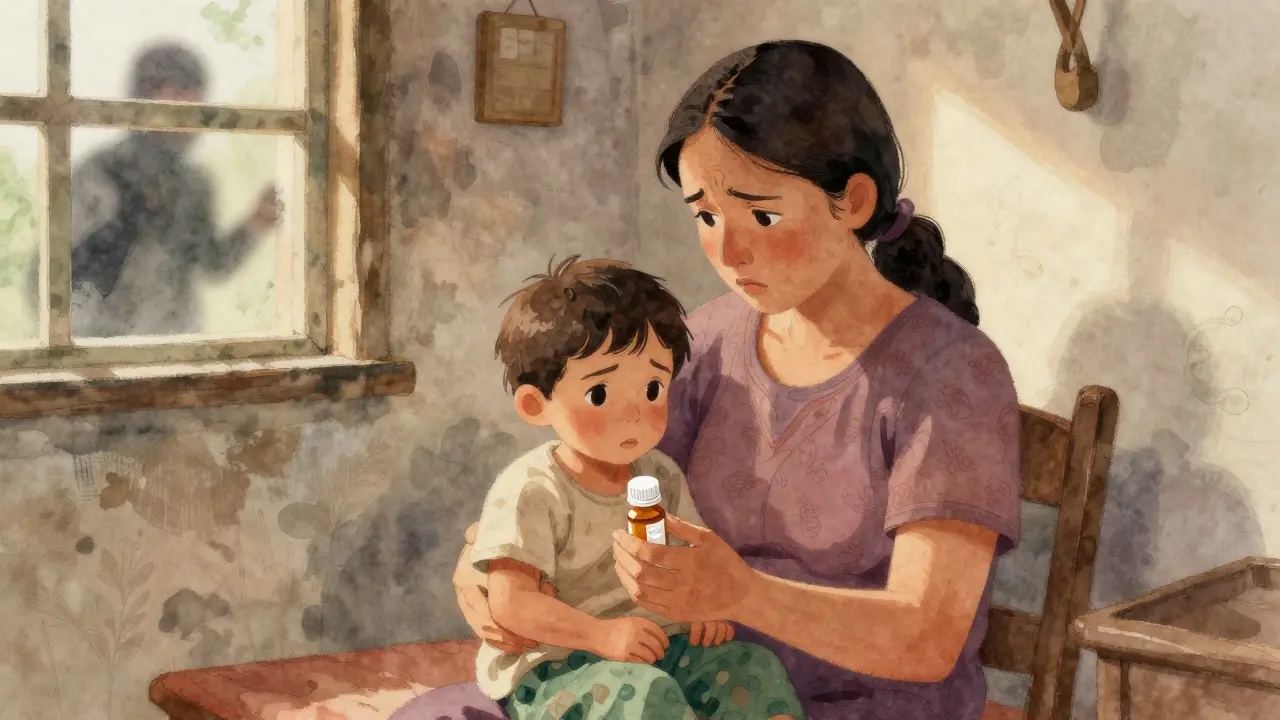
Imagine buying a life-saving antibiotic for your child’s infection, only to find out later it contains nothing but chalk and sugar. This isn’t a hypothetical nightmare; it is the daily reality for millions of people living in low- and middle-income countries. The crisis of counterfeit drugs is not just about lost money-it is a silent killer that undermines global health efforts and erodes trust in medical systems.
The scale of this problem is staggering. According to the World Health Organization (WHO), approximately 10% of medical products in these regions are substandard or falsified. That means one in ten pills, injections, or syrups you buy might fail to treat your condition-or worse, could poison you. With an estimated $83 billion worth of these fake products sold globally each year, the criminal networks behind them have become sophisticated, well-funded, and increasingly dangerous.
The Hidden Cost of Fake Medicines
When we talk about counterfeit drugs, we are usually referring to two distinct categories defined by the WHO: substandard medical products, which are genuine medicines that failed quality control during manufacturing, and falsified medical products, which are deliberately made to look like real drugs but contain wrong ingredients, no active ingredient, or toxic substances.
The human cost is quantifiable and devastating. In sub-Saharan Africa alone, substandard anti-malarial drugs contributed to over 116,000 deaths annually as reported by the WHO in 2018. Globally, adverse toxicity and treatment failures from these fakes contribute to between 72,000 and 169,000 child deaths from pneumonia every year. These aren't just statistics; they represent families shattered by preventable tragedies.
| Content Type | Percentage of Cases | Risk Level |
|---|---|---|
| No Active Ingredient | ~30% | High (Treatment Failure) |
| Incorrect Dosage | ~45% | Critical (Under/Over-dosing) |
| Harmful Substances | ~25% | Extreme (Toxicity/Death) |
Why do criminals risk everything to produce these fakes? The profit margins are astronomical. Interpol’s 2025 Operation Pangea XVI report estimates markups of up to 9,000%. For a criminal organization, the financial reward vastly outweighs the relatively low risk of prosecution in many jurisdictions where penalties remain weak compared to the severity of the harm caused.
Who Is Most at Risk?
Not all drugs are targeted equally. Criminal organizations focus on medications where patients are desperate, sick, and less likely to question immediate results. Anti-infectives account for 35% of counterfeit cases, followed by cardiovascular drugs at 20% and central nervous system medications at 15%. Oncology drugs, while fewer in number, represent high-value targets due to their extreme cost and the vulnerability of cancer patients.
Geographically, the burden falls heaviest on developing nations. Africa faces the highest prevalence, with 18.7% of medicines being substandard or falsified. Asia-Pacific follows with 14.2%, and Latin America with 10.3%. In contrast, the United States sees a prevalence of only about 1%, thanks to rigorous FDA oversight. However, even in developed nations, online pharmacies pose a growing threat, with 68% of negative reviews on Southeast Asian pharmacy sites citing suspected counterfeits.
The supply chain complexity makes detection difficult. A single pill may pass through 5-7 intermediaries before reaching a rural clinic in Nigeria or a village in Pakistan. At each handoff, there is an opportunity for tampering, substitution, or theft. By the time the medicine reaches the patient, its authenticity is often impossible to verify without specialized equipment.
How to Spot a Fake Drug
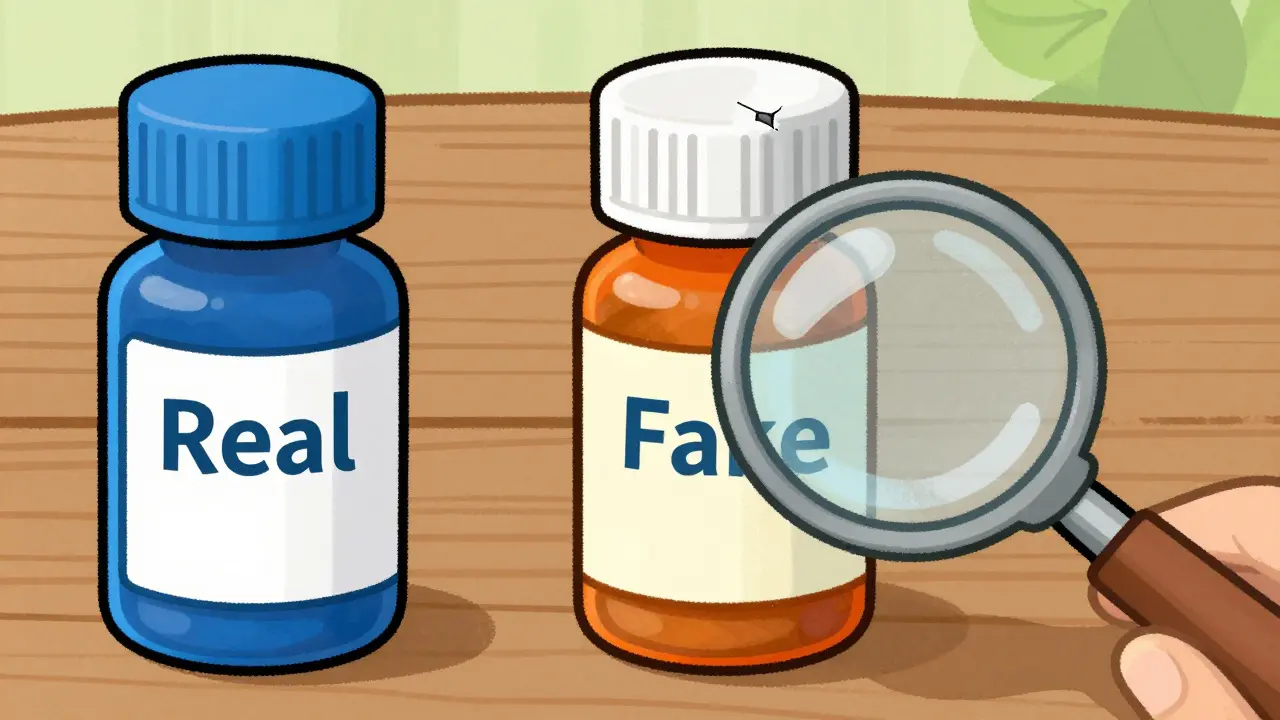
For most consumers, visual inspection is the first line of defense-but it is woefully inadequate. Modern counterfeiting operations use 3D printing technology to replicate packaging with 99% accuracy. Labels, holograms, and batch numbers are copied so precisely that even experienced pharmacists can be fooled.
However, some red flags still exist:
- Packaging Errors: Look for misspellings, blurry fonts, or poor-quality printing. Legitimate manufacturers invest heavily in brand consistency.
- Pill Appearance: Check for cracks, discoloration, or unusual odors. If a tablet dissolves instantly in water when it shouldn't, it is likely fake.
- Price Discrepancies: If the price seems too good to be true-often 300-500% cheaper than legitimate alternatives-it probably is.
- Lack of Verification Codes: Many major brands now include scratch-off codes or QR codes for authentication. If yours doesn't, ask why.
Despite these tips, visual checks have only a 30% effectiveness rate according to WHO data. You cannot rely on your eyes alone.
Detection Technologies: From Spectroscopy to Blockchain
To truly combat this crisis, we need better tools. Traditional laboratory methods like spectroscopy offer 95% accuracy but require expensive equipment that 85% of rural health facilities in low-income countries simply do not have. Chemical testing kits are cheaper ($5-$10 per test) but only achieve 70% accuracy and still require trained personnel.
This is where digital innovation offers hope. Companies like Pfizer have prevented over 302 million counterfeit doses from reaching patients since 2004 using proprietary verification systems. More recently, blockchain technology has emerged as a game-changer. The WHO launched its Global Digital Health Verification Platform in March 2025, implemented in 27 countries. This system tracks medicines from manufacturer to patient with 99.9% accuracy, creating an immutable record that cannot be forged.
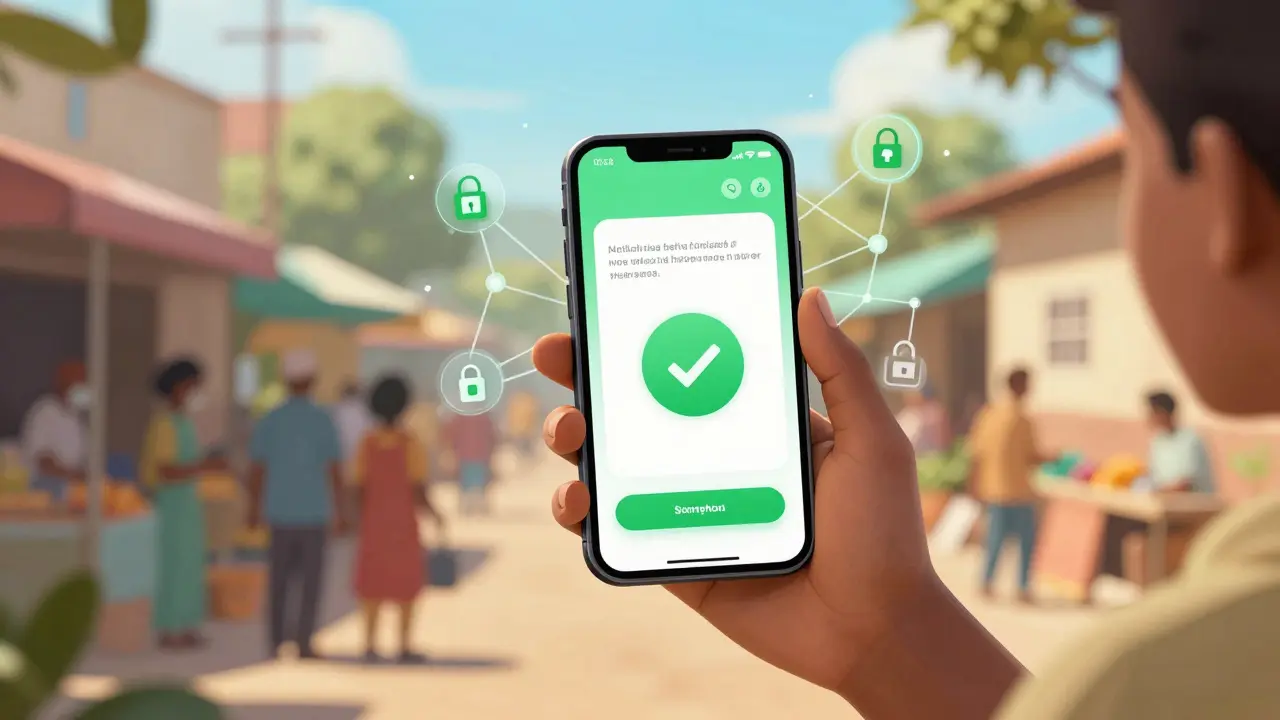
For everyday users, SMS-based verification services like mPedigree have proven effective. Users text a unique code from the medicine pack to a central database. If the code is valid and hasn't been used before, the drug is authentic. In Ghana, this simple system received a 4.2/5 star rating from 15,000 users, with many reporting it saved lives by identifying fake antimalarials.
The Role of Regulation and International Cooperation
Technology alone cannot solve this problem. Strong legal frameworks are essential. The Medicrime Convention, ratified by 76 countries as of 2025, provides a critical international framework for combating counterfeit medicines. It mandates strong intellectual property enforcement and border controls. However, only 45 countries have fully integrated it into national law, leaving significant gaps.
Law enforcement is stepping up. Interpol’s Operation Pangea XVI in 2025 involved 90 countries, resulting in 769 arrests, the dismantling of 123 criminal groups, and the seizure of 50.4 million doses of unapproved medicines. Yet, the Pharmaceutical Security Institute recorded 6,424 incidents of pharmaceutical counterfeiting in 2024 alone, impacting 136 countries. The fight is ongoing, and criminals are adapting faster than regulators.
Dr. Tedros Adhanom Ghebreyesus, Director-General of the WHO, stated clearly in 2023: "Substandard and falsified medical products are a symptom of weak health systems and a cause of their further weakening." Breaking this cycle requires investment in regulatory capacity, healthcare infrastructure, and public education.
What Can You Do?
If you live in or travel to a developing nation, you are not powerless. Here are practical steps to protect yourself and your family:
- Buy from Licensed Pharmacies: Avoid street vendors, informal markets, and unverified online sellers. Even if prices are lower, the risk is not worth it.
- Use Verification Apps: Download apps like mPedigree or check if local authorities have official verification portals. Learn how to use them before you need them.
- Report Suspicious Products: If you suspect a drug is fake, report it to your national medicine regulatory authority. Your data helps track trends and shut down criminal networks.
- Educate Others: Share knowledge with friends and family. Many victims don’t know what to look for because misinformation spreads faster than facts.
- Support Advocacy Groups: Organizations like TrueMed and the Pharmaceutical Security Institute work tirelessly to expose and stop counterfeiters. Their work needs public support.
The future looks cautiously optimistic. The EU’s 2026 Anti-Counterfeiting Pharmaceutical Initiative will allocate €250 million to strengthen supply chains in 30 developing nations. The WHO aims to reduce counterfeit prevalence to below 5% in all member states by 2027. But achieving this goal requires vigilance from every stakeholder-from policymakers to patients.
Counterfeit drugs are more than a commercial crime; they are a violation of human rights. Every person deserves access to safe, effective medicine. Until we close the loopholes in our global supply chains and empower communities with better detection tools, the battle against fakes will continue. Stay informed, stay skeptical, and never compromise on your health.
How common are counterfeit drugs in developing countries?
Approximately 10% of medical products in low- and middle-income countries are substandard or falsified, according to the WHO. In some regions like Africa, the prevalence rises to nearly 19%.
Can I tell if a drug is fake by looking at it?
Visual inspection has only a 30% success rate. Modern counterfeits mimic packaging with 90-99% accuracy. Always use digital verification codes or trusted pharmacy sources instead of relying solely on appearance.
Which types of medicines are most often counterfeited?
Anti-infectives (35%), cardiovascular drugs (20%), and central nervous system medications (15%) are the most frequently targeted. Cancer treatments and biologics are also high-value targets due to their cost and patient vulnerability.
What happens if I take a counterfeit antibiotic?
You may experience treatment failure, allowing the infection to worsen. Additionally, insufficient active ingredients contribute to antimicrobial resistance, making future infections harder to treat globally.
Is it safe to buy medicines online in developing nations?
Only from verified, licensed online pharmacies. Unregulated websites pose significant risks. In Southeast Asia, 68% of negative reviews for online pharmacies cited suspected counterfeit medications.
How does blockchain help stop counterfeit drugs?
Blockchain creates an immutable, transparent record of a medicine's journey from manufacturer to patient. The WHO's 2025 platform uses this tech to achieve 99.9% tracking accuracy, making it nearly impossible to insert fakes into the supply chain.
What should I do if I suspect my medicine is fake?
Stop taking the medication immediately. Report it to your national medicine regulatory authority or health ministry. Keep the packaging and any remaining pills as evidence. Seek alternative treatment from a trusted provider.