
Diabetes and Heart Disease: How Medications and Lifestyle Together Cut Risk
 Nov, 15 2025
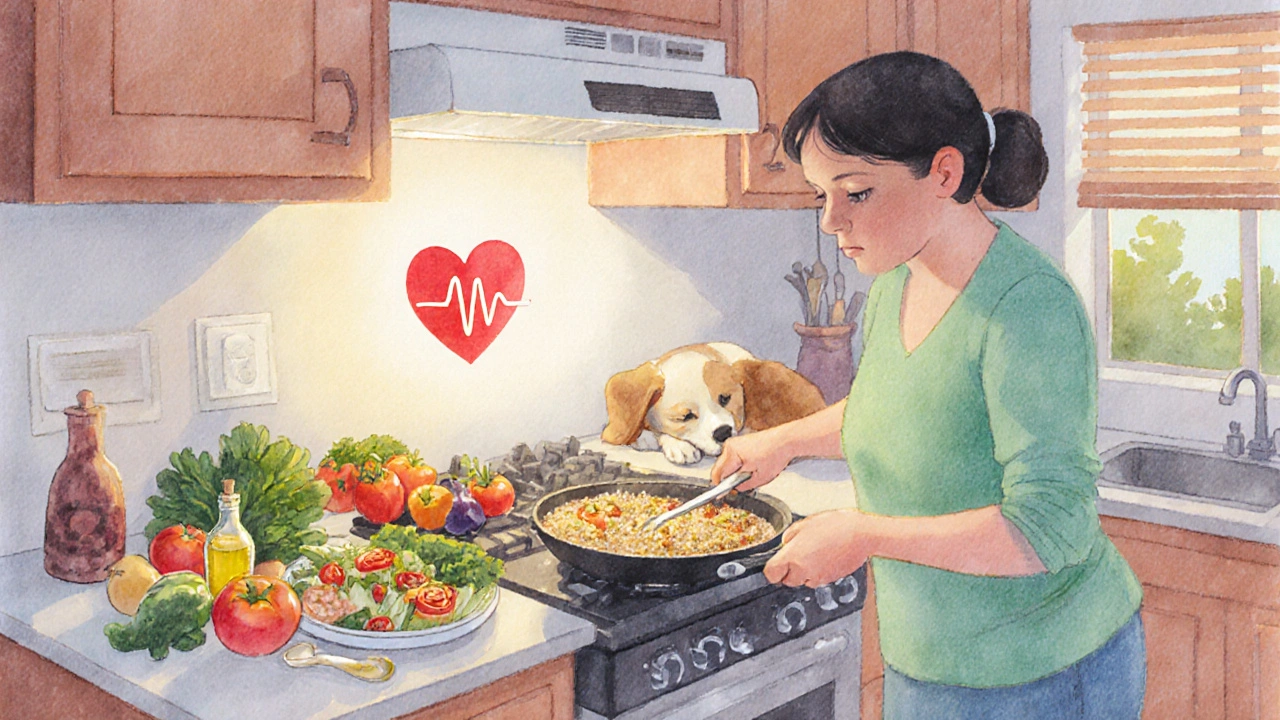
For people with type 2 diabetes, the biggest threat isn’t high blood sugar alone-it’s what that high blood sugar does to the heart. About 65% of deaths in people with diabetes are caused by heart disease. That’s not a coincidence. Diabetes doesn’t just affect your pancreas; it quietly damages your blood vessels, raises your blood pressure, and makes your cholesterol behave badly. The good news? You don’t have to accept this fate. The best way to protect your heart isn’t just one thing-it’s two things working together: the right medications and real lifestyle changes.
Why Diabetes and Heart Disease Are So Linked
High blood sugar doesn’t just make you tired or thirsty. Over time, it sticks to proteins in your blood, causing inflammation and scarring in your arteries. That’s how plaque builds up. At the same time, many people with diabetes also have high blood pressure, excess belly fat, and abnormal cholesterol levels-all of which push your heart toward failure or a heart attack.
The American Heart Association and the American College of Cardiology have been clear since 2017: diabetes is one of the strongest risk factors for heart disease. It’s not just a risk factor-it’s a signal that your whole metabolic system is out of balance. That’s why treating just your blood sugar isn’t enough. You need to treat your heart, too.
Medications That Do More Than Lower Blood Sugar
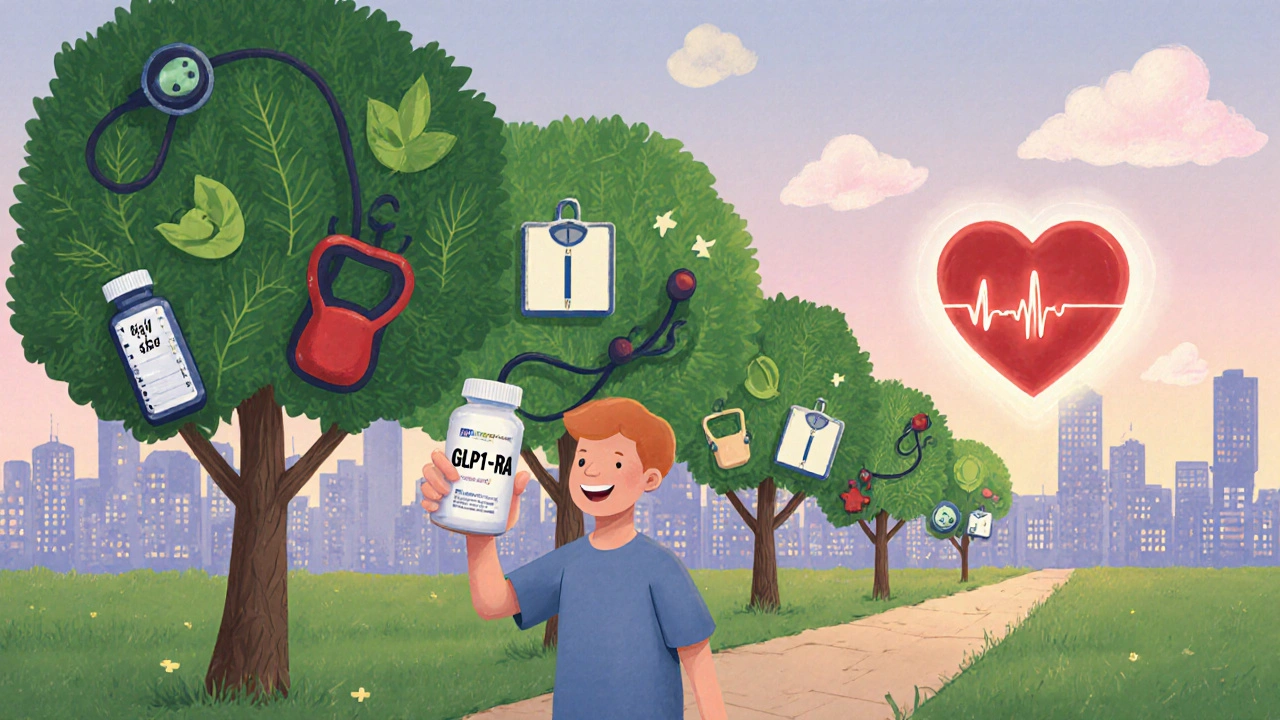
For years, metformin was the go-to drug for diabetes-and it’s still helpful. But newer medications have changed the game. GLP-1 receptor agonists (GLP-1 RAs) like semaglutide (Wegovy, Ozempic) and tirzepatide (Mounjaro, Zepbound) don’t just lower blood sugar. They help you lose weight, lower blood pressure, and reduce inflammation-all of which protect your heart.
Here’s what the data shows:
- At the 2.4 mg weekly dose, semaglutide leads to an average weight loss of 14.9% in people with obesity or overweight (STEP 1 trial, NEJM 2021).
- Tirzepatide at 15 mg weekly can lead to up to 22.5% weight loss (SURMOUNT-1 trial).
- In the LEADER trial, liraglutide (another GLP-1 RA) cut major heart events like heart attacks and strokes by 13% compared to placebo.
- The FDA approved Wegovy in 2023 specifically to reduce heart attacks, strokes, and heart-related death in people with existing heart disease and overweight or obesity.
This isn’t just about weight. These drugs work on multiple pathways: they slow stomach emptying, reduce appetite, and improve how your body uses insulin. They also lower inflammation markers like CRP and improve artery function. That’s why they’re now seen as heart-protective drugs, not just diabetes drugs.
Lifestyle Changes That Actually Move the Needle
Medications are powerful-but they’re not magic. Lifestyle changes still matter, and they matter a lot. The American Diabetes Association and the CDC have clear, specific guidelines that work:
- Diet: Focus on plant-based, whole foods. The Mediterranean or DASH diet is proven to lower blood pressure, improve cholesterol, and reduce inflammation. You don’t need to be perfect-just cut out sugary drinks, refined carbs, and processed snacks.
- Exercise: At least 30 minutes of moderate activity (like brisk walking) most days of the week. You can break it into 10-minute chunks. The goal isn’t to run a marathon-it’s to keep moving. Studies show exercise reduces heart disease mortality by 27% in people recovering from heart events.
- Weight loss: Losing just 7% of your body weight cuts heart disease risk factors like blood pressure and triglycerides. The Look AHEAD Trial proved this, even if it didn’t reduce heart attacks outright. That’s because weight loss improves insulin sensitivity and reduces fat around the heart.
- Blood pressure: Target is <130/80 mm Hg. Many people with diabetes don’t even know their numbers. Get checked regularly.
- Other habits: Don’t smoke. Limit alcohol. Get enough sleep. Manage stress. Each of these adds up. One study found that people who followed eight heart-healthy habits while taking GLP-1 RAs lowered their risk of a major heart event by 63% compared to those who didn’t make lifestyle changes.
It’s not about doing everything perfectly. It’s about doing more than you were doing before. Even one or two changes-like walking daily or swapping soda for water-start to make a difference.
Why Combining Both Is the Only Real Strategy
Here’s the truth: medications alone aren’t enough. Lifestyle alone isn’t enough either.
GLP-1 RAs help you lose 10-22% of your body weight. Lifestyle changes alone? Usually 3-5%. That difference matters because every extra pound lost reduces strain on your heart and blood vessels. But lifestyle changes do something medications can’t: they improve your mood, reduce anxiety, build social connection, and give you a sense of control. That’s why people who combine both do better long-term.
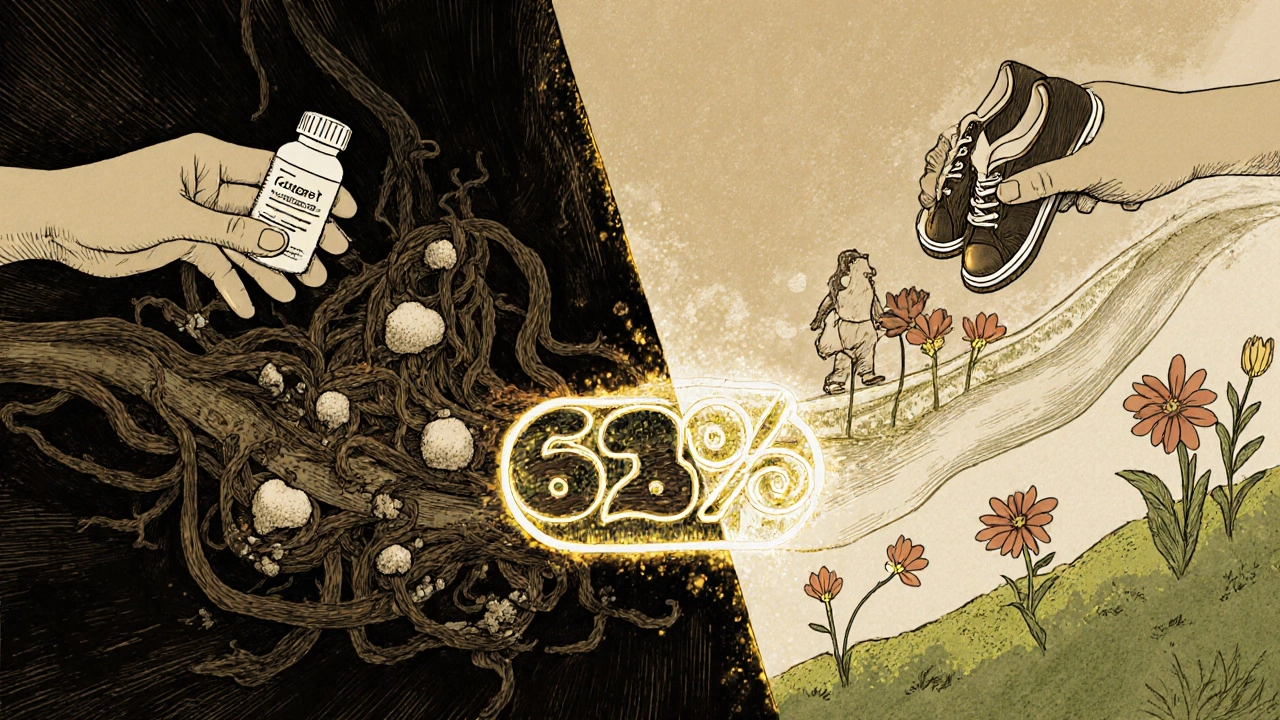
A study by the Department of Veterans Affairs showed that veterans with type 2 diabetes who took a GLP-1 RA and followed healthy habits had a 63% lower risk of heart attack or stroke. Those who only took the medication? A 20% reduction. The gap is huge.
The American College of Cardiology’s 2025 guidance says it plainly: you don’t have to “try and fail” at diet and exercise before getting medication. If you’re eligible, start the medication-and keep working on your lifestyle. The two aren’t rivals. They’re teammates.
What About the Cost and Access?
Let’s be real: these drugs are expensive. Semaglutide prescriptions rose 317% between 2021 and 2023, but nearly 40% of people who need them can’t get insurance coverage. That’s a barrier. But there are ways forward:
- Ask your doctor about patient assistance programs from drugmakers like Novo Nordisk and Eli Lilly.
- Some pharmacies offer discount cards or generic alternatives for older GLP-1 RAs.
- Even if you can’t afford the medication right now, focus on the lifestyle changes. They’re free, or low-cost, and they still reduce your risk.
And remember: the cost of ignoring this? Higher. Heart attacks, stents, bypass surgery, hospital stays-those costs dwarf the price of a monthly prescription.
The Bottom Line: It’s Not Either/Or. It’s Both.
Diabetes doesn’t have to mean heart disease. But you can’t rely on pills alone. And you can’t rely on willpower alone. The science is clear: the best protection comes from combining modern medications with real, sustainable lifestyle changes.
Start with one step: get your blood pressure checked. Then talk to your doctor about whether a GLP-1 RA is right for you. Meanwhile, take a 10-minute walk after dinner. Swap one sugary snack for a piece of fruit. Drink water instead of soda.
These aren’t just habits. They’re your heart’s best defense. And when you pair them with the right medication, you’re not just managing diabetes-you’re protecting your future.
Vera Wayne
November 17, 2025 AT 14:35This post gave me chills, honestly. I’ve been living with type 2 for 8 years, and no one ever explained it like this before. It’s not just about the sugar-it’s the silent war inside your arteries. I started semaglutide last year, and yes, I lost 18% of my body weight-but what surprised me was how much calmer I felt. Less brain fog. Less anxiety. It’s not magic, but it’s medicine that listens. Thank you for writing this.
Rodney Keats
November 17, 2025 AT 19:53Oh great, another ‘glorified weight loss drug’ is now a ‘heart protector.’ Next they’ll say coffee cures cancer. I’ve seen this movie before-remember when statins were ‘miracle drugs’? Now everyone’s on Ozempic like it’s a TikTok trend. Meanwhile, my grandma still walks 3 miles a day and eats beans. She’s 82. Still alive. No prescription needed.
Laura-Jade Vaughan
November 19, 2025 AT 09:41OMG, I’m literally crying 😭 this is the most beautiful, scientifically elegant thing I’ve read all week. 🌿✨ The way you framed GLP-1 RAs as *heart teammates*? Chef’s kiss. 🫶 I’ve been on tirzepatide for 6 months and I finally feel like my body isn’t betraying me. Also-swap soda for water? I did that. And now I cry when I see a vending machine. Not because I’m sad. Because I’m free. 🥹🥤
Jennifer Stephenson
November 19, 2025 AT 23:33Medication and lifestyle work together. That’s all.
Segun Kareem
November 21, 2025 AT 06:16Listen, in Nigeria, we don’t have Ozempic. We have cassava, bitter leaf, and walking 5km to the market every day. But I read this and I still feel it. The truth isn’t in the drug-it’s in the choice. To move. To eat clean. To care. I tell my brothers: your body is a temple, not a vending machine. No pill replaces sweat. No injection replaces discipline. Start small. Walk. Breathe. Live.
Philip Rindom
November 22, 2025 AT 01:19Love this. I’ve been on metformin for a decade, and honestly? I thought I was doing fine. Then I started walking after dinner and swapped my afternoon cookie for almonds. Lost 12 lbs. BP dropped 15 points. My doc said, ‘You’re not just managing diabetes-you’re upgrading your whole system.’ Honestly? I feel like a new person. And yeah, I’m still not ready to give up my cheese. But I’m trying. 😅
Jess Redfearn
November 23, 2025 AT 18:26Wait, so if I just lose 7% of my weight, I don’t need meds? I’m 300 lbs. I can’t walk. I hate vegetables. Can I just take the pill and still eat pizza? 🤔
Ashley B
November 24, 2025 AT 02:11This is Big Pharma’s latest scam. They know you’re scared. So they slap ‘heart-protective’ on a $1,000/month drug and make you feel guilty for not buying it. The real cause? Glyphosate in your food, EMFs, and the government hiding the truth. Your blood sugar isn’t the enemy-it’s the poison in the water. And they want you to pay for a fix they created. Wake up. 🚨
Scott Walker
November 24, 2025 AT 18:13Just wanted to say-thank you for writing this. I’m from Canada, and yeah, the cost is insane here too. But I’ve been on semaglutide for 8 months, and I finally feel like I’m not just surviving. I’m living. I started walking with my dog every night. We’re both healthier. The meds helped me get started. The walking kept me going. It’s not either/or. It’s both. And it’s worth it. 🐕❤️