
Exercise and Statins: What You Need to Know About Muscle Pain and Recovery
 Jan, 24 2026
Statin Exercise Safety Calculator
Exercise Safety Assessment
Based on your statin type, dose, and exercise intensity, this tool estimates your risk of muscle issues during activity.
Your Exercise Safety Assessment
Statins and Muscle Pain: A Common Concern
Millions of people take statins to lower their cholesterol and protect their heart. But for many, a troubling side effect shows up: muscle pain. It’s not just a minor annoyance-it can make people stop exercising, which is exactly the opposite of what they should do. The question isn’t whether statins cause muscle pain, but how they interact with movement, and whether you can still work out safely.
Studies show that 5 to 10% of statin users report muscle symptoms in clinical trials. But in real life, the number jumps to nearly 30%. That’s a big gap. Why? Because many people assume any soreness after a workout is from the statin, when it might just be normal muscle fatigue. And others stop moving altogether out of fear-even though staying active is one of the best things they can do for their heart.
How Statins Affect Muscle Function
Statins work by blocking an enzyme called HMG-CoA reductase, which your liver uses to make cholesterol. But that same enzyme is also involved in making coenzyme Q10 (CoQ10), a compound your muscles need to produce energy. When statins lower CoQ10 by up to 40% within weeks, your muscles have less fuel during physical activity.
This doesn’t mean everyone will feel it. But if you’re pushing hard-doing heavy lifting, HIIT, or long-distance running-you’re more likely to notice the difference. Lipophilic statins like atorvastatin and simvastatin cross into muscle tissue more easily than hydrophilic ones like pravastatin and rosuvastatin. That’s why switching from a high-dose atorvastatin to rosuvastatin often reduces muscle pain. One study found that atorvastatin 80 mg increased creatine kinase (CK) levels by 11.3% after six months, even in people who didn’t feel any pain.
Exercise Isn’t the Enemy-Intensity Is
Not all exercise is created equal when you’re on statins. The key is intensity.
A major 2023 study from Radboud University Medical Center followed 105 people: 35 on statins with muscle pain, 35 on statins without pain, and 35 not taking statins. Everyone did 30 minutes of moderate cycling. The results? No significant rise in CK levels in any group. That means moderate exercise doesn’t cause extra muscle damage in statin users.
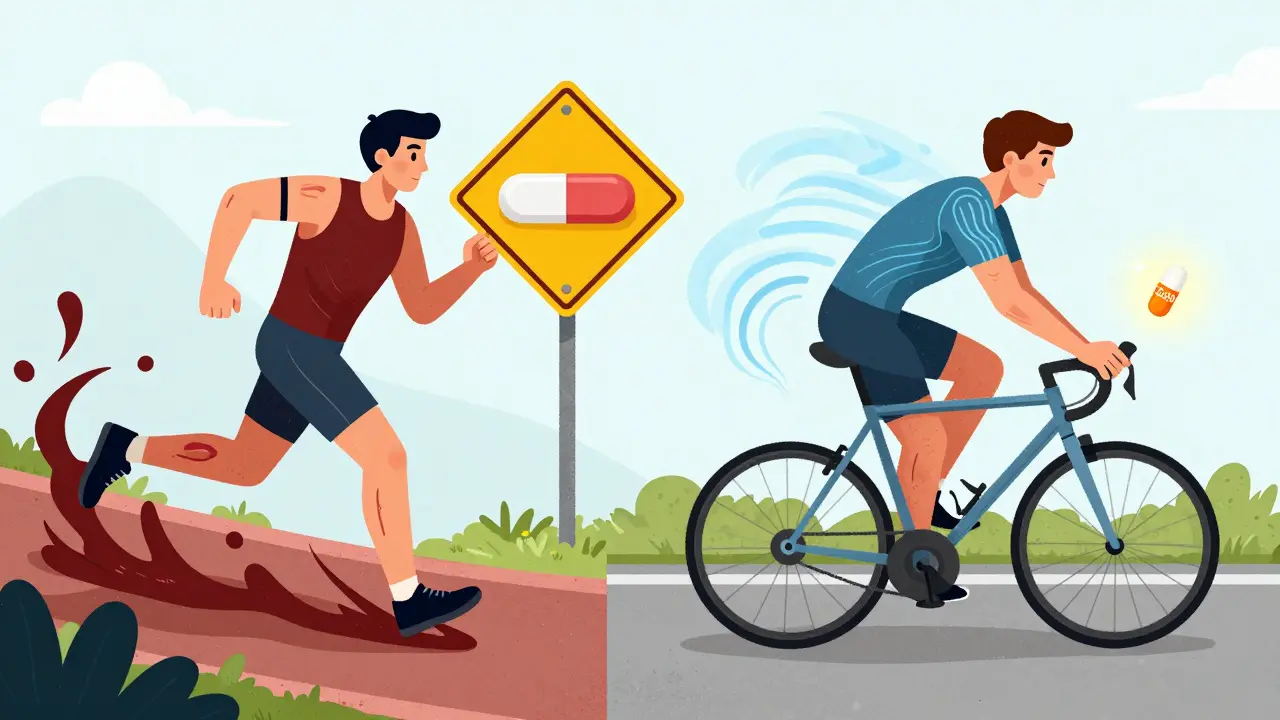
But when researchers looked at high-intensity workouts-like marathon running or heavy eccentric training (think downhill running or lowering weights slowly)-the picture changed. In one study of Boston Marathon runners, statin users had nearly 50% higher CK levels than non-users. Another study found that eccentric exercise spiked CK by 300% in statin users, compared to 200% in those not taking statins.
The takeaway? Walking, swimming, cycling at a steady pace, and light strength training are safe. High-intensity interval training (HIIT), CrossFit, and heavy lifting? Proceed with caution-or avoid them until you know how your body responds.
Who’s Most at Risk?
Not everyone on statins will have muscle issues. But some people are more vulnerable.
- Older adults: Muscle repair slows with age, and statins make it harder.
- People on high doses: Atorvastatin 80 mg carries a 10.5-fold higher risk of muscle injury than pravastatin 40 mg.
- Those with the SLCO1B1 gene variant: This genetic difference, discovered in 2023, increases muscle pain risk during exercise by more than double.
- People who didn’t exercise before starting statins: Harvard Health found that those who were active before starting statins were 37% less likely to develop muscle pain.
One case from Cycling Weekly tells the story: Maria Rodriguez, a competitive cyclist, developed rhabdomyolysis-a dangerous breakdown of muscle tissue-after combining high-dose simvastatin with intense training. Her CK levels hit 12,450 U/L (normal is 30-200). She ended up in the hospital. Her story isn’t rare. It’s a warning.
What to Do If You Have Muscle Pain
If you started statins and began feeling sore, don’t panic. But don’t ignore it either.
First, ask yourself: Is this new pain tied to a specific workout, or is it constant? Statin-related pain usually appears within 30 days of starting the drug and doesn’t go away with rest. Exercise-induced pain comes after activity and fades within a day or two.
Here’s what experts recommend:
- Don’t quit exercise. Instead, scale back. Start with 10-15 minutes of brisk walking daily. Increase by 5 minutes each week.
- Switch statins. If you’re on simvastatin or atorvastatin, ask your doctor about switching to rosuvastatin or pravastatin. Studies show a 65% success rate in reducing symptoms.
- Try CoQ10. A 2023 meta-analysis found that 200 mg of CoQ10 daily helped reduce muscle pain in 60% of users.
- Monitor your CK levels. If your levels rise above 1,000 U/L (5 times the upper limit of normal), stop intense activity and check in with your doctor.
- Consider every-other-day dosing. For some, taking statins every other day cuts muscle side effects by 58% without losing cholesterol control.
John Davis, a marathon runner profiled in Runner’s World, kept running 40 miles a week after switching from atorvastatin to rosuvastatin. His pain disappeared. He didn’t stop running-he adjusted his meds.
What the Experts Say
Dr. Michelina Catacola, lead author of the 2023 JACC study, says clearly: “Statin therapy does not augment exercise-induced muscle injury. Moderate-intensity exercise is safe for statin users with or without muscle symptoms.”
But Dr. Steven Nissen from the Cleveland Clinic warns: “The attenuation of exercise benefits by statins is an underappreciated concern.” In other words, even if you don’t feel pain, your muscles might not be getting the full benefit from your workouts. A 2013 study showed that simvastatin reduced improvements in VO2 max (a measure of fitness) by nearly 7% after 12 weeks of training.
The American College of Sports Medicine’s 2023 position stand says: “Continue moderate exercise while working with your physician to adjust statin therapy. Avoid high-intensity eccentric exercise until symptoms resolve.”
And the European Atherosclerosis Society puts it bluntly: “Exercise remains a non-negotiable component of cardiovascular risk reduction, even for statin users with muscle symptoms.”
Practical Tips for Staying Active on Statins
- Start slow: Walk 20 minutes a day, five days a week. That’s 100 minutes total. It’s enough to help your heart.
- Choose low-impact: Swimming, cycling, elliptical machines, and rowing are easier on muscles than running or jumping.
- Avoid eccentric overload: Skip downhill running, heavy squats with slow lowers, or plyometrics until you’re sure your body tolerates it.
- Listen to your body: If your muscles feel unusually stiff or sore two days after a workout, take a break.
- Track your progress: Keep a simple log: date, activity, duration, muscle soreness (1-10 scale). Patterns will emerge.
- Ask about genetic testing: If you’ve had persistent muscle pain, ask if SLCO1B1 testing is available. It’s not routine yet-but it’s coming.
The Bigger Picture
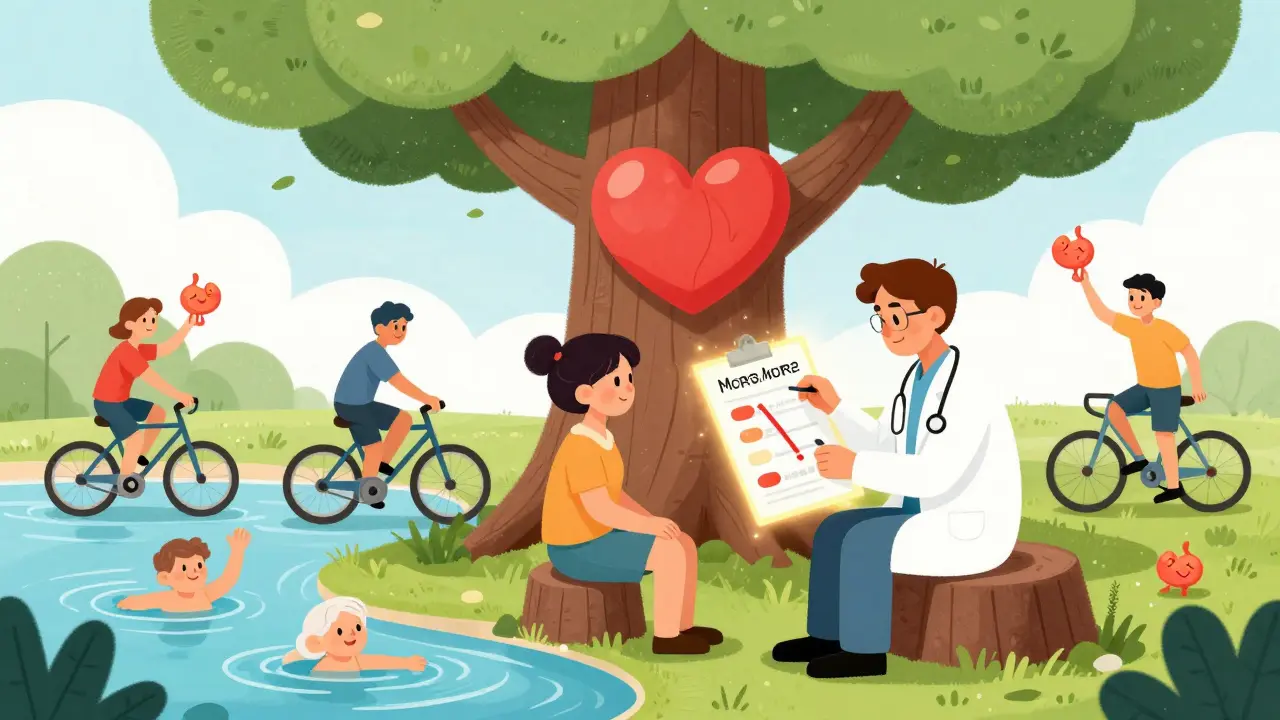
Statins save lives. They reduce heart attacks and strokes by up to 30% in high-risk people. But if muscle pain stops you from moving, you’re trading one risk for another. Inactivity raises your risk of diabetes, obesity, and even early death.
The solution isn’t to stop statins or stop exercising. It’s to find the right balance. For most people, that means moderate activity, smarter statin choices, and patience while your body adjusts.
By 2026, an estimated 45 million Americans will be on statins. That’s more than ever before. And with that number comes a growing need for clear, practical guidance. The good news? You don’t have to choose between your heart and your muscles. You just need to move smartly.
When to See Your Doctor
Call your doctor if you notice:
- Severe muscle pain or weakness that doesn’t go away
- Dark urine (a sign of muscle breakdown)
- Unexplained fatigue along with soreness
- CK levels above 1,000 U/L after exercise
Don’t wait. Early intervention prevents serious complications like rhabdomyolysis.
Can I still lift weights if I’m on statins?
Yes-but avoid heavy lifting with slow, controlled lowers (eccentric movements). Stick to moderate weights and faster reps. Focus on form over load. If you feel deep, persistent soreness after a session, scale back. Light resistance training is safe and helps preserve muscle mass as you age.
Does CoQ10 really help with statin muscle pain?
Evidence suggests it helps for some people. A 2023 meta-analysis found that 200 mg of CoQ10 daily reduced muscle pain in 60% of statin users. It’s not a magic fix, but it’s low-risk and may support muscle energy production. Talk to your doctor before starting.
Should I stop exercising if I have muscle pain?
No. Stopping movement can make things worse. Instead, reduce intensity. Swap running for walking, HIIT for steady cycling. Keep moving at a level that doesn’t worsen pain. Most people find that with gradual adjustment, they can stay active without triggering symptoms.
Are some statins safer for athletes?
Yes. Hydrophilic statins like rosuvastatin and pravastatin are less likely to enter muscle tissue than lipophilic ones like atorvastatin and simvastatin. Athletes who need to maintain performance often switch to rosuvastatin 10-20 mg and report fewer muscle issues. Dose matters too-lower doses reduce risk.
How long does it take to adjust to statins and exercise?
Most people find their rhythm in 3 to 6 months. The first month is often the toughest. Muscle symptoms usually peak around 4-6 weeks after starting a statin. With gradual exercise increases and possible statin adjustments, 78% of people can return to regular activity without major issues.
Can statins reduce the benefits of exercise?
Yes, in some cases. Studies show statins can blunt improvements in aerobic fitness (VO2 max) by 5-7% in people doing endurance training. This doesn’t mean exercise isn’t helping your heart-it still does. But your muscles might not get as strong or efficient as they would without statins. That’s why choosing the right statin and avoiding high doses matters.
Final Thoughts
You don’t have to choose between your heart and your muscles. Statins protect your arteries. Movement strengthens your body. The goal isn’t to avoid one for the other-it’s to manage both wisely. Start slow. Choose the right statin. Listen to your body. And keep moving.
Peter Sharplin
January 24, 2026 AT 20:32Also, CoQ10? I started 100mg daily and noticed less morning stiffness. Not a miracle, but worth a shot if you’re sore.
John Wippler
January 24, 2026 AT 23:33rasna saha
January 26, 2026 AT 09:48Skye Kooyman
January 26, 2026 AT 10:01shivam utkresth
January 26, 2026 AT 20:44Kipper Pickens
January 28, 2026 AT 06:20Aurelie L.
January 29, 2026 AT 07:26Joanna Domżalska
January 30, 2026 AT 11:21James Nicoll
January 31, 2026 AT 19:59Uche Okoro
February 1, 2026 AT 18:09Ashley Porter
February 2, 2026 AT 13:02Faisal Mohamed
February 4, 2026 AT 11:25Alexandra Enns
February 5, 2026 AT 20:10Marie-Pier D.
February 7, 2026 AT 17:25