
FDA Drug Shortage Database: How to Check Medication Availability
 Dec, 27 2025
What is the FDA Drug Shortage Database?
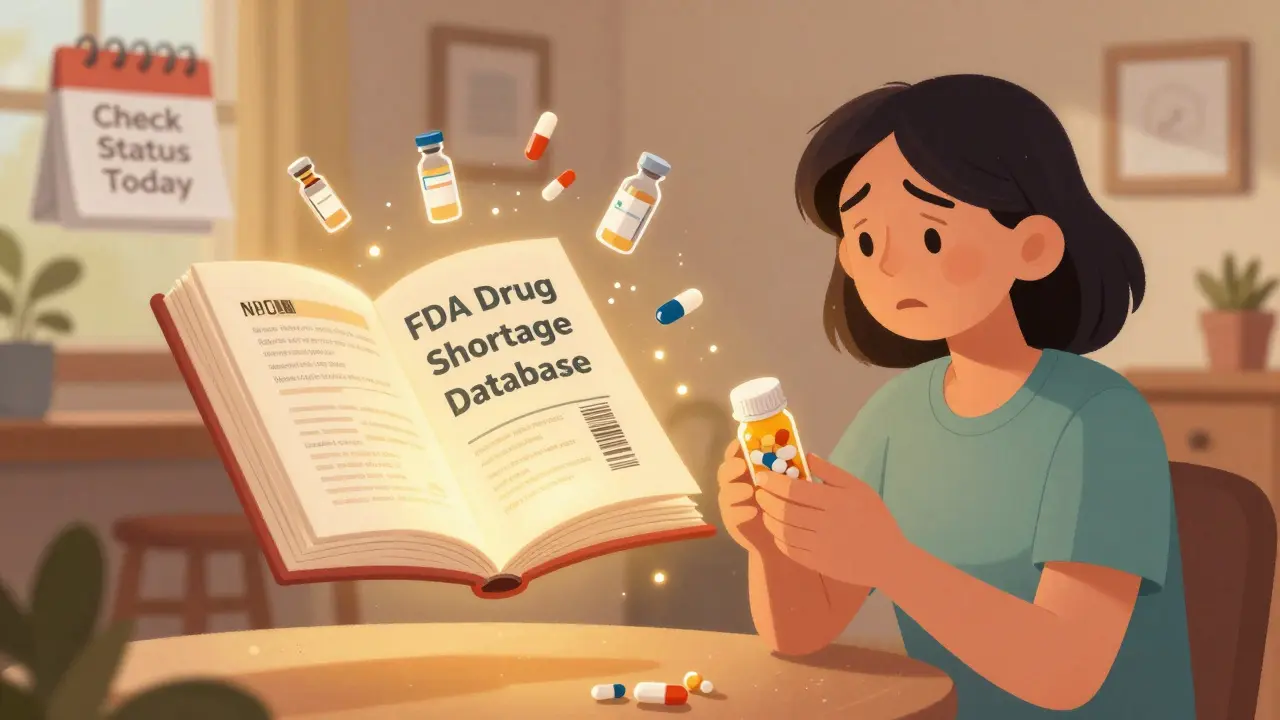
The FDA Drug Shortage Database is the U.S. government’s official tool for tracking which medications are running low or unavailable across the country. It’s not a suggestion or a rumor tracker-it’s a legal reporting system. Since 2012, drug manufacturers are required by law to notify the FDA when they expect a shortage of a critical medicine. The FDA then verifies the claim, updates the database, and shares it publicly.
This isn’t just a list. It includes exact drug names, manufacturer details, National Drug Code (NDC) numbers, why the shortage is happening, and how long it’s expected to last. If you’re a pharmacist, nurse, doctor, or even a patient relying on a specific medication, this database tells you whether your drug is truly unavailable-or if it’s just a local stock issue.
Why This Matters for Patients and Providers
Drug shortages aren’t just inconvenient. They can delay cancer treatments, disrupt heart medication regimens, or force patients onto less effective alternatives. In 2023, over 290 drugs were on the FDA’s active shortage list. Most of them-nearly 60%-were injectable generics like insulin, heparin, or antibiotics. These are medicines hospitals and clinics depend on every day.
One real example: In April 2024, an insulin shortage tied to NDC 0002-8745-01 was flagged in the FDA database. Because the system showed exactly which batch was affected, hospitals were able to switch to other formulations before patients were impacted. Without that data, delays could have been widespread.
But here’s the catch: The database doesn’t tell you if your local pharmacy has it in stock. It tells you if the medicine is in short supply nationwide. That’s why you need to cross-check with your provider or pharmacist.
How to Access the FDA Drug Shortage Database
You don’t need special access. The database is free and open to anyone. Here’s how to use it:
- Go to www.accessdata.fda.gov/scripts/drugshortages/default.cfm
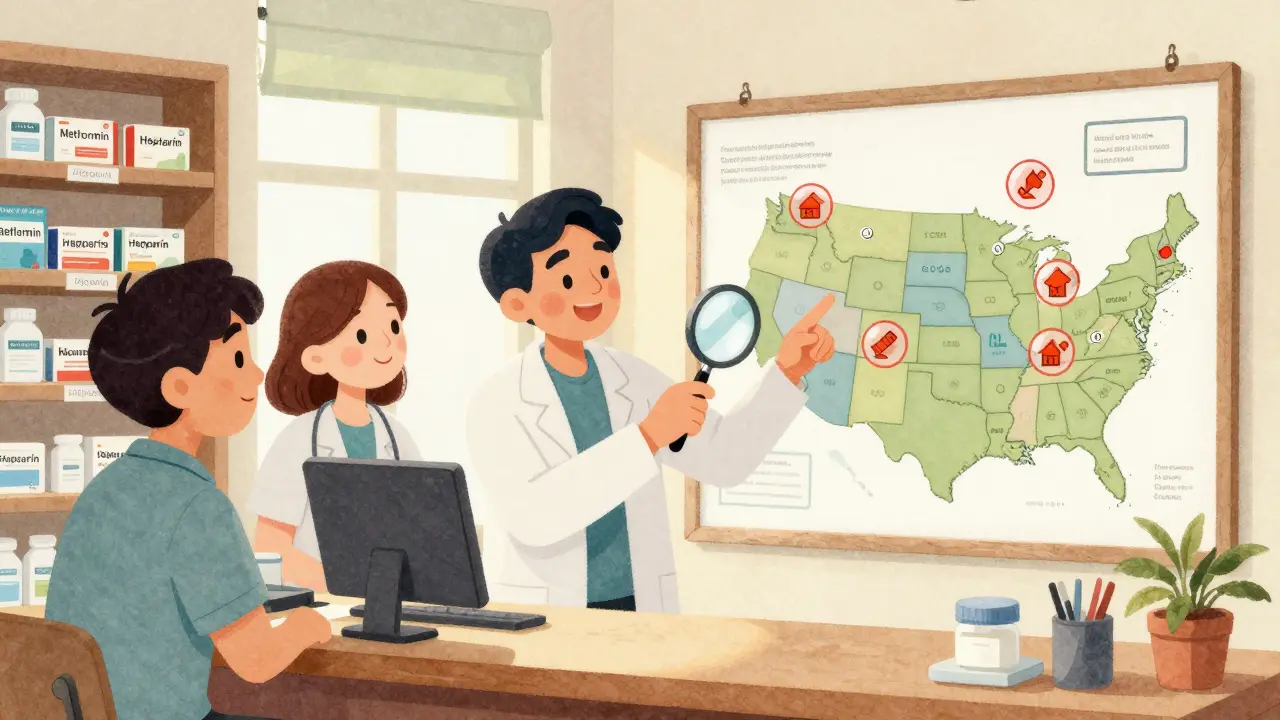
- Use the search bar to type in the generic name of the drug (e.g., “diphenhydramine”) or its active ingredient
- Or filter by therapeutic category-like “Cardiovascular” or “Infectious Disease”
You’ll see results showing the drug name, manufacturer, NDC, reason for shortage, and status: Current, Resolved, or Discontinued.
Don’t rely on brand names. Search by the generic name. For example, search “metformin,” not “Glucophage.” The database only lists generic drugs and their manufacturers.
Use the FDA Mobile App for Real-Time Alerts
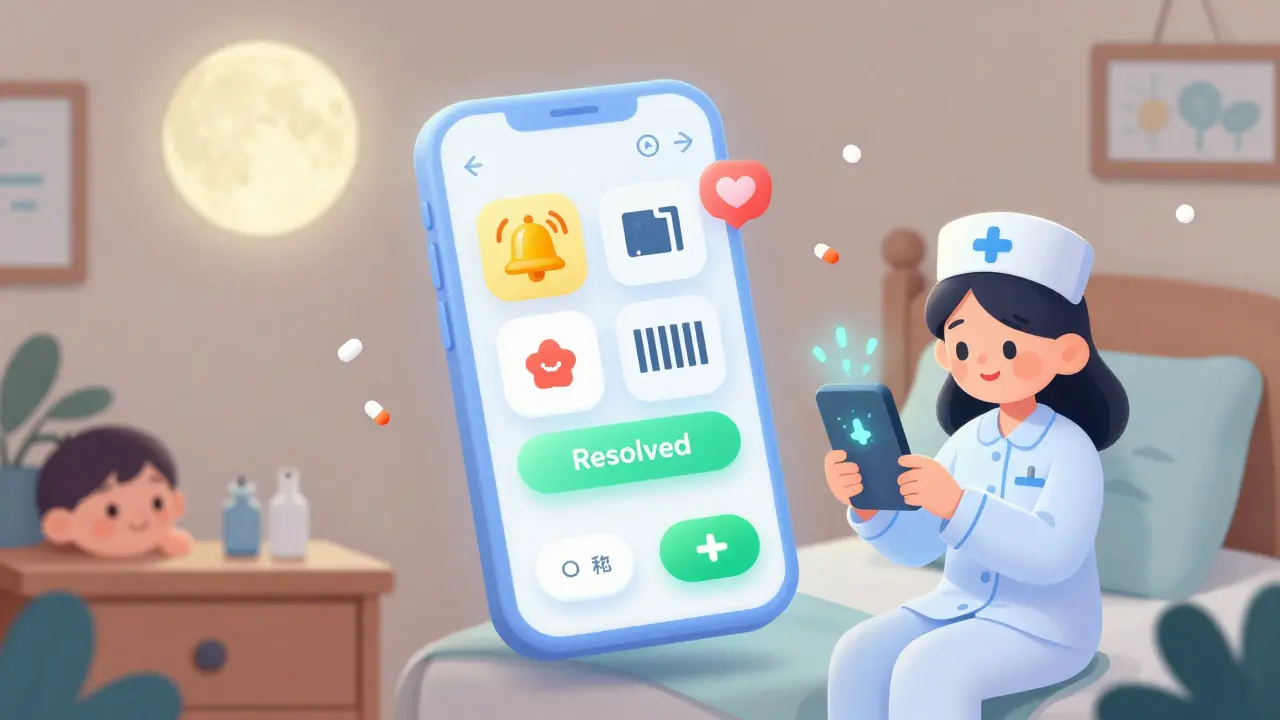
If you check drug availability often, download the official FDA Drug Shortages app. It’s free on iOS and Android. Launched in 2022, it’s been downloaded over 150,000 times.
The app lets you:
- Search by drug name or NDC number
- Set up push notifications for specific medications you rely on
- Report a suspected shortage directly from your phone
- View updated status even when offline
One user on Reddit, a hospital pharmacist, said: “I get alerts for my top 5 shortage-prone drugs. If one drops off the list, I know it’s safe to order again.”
The app doesn’t require an account for basic use, but if you want to report a shortage, you’ll need to verify your email.
What the “Reason for Shortage” Field Really Means
Every entry includes a reason. These aren’t casual explanations-they’re coded categories based on FDA’s official taxonomy. The most common reasons:
- Manufacturing issues (68% of all shortages): Contamination, equipment failure, production delays
- Quality issues: Failed lab tests, recalls, compliance violations
- Raw material shortages: Active pharmaceutical ingredients (API) not available
- Business decisions: Manufacturer stops producing a low-profit drug
Here’s what to watch for: If the reason is “manufacturing,” it often means other drugs made on the same line could be affected too. For example, if one injectable antibiotic is short because of a sterilization problem, other injectables from the same factory might be next.
Don’t assume “resolved” means the drug is back in full supply. It only means supply now meets demand-there might still be delays at your pharmacy.
FDA vs. ASHP: Which One Should You Trust?
You’ll probably come across the American Society of Health-System Pharmacists (ASHP) drug shortages page too. Both are useful, but they serve different purposes.
| Feature | FDA Database | ASHP Resource |
|---|---|---|
| Scope | Nationwide shortages only | Nationwide + regional/local issues |
| NDC Coverage | 100% of listed drugs | 82% of listed drugs |
| Update Frequency | Daily | Weekly |
| Clinical Guidance | Limited | Extensive: alternatives, dosing tips |
| Reporting Authority | Legally mandated | Voluntary |
| Best For | Verifying if a shortage is real | Figuring out what to use instead |
Most healthcare professionals use both. They check the FDA database first to confirm a shortage is official. Then they go to ASHP to find clinical alternatives.
Common Mistakes People Make
Even experienced users get tripped up. Here are the top errors:
- Searching by brand name → Only generic names work
- Assuming “resolved” = fully stocked → It just means supply meets demand
- Ignoring NDC numbers → A drug might be short in 500mg tablets but fine in 250mg
- Not checking extended use dates → Some drugs have FDA-approved expiration extensions during shortages
One 2024 FDA usability study found that 28% of providers thought a “resolved” status meant the drug was back to normal. It didn’t. They ordered it, only to find out the pharmacy still had zero stock.
What to Do If You Spot a Shortage Not Listed
If you believe a drug is in short supply but it’s not in the database, report it. The FDA encourages this.
Send an email to [email protected] with:
- Drug name (generic)
- NDC number (if you have it)
- Manufacturer name
- Why you think it’s in short supply
- Your contact info (optional)
They review all reports. If confirmed, they’ll add it within 3-5 business days.
How Accurate Is the Data?
It’s reliable-but not perfect.
The FDA database has a 7-10 day lag. Manufacturers report shortages after they happen. Dr. Erin Fox from the University of Utah found that in 63% of cases, ASHP listed a shortage before the FDA did.
Also, the “estimated duration” field is only 79% accurate for shortages reported directly by manufacturers through the CDER Direct NextGen Portal. If it’s reported by a hospital or pharmacy, accuracy drops.
Still, it’s the most authoritative source. No other government or private tool has the same legal backing.
How to Stay Updated Without Checking Daily
You don’t need to visit the site every day.
- Subscribe to the FDA’s Drug Shortages email updates-sent every Tuesday and Friday
- Use the mobile app to set alerts for specific drugs
- Bookmark the FDA Drug Shortages page in your browser
For providers: Print out the list of your top 10 most-used drugs and check them every Monday. That’s all it takes to stay ahead.
What’s Next for the FDA Drug Shortage Database?
The FDA is working on improvements:
- AI tools to predict shortages before they happen (testing started in late 2024)
- Barcode scanning in the mobile app to check NDCs on the spot
- Integration with wholesale distributor data to track supply chain bottlenecks
- More detailed filtering: by dosage form, route of administration, and manufacturer
They’re also pushing manufacturers to report shortages earlier-before patients feel the impact. Right now, only 35% of shortages are reported before supply runs low.
Final Takeaway: Know Where to Look
If you’re worried about a medication being unavailable, the FDA Drug Shortage Database is your first stop. It’s free, official, and updated daily. Use the app for alerts. Use ASHP for alternatives. Don’t guess. Don’t rely on pharmacy staff alone-they might not know about national shortages until it’s too late.
Drug shortages are a growing problem. But with the right tools, you can stay informed, plan ahead, and avoid disruptions to care.
Bradly Draper
December 28, 2025 AT 08:31I just checked my insulin prescription last week and saw it was flagged in the FDA database. I didn’t even know this existed until my pharmacist mentioned it. Seriously, this could save lives. Thanks for sharing.
Nicole Beasley
December 29, 2025 AT 17:10OMG I just downloaded the app!! 🚀 I set alerts for metformin and levothyroxine-my two daily essentials. Now I don’t have to panic every time my pharmacy says ‘out of stock’ again. 🙏
Vu L
December 31, 2025 AT 15:20Yeah right. Like the FDA actually cares about your insulin. They’re just here to make you feel safe while Big Pharma quietly hikes prices and cuts production. This database? Just a distraction from the real problem.
ANA MARIE VALENZUELA
January 1, 2026 AT 07:29People still don’t get it. The FDA database doesn’t fix anything-it just documents failure. And you think checking a website is ‘proactive’? Meanwhile, hospitals are rationing antibiotics because no one’s holding manufacturers accountable. This is performative transparency at its finest.
James Hilton
January 1, 2026 AT 12:21So let me get this straight-you’re telling me the government has a real-time map of which drugs are running out… and we still can’t get them? 🤡 I’m starting to think the FDA’s main job is just to give us a fancy spreadsheet while we all die slowly.
Celia McTighe
January 2, 2026 AT 11:43Thank you for this. I’m a nurse and I’ve seen too many patients get switched to worse meds because no one checked the database. I share this link with every new grad on my team now. 🌱 Also, the app is a game-changer-I got an alert for heparin last month and pre-ordered before the shortage hit. Small wins, right?
Mimi Bos
January 3, 2026 AT 16:17wait so u just type in the drug name? like ‘amoxicillin’? i thought u needed a code or something. i just checked and my doc prescribed me something that’s on the list… oh no. 😳
Ryan Touhill
January 4, 2026 AT 01:29While the FDA database is undoubtedly a useful tool, its utility is fundamentally constrained by the structural deficiencies of the U.S. pharmaceutical supply chain-a system predicated on profit maximization over public health imperatives. The fact that 68% of shortages stem from manufacturing issues-often attributable to cost-cutting measures and consolidation among generic manufacturers-suggests that this database is less a solution and more a symptom of systemic decay. Moreover, the 7-10 day lag in reporting, coupled with the questionable accuracy of manufacturer-provided estimates, renders the data inherently reactive rather than predictive. One must ask: if the FDA possesses the legal authority to mandate reporting, why not enforce earlier disclosure? Why not incentivize redundant production capacity? Why do we still rely on voluntary ASHP submissions to fill the clinical guidance void? This is not a data problem-it is a governance failure. The database is a Band-Aid on a hemorrhage.
Teresa Marzo Lostalé
January 5, 2026 AT 21:09It’s funny… we have a database that tracks every pill in the country, but no one’s tracking how many people are skipping doses because they can’t afford the alternatives. We’re so good at documenting scarcity, but terrible at ending it. 🌑