
FDA Serious Adverse Events: What Patients Need to Know
 Apr, 11 2026
FDA Seriousness Checker
How to use: Select the outcome associated with your event to see if it qualifies as a Serious Adverse Event (SAE) according to FDA standards.
Classification: Serious Adverse Event (SAE)
This event meets the FDA criteria for Seriousness because of the specific outcome. This is a regulatory label used to prioritize safety signals.
Classification: Adverse Event (Non-Serious)
While the symptom may be Severe (intense or painful), it does not meet the regulatory criteria for a "Serious Adverse Event" because it did not result in one of the five critical outcomes.
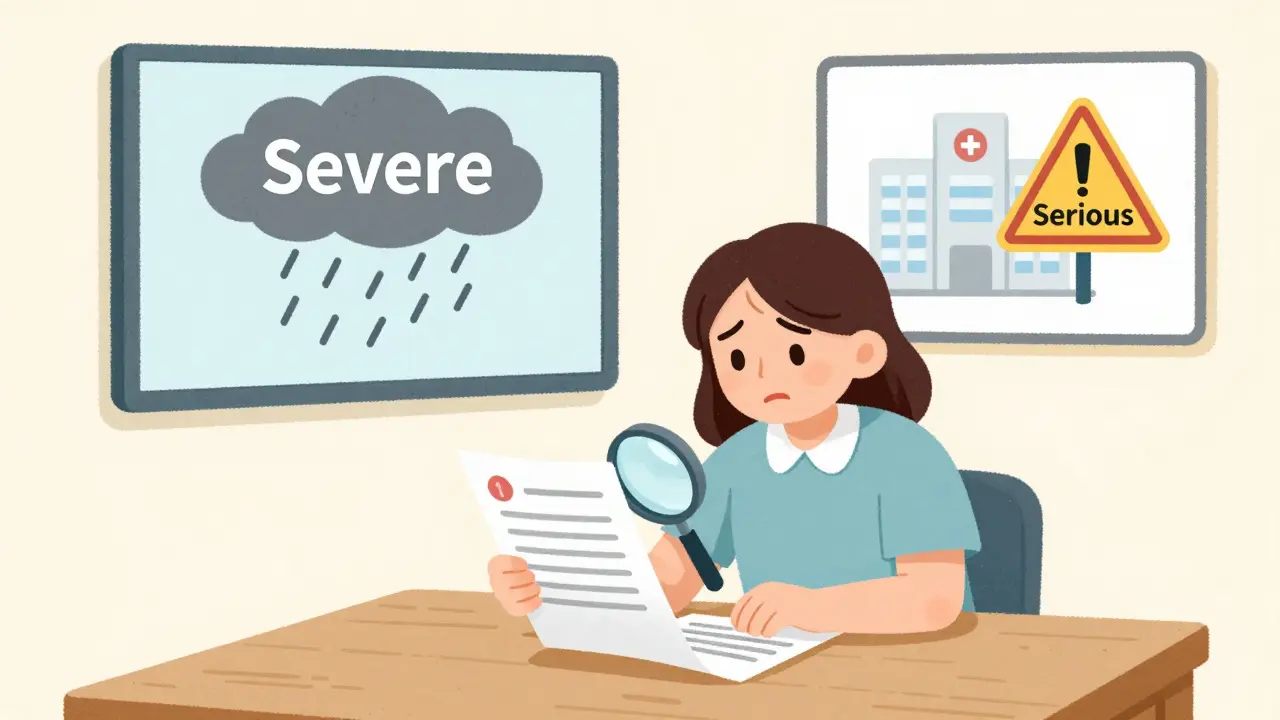
If you have ever read a clinical trial report or a medication guide, you might have come across the term Serious Adverse Event is any undesirable medical occurrence associated with a drug, biologic, or medical device that results in specific serious outcomes. Also known as SAE, it is a regulatory label used by the FDA to track patient safety. But here is the catch: in the medical world, "serious" doesn't mean the same thing as "severe."
Many people panic when they see a "Grade 3" or "Grade 4" event in their trial results, thinking it means the drug is dangerous. In reality, a side effect can be incredibly painful or intense (severe) without actually being "serious" by FDA standards. Understanding this gap can save you from unnecessary anxiety and help you know exactly when you need to call your doctor.
The Big Difference: Serious vs. Severe
This is the most common point of confusion. Think of severity as the intensity of the symptom, while seriousness is about the outcome of the event. You can have a severe migraine that makes it impossible to look at light, but if it doesn't put you in the hospital or threaten your life, the FDA doesn't classify it as a Serious Adverse Event.
To keep things organized, researchers use a scale called the Common Terminology Criteria for Adverse Events (or CTCAE), which grades severity from 1 to 5. For example, a Grade 3 event is severe and might require a hospital visit or invasive treatment. However, data from the American Society of Clinical Oncology shows that about 68% of these severe events in cancer trials aren't actually "serious" because they don't meet the FDA's specific outcome criteria.
| Feature | Severity (Grade) | Seriousness (SAE) |
|---|---|---|
| Focus | Intensity of the symptom | Impact on patient's life/health |
| Measured By | CTCAE Scale (Grade 1-5) | Specific Outcome Criteria |
| Example | Extreme nausea (Grade 3) | Hospitalization for nausea |
| Key Question | "How bad does it feel?" | "What happened as a result?" |
What Actually Makes an Event "Serious"?
For an event to be labeled an SAE, it must hit at least one of these five markers. If it doesn't, it's just an adverse event, regardless of how "severe" it feels:
- Death: Any event that results in the patient passing away.
- Life-threatening: The patient was at a substantial risk of dying at the moment the event happened.
- Hospitalization: This includes being admitted to a hospital for the first time or having an existing stay extended by 24 hours or more.
- Disability or Permanent Damage: A significant disruption in how a person functions in their daily life.
- Congenital Anomaly: A birth defect resulting from the use of the medication.
There is also a category called Important Medical Events (IMEs). These are situations that might not immediately land you in the hospital but are dangerous enough that a doctor must step in to prevent a serious outcome. Including IMEs has helped the FDA detect nearly 15% more safety signals, ensuring that risks are caught before they become widespread crises.
Where to Find This Information in Your Paperwork
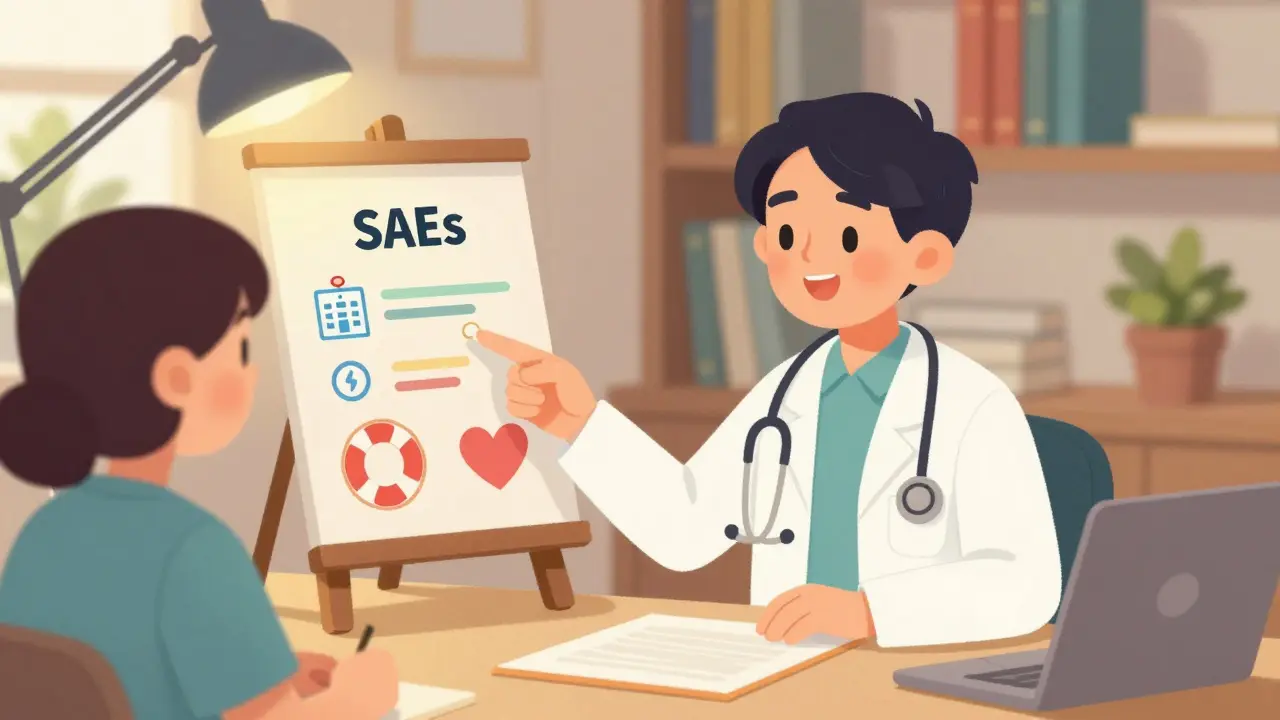
You don't need to be a scientist to find this data; it is usually hidden in plain sight in your medical documents. If you are taking a prescription drug, look at the Medication Guide. Specifically, check the "Warnings and Precautions" section. The FDA requires this section to list serious reactions and exactly how often they happened (for example, "Serious infections occurred in 2.3% of patients").
If you are in a clinical trial, your Informed Consent Form is the gold mine. Look for headings like "Risks and Discomforts" or "Adverse Events." These sections explain how the team will monitor you. If the form is too dense, ask your coordinator for a plain-language glossary. The FDA actually recommends that sponsors explain an SAE simply as: "An event that results in death, requires hospitalization, causes significant disability, or presents a life-threatening situation."
The Role of Patient Reporting
The system isn't perfect. A lot of safety data comes from voluntary reporting, which means many events-especially those that don't lead to hospitalization-never get recorded. This is why your voice matters. The MedWatch program is the FDA's official channel for patients to report side effects directly. By using Form 3500B, you help the agency spot patterns that might lead to label changes or safety alerts.
In 2022 alone, this reporting system helped trigger 128 medication safety alerts. When patients report that a "severe" side effect is making their life miserable, even if it's not "serious" by regulatory definitions, it pushes the FDA to investigate the drug's overall impact on quality of life.
Looking Ahead: AI and Patient-First Data
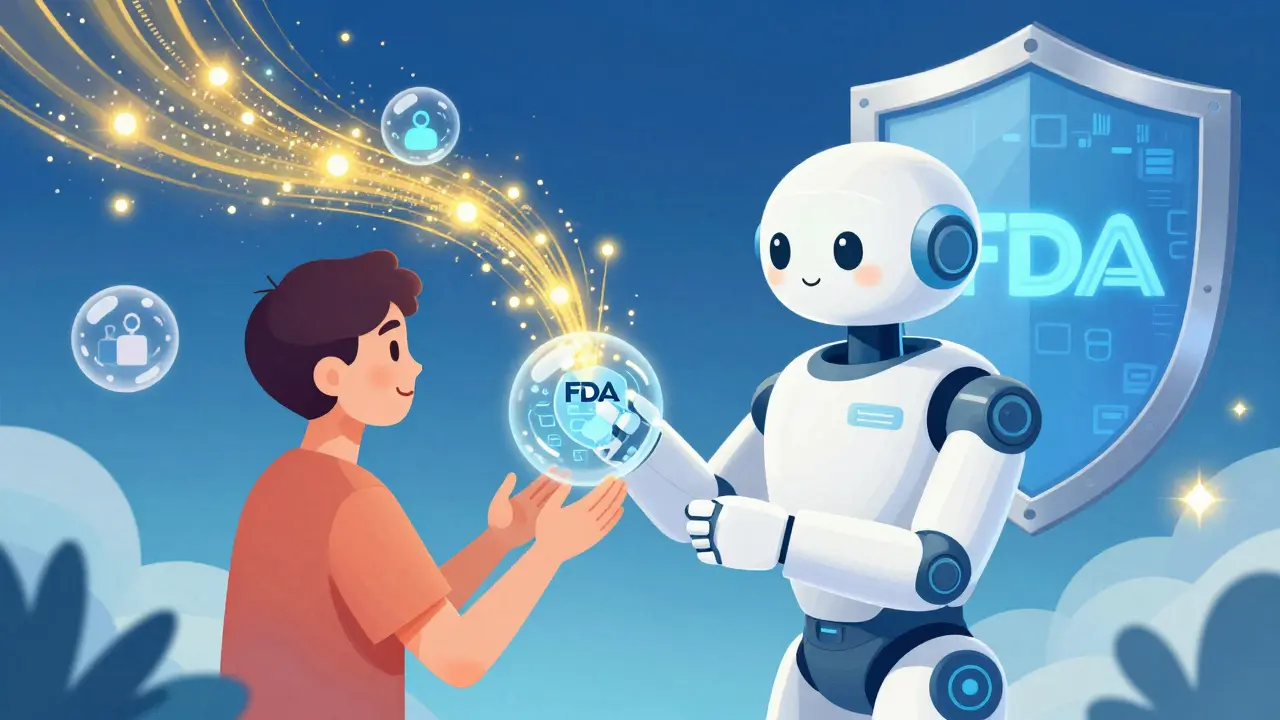
The way we track these events is changing. The Sentinel Initiative now monitors records for 300 million people to find safety signals in near real-time. Furthermore, the FDA is starting to use Artificial Intelligence to sort through SAE reports. In recent pilots, AI helped reduce the review time for critical events from 30 days down to just 7, meaning dangerous side effects are identified and addressed much faster.
We are also seeing a shift toward "Patient-Reported Outcome Measures." Instead of just relying on a doctor's note, the FDA is increasingly valuing how the patient describes their own experience. This ensures that the definition of a "serious" event evolves to include what patients actually care about, not just what can be measured in a clinic.
If my side effect is Grade 3, is it a Serious Adverse Event?
Not necessarily. Grade 3 means the side effect is severe and may require medical intervention. However, it only becomes a "Serious Adverse Event" if it meets specific FDA criteria, such as requiring you to be admitted to the hospital or causing permanent damage. Many Grade 3 events are managed in a clinic and are not classified as serious.
What should I do if I experience a serious side effect?
Contact your healthcare provider immediately. If the event is life-threatening or requires emergency care, go to the nearest emergency room. After you are stable, you can report the event to the FDA via the MedWatch program to help improve drug safety for others.
Does every hospital visit count as an SAE?
Generally, yes. Under FDA rules, any event that results in initial hospitalization or prolongs an existing hospital stay by 24 hours or more is classified as serious, regardless of whether the doctor thinks the drug caused it.
Why does the FDA distinguish between serious and severe?
The distinction allows the FDA to prioritize the most dangerous risks. While severity tells them how a patient feels, seriousness tells them if the drug is causing life-altering or fatal outcomes. This helps them decide if a drug needs a "Black Box Warning" or if it should be removed from the market.
How often are labels changed because of SAEs?
Frequently. In 2022, the FDA's monitoring systems led to 47 specific label changes and 128 safety alerts, proving that the SAE classification system is actively used to protect patients.
Catherine Mailum
April 12, 2026 AT 05:18oh great so the fda basically says if you're not literally dying or in a hospital bed then your suffering is just a cute little grade 3 event lol thanks for the clarity i guess
Mary Johnson
April 13, 2026 AT 21:07this is exactly how they manipulate the data to keep these poison drugs on the market. they create these fake distinctions between severe and serious just to hide the true casualty rates from the public. if you actually dig into the archives you'll see they've been doing this for decades to protect big pharma profits while we act as unpaid lab rats. nobody is actually reporting these events because the system is designed to ignore us. the sentinel initiative is probably just a surveillance tool to see who's waking up to the truth. don't trust the medication guides because they're written by the same people making the pills. it's all a game of semantic gymnastics to keep us compliant. they want you to think a grade 3 event is fine as long as you don't end up in the er. total garbage. the fda is basically a subsidiary of the companies they're supposed to regulate. wake up and stop trusting these 'regulatory labels' before they redefine your health into a statistic. this whole post is just propaganda to make us feel safer while they experiment on us. the a-i part is the scariest because now they can automate the censorship of side effects. keep your eyes open and don't believe the corporate script.
john chiong
April 15, 2026 AT 12:31absolutely abhorrent that we live in a society where a patient's agony is reduced to a sterile grade on a chart. it is a moral vacuum. the sheer audacity of the bureaucracy to play word games with human suffering is just sickening. total clowns
mimi clouet
April 17, 2026 AT 10:52Actually, the CTCAE is used globally not just by the FDA! 🌍 It's super helpful for doctors to have a standardized way to talk about symptoms so they don't just say it's 'bad' but can specify exactly how it impacts function. It's all about data consistency! ✨💖
melissa mac
April 17, 2026 AT 15:19It is really important to remember that we all experience side effects differently. If you're feeling overwhelmed by the paperwork, just take it one step at a time and keep a personal log of your symptoms to share with your care team.
Anurag Moitra
April 18, 2026 AT 22:49The distinction between severity and seriousness is a critical component of pharmacovigilance. It ensures that regulatory bodies can prioritize interventions that prevent mortality and permanent morbidity while still tracking the general tolerability of a compound.
Haley Moore
April 19, 2026 AT 13:28Ugh, why is the formatting of these guides always so hideous? 🙄 Like, if they want us to find the 'gold mine' of info, maybe they shouldn't hide it in 8pt font in a 50-page PDF. Truly pathetic. 💅
Clare Elizabeth
April 21, 2026 AT 11:18this is so helpful for anyone feeling anxious about their trial results!! lets all make sure we use MedWatch to get our voices heard and make things better for everyone 🌟
Jasmin Stowers
April 22, 2026 AT 05:32totally makes sense. helps keep things clear