
Fixed-dose combination drugs: what they are and why they exist
 Jan, 12 2026
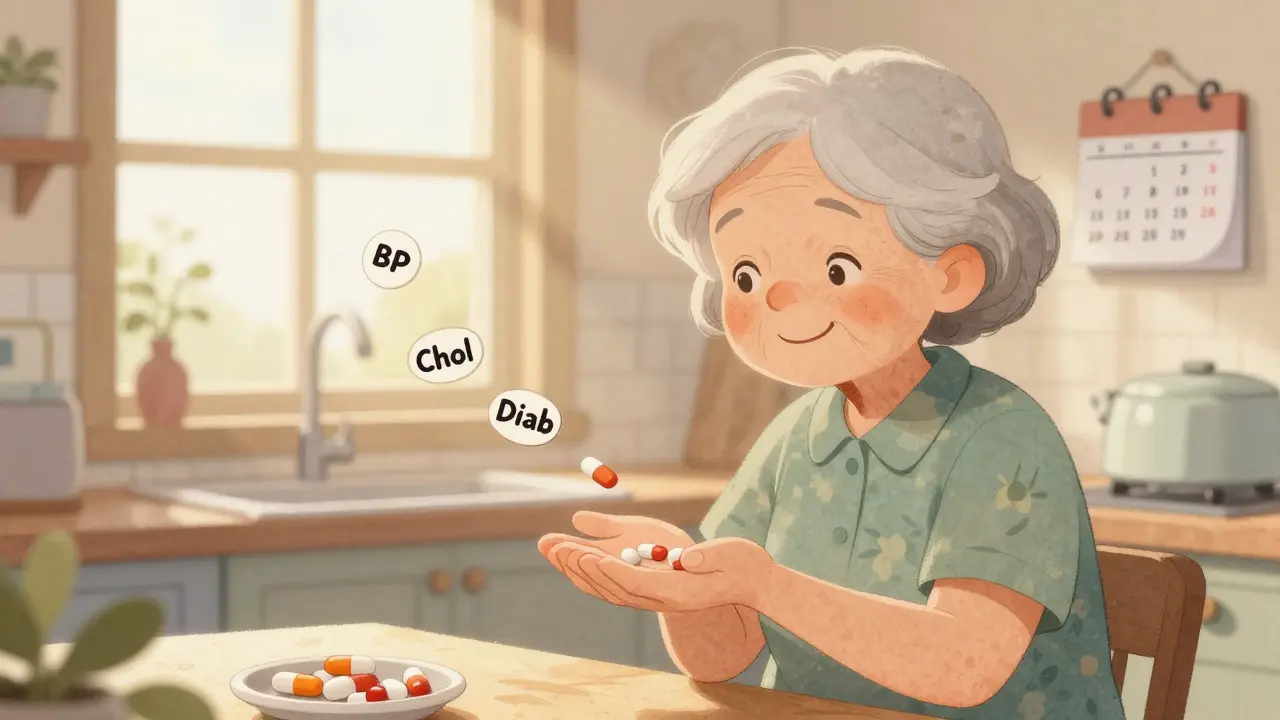
Imagine taking five pills a day just to manage your blood pressure, diabetes, and cholesterol. Now imagine taking just one. That’s the whole point of fixed-dose combination drugs - they pack two or more medicines into a single tablet or capsule, so you don’t have to juggle multiple pills. This isn’t just about convenience. It’s about survival for people with chronic conditions who forget doses, get overwhelmed, or can’t afford the co-pays for separate prescriptions.
What exactly are fixed-dose combination drugs?
A fixed-dose combination drug, or FDC, is a single pill that contains two or more active ingredients in fixed amounts. You can’t change the dose of one without changing the other. If the pill has 10 mg of drug A and 5 mg of drug B, that’s it - no adjustments possible. This is different from taking two separate pills at the same time, even if they’re prescribed together.
The most common examples you’ll see are for heart disease, like pills combining a statin with blood pressure medicine, or for diabetes, where metformin is paired with another glucose-lowering agent. Tuberculosis treatment relies heavily on FDCs - rifampicin and isoniazid in one tablet. Even Parkinson’s patients often take levodopa with carbidopa to reduce side effects. These aren’t random mixes. They’re carefully chosen because the drugs work better together.
Why do they exist? The real reasons behind the combo
There are three big reasons FDCs were developed - and they’re not all about profit.
First, they make treatment simpler. People with multiple chronic illnesses often take 6-10 pills a day. That’s a lot to remember. Studies show that when pill burden drops, adherence goes up. One study found patients on FDCs were 30% more likely to stick to their regimen than those on separate pills. That’s huge. Missing doses for blood pressure or HIV meds can lead to hospitalizations, drug resistance, or even death.
Second, some drugs only work well together. Take antibiotics for resistant infections. A beta-lactam antibiotic like amoxicillin gets broken down by bacteria. But when you add a beta-lactamase inhibitor like clavulanic acid, it blocks that breakdown. Together, they kill the bug. Alone, they don’t. This is synergy - not just convenience.
Third, there’s a cost benefit. One pill means one prescription, one pharmacy trip, one co-pay. For patients on fixed incomes, that adds up. In the U.S., switching from three separate pills to one FDC can cut monthly out-of-pocket costs by 40% or more. For public health systems, fewer prescriptions mean less administrative work and lower overall spending.
The downsides - why FDCs aren’t always the answer
But FDCs aren’t magic. They come with real limits.
One big problem: you can’t adjust doses. Say you need to lower your blood pressure medicine but your cholesterol drug is fine. With an FDC, you’re stuck. You either take the full dose of both or stop the whole thing. That’s dangerous if you’re sensitive to one ingredient. Some patients end up taking extra pills just to fine-tune their regimen - defeating the whole purpose.
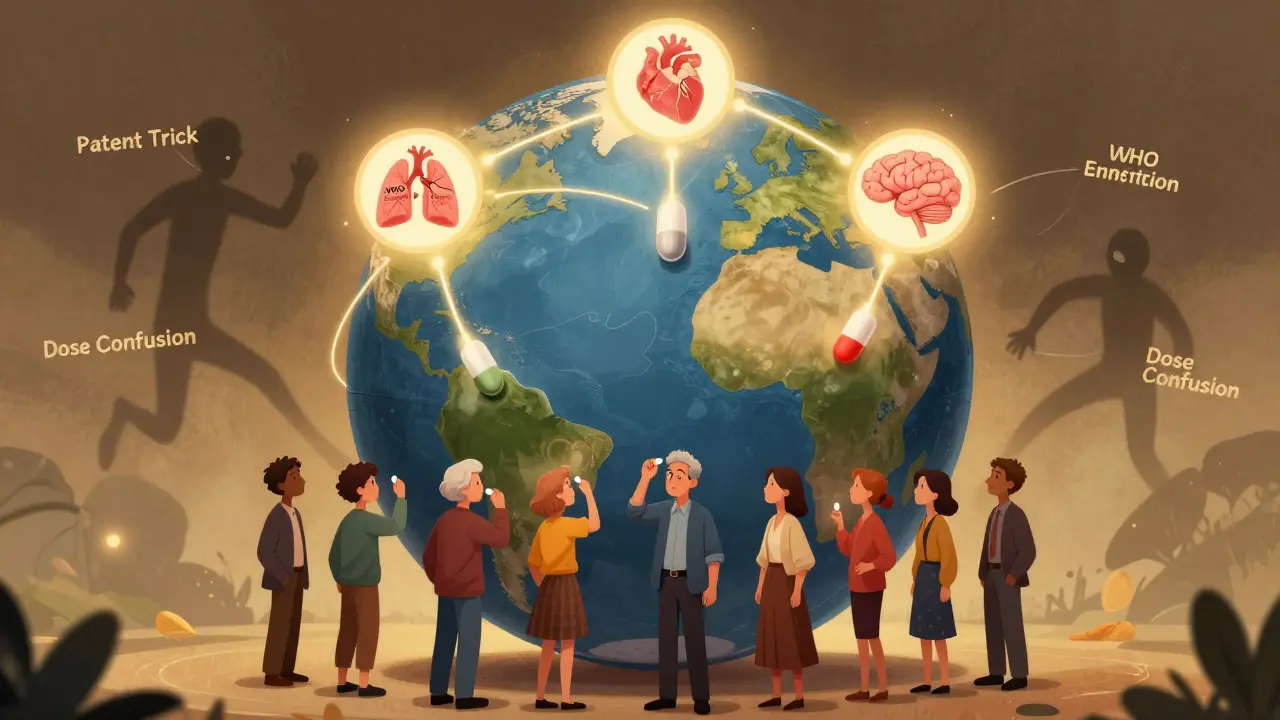
Another issue: pharmacokinetics. If one drug is absorbed quickly and the other slowly, the combo might not work as well as separate doses taken at different times. This is why regulators require detailed studies before approving an FDC. The World Health Organization says a good FDC must have matching absorption rates and no dangerous interactions.
And then there’s the shady side. Some drug companies create FDCs not because they’re better, but because their patent on a top-selling drug is about to expire. By combining it with an older, generic drug, they get a new patent and delay generic competition. Payers call these “lifecycle extension” tactics. The FDA and EMA now demand proof that each component contributes to the benefit - not just that they’re in the same pill.
How are FDCs approved? It’s stricter than you think
You might think combining two approved drugs is easy. It’s not.
The U.S. Food and Drug Administration requires sponsors to prove that each active ingredient in the FDC adds real value. You can’t just slap two pills together and call it a day. You need clinical data showing the combination works better than the individual drugs - or at least as well, with better adherence or fewer side effects.
Most FDCs use the 505(b)(2) approval pathway, which lets companies rely on existing safety data for the individual drugs. But even then, they still need Phase 2 and 3 trials for the combo. Between 2010 and 2015, half of all approved FDCs went through full clinical testing, even though they used older ingredients. That’s because regulators know bad combinations can hurt patients.
The WHO has strict rules too. Their Model List of Essential Medicines includes only FDCs that meet three criteria: the drugs must act by different mechanisms, their absorption and half-lives must be compatible, and the combo must not increase toxicity. That’s why you see sulfamethoxazole + trimethoprim for UTIs, or isoniazid + ethambutol for TB - proven, rational, life-saving.
Where are FDCs most common - and why?
Not all disease areas use FDCs equally. Cardiovascular disease leads the pack. Why? Because high blood pressure, high cholesterol, and diabetes often go hand-in-hand. A single pill with a statin, ACE inhibitor, and thiazide diuretic makes perfect sense for someone with metabolic syndrome.
Dermatology is another big area. Acne treatments often combine benzoyl peroxide with an antibiotic like clindamycin. One cream, two actions - kills bacteria and reduces inflammation. Much easier than applying three different products.
HIV treatment was one of the first big wins for FDCs. In the 1990s, patients had to take 15-20 pills a day. Today, many take one pill once a day. That single change turned HIV from a death sentence into a manageable condition. It’s not just medical - it’s human.
On the flip side, oncology and neurodegenerative diseases have fewer FDCs. Why? Because cancer and Alzheimer’s treatments are highly individualized. Dosing needs to change weekly, sometimes daily. FDCs don’t fit that model - yet.
What’s next for fixed-dose combinations?
The future of FDCs isn’t just more pills. It’s smarter pills.
Researchers are testing FDCs for complex conditions like Alzheimer’s, where multiple pathways are involved. One new combo in trials pairs a drug that clears amyloid plaques with one that reduces brain inflammation. If it works, it could be a game-changer.
Antimicrobial resistance is another hot area. New FDCs combining antibiotics with resistance-breakers are being developed for superbugs like MRSA and drug-resistant TB. These aren’t just convenience products - they’re last-resort tools.
Regulators are also pushing for real-world evidence. It’s not enough to say “patients take it more often.” Now, companies need to show that FDCs lead to fewer hospital visits, better lab results, or longer survival. Payers want proof of value, not just convenience.
Meanwhile, generic manufacturers are catching up. Once patents expire, cheaper FDCs flood the market. That’s good for patients - but it means brand-name companies have to innovate faster to stay relevant.
Should you ask for an FDC?
If you’re taking three or more pills daily for chronic conditions, talk to your doctor or pharmacist. Ask: “Is there a combination pill that could work for me?”
But don’t assume it’s always better. If your doses need to change often - say, your blood pressure fluctuates - an FDC might not be right. If you have kidney or liver issues, the fixed ratio could be too strong for one ingredient.
The best FDCs are those backed by science, not marketing. Look for ones on the WHO Essential Medicines List. Check if your country’s health authority recommends them. And never switch to an FDC without professional guidance.
Fixed-dose combinations aren’t perfect. But when used right, they save lives. They reduce chaos. They make treatment possible for people who otherwise couldn’t keep up. In a world where adherence is the biggest barrier to effective care, sometimes, one pill really is better than ten.
Are fixed-dose combination drugs safe?
Yes, when they’re properly developed and prescribed. Regulators like the FDA and EMA require proof that each drug in the combo contributes to the benefit and that the combination doesn’t increase side effects. Many FDCs, like those for HIV, TB, and hypertension, have been used safely for decades. But they’re not risk-free - especially if the doses can’t be adjusted for your individual needs.
Can I split or crush a fixed-dose combination pill?
Never split or crush an FDC unless your doctor or pharmacist says it’s safe. Some pills have special coatings or timed-release layers. Crushing them can change how the drugs are absorbed, making one part too strong or too weak. If you need a different dose, talk to your provider - don’t try to adjust it yourself.
Why are FDCs cheaper than buying separate pills?
Because you’re paying for one prescription, one manufacturing process, and one packaging unit instead of two or three. Pharmacies also save on handling and refill costs. For patients, that often means one co-pay instead of multiple. Generic FDCs are especially cost-effective - sometimes costing less than the sum of the individual generics.
Do FDCs cause more side effects?
Not necessarily - but the risk is different. With separate pills, you might notice a side effect from one drug and stop it. With an FDC, you can’t isolate the cause. If you get dizziness or nausea, you don’t know if it’s from drug A, drug B, or the combo. That’s why doctors monitor patients closely when switching to an FDC.
Are all combination pills fixed-dose?
No. Some drugs are co-packaged - meaning two separate pills are sold together in one blister pack or box. These aren’t FDCs. You still take them as two pills. FDCs are literally one pill. Co-packaged drugs are easier to develop but don’t reduce pill burden the same way.
Can children take fixed-dose combination drugs?
Rarely. Most FDCs are developed and tested only in adults. Children often need precise, weight-based dosing that FDCs can’t provide. There are a few exceptions, like certain HIV or TB combos for kids, but these are specially formulated and approved. Always check with a pediatric specialist before giving an FDC to a child.
Trevor Davis
January 14, 2026 AT 10:29I used to take seven pills a day for my hypertension and diabetes. Then my doc switched me to a combo pill. Life changed. No more pill organizer chaos, no more forgetting one. I actually started taking them regularly. Seriously, if you’re juggling meds, ask about FDCs. It’s not magic, but it’s close.
vishnu priyanka
January 15, 2026 AT 18:12In India, TB treatment is all FDCs. One tablet, three drugs. No one’s asking for separate pills - we know this saves lives. My uncle survived multidrug-resistant TB because of this. The pharma companies? They’re happy. But the patients? We’re just grateful.
Angel Tiestos lopez
January 17, 2026 AT 10:32bro. i just realized my blood pressure pill is basically a mini superhero team-up 🦸♂️💊. statin + ace inhibitor + diuretic. like, why am i still taking three things? also… why does my doctor never mention this? i feel scammed. 🤔
Pankaj Singh
January 18, 2026 AT 09:00Don’t fall for the marketing. Most FDCs are patent extensions disguised as medical progress. Your ‘convenience’ pill? Likely a repackaged expired drug slapped with a newer one. The FDA approves them because the industry pays for the studies - not because they’re better. Stop believing the hype.
Scottie Baker
January 19, 2026 AT 21:55My ex-wife took one of those combo pills for her diabetes and ended up in the ER because she couldn’t adjust the dose when her kidneys started failing. They didn’t warn her. Now she’s on three separate meds again, and she’s pissed. This isn’t freedom - it’s a trap for people who don’t know how to ask questions.
John Tran
January 19, 2026 AT 22:40Think about it - we live in a world where we can order a pizza in 12 minutes, but we still force people to swallow 10 pills before breakfast. The FDC is not just a pharmaceutical innovation - it’s a philosophical statement. It says: ‘We see your suffering. We acknowledge your chaos. And we’re going to try, however imperfectly, to reduce it.’ That’s… actually kind of beautiful. Even if Big Pharma profits from it. Even if the doses are rigid. Even if we’re still missing the point that people aren’t machines. But still - one pill. One less thing to carry. One less reason to give up. That’s worth something.
John Pope
January 20, 2026 AT 10:03Let’s not ignore the pharmacokinetic nightmare here. Just because two drugs are in the same pill doesn’t mean they’re absorbed at the same rate. Take metformin + sitagliptin - metformin has delayed release, sitagliptin doesn’t. So you get a spike in one, a slow drip in the other. That’s not synergy. That’s pharmacological dissonance. And regulators? They approve it anyway because adherence metrics look good. But what about long-term toxicity? No one’s tracking that.
Nelly Oruko
January 20, 2026 AT 18:17One pill. One co-pay. One less thing to forget. I’ve seen patients die because they couldn’t afford three separate prescriptions. FDCs aren’t perfect - but they’re the closest thing we have to equity in chronic care. If your doctor doesn’t mention them, ask. Don’t wait until you’re drowning in pills.
Robin Williams
January 22, 2026 AT 17:08Y’all need to stop treating medicine like a puzzle. If you’re taking 5 pills a day, you’re not ‘managing’ your health - you’re surviving a paperwork nightmare. FDCs? They’re not magic. But they’re the closest thing we’ve got to a hug from the healthcare system. Go ask your doc. Seriously. Do it today.
Anny Kaettano
January 24, 2026 AT 13:19As a nurse who’s seen patients skip meds because the pillbox looks like a Russian nesting doll - I can’t stress this enough: FDCs save lives. Not because they’re cheaper (though they are) or because they’re trendy (they’re not) - but because they reduce cognitive load. For someone with dementia, depression, or just exhaustion - one pill means they still have a chance. That’s not pharmaceutical marketing. That’s human care.
Kimberly Mitchell
January 25, 2026 AT 14:33Why are we even celebrating this? It’s just corporate laziness dressed up as innovation. Instead of designing personalized regimens, drug companies push one-size-fits-all combos because it’s easier to patent and sell. And now we’re supposed to be grateful? No. We should demand better - individualized dosing, not convenience pills that hide behind ‘adherence’ metrics.