
Future of Generic Combinations: Regulatory and Market Trends
 Dec, 8 2025
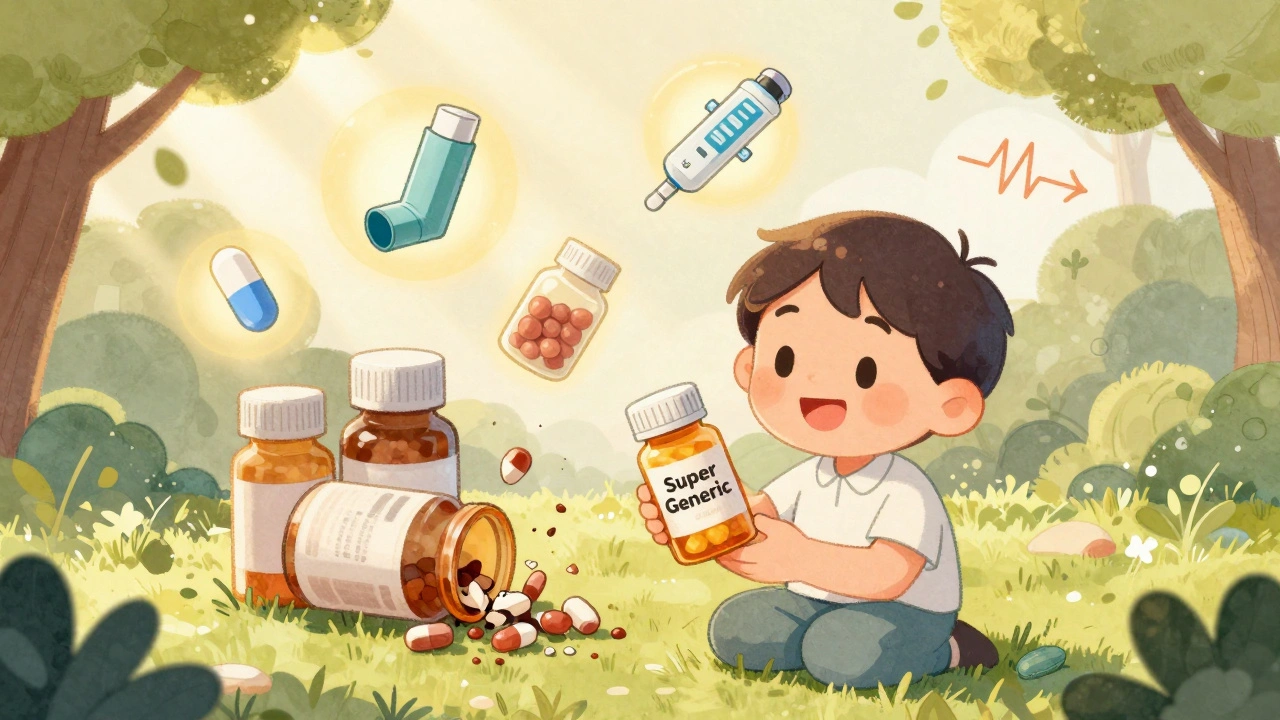
Generic drugs used to be simple: copy a brand-name pill, prove it works the same, and sell it for pennies. But that era is over. Today, the most valuable generics aren’t just copies-they’re improved versions. These are called generic combinations, and they’re changing how we treat chronic diseases. They’re not just cheaper alternatives anymore. They’re smarter, safer, and designed to help patients stick to their meds longer. And the market is responding.
What Exactly Are Generic Combinations?
Generic combinations aren’t your grandfather’s generic pills. They’re fixed-dose combinations (FDCs), drug-device systems like auto-injectors or inhalers, or modified-release tablets that control how and when the drug hits your body. Think of them as upgraded generics-same active ingredients, but better delivery.
For example, instead of taking three separate pills for high blood pressure, a patient might take one pill that combines three drugs in one tablet. Or, instead of using a separate inhaler and spacer, a single device delivers two asthma drugs with perfect timing. These aren’t new drugs. They’re clever reconfigurations of old ones-designed to fix real problems like missed doses, side effects, or poor absorption.
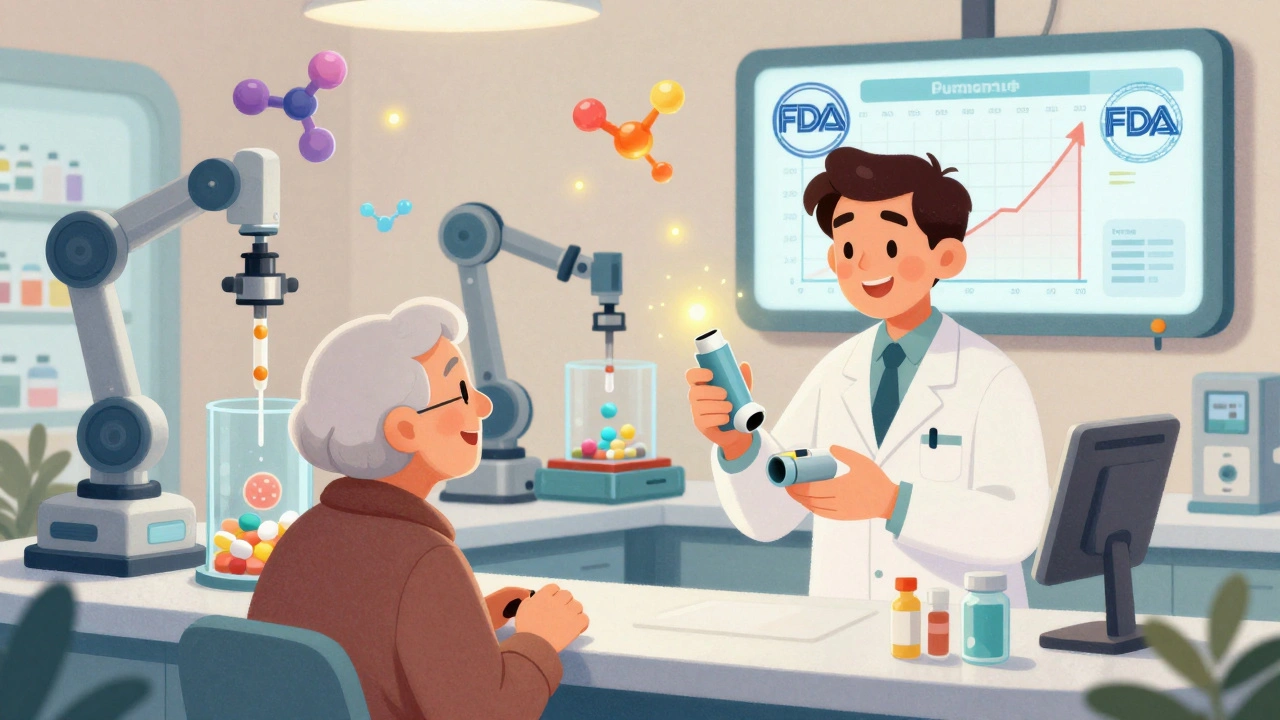
The FDA calls these combination products. And unlike regular generics, they don’t just need to match the original drug’s chemistry. They have to prove they work better-or at least just as well-in real-world use. That means more testing, more data, and more time. But the payoff? Higher prices and stronger margins.
Why the Market Is Shifting Fast
Here’s the math: in 2024, generics made up 90% of all prescriptions in the U.S. But they accounted for less than 20% of total drug spending. That’s because most generics are cheap-sometimes under $5 a month. Drugmakers can’t make money that way anymore.
Enter the super generics. These are complex combinations that can charge 40-60% more than traditional generics and keep that price for five years or longer. Compare that to regular generics, which lose 80-90% of their price within two years of launch.
Take bupropion, the antidepressant also used for smoking cessation. The original branded version, Wellbutrin XL, brought in $187 million a year before generics hit. When simple generics came out, total sales dropped to $42 million. But when Teva launched Budeprion XL-an extended-release version with better absorption-it captured a premium share of the market, even with competitors around.
Now imagine that same pattern applied to drugs like Trelegy Ellipta (a three-drug inhaler for COPD) or Austedo (for movement disorders). Both had over $1 billion in U.S. sales in 2024. When their patents expire between 2025 and 2030, the race will be on to launch the best version-not just the cheapest.
Regulatory Hurdles Are Getting Tougher
Getting approval for a regular generic takes about 2-3 years and costs $1-5 million. For a complex combination? That jumps to 4-7 years and $15-50 million. Why? Because regulators don’t just check if the drug works. They check how it’s made, how it’s delivered, and whether the device part (like a pen or inhaler) works reliably every time.
The FDA’s Office of Combination Products has to decide whether the drug or the device is the main way the product works. That determines which division reviews it-and what standards apply. A drug-device combo like an auto-injector for epinephrine? That’s held to the same standards as a new drug. Bioequivalence isn’t enough. You need to prove the device delivers the exact dose every single time, even after being dropped, exposed to heat, or stored for months.
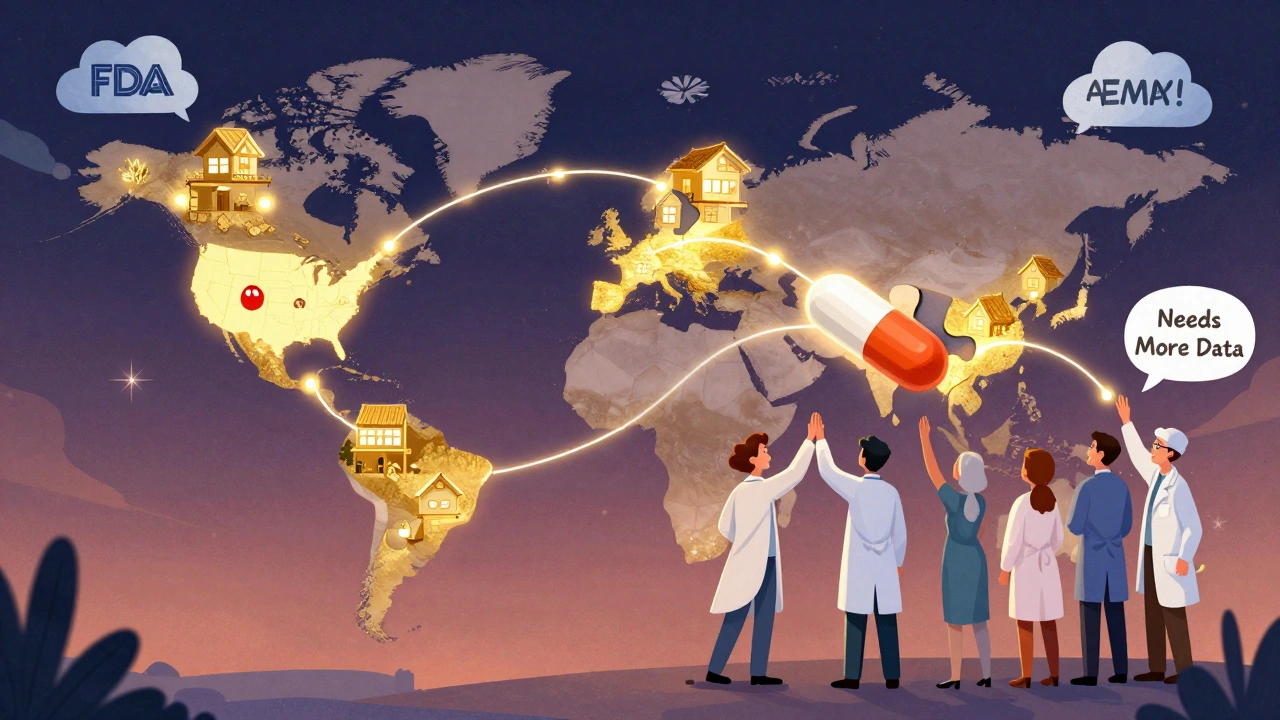
And it’s not just the U.S. The European Medicines Agency (EMA) is far more cautious. Through early 2025, the U.S. approved 37 complex generic combinations. The EU approved just 12. That’s a big gap. Companies launching in both markets have to build two different versions of the same product-adding cost and complexity.
According to the Regulatory Affairs Professionals Society, 78% of failed generic combination applications aren’t because the drug doesn’t work. They fail because the delivery system-like a tablet that doesn’t dissolve right, or an inhaler that clogs-doesn’t perform consistently.
Where the Growth Is: Oncology, Respiratory, and CNS
Not all therapeutic areas are equal. Some are ripe for combinations. Others? Not so much.
On top of the list: oncology. Kinase inhibitor combinations-used in cancers like leukemia and melanoma-are growing at 11.3% per year. Why? Because patients often need multiple targeted drugs at once. Making them into one pill improves adherence and reduces pill burden.
Respiratory is next. Inhalers that combine steroids, long-acting bronchodilators, and anticholinergics are becoming standard. Generic versions of Trelegy Ellipta and Stiolto will hit the market soon. These aren’t simple pills. They’re precision-engineered devices with exact particle sizes and dosing triggers. Only a handful of manufacturers can make them.
Central nervous system (CNS) drugs are a third big area. Drugs for Parkinson’s, bipolar disorder, and epilepsy often need multiple active ingredients to balance effectiveness and side effects. Generic versions of these are harder to copy because the brain is sensitive to tiny changes in drug levels. A 5% difference in absorption can mean a seizure-or no effect at all.
Meanwhile, simple oral FDCs-like a statin plus a blood pressure pill-are still the most common, making up 62% of the market. But they’re growing slowly, at just 5.2% per year. The real action is in the complex stuff: drug-device and injectable combos, growing at nearly 10% a year.
Manufacturing Is Getting High-Tech
These aren’t pills you can make on an old tablet press. Complex combinations require:
- Hot-melt extrusion to blend drugs that don’t mix well
- Lipid-based systems to improve absorption of poorly soluble drugs
- Manufacturing equipment with ±2% tolerance for drug ratios
- Dissolution tests that match the brand product within 10% (f2 similarity factor)
Companies like Catalent and Lonza are partnering with generic makers to build these capabilities. It’s not just about chemistry anymore-it’s about engineering.
And now, the FDA has a pilot program to fast-track reviews for U.S.-made combination products. If you manufacture your inhaler or auto-injector in the U.S., you could get approval 3-6 months faster. That’s a huge incentive for companies to bring production back from India and China.
Who’s Winning and Why
The players are changing. Sandoz split from Novartis to focus only on generics-and now targets complex products. Viatris and Credence merged for $2.3 billion in 2025 specifically to build a powerhouse in advanced generics. Teva, Mylan, and Aspen are all investing heavily in modified-release tech and combination devices.
One of the biggest bets? Generic versions of semaglutide. The original Ozempic and Wegovy are worth over $100 billion a year. Companies are already working on fixed-dose combos that pair semaglutide with metformin or SGLT2 inhibitors-creating once-weekly pills for type 2 diabetes that could undercut the branded versions.
India still makes 35% of the world’s complex generics, but the U.S. leads in innovation and market value. The U.S. market is expected to grow 11.4% in 2025-up from just 4.9% in 2024-because more complex products are hitting shelves.
The Risks Are Real
But this isn’t all upside. The biggest danger? Regulatory inconsistency. If a company launches a combination product in the U.S. that’s approved by the FDA, but the EMA says it’s not equivalent, they’re stuck. Patients in Europe might get a less effective version-or none at all.
There’s also the risk of overpromising. Some companies claim their combo is “therapeutically superior” without solid proof. Dr. Aaron Kesselheim from Harvard warned in NEJM 2025 that the FDA’s standards for therapeutic equivalence in complex products are still vague. That could lead to safety issues down the line.
And pricing pressure isn’t going away. Even super generics face pressure from insurers and PBMs. Morningstar predicts that if companies don’t keep innovating, generic margins could drop 30% over the next decade.
What Comes Next?
The future of generics isn’t about being the cheapest. It’s about being the best version of a drug. The winners will be companies that can:
- Build advanced formulations with precision
- Design reliable drug-device systems
- Pass tough regulatory reviews
- Manufacture at scale in regulated markets
By 2030, super generics could make up 35-40% of the total generics market value-even though they’re only a fraction of the volume. That’s the new reality. The old model of copy-paste generics is dying. The future belongs to those who can improve, not just imitate.
What is a fixed-dose combination (FDC) in generics?
A fixed-dose combination (FDC) is a single pill or dosage form that contains two or more active pharmaceutical ingredients. Unlike taking separate pills, an FDC combines them into one, improving patient adherence. In generics, FDCs must prove they’re therapeutically equivalent to the brand-name version, often requiring additional clinical data beyond standard bioequivalence tests.
Why are generic combinations more expensive to develop than regular generics?
Generic combinations require more complex testing, longer development cycles, and advanced manufacturing. While a regular generic costs $1-5 million and takes 2-3 years, a complex combination can cost $15-50 million and take 4-7 years. This is because regulators demand proof of equivalence not just in drug content, but in delivery-like how a tablet dissolves, or how an inhaler delivers the right dose every time.
How does the FDA regulate combination products?
The FDA’s Office of Combination Products (OCP) determines whether the drug, device, or biological component is the primary mode of action. Based on that, it assigns the product to the appropriate review center-CDER for drugs, CDRH for devices. Approval requires data on both safety and performance of the entire system, not just the active ingredient.
Which therapeutic areas are seeing the most growth in generic combinations?
Oncology is growing fastest at 11.3% CAGR, driven by kinase inhibitor combinations. Respiratory follows at 9.89% CAGR, with multi-drug inhalers replacing older single-agent devices. CNS disorders like Parkinson’s and bipolar disorder are growing at 8.7% CAGR because combination therapies better manage symptoms and reduce side effects.
Is the U.S. market leading in generic combinations?
Yes. The U.S. accounts for 42% of the global market for complex generics, thanks to higher reimbursement rates, advanced healthcare infrastructure, and a more flexible regulatory approach. The FDA has approved 37 complex combination products through early 2025, compared to just 12 in the EU. The U.S. also leads in innovation, with pilot programs fast-tracking U.S.-manufactured products.
What’s the biggest risk for companies making generic combinations?
The biggest risk is regulatory inconsistency across regions. A product approved in the U.S. might be rejected in Europe or Japan due to different standards for equivalence. Also, if a company overstates therapeutic benefits without solid data, it risks safety issues and regulatory backlash. Pricing pressure from insurers could also erode margins if innovation slows.
Noah Raines
December 9, 2025 AT 11:42Ruth Witte
December 10, 2025 AT 17:21Philippa Barraclough
December 12, 2025 AT 01:46ian septian
December 13, 2025 AT 15:32Suzanne Johnston
December 14, 2025 AT 04:35Arun Kumar Raut
December 16, 2025 AT 00:14Simran Chettiar
December 16, 2025 AT 22:28Tiffany Sowby
December 18, 2025 AT 02:06Asset Finance Komrade
December 19, 2025 AT 18:42Brianna Black
December 20, 2025 AT 17:09Katie Harrison
December 22, 2025 AT 02:20Darcie Streeter-Oxland
December 23, 2025 AT 23:18Olivia Portier
December 24, 2025 AT 11:27Anna Roh
December 25, 2025 AT 23:58Philippa Barraclough
December 26, 2025 AT 08:58