
Graves’ Disease: Understanding Autoimmune Hyperthyroidism and the Role of PTU Treatment
 Feb, 28 2026
Graves’ disease isn’t just another thyroid problem. It’s an autoimmune disorder where your body turns on itself-specifically, your thyroid gland. Imagine your immune system, which normally protects you from viruses and bacteria, suddenly mistaking your thyroid for an invader and starting to overstimulate it. That’s what happens in Graves’ disease. The result? Too much thyroid hormone flooding your system, speeding up everything from your heartbeat to your metabolism. This condition affects about 1 in 200 people in the U.S., and women are seven to eight times more likely to get it than men. Most cases show up between ages 30 and 50.
How Graves’ Disease Works
The thyroid sits right at the base of your neck, shaped like a butterfly. It makes two key hormones-T4 and T3-that control how your body uses energy. In Graves’ disease, your immune system produces abnormal antibodies called thyrotropin receptor antibodies (TRAb). These stick to the thyroid like keys in a lock, forcing it to pump out way more hormone than needed. You don’t just feel "a bit off"-you feel like your body’s running at 110% all the time.
Common signs include:
- Fast or irregular heartbeat (often over 100 bpm)
- Unexplained weight loss-even if you’re eating more
- Shaky hands or tremors
- Feeling hot all the time, even when others are cold
- Anxiety, irritability, or trouble sleeping
- Thin, brittle hair or muscle weakness
But Graves’ disease has a few unique hallmarks that set it apart from other causes of hyperthyroidism. About 30% to 50% of people develop Graves’ ophthalmopathy-bulging eyes, redness, double vision, or even pressure behind the eyes. In rare cases, this can threaten sight. Around 1% to 4% get dermopathy, a lumpy, reddish thickening of the skin, usually on the shins. These aren’t random side effects-they’re direct results of the same autoimmune attack.
Diagnosis: It’s Not Just About Symptoms
Doctors don’t just guess. They test. A simple blood panel shows the story:
- TSH (thyroid-stimulating hormone): Usually below 0.4 mIU/L-often undetectable.
- Free T4: Above 1.8 ng/dL.
- Free T3: Above 4.2 pg/mL.
But the real clincher? Measuring TRAb levels. This test is 90% to 95% accurate at confirming Graves’ disease. If TRAb is high, you almost certainly have it. Other tests like radioactive iodine uptake or thyroid ultrasound help rule out other causes, but TRAb is the gold standard.
Many patients wait months-or even over a year-before getting the right diagnosis. Symptoms like anxiety, insomnia, or weight loss are often blamed on stress, menopause, or depression. A 2023 survey of over 1,200 patients found 35% were initially misdiagnosed with anxiety disorders. That delay can be dangerous. Left untreated, Graves’ disease can lead to heart failure, bone thinning, or even thyroid storm-a medical emergency with a 20% to 30% death rate.
Why PTU? The Role of Propylthiouracil
There are three main treatments for Graves’ disease: antithyroid drugs, radioactive iodine, and surgery. Antithyroid drugs are usually the first step. The two main ones are methimazole and propylthiouracil (PTU). Both block the thyroid from making extra hormone. But they’re not the same.
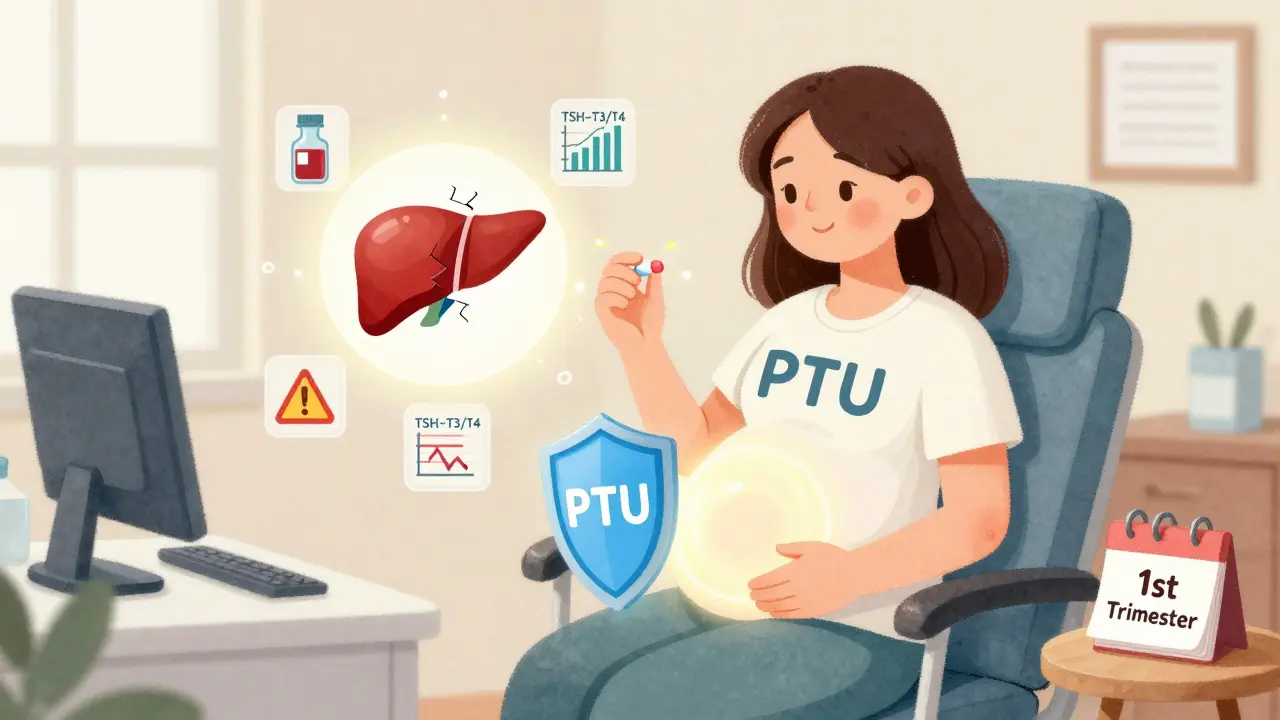
Methimazole is the go-to for most adults. It works well, you take it once a day, and it has fewer serious side effects. But PTU has one critical advantage: it’s safer during the first trimester of pregnancy. Why? Because methimazole can cross the placenta and slightly increase the risk of birth defects. PTU doesn’t cross as easily-so it’s the preferred choice for pregnant women in early pregnancy.
But PTU isn’t without risks. It carries a small but serious chance of severe liver damage. About 0.2% to 0.5% of people on PTU develop hepatitis, sometimes leading to liver failure. That’s why the FDA requires a black box warning-the strongest safety alert-for PTU. Patients on PTU need monthly liver function tests. If you get yellow skin, dark urine, or sudden nausea, stop the drug and call your doctor immediately.
Other side effects of PTU include joint pain (reported by 18% of users in one registry), a metallic taste, and skin rashes. One patient on a Graves’ disease forum wrote: "PTU saved my pregnancy, but the monthly blood tests made me feel like a lab rat. My ALT hit 120-normal is under 40. I had to cut my dose in half."
How PTU Compares to Other Treatments
| Treatment | Effectiveness | Side Effects | Cost (monthly or per treatment) | Long-Term Outcome |
|---|---|---|---|---|
| PTU | High (slower onset than methimazole) | Liver toxicity (0.2-0.5%), taste changes, joint pain | $10-$30 | Remission possible; relapse risk 40-60% |
| Methimazole | High (faster, once-daily) | Skin rash (0.1-0.3%), low white blood cells | $10-$40 | Remission possible; relapse risk 40-60% |
| Radioactive Iodine (I-131) | 80-90% cure rate | Permanent hypothyroidism (50-80%) | $300-$1,500 (one-time) | Lifelong thyroid hormone replacement needed |
| Thyroidectomy | 95% success | Nerve damage (1%), low calcium (1-2%) | $5,000-$15,000 | Lifelong hormone replacement |
Radioactive iodine is common in the U.S. because it’s a one-time treatment. But it permanently destroys the thyroid, so you’ll need to take thyroid hormone pills for the rest of your life. Surgery removes the gland entirely and works fast-but it’s invasive and carries surgical risks. For many, antithyroid drugs like PTU or methimazole are the best starting point because they offer a chance at remission without permanent changes.
Remission and Relapse: What to Expect
After 12 to 18 months of antithyroid drugs, doctors may try to stop treatment. About 30% to 50% of people go into remission-meaning their thyroid function returns to normal without medication. But here’s the catch: 40% to 60% relapse within a year. Factors that raise relapse risk include high TRAb levels at diagnosis, large thyroid size, and smoking.
That’s why doctors now test TRAb again after treatment ends. If levels are above 10 IU/L, your chance of relapse is 80%. That’s a clear signal to consider radioactive iodine or surgery instead of risking another flare-up.
Living with Graves’ Disease
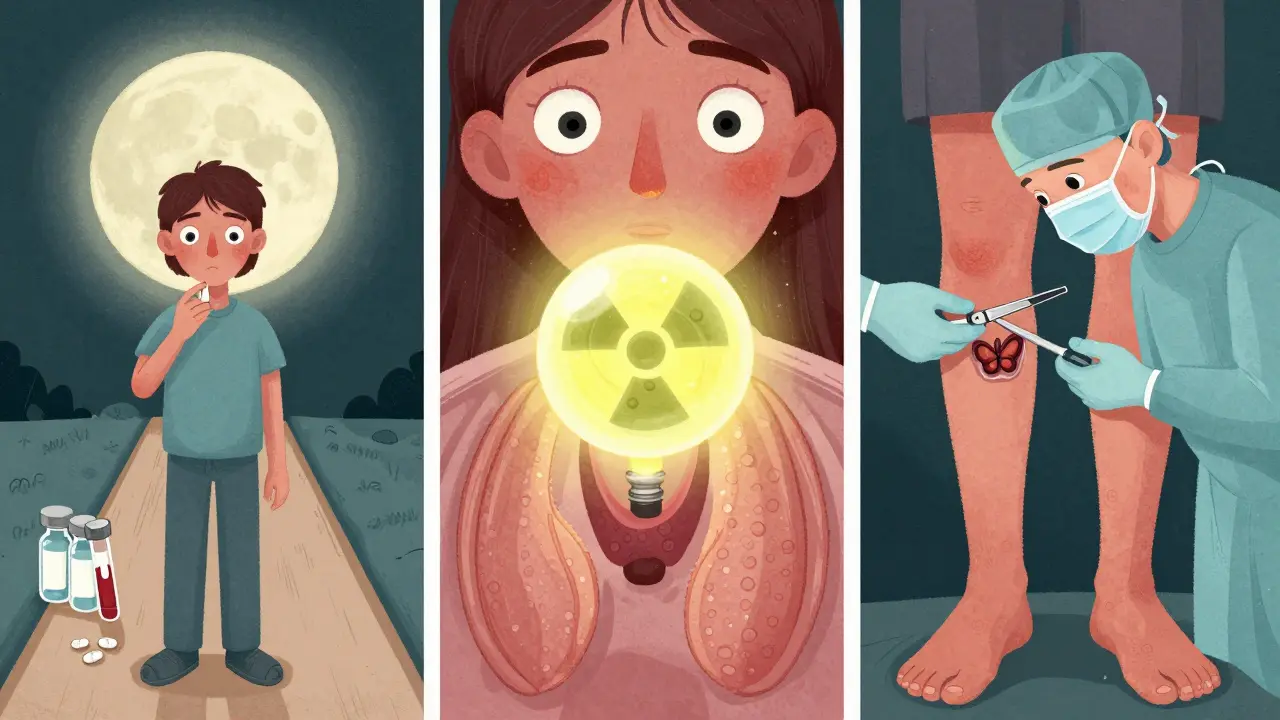
Even after hormone levels normalize, many people still struggle. A 2023 study found 40% of patients had ongoing eye symptoms. Some needed injections, radiation, or even surgery to protect their vision. Others dealt with fatigue, brain fog, or mood swings that lingered long after treatment started.
Managing Graves’ disease isn’t just about pills. It’s about:
- Monitoring your heart rate-if it stays above 100 bpm, contact your doctor
- Watching for signs of low thyroid (fatigue, cold intolerance) if medication is too strong
- Avoiding smoking-it doubles your risk of severe eye disease
- Getting regular blood tests, especially if you’re on PTU
Support matters too. Organizations like the Graves’ Disease and Thyroid Foundation offer 24/7 helplines and peer networks. One patient said: "Finding others who get it changed everything. I stopped feeling crazy for being so anxious all the time."
What’s Next?
The future of Graves’ treatment is evolving. A drug called teprotumumab, approved in 2021, can reduce bulging eyes by over 70% in just months-but it costs $150,000 per course. Researchers are testing drugs that block the thyroid-stimulating receptor directly, with early results showing promise. One experimental drug, K1-70, normalized thyroid function in 85% of patients without causing hypothyroidism.
For now, PTU remains vital-especially for pregnant women and those who can’t tolerate other treatments. Its risks are real, but for many, it’s the only bridge to a healthy pregnancy or a chance at remission without surgery.
Is PTU safe during pregnancy?
PTU is considered the safest antithyroid drug during the first trimester of pregnancy because it crosses the placenta less than methimazole, reducing the risk of birth defects. After the first trimester, doctors often switch to methimazole due to PTU’s liver risks. Always work with an endocrinologist and obstetrician who specialize in thyroid disorders during pregnancy.
Can Graves’ disease be cured without medication?
Graves’ disease can go into remission with antithyroid drugs in 30-50% of cases after 12-18 months of treatment. However, relapse is common-up to 60% of people will see symptoms return after stopping medication. For those who relapse or can’t tolerate drugs, radioactive iodine or surgery offer permanent solutions by removing or disabling the thyroid, though they require lifelong hormone replacement.
Why is PTU used less often than methimazole?
PTU is used less often because it requires three doses a day and carries a higher risk of severe liver injury compared to methimazole. Methimazole is more convenient and safer for long-term use in non-pregnant adults. PTU is reserved mainly for first-trimester pregnancy, thyroid storm, or when methimazole causes severe side effects.
How do I know if my Graves’ disease is getting worse?
Watch for worsening symptoms: heart rate over 120 bpm, unexplained fever, extreme weakness, confusion, or vomiting. These could signal thyroid storm-a life-threatening emergency. Also, if your eyes become more swollen, painful, or blurry, or if you notice new skin changes, contact your doctor immediately. Regular blood tests for TSH, T3, T4, and TRAb help track progression.
Does smoking affect Graves’ disease?
Yes-smoking doubles your risk of developing severe Graves’ ophthalmopathy (eye disease) and makes eye symptoms harder to treat. Quitting smoking is one of the most effective things you can do to protect your vision and improve your overall outcome. Even secondhand smoke can worsen eye complications.
Mariah Carle
February 28, 2026 AT 23:54To anyone scared of meds: this isn’t about being weak. It’s about your body fighting a war you can’t see. And sometimes, the quietest battles leave the deepest scars.
Justin Rodriguez
March 2, 2026 AT 20:53Raman Kapri
March 4, 2026 AT 14:06Megan Nayak
March 5, 2026 AT 07:09I had Graves’. I took PTU. I lost three months of my life to blood draws. My ALT hit 180. I cried in the lab parking lot. And for what? So I could "have a baby" while my liver screamed? No. We need better options. Not Band-Aids.
Tildi Fletes
March 5, 2026 AT 15:29Siri Elena
March 7, 2026 AT 09:46Also, I’ve got three kids. I didn’t need PTU. I just drank coconut water and chanted. Jk. But seriously, why are we still doing this?
Divya Mallick
March 7, 2026 AT 10:40Stop lecturing. Start solving.
Pankaj Gupta
March 9, 2026 AT 04:31Alex Brad
March 10, 2026 AT 11:05Renee Jackson
March 10, 2026 AT 12:40You are not weak. You are not lazy. You are fighting an invisible war. And you deserve care that sees you-not just your numbers.
I’m here. I’ve been there. And I believe in your healing.
RacRac Rachel
March 10, 2026 AT 22:20To anyone scared: talk to your endo. Ask about alternatives. But don’t let fear stop you from living. You got this 💪🌈
Jane Ryan Ryder
March 11, 2026 AT 02:20Callum Duffy
March 12, 2026 AT 07:55Chris Beckman
March 12, 2026 AT 08:07