
Guillain-Barré Syndrome: Understanding Acute Weakness and IVIG Treatment
 Dec, 11 2025
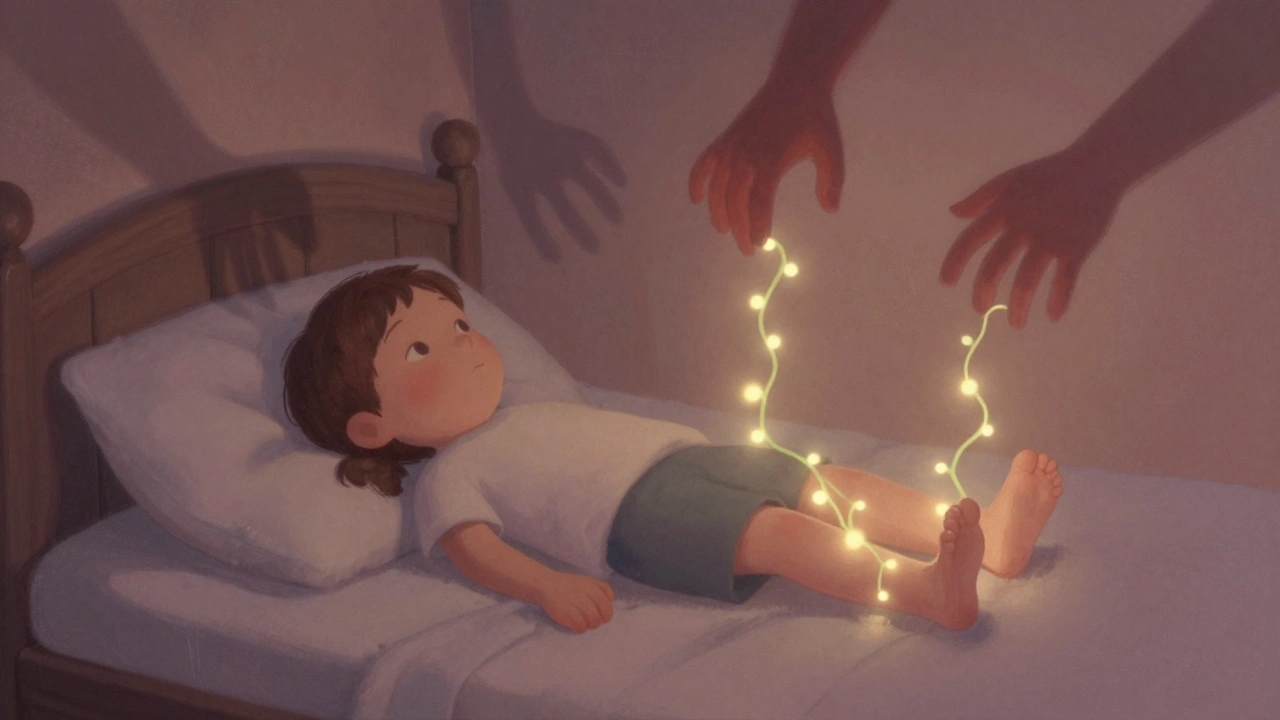
Guillain-Barré Syndrome doesn’t announce itself with a fever or a cough. It creeps in quietly - maybe a tingling in your toes, then a heaviness in your legs. Within days, walking becomes impossible. Some people can’t smile. Others can’t swallow. This isn’t just muscle fatigue. It’s your immune system turning against your own nerves. In the U.S., about 1 in 100,000 people get it each year. It’s rare, but when it hits, time is everything.
How Guillain-Barré Syndrome Starts
Most cases begin after an infection - often a stomach bug caused by Campylobacter jejuni. About 1 in 3 people who get this bacteria go on to develop GBS. Other triggers include the flu, Epstein-Barr virus, Zika, and even surgery. The immune system, trying to fight off the invader, accidentally targets the myelin sheath - the protective coating around your nerves. Without it, signals from your brain can’t reach your muscles. That’s when weakness starts.The weakness almost always begins in the feet and legs, then moves upward. In 85% of cases, it climbs to the arms, face, and even breathing muscles. About half of patients lose the ability to blink or speak clearly. Around 20-30% end up on a ventilator. This isn’t slow degeneration. It’s rapid. Most people hit their worst point within three weeks. If you’re weak after a recent infection, don’t wait. Get checked now.
Why IVIG Is the First-Line Treatment
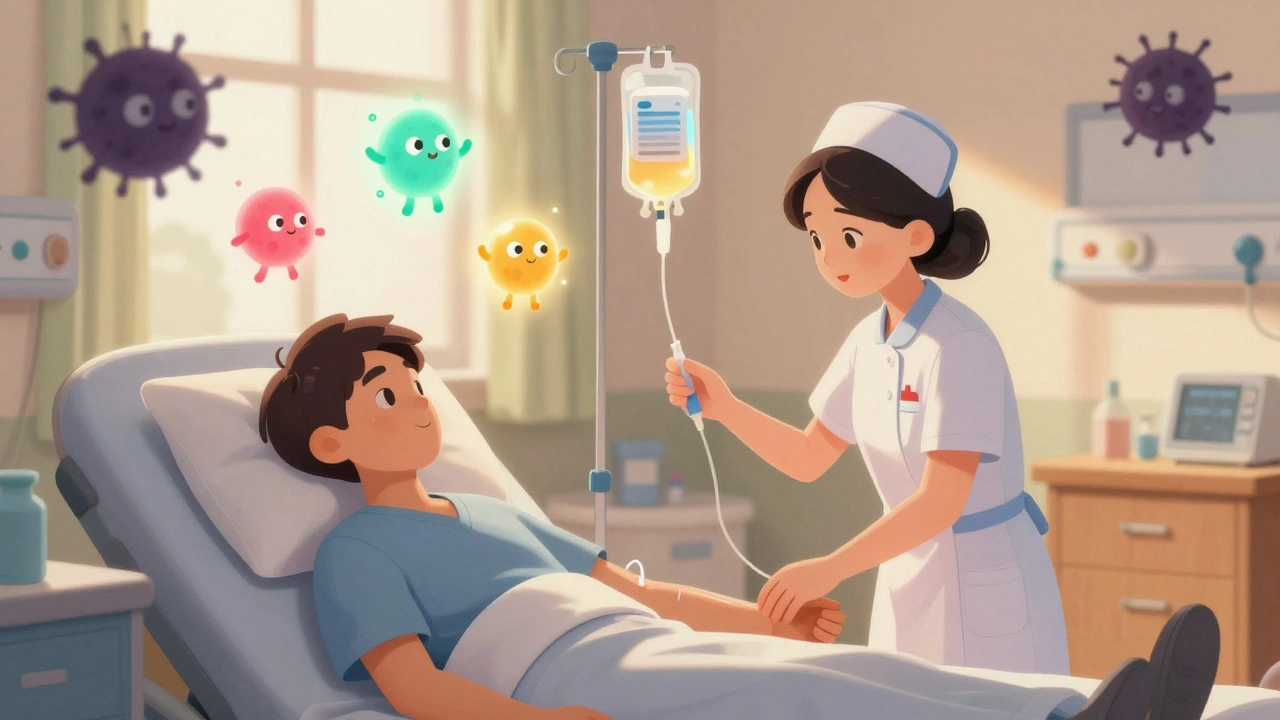
For decades, doctors had no real way to stop GBS. Then came intravenous immunoglobulin - or IVIG. It’s not a cure, but it’s the best tool we have. IVIG works by flooding your bloodstream with healthy antibodies from thousands of donors. These antibodies confuse your immune system, making it stop attacking your nerves.The standard dose is 0.4 grams per kilogram of body weight, given daily for five days. That’s about 28 grams for a 150-pound person. You don’t need surgery. No central lines. Just an IV in your arm. Most people start feeling better within two weeks. Studies show IVIG cuts recovery time by nearly half. People who get it walk again about three weeks faster than those who don’t.
It’s not magic. But it’s science. A 2012 NEJM trial found 60% of patients improved within 2-4 weeks with IVIG, compared to just 40% with placebo. Another study in JAMA Neurology showed IVIG and plasma exchange worked just as well at four weeks - but patients preferred IVIG because it was less painful and less invasive.
IVIG vs. Plasma Exchange: What’s the Difference?
Plasma exchange - or plasmapheresis - is the other first-line option. It removes your blood, filters out the bad antibodies, and returns the clean plasma. It’s effective. But it’s harder. You need a large catheter in your neck or groin. Sessions take hours. Complications like low blood pressure, infections, or clotting happen in about 30% of cases.IVIG? Side effects are milder. Headaches (25%), fever (15%), and occasional blood clots (1-3%). It’s easier to give, especially in smaller hospitals. That’s why most doctors start with IVIG unless the patient is in critical condition. If someone’s already on a ventilator and getting worse fast, plasma exchange might be chosen for its quicker action. But for most, IVIG is the go-to.
Cost matters too. In the U.S., one IVIG course runs $15,000 to $25,000. Plasma exchange? $20,000 to $30,000. Insurance usually covers both. But availability? That’s another story. During the 2020-2022 pandemic, global IVIG shortages hit hard. Some hospitals had to ration. Now, supply chains are better - but not foolproof.
Who Shouldn’t Get IVIG?
Not everyone can get it. People with severe IgA deficiency are at risk for life-threatening allergic reactions. If you’ve had a bad reaction to IVIG before, you won’t get it again. Kidney problems? That’s a red flag too. IVIG contains sugar (sucrose or maltose) that can stress the kidneys, especially in diabetics or older adults. One patient on PatientsLikeMe developed acute kidney failure after the third dose - rare, but real.Doctors check your IgA levels before starting. If you’re deficient, they’ll skip IVIG and go straight to plasma exchange. No guesswork. Also, IVIG doesn’t work well if you wait too long. The window for best results is within two weeks of symptoms starting. After that, its power drops. Every day delayed reduces effectiveness by about 5%, according to NINDS data.
What Happens After Treatment?
Getting IVIG doesn’t mean you’re out of the woods. Recovery is slow. Most people start feeling stronger after 10-14 days - toes twitching, arms lifting a little. But full recovery? That takes months. About 60% of patients return to normal function within a year. Thirty percent have lingering weakness - maybe foot drop, trouble climbing stairs, or numbness. Ten percent remain severely disabled.Rehabilitation is key. Physical therapy, occupational therapy, and sometimes speech therapy are part of the plan. Some need walkers, braces, or wheelchairs temporarily. Others never fully regain strength. A Reddit user named GBSSurvivor99 wrote: “Day 5: IVIG started. Day 12: I could wiggle my toes. Day 18: stood with help.” That’s progress. But it’s not fast.
And the pain? Neuropathic pain - burning, stabbing, electric shocks - can last for months. Medications like gabapentin or amitriptyline help, but they’re not perfect. Fatigue is another invisible burden. Even after walking again, many say they’re exhausted all the time.
Why Steroids Don’t Work
You might wonder: Why not just use steroids? They work for other autoimmune diseases. But for GBS? Multiple trials have shown they don’t help. A 2017 Cochrane review looked at 10 studies with over 800 patients. Steroids didn’t speed up recovery. Didn’t reduce disability. Didn’t lower the need for ventilation. In fact, they might even make things worse by increasing infection risk. So no - steroids are not part of the protocol. Stick to IVIG or plasma exchange.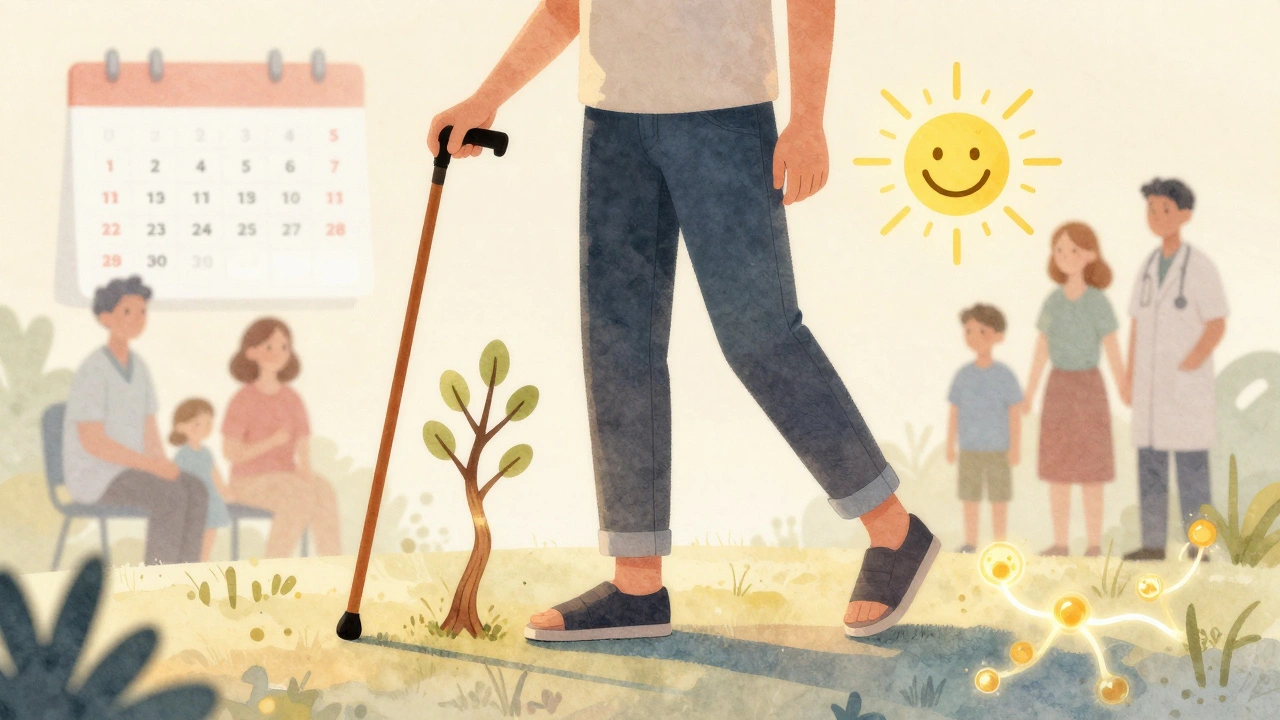
What’s Next for GBS Treatment?
Science is moving forward. Researchers are looking at drugs that block the complement system - a part of the immune system that destroys nerves in GBS. Eculizumab, a drug used in rare kidney diseases, showed 30% faster recovery in a 2022 trial. It’s not approved yet, but it’s promising.Another path? Blood tests. Some patients have specific antibodies - anti-ganglioside antibodies - that predict worse outcomes. If you test positive, doctors might treat you more aggressively. Personalized treatment is coming.
And then there’s the subcutaneous version of immunoglobulin - given under the skin instead of through an IV. It’s already approved for CIDP, a chronic cousin of GBS. If it works for acute cases too, it could change home care forever.
Recognizing the Signs Early
If you or someone you know has:- Weakness starting in the feet and moving upward
- Loss of reflexes (knee or ankle jerk gone)
- Recent infection (stomach bug, cold, flu)
- Difficulty walking, smiling, or swallowing
- get to the ER immediately. Don’t wait. Diagnosis relies on three things: clinical symptoms, nerve conduction tests (showing slowed signals), and a spinal tap (showing high protein with normal cell count - called albuminocytological dissociation). If all three match, it’s GBS.
Delaying treatment by even a few days can mean longer hospital stays, more rehab, and worse outcomes. That’s why neurologists stress: “When in doubt, treat.”
Living Beyond GBS
GBS changes you. Not just physically, but emotionally. Many survivors say they never feel the same. Anxiety, depression, and PTSD are common. Support groups like the GBS/CIDP Foundation offer real stories, not just statistics. One mother wrote: “My son needed dialysis after IVIG. We thought we’d lost him. But he walked again - just slower.”There’s no guarantee of full recovery. But there’s hope. With early IVIG, most people go home. Most people walk again. Most people live full lives - even if they carry a little extra fatigue, a little extra pain, or a little extra caution.
GBS doesn’t define you. But how you respond to it? That does.
What are the first signs of Guillain-Barré Syndrome?
The earliest signs are tingling or numbness in the feet and legs, followed by progressive muscle weakness that moves upward. Reflexes like the knee-jerk reflex disappear. Many also experience difficulty walking, climbing stairs, or balancing. In about half of cases, facial muscles weaken, leading to trouble smiling, chewing, or swallowing.
How quickly does IVIG start working for GBS?
Most patients begin to show improvement within 10 to 14 days after starting IVIG treatment. Some notice small changes - like being able to wiggle their toes - as early as day 5. But full recovery takes weeks to months. IVIG doesn’t reverse damage overnight; it stops the immune attack so the body can heal itself.
Is IVIG treatment safe for everyone?
No. IVIG is not safe for people with severe IgA deficiency, as it can trigger anaphylaxis. It’s also used cautiously in patients with kidney disease, heart failure, or a history of blood clots. Side effects like headaches, fever, and nausea are common but usually mild. Rare but serious risks include kidney failure and stroke. Doctors screen for these risks before starting treatment.
Can Guillain-Barré Syndrome come back?
Relapses are rare - less than 5% of patients. But some people develop a chronic form called chronic inflammatory demyelinating polyneuropathy (CIDP), which shares features with GBS but lasts longer than eight weeks. If weakness returns after initial recovery, it’s important to see a neurologist right away.
Why is IVIG preferred over plasma exchange?
IVIG is easier to administer, requires only standard IV access, and has fewer complications. Plasma exchange needs a central line, takes longer per session, and carries higher risks like infection and low blood pressure. While both treatments work equally well at improving function, patient satisfaction is higher with IVIG because it’s less invasive and more comfortable.
What’s the long-term outlook for GBS patients?
About 60% of patients fully recover within 6 to 12 months. Another 30% have some lasting weakness or numbness - maybe needing a cane or braces. About 10% remain significantly disabled. Fatigue, pain, and emotional stress are common long-term issues. Early IVIG improves outcomes, but recovery is often slow and requires ongoing rehab.
Rob Purvis
December 12, 2025 AT 09:29Man, I never realized how quickly GBS can escalate-tingling toes one day, ventilator the next? That’s terrifying. I’ve seen a friend go through this, and the IVIG treatment was the only thing that gave us hope. It’s not a cure, but it’s the closest thing we’ve got. The fact that it works by confusing the immune system? Genius. I mean, who knew flooding the body with other people’s antibodies could save your nerves?
And yeah, the cost is insane-$20K+? But honestly, if it gets you walking again, it’s worth every penny. I wish more people knew about this. Most think it’s just ‘bad flu’ until it’s too late.
Laura Weemering
December 12, 2025 AT 23:30Let’s be real-IVIG isn’t medicine, it’s a placebo wrapped in corporate greed. The pharmaceutical industry profits from this ‘treatment’ while quietly suppressing cheaper alternatives. Why aren’t we researching natural immunomodulators? Why is every study funded by Big Pharma? The ‘evidence’? Manufactured. The ‘trials’? Biased. And don’t even get me started on the sucrose content-it’s a metabolic landmine disguised as salvation.
They call it science. I call it control. And the fact that you’re all nodding along like sheep? That’s the real syndrome.
Stacy Foster
December 13, 2025 AT 06:06Okay but what if this is all a lie? What if GBS doesn’t even exist? What if it’s just a cover for something else? Like… mind control? Or vaccine side effects being buried under a fancy name? I read a guy on TruthFeed who said his cousin got GBS after a flu shot-then disappeared from the hospital. No autopsy. No records. Coincidence? I think not.
And IVIG? That’s just blood from donors who were probably vaccinated with the same stuff that caused the ‘infection’ in the first place. It’s a cycle. A trap. They want you dependent. They want you coming back every year. Don’t be fooled.
Reshma Sinha
December 14, 2025 AT 08:36As a neurology resident in Mumbai, I’ve seen GBS cases surge post-dengue outbreaks. IVIG is our lifeline-but we ration it because supply chains are broken. We don’t have the luxury of $20k doses. We use plasma exchange when we can, but the catheters? Expensive. Sterile? Rare. Still, we fight. Every patient who wiggles a toe after IVIG? That’s a victory. We don’t have fancy trials-we have grit. And hope. Don’t underestimate the power of a team that refuses to give up.
Lawrence Armstrong
December 16, 2025 AT 02:49Just had a cousin go through this. Day 1: ‘Just tired.’ Day 5: Couldn’t lift coffee cup. Day 7: IVIG started. Day 10: Could wiggle toes. 😌
Recovery’s slow as hell. Still uses a cane. Still gets zaps in his feet at night. But he’s alive. And walking. IVIG saved him. No drama. Just science. 🙏
Donna Anderson
December 16, 2025 AT 05:27OMG I just read this and cried 😭 my uncle had GBS last year and they gave him IVIG and he was like a zombie for weeks but then one day he just… sat up. And smiled. I swear. I was like ‘DID YOU JUST SMILE?!’ and he said ‘yeah i think i can move my thumb’ and i lost it. it’s not magic but it’s real. and the pain? yeah it’s brutal. but he’s walking now. kinda. and that’s enough.
Levi Cooper
December 17, 2025 AT 11:06Why are we letting foreigners dictate our medical standards? In America, we’ve got the best hospitals, the best drugs. But now we’re importing IVIG from Europe because ‘supply chains’? That’s weak. And why are we even using plasma exchange? It’s outdated. We need American-made alternatives. This isn’t just medicine-it’s national security. If we can’t treat our own citizens with American solutions, what’s the point of being a superpower?
sandeep sanigarapu
December 19, 2025 AT 07:43