
Hemorrhoids: Internal vs. External and How to Treat Them
 Mar, 17 2026
Most people don’t talk about hemorrhoids until they can’t ignore them. That burning, itching, or sharp pain when you sit down? Or the bright red blood on the toilet paper after a bowel movement? It’s not rare. In fact, about 75% of people will deal with hemorrhoids at some point in their lives. But knowing the difference between internal and external hemorrhoids - and what actually works to treat them - can save you months of discomfort and unnecessary stress.
What Exactly Are Hemorrhoids?
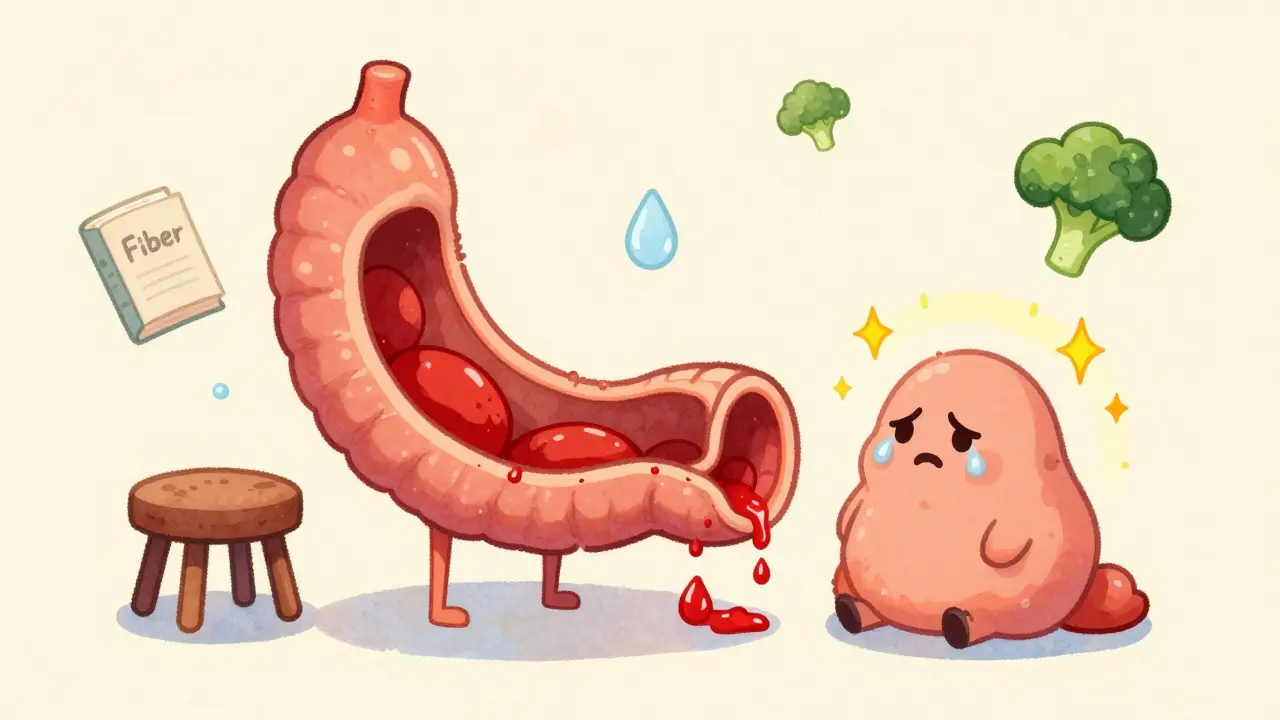
Hemorrhoids aren’t some weird abnormality. They’re normal blood vessels that help control stool passage. Think of them like cushions inside and around your anus. But when pressure builds up - from straining, sitting too long, pregnancy, or constipation - these cushions swell, become inflamed, and start causing trouble. The key difference between internal and external hemorrhoids comes down to location and nerve supply. Internal hemorrhoids form inside the rectum, above a line called the dentate line. This area has no pain receptors, so even if they’re swollen, you might not feel pain - but you’ll likely notice bleeding. External hemorrhoids form below the dentate line, right around the anus. This area is packed with nerves. So when they swell, you feel it - hard, painful lumps, itching, and discomfort when sitting.Internal Hemorrhoids: The Silent Problem
Internal hemorrhoids are sneaky. You might not even know you have them until you see bright red blood on the toilet paper or in the bowl. No pain. No lump. Just a surprise when you wipe. That’s because the lining inside the rectum doesn’t have pain sensors. Doctors classify them into four grades:- Grade I: Just bleed. No prolapse.
- Grade II: Protrude during bowel movements but go back in on their own.
- Grade III: Protrude and need to be pushed back in manually.
- Grade IV: Stay outside all the time. Can’t be pushed back. Often painful and prone to bleeding.
External Hemorrhoids: The Painful Ones
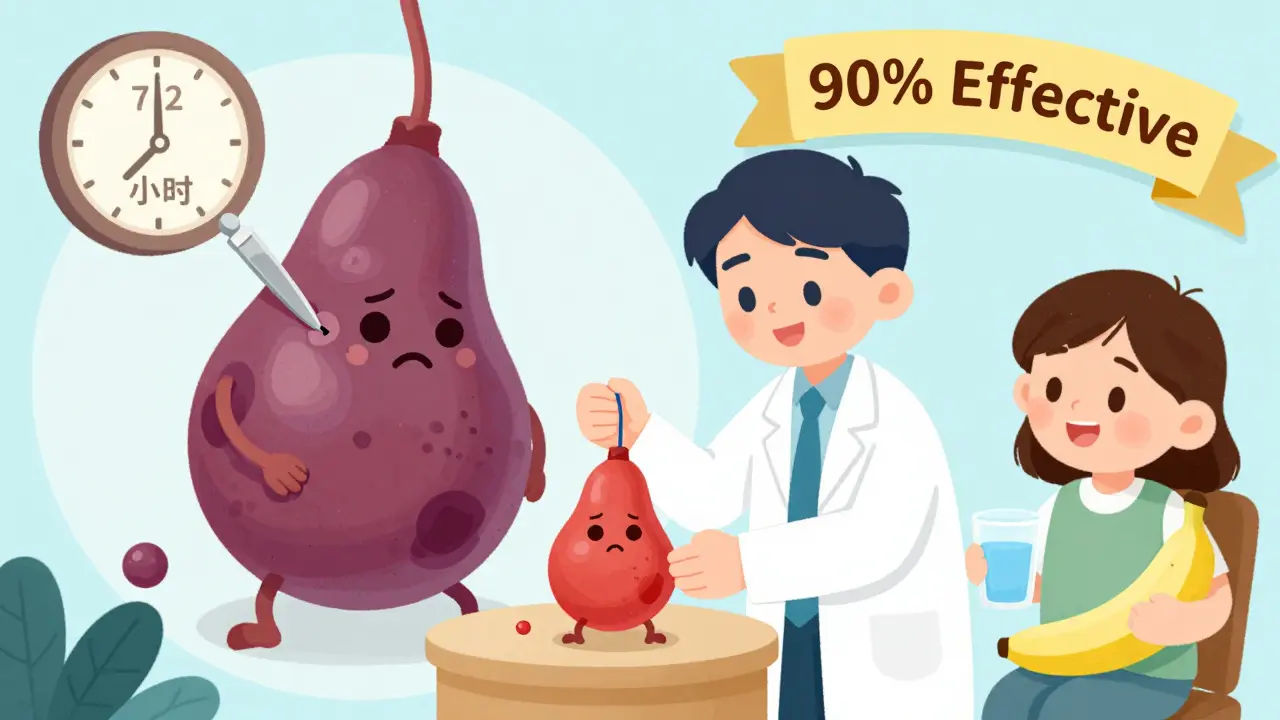
External hemorrhoids are harder to ignore. You’ll feel a soft, skin-colored lump near your anus. It might itch, burn, or ache - especially when sitting. But the worst case? A thrombosed external hemorrhoid. That’s when a blood clot forms inside the swollen vein. It turns into a hard, purple or blue lump the size of a pea or marble. The pain hits fast and hard. Sitting, walking, even coughing can feel unbearable. These usually need urgent care. If treated within 72 hours, a simple procedure - cutting open the lump and removing the clot - can bring instant relief. Don’t try to pop it yourself. That’s a recipe for infection. And don’t wait. The pain peaks in the first few days and then slowly fades. But getting it drained early means you’re back to normal faster.Can You Have Both?
Yes. And it’s more common than you think. Many people have a mix - internal hemorrhoids that prolapse and external ones that swell at the same time. That’s why symptoms can get confusing. Is the bleeding from inside? Is the pain from outside? Are you itchy because of skin irritation or internal inflammation? This is why self-diagnosis is risky. A doctor can tell the difference with a quick exam. Sometimes they use a small scope to look inside. Don’t let embarrassment stop you. Doctors see this every day.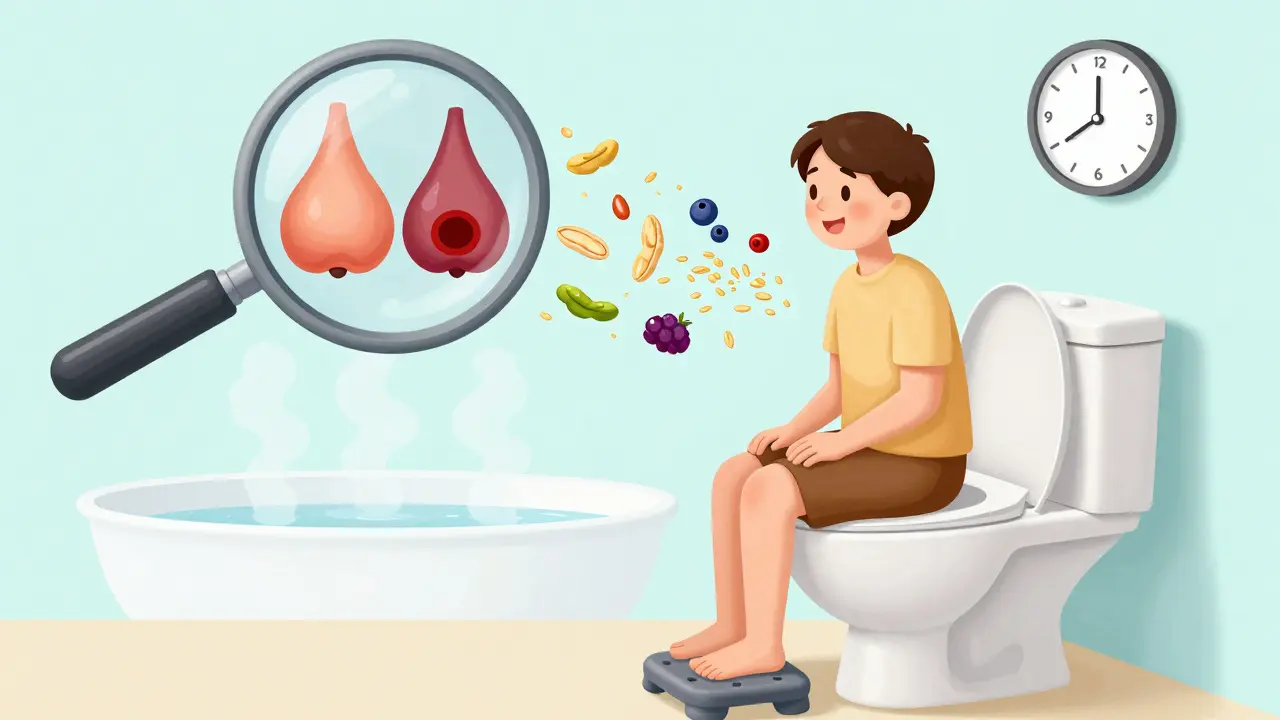
Home Treatments That Actually Work
For mild cases, you don’t need surgery. Simple changes make a huge difference:- Eat more fiber: Aim for 25-30 grams daily. That’s beans, oats, berries, broccoli, whole grains. Fiber softens stool so you don’t strain.
- Drink water: At least 8 glasses a day. Fiber without water just makes things worse.
- Use a footstool: Put your feet up while sitting on the toilet. This positions your pelvis to reduce pressure by about 30%.
- Limit toilet time: No scrolling. Five minutes max. Straining for longer just inflames them more.
- Sitz baths: Soak your bottom in warm (not hot) water for 15-20 minutes, 2-3 times a day. It reduces swelling and soothes irritation.
- Over-the-counter options: Hydrocortisone cream (for itching), witch hazel pads (for inflammation), or lidocaine gel (for pain). Avoid long-term use of steroid creams - they thin the skin.
When You Need Medical Help
If home care isn’t enough, doctors have effective, minimally invasive options - especially for internal hemorrhoids:- Rubber band ligation: A tiny band is placed around the base of the hemorrhoid. It cuts off blood flow. The hemorrhoid shrivels and falls off in a few days. It’s 90% effective for Grades I-III. You might feel pressure or mild cramping for a day or two.
- Sclerotherapy: A chemical solution is injected into the hemorrhoid. It scars the tissue and shrinks it. Less painful than banding, but may need repeat sessions.
- Infrared coagulation: A brief burst of heat seals the blood vessels. Quick, no anesthesia, and you can walk out the same day.
Surgery: Last Resort
If hemorrhoids keep coming back, are Grade IV, or cause severe bleeding, surgery might be needed. Two common procedures:- Hemorrhoidectomy: The hemorrhoid is cut out. It’s the most effective - 95% success rate. But recovery takes 2-4 weeks. Pain is real, and you’ll need painkillers.
- Stapled hemorrhoidopexy: Used mostly for prolapsed internal hemorrhoids. The surgeon staples the tissue back into place. Less pain than removal, but higher chance of recurrence.
Prevention Is the Real Win
The best treatment? Never letting them get bad in the first place.- Keep moving. Exercise helps prevent constipation.
- Don’t hold it in. Go when you feel the urge.
- If you’re pregnant, sleep on your left side. It takes pressure off your pelvic veins.
- Avoid heavy lifting. If you must lift, breathe out - don’t hold your breath.
What Not to Do
Don’t fall for miracle creams online. No “natural” oil, herbal tea, or supplement has been proven to cure hemorrhoids. The American Gastroenterological Association warns against these. They waste money and delay real treatment. Also, don’t ignore bleeding. If you’ve never had hemorrhoids before and suddenly see blood - especially if you’re over 50 - get a colon evaluation. It could be something more serious.What to Expect After Treatment
After rubber band ligation, you might feel a dull ache or pressure for 24-48 hours. That’s normal. After surgery, expect pain for 7-10 days. Pain meds help. So do sitz baths and stool softeners. Most people report 80% improvement if they maintain fiber intake and hydration. One patient told me: “I thought I’d be stuck with this forever. After 3 weeks of eating beans and drinking water, I forgot I ever had them.”When to See a Doctor
Call your doctor if:- Bleeding lasts more than a week.
- Pain is severe or gets worse.
- You feel dizzy or weak - that could mean significant blood loss.
- Changes in bowel habits - like constipation lasting more than a week or diarrhea that won’t stop.
- You’re over 50 and this is your first time experiencing symptoms.
Can internal hemorrhoids turn into external ones?
No, they don’t transform. Internal and external hemorrhoids form in different areas. But an internal hemorrhoid can prolapse - meaning it pushes out through the anus - and then become irritated and swollen like an external one. That’s why some people think they’ve changed types. It’s the same hemorrhoid, just in a different state.
Is it safe to use hemorrhoid creams long-term?
No. Hydrocortisone creams are fine for short-term relief (up to a week), but using them longer can thin the skin around the anus, making it more sensitive and prone to damage. Stick to the label instructions. If symptoms don’t improve in 7 days, see a doctor.
Do hemorrhoids cause cancer?
No. Hemorrhoids themselves don’t turn into cancer. But rectal bleeding - a common symptom - can also be a sign of colon cancer, especially in people over 50. That’s why any new bleeding should be checked by a doctor. Don’t assume it’s just hemorrhoids.
Can pregnancy cause hemorrhoids? What can I do?
Yes. Up to 35% of pregnant women get hemorrhoids due to increased pressure on pelvic veins. The good news? They often go away after delivery. In the meantime, focus on fiber, water, and avoiding straining. Sleeping on your left side helps reduce pressure. Avoid sitting for long periods. Sitz baths are safe during pregnancy and can offer real relief.
How long does it take for hemorrhoids to go away?
Mild cases can improve in 4-7 days with home care. Thrombosed external hemorrhoids may take 1-2 weeks to heal naturally, but getting the clot removed early cuts recovery time in half. Prolapsed or severe internal hemorrhoids often need medical treatment. Without treatment, they can linger for months or come back repeatedly.
Melissa Starks
March 18, 2026 AT 04:35Alexander Pitt
March 19, 2026 AT 06:19Emily Hager
March 20, 2026 AT 12:35MALYN RICABLANCA
March 20, 2026 AT 14:50Manish Singh
March 20, 2026 AT 21:41becca roberts
March 21, 2026 AT 13:19gemeika hernandez
March 23, 2026 AT 07:44Lauren Volpi
March 24, 2026 AT 00:17Suchi G.
March 25, 2026 AT 11:48Nicole Blain
March 26, 2026 AT 04:25Kathy Underhill
March 27, 2026 AT 03:39