
Home Hemodialysis: Schedules, Training, and Outcomes
 Jan, 31 2026
What Is Home Hemodialysis?
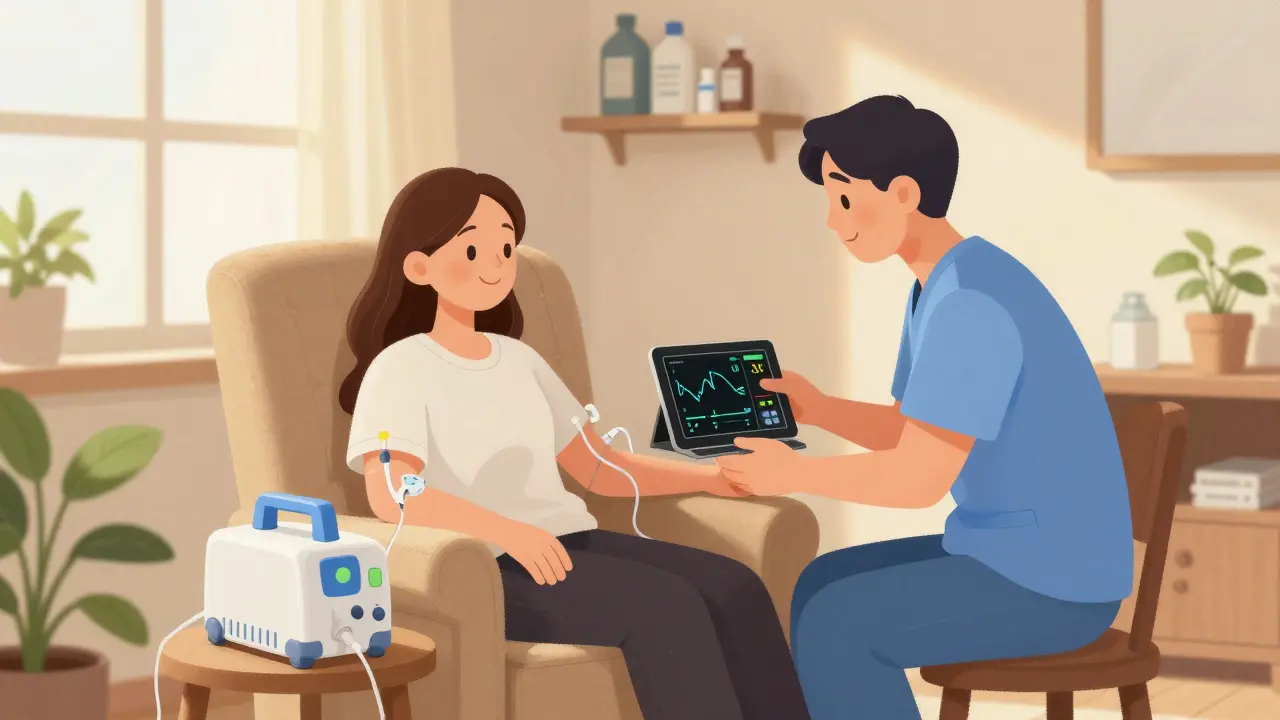
Home hemodialysis lets people with end-stage kidney disease do their dialysis treatments in their own homes instead of going to a clinic three times a week. It’s not just a convenience-it changes how you live. You choose when to dialyze: early morning, late at night, or even while you sleep. This flexibility means fewer disruptions to work, family time, or hobbies. But it’s not as simple as plugging in a machine. Home hemodialysis requires training, space, a care partner, and a commitment to managing your own treatment.
How Training Works
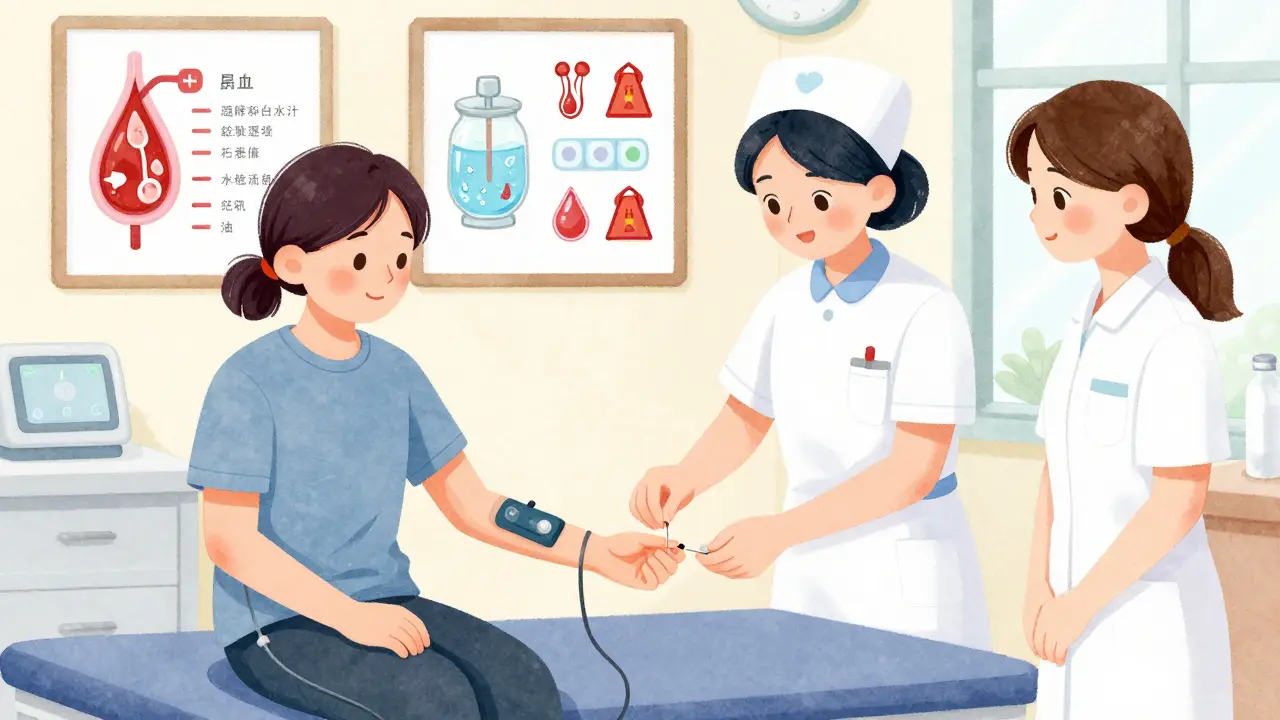
Training for home hemodialysis isn’t a quick process. Most people spend between 3 and 12 weeks learning how to do it safely. The exact length depends on your health, how quickly you pick up the skills, and whether you’re training with a partner. You’ll need to master at least six core skills: setting up the machine, cleaning and disinfecting it, connecting your vascular access (usually a fistula or graft), inserting the needles yourself or helping your partner do it, monitoring your blood pressure, and recognizing warning signs like low blood pressure or air in the lines.
Many programs use a step-by-step approach. First, you watch and ask questions. Then you practice on a training machine that doesn’t use real blood. After that, you do supervised treatments at the clinic, slowly taking over more tasks. By the end, you should be able to handle the whole process without help-except for one rule: you can’t do it alone. Medicare and most health systems require a trained care partner to be present during every treatment. That means your spouse, adult child, or close friend must learn everything you learn. If you don’t have someone reliable, home dialysis isn’t an option.
Three Main Schedules, Three Different Lives
Not all home hemodialysis is the same. There are three common schedules, each with different effects on your body and daily routine.
- Conventional home hemodialysis is three times a week for 3 to 4 hours-similar to in-center dialysis but with your own schedule. You still get the benefit of being at home, but the clinical outcomes are close to what you’d get at a clinic.
- Short daily home hemodialysis means 5 to 7 treatments a week, each lasting 2 to 3 hours. This schedule is gentler on your heart. Studies show people on this plan have better blood pressure control, less fluid overload, and a 28% lower risk of dying compared to in-center patients.
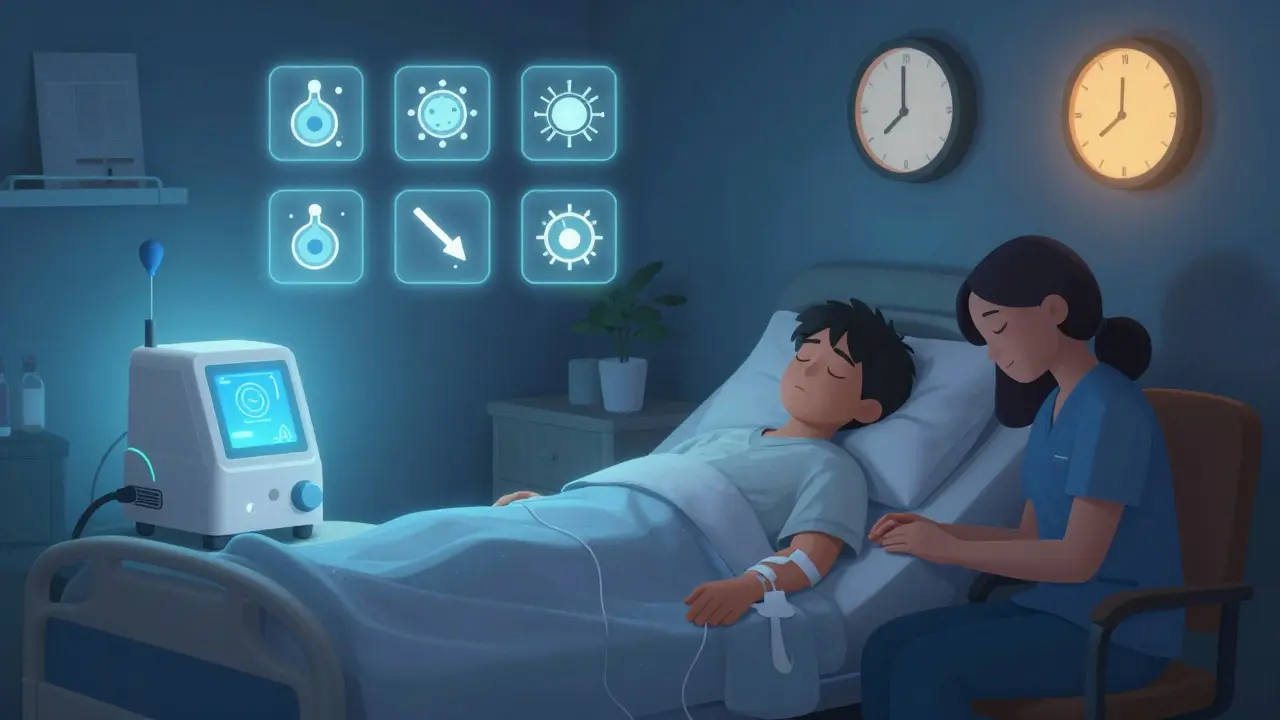
- Nocturnal home hemodialysis happens while you sleep, usually 6 to 10 hours, 3 to 7 nights a week. Because the treatment is slow and long, your body clears toxins and fluids more completely. This leads to much lower phosphate levels-so you need fewer phosphate binder pills. Many patients say they feel more energetic and sleep better after switching to nocturnal dialysis.
The key takeaway? More frequent, longer sessions = better outcomes. But they also demand more time and energy. You need to plan your life around your schedule, not the other way around.
What You Need at Home
Setting up for home hemodialysis means making changes to your living space. You’ll need a dedicated area of at least 6 feet by 6 feet. That’s where you’ll store supplies, set up the machine, and do your treatments. The machine needs a dedicated electrical circuit-usually a 120-volt, 20-amp outlet. No sharing with your microwave or hair dryer. You’ll also need a dedicated water line and a drain. Most homes need a plumber to install these.
Water quality is non-negotiable. The system uses reverse osmosis to purify water before it becomes dialysate. Monthly tests for bacteria and chemicals are required by law. You’ll keep logs of water pressure, chlorine levels, and cleaning schedules. If the water isn’t clean, you risk infection or poisoning.
Portable machines like the NxStage System One exist, but they’re not for everyone. They’re lighter and can be taken on trips, but they require more setup and still need clean water. If you travel often, you’ll need to plan dialysis at clinics ahead of time-unless you’re using a portable unit.
Outcomes: Why It Works Better
People who do home hemodialysis live longer, feel better, and spend less time in the hospital. A 2020 report from the U.S. Renal Data System found home hemodialysis patients had a 15-20% lower death rate than those on in-center dialysis. That gap widens if you’re doing short daily or nocturnal treatments.
One major reason: better toxin removal. Nocturnal dialysis clears phosphorus 42% more effectively than standard in-center sessions. That means fewer phosphate binders-on average, 3.2 fewer pills per day. Fewer pills mean fewer stomach issues and lower costs.
Quality of life improves, too. A 2019 study found home dialysis patients scored 37% higher on quality-of-life surveys. Why? No more commuting. No more rigid clinic hours. No more feeling exhausted after a 4-hour session. Many say they can return to work, take care of their kids, or travel again.
The Hidden Challenges
It’s not all smooth sailing. The biggest complaint? Machine alarms. They go off for minor issues-a drop in pressure, a kinked line, a low battery. At first, they’re terrifying. You learn to ignore the false ones, but it takes months. About 67% of home dialysis users say alarms cause constant stress.
Then there’s the care partner. You’re not just treating your kidneys-you’re managing a relationship. About 41% of users report tension with their partner because of the pressure. One person on Reddit said, “I feel like I’m being watched every time I dialyze. I’m not sick. I’m a patient.” That emotional weight is real.
Supply management is another hidden burden. You order tubing, needles, dialysate bags, and cleaning supplies every few weeks. If you forget, your treatment gets canceled. Some patients keep a checklist taped to the fridge. Others use automated delivery services.
Who Gets Left Behind?
Even though home hemodialysis is better for most, only 12% of U.S. dialysis patients use it. Why? Three big reasons.
- No care partner-About 30% of potential candidates don’t have someone who can help. That’s a hard barrier.
- No training program nearby-Only 12% of dialysis centers offer home training. If you live in a rural area, you might need to drive 100 miles just to start.
- Doctors don’t push it-Many nephrologists still default to in-center dialysis because it’s easier for them. They don’t have the staff or time to train patients properly.
But things are changing. New machines are smaller. Training is getting faster-some programs now use virtual reality simulators to teach needle insertion, cutting training time from 6 weeks to 4. And Medicare is shifting payments to reward better outcomes, not just more treatments. That means more centers will start offering home dialysis.
Is It Right for You?
Ask yourself these questions:
- Do you have someone who can be with you during every treatment?
- Can you handle the responsibility of managing your own care?
- Do you want more control over your time and schedule?
- Are you willing to learn new skills and deal with machine alarms?
If you answered yes to most of these, home hemodialysis could be the best choice you’ve ever made for your health. It’s not easy, but it’s worth it. The people who stick with it say they get their life back.
Can you do home hemodialysis alone?
No, not under standard protocols. Medicare and most health systems require a trained care partner to be present during every treatment. Solo home hemodialysis is possible with special equipment and approval, but it’s rare and only for highly experienced patients who have passed additional safety evaluations. For most people, having a partner isn’t optional-it’s mandatory for safety.
How long does home hemodialysis training take?
Training typically lasts between 3 and 12 weeks, with most people completing it in 4 to 6 weeks. The length depends on your learning pace, whether you’re training with a partner, and your clinic’s program. Some centers now use virtual reality simulators to teach needle insertion, which can cut training time to as little as 3 weeks. You must pass both written and hands-on tests before you’re cleared to dialyze at home.
Is home hemodialysis cheaper than in-center dialysis?
Medicare pays the same amount whether you do dialysis at home or in a center. But home dialysis can save you money indirectly. You save on transportation, meals outside the home, and time off work. Many patients also need fewer medications because their treatments are more effective-especially phosphate binders. Over time, these savings add up. The biggest cost is your time and your partner’s time, which isn’t financial but is still significant.
What happens if the machine breaks down?
Every home hemodialysis program gives you a backup plan. Most clinics provide a spare machine or have arrangements with nearby centers where you can go for an emergency treatment. You’ll also get a 24/7 helpline to call if something goes wrong. If your machine alarms and you can’t fix it, you stop the treatment and call for help. Never try to force a malfunctioning machine to run. Safety comes first.
Can you travel with a home hemodialysis machine?
Yes, but only if you have a portable system like the NxStage System One. Standard home machines are too large and heavy to move. With a portable unit, you can take your machine on trips-but you need to plan ahead. You must arrange for clean water and a drain at your destination. Some patients ship dialysis supplies ahead or use delivery services. Always contact your dialysis center before traveling to make sure you’re covered.
Does home hemodialysis improve survival?
Yes. Multiple studies show home hemodialysis patients live longer than those on in-center dialysis. The survival benefit is strongest for those doing short daily or nocturnal treatments. One study found a 28% lower risk of death for short daily users. Another showed a 15-20% lower death rate overall. Better clearance of toxins, improved heart health, and fewer hospitalizations are the main reasons.
What Comes Next?
If you’re considering home hemodialysis, start by asking your nephrologist if your clinic offers training. If they say no, ask why-and ask for a referral to a center that does. Don’t accept “it’s not for everyone” as an answer. It’s for many more people than you think. Talk to others who’ve done it. Join online forums. Watch videos of real patients doing their treatments. The fear of the unknown is the biggest obstacle. Once you see how it works, you’ll realize it’s not about being brave-it’s about being ready.
franklin hillary
February 2, 2026 AT 02:44Melissa Melville
February 3, 2026 AT 04:56Lilliana Lowe
February 4, 2026 AT 14:22vivian papadatu
February 4, 2026 AT 16:33Jamie Allan Brown
February 5, 2026 AT 10:29Nicki Aries
February 5, 2026 AT 12:40Ed Di Cristofaro
February 6, 2026 AT 21:22Deep Rank
February 8, 2026 AT 12:52Naomi Walsh
February 8, 2026 AT 17:23Bryan Coleman
February 10, 2026 AT 05:58Naresh L
February 12, 2026 AT 02:39Sami Sahil
February 13, 2026 AT 01:15Bob Cohen
February 13, 2026 AT 16:34Ishmael brown
February 14, 2026 AT 23:33Aditya Gupta
February 16, 2026 AT 06:56