
How FDA Ensures Generic Drug Quality During Manufacturing
 Dec, 29 2025
The U.S. Food and Drug Administration doesn’t wait for a generic drug to hit the shelf before checking its quality. Instead, it builds safety into every step of the manufacturing process - from the raw ingredients to the final pill in the bottle. This isn’t about spot-checking random samples. It’s about making sure every batch, everywhere in the world, meets the same strict standards as the brand-name drug. And it works. Around 90% of all prescriptions filled in the U.S. are for generic drugs, and patients trust them because the FDA makes sure they’re just as safe and effective.
What Makes a Generic Drug Really the Same?
A generic drug isn’t just a copy. It has to be a pharmaceutical equivalent - same active ingredient, same strength, same way it’s taken (pill, injection, etc.), and same intended use. But that’s only half the story. It also has to be bioequivalent. That means your body absorbs it at the same rate and to the same extent as the brand-name version. If you take 100 mg of a generic lisinopril and 100 mg of the brand, your blood levels should be nearly identical. The FDA requires this proof before approving any generic.
It’s not enough to say it’s the same. The FDA demands hard data. Manufacturers must run studies showing that the generic performs like the original in real human bodies. These studies aren’t shortcuts. They’re tightly controlled, peer-reviewed, and reviewed again by FDA scientists. Only when every number adds up does approval move forward.
The Backbone of Quality: cGMP Rules
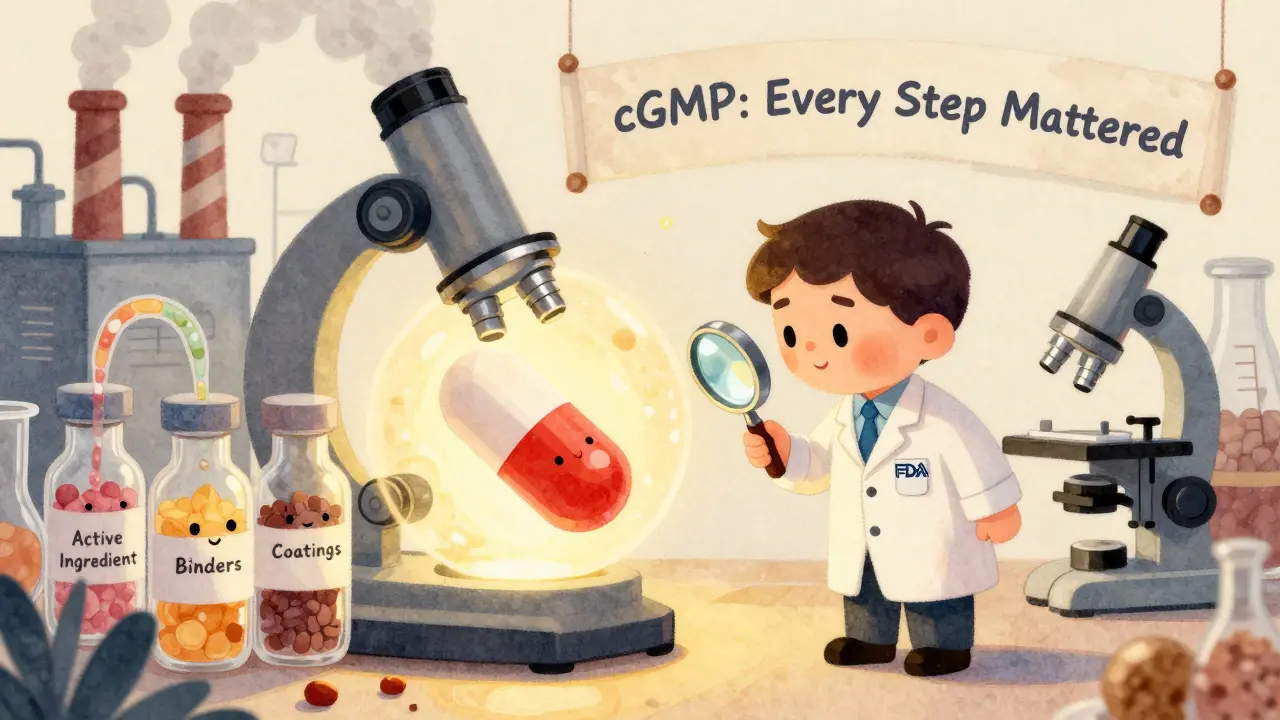
The foundation of everything the FDA does is called cGMP - Current Good Manufacturing Practices. These aren’t suggestions. They’re federal law, written in Title 21 of the Code of Federal Regulations. Think of cGMP as the rulebook that tells manufacturers how to make drugs safely, consistently, and without errors.
There are five core areas the FDA checks under cGMP:
- Control of Materials: Every ingredient, even the tiniest one, must be tracked from the moment it arrives. Where did it come from? Who tested it? Was it stored properly? The FDA wants paper trails - not guesses.
- Production and Process Controls: Every step in making the drug must be written down and followed exactly. If a machine runs too hot or a mixing time is off by five seconds, it’s flagged. Deviations aren’t ignored. They’re investigated and fixed before the next batch is made.
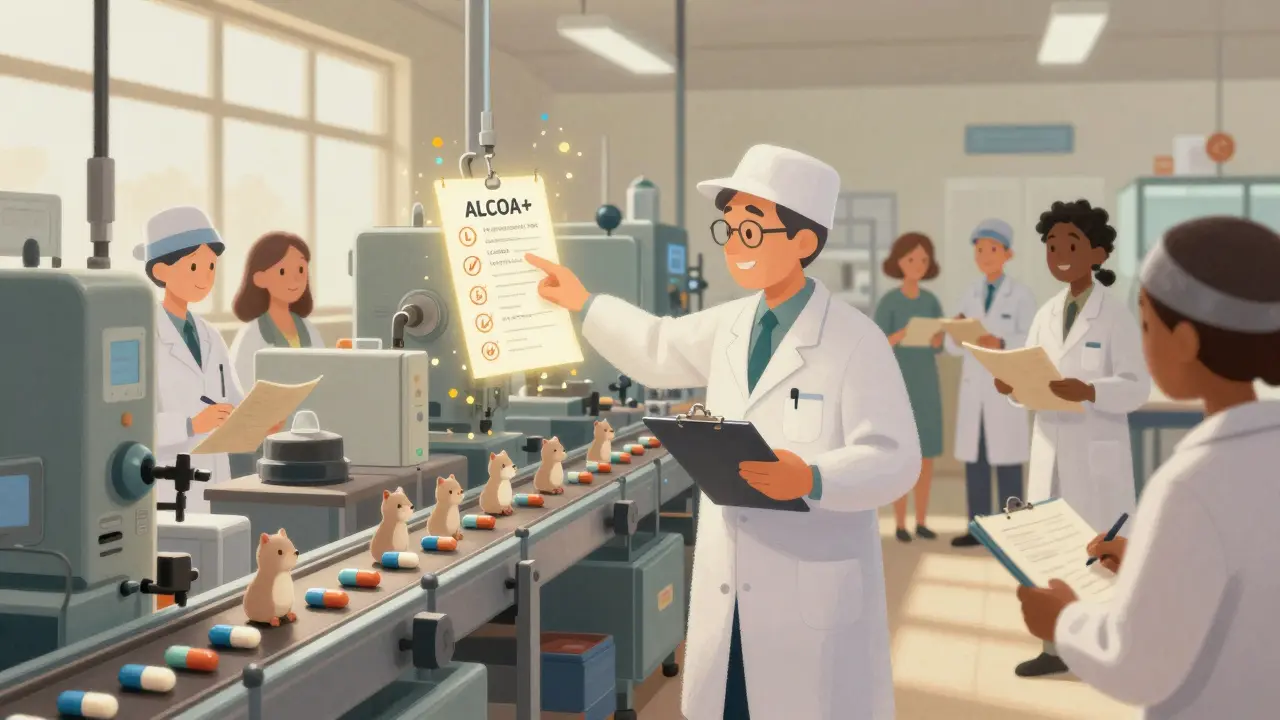
- Quality Control and Lab Testing: Raw materials, in-process samples, and final products are tested using validated methods. The FDA insists on ALCOA+ standards: data must be attributable, legible, contemporaneously recorded, original or true copy, accurate, complete, consistent, enduring, and available. No backdating. No deleting. No fudging.
- Packaging and Labeling: A pill that’s correct inside means nothing if the label says the wrong thing. The FDA checks that every bottle, box, and leaflet matches the approved version. Mislabeling is one of the most common reasons for recalls.
- Documentation and Record Keeping: If it wasn’t written down, it didn’t happen. Every test result, every adjustment, every inspection note must be kept for years. These records aren’t just for the FDA - they’re the manufacturer’s own safety net.
Inspections: No Notice, No Mercy
The FDA doesn’t call ahead. Inspectors show up unannounced at over 1,200 facilities each year - including factories in India, China, and other countries that supply the U.S. market. These aren’t tours. They’re full-scale audits. Inspectors can spend days or weeks in a facility, reviewing records, watching operations, and even taking samples.
When they find problems, they issue a Form 483. It’s not a fine. It’s a list of violations - things like missing records, uncalibrated equipment, or contaminated areas. If the company doesn’t fix them, the FDA can block the drug from entering the U.S. In 2022, 42% of all Form 483 observations were about data integrity issues. That’s how seriously the FDA takes documentation.
Domestic facilities have an 8% violation rate. Foreign facilities? 17%. The gap isn’t because foreign plants are worse - it’s because they’re harder to monitor. That’s why the FDA uses remote interactive evaluations (RIEs) more than ever. After the pandemic, 35% of inspections in 2022 were partially or fully done online, using video feeds and digital document sharing.
How Generic Drugs Get Approved: The ANDA Process
Applying to sell a generic drug isn’t quick. It’s called an Abbreviated New Drug Application, or ANDA. Even though it’s "abbreviated," it’s still a marathon. Manufacturers must submit detailed data on chemistry, manufacturing, and controls. And here’s something most people don’t know: they must provide three separate batches of the drug - one for each strength they plan to sell. One batch is used to make the lowest dose, another for the highest, and the third for everything in between. This ensures consistency across all versions.
The review process takes months - sometimes over a year. The FDA’s Office of Generic Drugs works hand-in-hand with the Office of Pharmaceutical Quality. That means the same team that checks the science also checks the factory. No silos. No handoffs. Just one unified evaluation.
Costs, Challenges, and Real-World Impact
Getting FDA approval isn’t cheap. Small manufacturers often spend $2-5 million just to set up the labs, hire trained staff, and build the documentation system before they even submit their first application. About 30-40% of development time for some companies goes into paperwork alone. But the payoff is real: generic drugs cost 80-85% less than brand-name versions. That’s billions saved every year for patients and the health system.
Still, challenges remain. The Government Accountability Office found that FDA resources are stretched thin. With over 1,700 global facilities to monitor, inspectors can’t be everywhere at once. That’s why the FDA now uses risk-based sampling - focusing on plants with past issues, or those making high-risk drugs like injectables or antibiotics.
And the system is evolving. In 2023, the FDA launched the Drug Quality Reporting System (DQRS), making it easier for manufacturers to report problems quickly. And under GDUFA III, which started in October 2022, the agency got $650 million over five years to boost inspections and technology. That money is going toward tools like real-time release testing - where quality is checked during production, not after.
Why This Matters to You
You might think generics are just cheaper versions. But the truth is, they’re held to the same gold standard as brand-name drugs. The FDA doesn’t cut corners. It doesn’t trust luck. It builds quality into the process - from the first gram of powder to the last pill in the bottle. That’s why millions of Americans rely on generics every day without fear.
When you pick up a generic prescription, you’re not taking a gamble. You’re getting a drug that’s been scrutinized at every stage. The same scientists who approved the original drug reviewed the generic. The same inspectors who checked the brand-name factory checked the generic’s. And the same strict rules apply.
That’s not just regulation. That’s patient protection.
What’s Next for Generic Drug Quality?
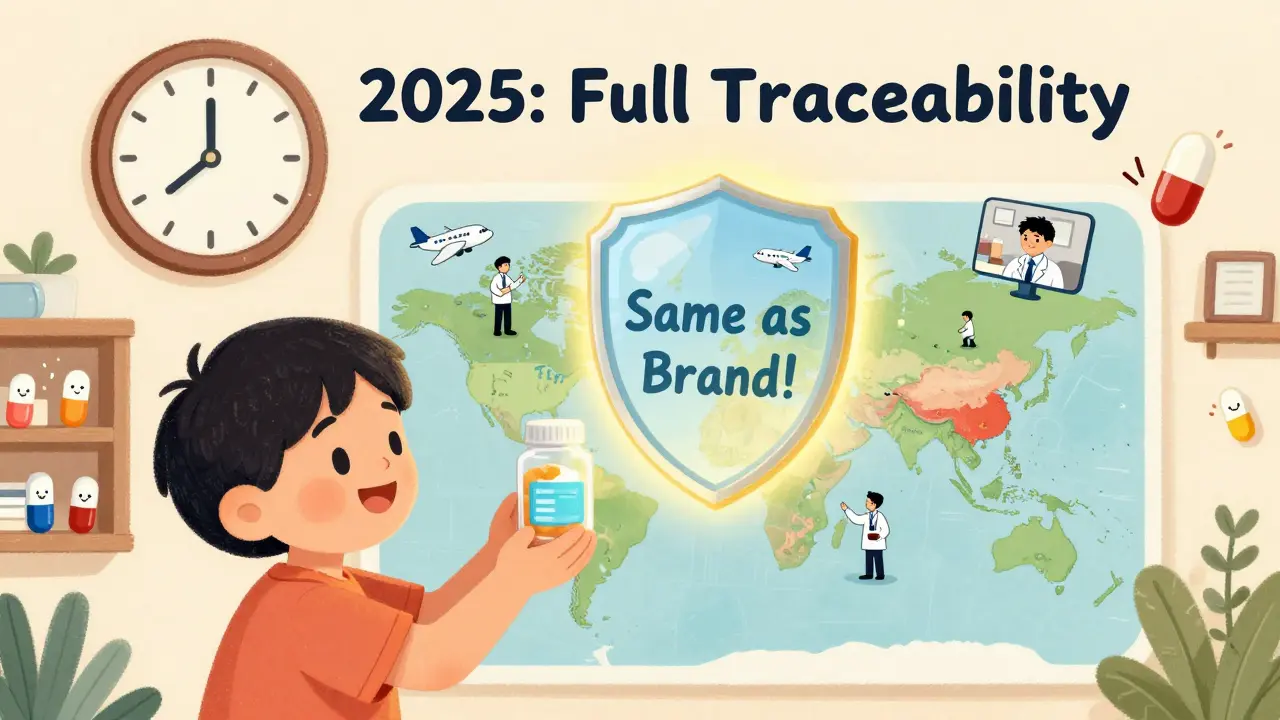
The FDA is pushing toward smarter manufacturing. Technologies like continuous manufacturing - where drugs are made in one unbroken flow instead of in batches - are being tested. Real-time quality monitoring could mean fewer recalls and faster approvals. By 2025, new rules may require full traceability of active ingredients from source to final product.
These changes won’t make things easier for manufacturers. But they’ll make the system more reliable. And for patients, that’s the only thing that matters.
Are generic drugs as safe as brand-name drugs?
Yes. The FDA requires generic drugs to meet the same strict standards for identity, strength, purity, and quality as brand-name drugs. They must also prove they work the same way in the body. Over 90% of U.S. prescriptions are for generics, and they’ve been safely used for decades.
Does the FDA inspect generic drug factories?
Yes. The FDA conducts over 1,200 unannounced inspections each year at facilities worldwide that make generic drugs for the U.S. market. Inspectors review records, observe production, and take samples. They don’t give advance notice - and they stay as long as needed to verify compliance.
Why do generic drugs cost so much less?
Generic manufacturers don’t have to repeat expensive clinical trials because they prove their drug is bioequivalent to the brand-name version. They also face more competition, which drives prices down. Despite the lower cost, they must still meet the same FDA quality standards - meaning the savings come from efficiency, not lower quality.
What happens if a generic drug fails FDA inspection?
If a facility fails an inspection, the FDA can block its products from entering the U.S. market. The company must fix the issues and pass a follow-up inspection before approval is granted. In serious cases, the FDA may issue a warning letter or even ban imports from that facility.
How long does it take to get a generic drug approved?
The approval process typically takes 12 to 24 months, with multiple review cycles. Each cycle can last several months. The timeline depends on how complete and clear the application is, whether the FDA requests more data, and whether the manufacturing facility has prior compliance history.
Do all generic drug manufacturers follow the same rules?
Yes. Whether it’s a small startup or a global company, every manufacturer of a generic drug for the U.S. market must comply with the same cGMP regulations. The FDA applies identical standards regardless of size, location, or whether the company also makes brand-name drugs.