
How to Check Active Ingredients to Avoid Double Dosing in Children
 Dec, 23 2025
Every year, thousands of children end up in emergency rooms because their parents gave them too much of a medicine - not because they meant to, but because they didn’t know they were giving the same ingredient twice. It’s not a rare mistake. In fact, about one in five parents has accidentally double-dosed their child with something like acetaminophen or ibuprofen. And the worst part? It’s completely preventable.
Why Double Dosing Happens
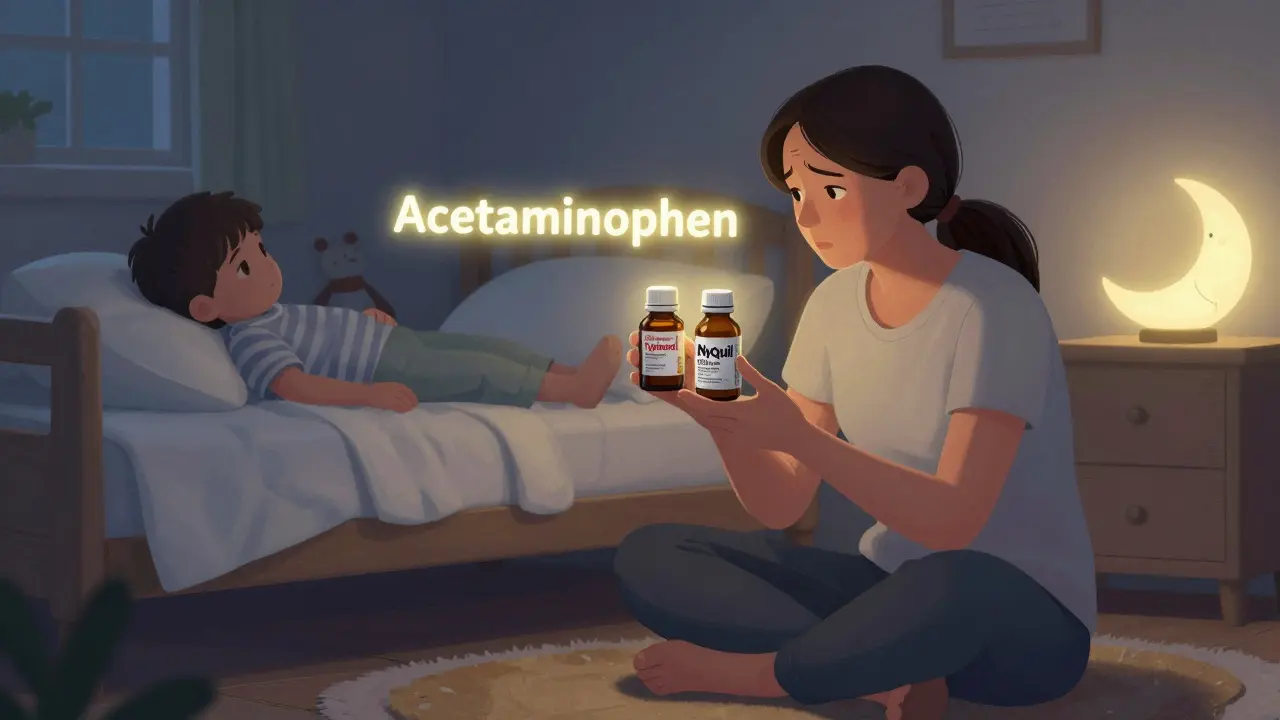
Most parents think they’re being careful. They read the label. They use the dosing cup. They wait the right amount of time between doses. But here’s the problem: many common cold, cough, and fever medicines contain the same active ingredients - just under different names. For example, you might give your child Children’s Tylenol for a fever, then later give them NyQuil Cold & Flu because they’re coughing and congested. Sounds logical, right? But both contain acetaminophen. That’s two doses of the same medicine, rolled into one. And acetaminophen overdose is the leading cause of acute liver failure in kids under six. Same goes for ibuprofen. Giving Advil Children’s and then Children’s Motrin a few hours later? That’s doubling up. Even worse, some allergy meds like Benadryl show up in nighttime cough syrups. One parent gives the allergy medicine for runny nose. Another gives the cough syrup for sleep. Both have diphenhydramine. Result? A child so drowsy they can’t wake up. The FDA found that 60% of these mistakes happen in kids under five. Why? Because their bodies are smaller, their livers are still developing, and even a little extra can push them over the edge. A 10% overdose in a toddler can double their risk of serious side effects. A 20% overdose of insulin? That’s a trip to the ER. A 25% overdose of ADHD meds like Adderall? Heart rate spikes, blood pressure soars, and seizures can follow.The Most Dangerous Ingredients
Not all ingredients are created equal. Some have razor-thin safety margins. Here are the big three that cause the most trouble:- Acetaminophen (also called paracetamol, APAP, or N-acetyl-p-aminophenol) - Found in over 600 OTC products, including Tylenol, NyQuil, Theraflu, Vicks, and even some prescription painkillers. It’s the #1 reason kids end up in the hospital from medication errors.
- Ibuprofen - Sold as Advil, Motrin, and countless store brands. Overdose can cause kidney damage, stomach bleeding, and seizures.
- Diphenhydramine - The sleepy-time ingredient in Benadryl, Dimetapp, and many nighttime cold formulas. Too much causes extreme drowsiness, trouble breathing, and even hallucinations in kids.
How to Check Active Ingredients - Step by Step
You don’t need to be a pharmacist. You just need to slow down and follow these three steps every time you give your child medicine.- Look at the “Active Ingredients” section - Not the brand name. Not the flavor. Not the “for cold and flu” label. Open the bottle. Flip the box. Find the small print that says “Active Ingredients.” That’s where the real info lives.
- Write it down - Keep a simple list on your phone or a sticky note. For each medicine, write: Brand Name, Active Ingredient, Strength (like 160mg/5mL), and Time Given. Example: “NyQuil - Acetaminophen - 160mg/5mL - 2pm.”
- Compare before giving anything new - Before you give another medicine, check your list. If you already gave acetaminophen in the last 4-6 hours, don’t give another one - even if it’s a different brand. Wait. Call your doctor if you’re unsure.

What to Do If You Accidentally Double Dose
Mistakes happen. If you realize you gave your child two doses of the same medicine - or two medicines with the same ingredient - don’t panic. But don’t wait either.- Call Poison Control immediately - In the U.S., it’s 1-800-222-1222. They’re free, available 24/7, and trained to handle exactly this. Tell them: what medicine, how much, when, and your child’s weight.
- Don’t induce vomiting - That’s outdated advice and can make things worse.
- Keep the medicine bottle - Bring it with you if you go to the ER. The exact ingredients and strength matter.
What to Avoid
Here are the top three habits that lead to double dosing - and what to do instead.- Don’t alternate acetaminophen and ibuprofen - Many parents think switching between Tylenol and Advil keeps fever down longer. But research shows this increases double-dosing risk by 47%. Stick to one, and only switch if your doctor says so.
- Don’t use kitchen spoons - A teaspoon isn’t 5mL unless it’s the one that came with the medicine. Household spoons can hold anywhere from 2.5mL to 7.5mL. That’s a 200% variation. Always use the dosing cup, syringe, or dropper that came with the bottle.
- Don’t assume “children’s” means safe - Just because it says “children’s” doesn’t mean it’s right for your child’s weight. A 20-pound toddler needs a different dose than a 50-pound kid. Always check the label by weight, not age.

Tools That Help
You don’t have to remember everything. There are tools that do the work for you.- Medication apps - Apps like Medisafe or Round Health let you scan barcodes, set reminders, and alert you if you’re about to give a duplicate ingredient. One study showed they cut double-dosing risk by 52%.
- Pharmacist check-ups - When you pick up a new prescription or OTC medicine, ask the pharmacist: “Does this have the same active ingredient as anything else my child is taking?” Most now offer free medication reviews.
- Smart packaging - Big brands like Johnson & Johnson and Procter & Gamble are starting to put QR codes on pediatric medicine boxes. Scan it, and you’ll see a list of all other products with the same ingredient. Look for it.
How to Talk to Other Caregivers
Double dosing often happens when more than one person is giving medicine. Grandma gives Tylenol. Dad gives a cough syrup. Mom doesn’t know. Create a simple system:- Keep a whiteboard or sticky note on the fridge with: Medicine | Time Given | Who Gave It
- Use the “one person, one responsibility” rule - one adult handles all meds for the day.
- Text the other parent before giving anything new: “Giving Motrin now. No acetaminophen since 8am.”
The Bottom Line
You don’t need to memorize every medicine on the shelf. You just need to check one thing before every dose: What’s the active ingredient? That’s the only thing that matters. The FDA is finally forcing clearer labels - by December 2025, all children’s OTC meds must list active ingredients in bold, standardized wording. That’s progress. But you don’t have to wait. Start today. Write down the active ingredients. Use the right measuring tool. Talk to your pharmacist. Use an app if it helps. And if you’re ever unsure - call Poison Control. It’s free. It’s fast. And it could save your child’s life.Can I give my child both Tylenol and Advil for fever?
The American Academy of Family Physicians advises against alternating acetaminophen and ibuprofen in children under 3 years. While it might seem like it helps more, studies show it increases the chance of accidental double dosing by 47%. Stick to one medication unless your doctor specifically tells you to switch.
What if my child’s medicine doesn’t list the active ingredient clearly?
If the active ingredient isn’t clearly listed on the front or back label, don’t give it. Call the pharmacy where you bought it or contact the manufacturer. The FDA requires all pediatric OTC medicines to list active ingredients in bold by December 2025, but until then, if it’s hard to find, it’s not safe to guess.
Is it safe to use leftover medicine from last time?
Only if you’re certain of the active ingredient, strength, and expiration date. A bottle of Children’s Tylenol from last winter might be the same, but it could also be a different formula or strength. Always check the label. Never assume. If in doubt, throw it out and get a new bottle.
How do I know if my child had too much acetaminophen?
Early signs include nausea, vomiting, loss of appetite, and tiredness. But liver damage can happen without obvious symptoms at first. If you suspect an overdose - even if your child seems fine - call Poison Control immediately. Waiting for symptoms to appear can be dangerous.
Are natural or herbal remedies safe to mix with children’s medicine?
No. Many herbal products - like elderberry syrup or chamomile drops - contain hidden ingredients that can interact with OTC medicines. Some even contain acetaminophen or antihistamines without listing them. Always treat them like medicine. Check the label. Ask your pharmacist. Never assume they’re safe to combine.
Ajay Sangani
December 24, 2025 AT 04:34man i just gave my kid tylenol yesterday and then nyquil today cause i thought they were diff... turns out both got apap? oof. i feel like a dumbass. never checked the fine print. learned the hard way. my bad.
Pankaj Chaudhary IPS
December 25, 2025 AT 11:44This is not just a parenting issue-it’s a public health imperative. In India, we see this daily: grandparents administering cough syrups with diphenhydramine alongside antihistamines, believing ‘more is better.’ Education must be institutionalized. Schools, pharmacies, and ASHA workers must disseminate this knowledge in local languages. A child’s life is not a guessing game.
Aurora Daisy
December 27, 2025 AT 03:40Oh wow, so now we’re blaming parents for not being pharmacists? Brilliant. Next you’ll tell us to memorize the periodic table before we give our kids a gummy vitamin. I’m sure the FDA’s ‘bold text by 2025’ will fix everything… right after we all become licensed pharmacists.
Paula Villete
December 28, 2025 AT 11:24So… i literally just wrote down every med my kid’s on in my notes app with the active ingred + time + strength. and guess what? i caught myself about to give two things with acetaminophen. i’m not a genius. i’m just tired. and this post saved me from a nightmare. thank you. also… tylenol = apap. why is this not on the front like a neon sign???
Georgia Brach
December 29, 2025 AT 15:59Let’s be honest: 90% of these ‘accidents’ happen because parents are lazy and assume ‘children’s’ means ‘safe.’ The FDA doesn’t regulate OTC meds like pharmaceuticals. That’s not negligence-it’s systemic failure. And now we’re putting the burden on mothers to become medical detectives? This is capitalism. You want safety? Regulate the damn labels. Don’t make parents Google ‘APAP vs acetaminophen’ at 2 a.m.
Katie Taylor
December 29, 2025 AT 20:56STOP alternating Tylenol and Advil. It’s not ‘better’-it’s a death wish. I’ve seen it. My cousin’s kid went into liver failure because her mom thought ‘switching meds’ was smarter. It’s not. It’s stupid. And if you’re doing it, stop right now. Call your pediatrician. Not tomorrow. Today.
Isaac Bonillo Alcaina
December 30, 2025 AT 18:16Let me guess-you’re one of those people who thinks ‘read the label’ is a sufficient solution. You’re ignoring the fact that 73% of parents can’t identify active ingredients even when they’re written out. This isn’t about diligence-it’s about design failure. If a product can’t be safely used by the average human without a chemistry degree, it shouldn’t be sold. Period.
Joe Jeter
December 30, 2025 AT 22:49Wait-so the solution is to write stuff down? That’s it? You’re telling me the entire medical industry can’t build a simple app that scans a barcode and says ‘THIS HAS THE SAME STUFF AS WHAT YOU GAVE 3 HOURS AGO’? We have self-driving cars but we still need sticky notes to keep kids alive? What a joke.
Jeffrey Frye
December 31, 2025 AT 21:37my wife swears she reads the labels but she still gave my daughter motrin and then a cold med with ibuprofen… i caught it because i was like ‘wait that’s the same thing’ and she was like ‘but it’s a different brand’… bro. we need a damn app that beeps when you scan duplicate stuff. this is 2025. not 1985.
Usha Sundar
January 1, 2026 AT 01:47One dose. One time. One person. Done.
claire davies
January 2, 2026 AT 12:35I live in the UK and we’ve had this exact conversation at the school gate. One mum gave her toddler a cold syrup with diphenhydramine after Benadryl-because ‘it’s just for sleep.’ The kid was so out cold they had to rush to A&E. Since then, we’ve all got a little whiteboard on the fridge with meds, times, and initials. It’s silly, but it works. And honestly? I’ve started asking pharmacists, ‘Is this the same as the one I bought last week?’ They’re usually thrilled someone cares enough to ask. We’ve got to make this normal, not shameful.
Raja P
January 3, 2026 AT 22:39my sister in delhi just told me her mom gives nyquil to her 4-year-old because ‘it’s for cold’ and doesn’t know it’s tylenol too. i sent her this post. hope it helps. we gotta spread this. no one talks about this stuff. it’s scary how easy it is to mess up.
Joseph Manuel
January 4, 2026 AT 02:08The data presented is statistically significant but lacks contextual nuance. The CDC’s 73% figure derives from a self-reported survey with a non-representative sample of urban, English-speaking parents. Extrapolating these findings to rural populations or non-native English speakers introduces significant sampling bias. Furthermore, the recommendation to ‘call Poison Control’ assumes immediate access to telecommunication infrastructure-a privilege not universally available. This piece, while well-intentioned, risks reinforcing a technocratic solution to a systemic equity problem.