
How to Manage Antibiotic Side Effects and Finish Your Course
 Nov, 27 2025
Antibiotic Side Effect Checker
Check Your Side Effects
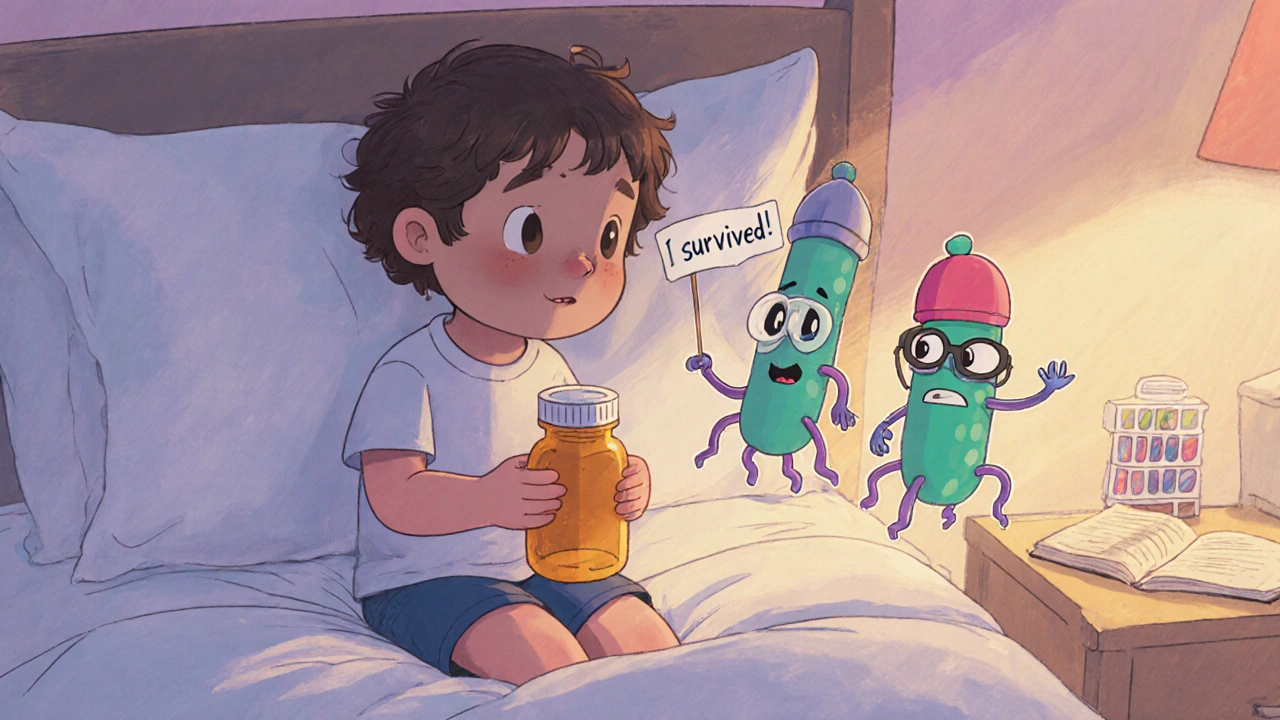
Stopping your antibiotics early because of side effects might feel like the right thing to do - especially when you’re feeling sick from the medicine itself. But here’s the truth: antibiotic side effects are common, and finishing your full course is one of the most important things you can do for your health and the health of everyone around you. Each time you quit early, you increase the chance that the bacteria surviving in your body will become resistant. That’s how superbugs are born.
Why You Must Finish Your Antibiotics
It’s not about feeling better. It’s about killing every last harmful bacterium. Even if your fever is gone and your cough has cleared after three days, the remaining bacteria are often the toughest ones - the ones most likely to survive and multiply if not fully wiped out. Studies show that 31% of people who stop antibiotics early do so because of side effects. And that’s exactly why managing those side effects matters so much.
The CDC and the Infectious Diseases Society of America both stress that completing your full course reduces the risk of antibiotic resistance. In fact, incomplete courses contribute to 12% of resistance cases in the U.S. alone. Think of it this way: if you’re taking amoxicillin for a sinus infection, you’re not just treating yourself - you’re helping stop the spread of resistant strains that could make future infections harder - or even impossible - to treat.
Most Common Side Effects (And What to Do About Them)
Antibiotics don’t just target bad bacteria. They also mess with the good ones living in your gut. That’s why digestive issues are the #1 complaint. About 1 in 4 people get diarrhea. One in 10 gets nausea or vomiting. Bloating and loss of appetite are also common.
- Diarrhea: Mild diarrhea is normal with about 25% of antibiotic courses. But if it’s watery, bloody, lasts more than 48 hours after you finish the medicine, or comes with fever or severe cramps, call your doctor right away. It could be C. diff, a serious infection triggered by antibiotics.
- Nausea and vomiting: Taking your antibiotic with a small, bland snack - like plain toast, crackers, or a spoonful of Greek yogurt - helps many people. Avoid heavy, greasy meals. Don’t lie down for at least 30 minutes after taking it.
- Bloating and gas: These are temporary. Probiotics can help. Look for supplements with Lactobacillus rhamnosus GG - clinical trials show they reduce antibiotic-related diarrhea by half. You can also eat unsweetened yogurt daily.
Some antibiotics need special handling. Doxycycline, for example, can irritate your throat if not taken correctly. Always swallow it with a full glass of water (at least 8 ounces), and stay upright for 30 minutes after. Never take it right before bed. Tetracycline must be taken on an empty stomach - at least one hour before or two hours after eating. But amoxicillin? It’s fine with food. Always check the label or ask your pharmacist.
What to Avoid
Some things make side effects worse - or even dangerous.
- Alcohol: While it doesn’t directly interact with most antibiotics, it can make nausea, dizziness, and liver stress worse. Skip it while you’re on treatment.
- Dairy with tetracycline: Milk, cheese, and yogurt can block absorption. Wait at least two hours after taking it before eating dairy.
- Antacids and iron pills: These can also reduce how well your antibiotic works. Take them at least two hours apart.
- Skipping doses: Don’t double up if you miss one. Just take it as soon as you remember - unless it’s almost time for the next dose. Then skip the missed one. Never try to catch up.
When to Call Your Doctor
Not all side effects are normal. Some need urgent attention.
- Diarrhea with blood or mucus
- Severe stomach pain or cramping
- Uncontrollable vomiting
- Rash, hives, swelling of the face or throat
- Difficulty breathing or wheezing
- Severe sunburn or blistering after being outside (common with doxycycline or tetracycline)
If you experience any of these, stop the antibiotic and contact your provider immediately. Allergic reactions can be life-threatening. C. diff infections need specific treatment. Don’t wait.
How to Stay on Track
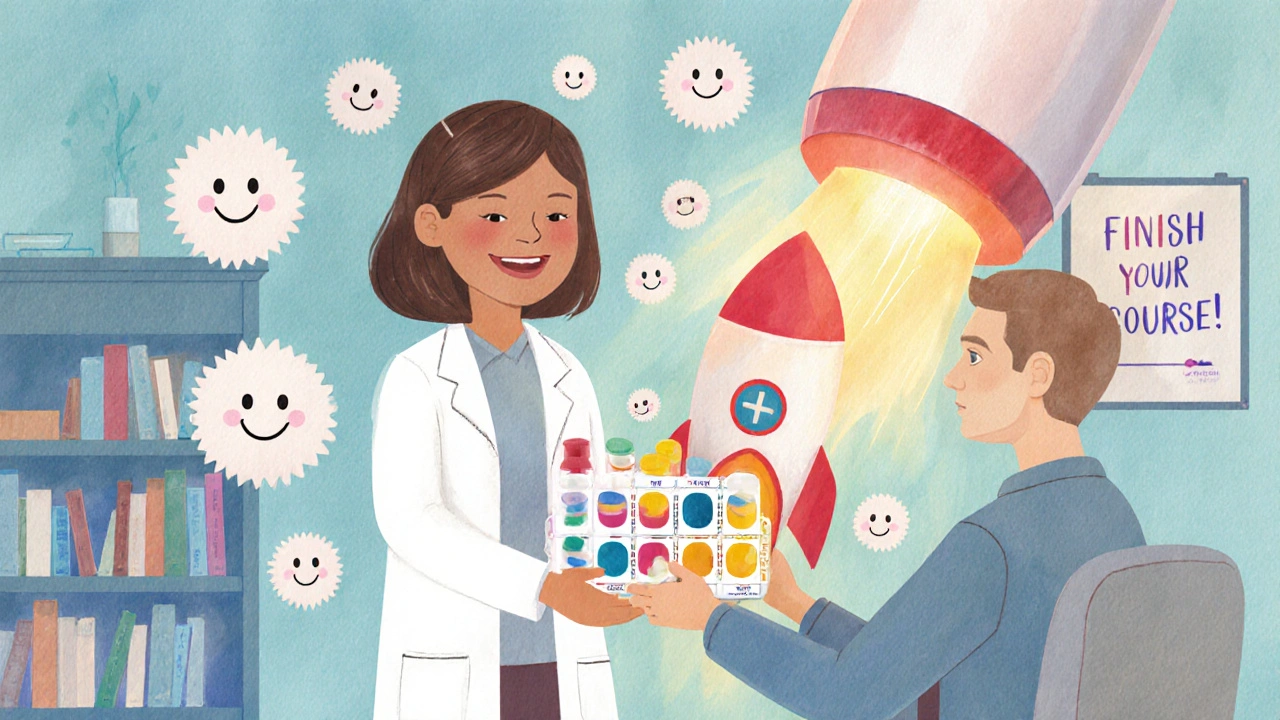
People who finish their antibiotics are more likely to have had one thing: clear advice from their doctor or pharmacist. Studies show that patients who get a simple explanation about what to expect are 35% less likely to quit early.
Here’s what works:
- Write down your schedule. Set phone alarms for each dose. Use a pill organizer if you take multiple meds.
- Keep a side effect journal. Note what you ate, when you took the pill, and how you felt. This helps you spot patterns and talk to your doctor.
- Ask for a printed guide. Many clinics now give out simple handouts on managing side effects. If yours doesn’t, ask. Patients who get one are 42% more likely to finish their course.
- Use the ‘4 Ts’ method: Timing (same time each day), Taking (with food or on empty, as needed), Tolerating (knowing what’s normal), and Treatment completion (finishing the whole bottle).
What’s New in Antibiotic Care
Science is catching up. In 2023, the FDA approved the first probiotic strain - Lactobacillus reuteri NCIMB 30242 - specifically for preventing antibiotic-associated diarrhea. The CDC launched a free digital tool called the Antibiotic Side Effect Navigator that gives personalized tips based on your antibiotic, age, and health conditions.
Researchers are also testing smart pills that release antibiotics directly in the gut, reducing stomach upset. And by 2026, AI tools may help doctors pick the right antibiotic for you based on your microbiome - cutting side effects by nearly half.
For now, the best tools are simple: knowledge, planning, and communication. Don’t suffer in silence. Tell your pharmacist about your side effects. They can suggest swaps, timing tricks, or probiotics that make a real difference.
Final Thought: Your Course Matters
Antibiotics saved your life - or prevented a serious infection. Don’t let side effects undo that. Most side effects are temporary, manageable, and far less dangerous than the alternative: antibiotic-resistant infections that no medicine can cure.
You’re not just protecting yourself. You’re helping protect your kids, your parents, your neighbors. Every pill you take, every course you finish, is a small act of public health. Stick with it. Your body - and the world - will thank you.
doug schlenker
November 28, 2025 AT 00:59I used to stop my antibiotics the second I felt better, until my kid got a superbug infection last year. Now I know better. Side effects suck, but they’re temporary. The real nightmare is when antibiotics stop working for everyone. I keep a little notebook now-what I ate, when I took it, how I felt. It helped me spot that yogurt made my stomach way calmer.
Also, setting alarms on my phone was a game-changer. I’d forget halfway through. Now I treat it like a meeting I can’t miss.
Thanks for the reminder. This post saved me from making the same mistake again.
Chris Kahanic
November 28, 2025 AT 10:23There’s a growing body of evidence suggesting that shorter courses may be sufficient for some infections, particularly in low-risk populations. The blanket recommendation to always finish the full course is rooted in older protocols. Recent studies from the BMJ and The Lancet indicate that for uncomplicated UTIs or sinusitis, 5–7 days may be just as effective as 10–14.
That said, I’m not advocating for self-discontinuation. I’m advocating for personalized medicine. If your doctor didn’t explain the rationale behind the duration, ask. Don’t just assume longer = better.
Geethu E
November 29, 2025 AT 01:47Bro I was on amoxicillin last month and I swear I was gonna quit after day 3-my gut was screaming. But I remembered my grandma saying, ‘Don’t let the medicine win.’ So I swallowed it with a spoon of banana and a glass of water. No dairy. No coffee. No lying down.
Probiotic gummies from the Indian pharmacy next door? Life saver. I didn’t even get diarrhea. And yeah, I finished the whole bottle. Not because I’m scared of superbugs-though I am-but because I don’t trust doctors who don’t tell you how to survive the side effects.
PS: If you’re Indian, try amla juice. Natural gut healer. Works better than any fancy supplement.
king tekken 6
November 29, 2025 AT 21:22Okay but like… what if the antibiotics are just making you sicker than the infection? I mean, think about it-bacteria are just trying to survive, same as us. We’re the ones poisoning our own microbiome with these chemical cocktails. Maybe we’re the problem, not the bacteria.
And who says we need to kill them all? Maybe we just need to coexist. Like, what if the ‘resistance’ isn’t evil? What if it’s evolution? We’re the ones playing god with pills and now we’re scared of our own creation?
Also I heard the FDA is controlled by Big Pharma. Just saying.
Also my dog got antibiotics once and he started licking walls. That’s not normal. That’s a sign.
DIVYA YADAV
December 1, 2025 AT 08:41Let me tell you something about antibiotics. This whole ‘finish the course’ thing? It’s a Western scam. In India, we’ve been treating infections for centuries with turmeric, neem, and fasting. Why are we now bowing to some FDA-approved chemical regime that makes your guts explode? They don’t care about you. They care about selling more pills.
And don’t get me started on probiotics-those are just more expensive sugar pills with fancy names. Real gut health comes from eating roti, dal, and yogurt made at home. Not some lab-made powder in a plastic bottle.
Also, the CDC? They take money from Pfizer. You think they’d tell you the truth? No. They want you dependent. They want you scared. Don’t be fooled.
And why is everyone so obsessed with ‘superbugs’? Because if you believe in them, you’ll keep buying more antibiotics. It’s a cycle. A trap. Wake up.
Kim Clapper
December 2, 2025 AT 12:49While I appreciate the clinical precision of this post, I must emphasize that the emotional burden of antibiotic side effects is systematically minimized by medical institutions. The suggestion that one should simply ‘take it with toast’ ignores the profound psychological toll of nausea, fatigue, and the alienation one feels when one’s own body becomes an adversary.
Furthermore, the framing of antibiotic resistance as a moral imperative-‘you’re protecting your neighbors’-is a coercive narrative that pathologizes legitimate discomfort. If a patient cannot tolerate the treatment, the treatment is flawed, not the patient.
There is an ethical crisis here. We are asking people to endure suffering in the name of abstract public health, while pharmaceutical companies profit from the very systems that create these side effects. This is not medicine. This is discipline.
Bruce Hennen
December 2, 2025 AT 17:55Incorrect. The 31% statistic cited is misleading. It conflates self-reported discontinuation with clinically indicated discontinuation. Many patients stop because their symptoms resolved, not because of side effects. The CDC’s 12% resistance figure is extrapolated from modeling, not direct observation.
Also, probiotics? The evidence is mixed. L. rhamnosus GG shows modest benefit in pediatric diarrhea, but not in adults. And L. reuteri NCIMB 30242? Only one small RCT. Don’t treat anecdote as protocol.
Finally, the ‘4 Ts’ method? Cute acronym. Doesn’t change biology. Take the pill. Don’t skip. Don’t double. That’s it.
Jake Ruhl
December 3, 2025 AT 22:43Okay so imagine this: you’re on antibiotics and your stomach is like a warzone. You’re puking, you’re dizzy, you’re thinking ‘is this the end?’ and then your phone buzzes-your ex just posted a pic of them at the beach with their new partner. And you’re like… wait, am I dying from medicine or from heartbreak?
And then you remember your cousin said antibiotics are just poison and you’re like… maybe I should just stop.
But then you think-what if I’m the reason my little sister gets a superbug? What if I’m the reason the whole town can’t get penicillin anymore?
So you swallow the pill. You eat the toast. You take the probiotic. You cry a little. And you finish it.
Because sometimes the bravest thing you can do is keep going even when you want to quit.
And yeah, I cried after I finished. Not from pain. From pride.
Chuckie Parker
December 5, 2025 AT 09:53Stop taking antibiotics unless you have a confirmed bacterial infection. Viral infections don’t need them. Doctors prescribe them out of laziness. You don’t need a course. You need a diagnosis. Most people don’t even have bacterial infections. They just have colds. Stop being sheep. Stop taking pills you don’t need. Resistance starts with dumb prescriptions. Not with patients who stop early.
And probiotics? Waste of money. Eat pickles. Fermented food. Real food. Not lab crap.
George Hook
December 5, 2025 AT 23:30I’ve been a nurse for 22 years, and I’ve seen patients die from C. diff because they stopped their antibiotics too soon. I’ve also seen patients suffer for weeks because their doctor didn’t explain what to expect.
What this post says is true, but it’s incomplete. The real problem isn’t the patient. It’s the system. No one gives you a plan. No one says, ‘Here’s how to feel better while you take this.’
I keep a laminated card in my clinic with the exact tips from this post. I hand it out. I’ve watched patients finish their courses because they felt prepared, not scared.
Knowledge is the real antibiotic.
jaya sreeraagam
December 7, 2025 AT 04:47Y’all need to hear this: finishing your antibiotics isn’t about being perfect-it’s about being kind to your future self. I used to skip doses because I felt better. Then I got a UTI that turned into sepsis. Took me three months to recover. I lost my job. I lost my confidence.
Now I do this: I set a daily alarm called ‘Fight the Bugs.’ I put a sticky note on my mirror: ‘One pill today = one less nightmare tomorrow.’
And yes, I take my probiotics. And yes, I eat yogurt. And yes, I still get bloated. But I don’t quit.
You got this. You’re stronger than a side effect. One pill at a time. I’m rooting for you. 💪❤️
Katrina Sofiya
December 8, 2025 AT 12:20Thank you for this. As someone who works in public health, I’ve spent years trying to explain antibiotic resistance to the public. This is the clearest, most compassionate, and most practical guide I’ve ever seen.
It’s not about fear. It’s about responsibility. It’s not about obedience. It’s about solidarity.
And the part about asking for a printed handout? Brilliant. Patients need tangible tools, not just lectures. I’ve started giving out these exact tips to every patient I see. If your doctor doesn’t give you one-ask for it. You deserve to be empowered, not just prescribed.
kaushik dutta
December 9, 2025 AT 07:43As someone who grew up in Mumbai and now works in Boston, I’ve seen how cultural attitudes toward medicine diverge. In India, we often rely on Ayurveda and herbal remedies-sometimes appropriately, sometimes dangerously. In the U.S., we over-rely on pharmaceuticals. The truth? Both extremes are flawed.
Antibiotics are powerful. They’re not magic. They’re not evil. They’re tools. And like any tool, they require knowledge to use safely.
What’s missing in most Western discourse is the role of diet, hydration, and rest. You can’t just pop a pill and expect to heal. You need to support your body. That’s not ‘alternative medicine.’ That’s basic physiology.
Combine the science with the wisdom. That’s how you win.
Skye Hamilton
December 10, 2025 AT 13:01What if the real villain isn’t the bacteria… but the idea that we have to ‘win’ against our own microbiome? What if the side effects are our body screaming that we’re attacking the wrong enemy?
I stopped my antibiotics after day 5. My doctor yelled at me. I cried. I felt guilty. But I also felt… freer.
Now I eat kimchi. I sleep 8 hours. I drink bone broth. I don’t take pills unless I’m literally dying. And guess what? I haven’t been sick in two years.
Maybe we don’t need to kill everything. Maybe we just need to listen.
…I still take the probiotics though. Just in case.
doug schlenker
December 12, 2025 AT 12:36Just read @king_tekken_6’s comment. I get where you’re coming from. But the bacteria aren’t the enemy. The *uncontrolled* bacteria are. And when we don’t finish the course, we’re not being ‘natural’-we’re letting the toughest ones win. They don’t care about your feelings. They just multiply.
Also, your dog licking walls? That’s not a sign of evolution. That’s a sign of neurological weirdness or a bad batch of kibble. Please take him to the vet.
And yeah, I cried too. But not because I’m scared. Because I realized I’ve been part of the problem. And now I’m trying to be part of the solution.
One pill. One day. One life at a time.