
How to Prepare for Medication Needs during Pilgrimages and Treks
 Jun, 7 2026
Imagine you are at 14,000 feet. Your head is pounding, your stomach feels like it’s in knots, and the nearest hospital is a two-day hike away-or worse, requires a helicopter rescue that costs thousands of dollars. This isn’t just a bad day on vacation; it is a medical emergency born from poor preparation. High-altitude pilgrimages and treks, whether to Everest Base Camp, Mount Kailash, or the Andes, carry unique health risks that standard travel advice often misses.
You cannot buy your way out of altitude sickness with over-the-counter pills alone. You need a strategy. The difference between a transformative spiritual journey and a traumatic medical evacuation often comes down to three things: knowing what medications to pack, understanding how to store them in freezing conditions, and having a clear plan for when things go wrong. Here is exactly how to prepare your medical kit so you stay safe and focused on the path ahead.
The Non-Negotiable Pre-Trip Consultation
Before you even look at a map, you need to talk to a doctor who understands travel medicine. A general check-up isn't enough. According to the CDC Yellow Book, a pre-trip consultation is the single best opportunity to identify risks specific to your destination. For high-altitude travel, this means discussing your personal history with altitude sickness, existing conditions like asthma or diabetes, and any medications you currently take.
Why is this step so critical? Because 83% of serious altitude-related complications are preventable with proper screening, according to Himalayan Rescue Association statistics. If you have never been above 8,000 feet (2,438 meters), your body has no baseline for acclimatization. A specialist can prescribe prophylactic medications if needed and provide the official documentation required for carrying controlled substances across borders. Do not skip this. It is the foundation of your safety net.
Essential Altitude Medications: What and Why
Altitude sickness is not a myth; it is a physiological response to low oxygen pressure. Acute Mountain Sickness (AMS) affects 25-85% of travelers ascending above 8,000 feet, depending on how fast they climb. To manage this, you need specific prescription medications, not just painkillers.
| Medication | Primary Use | Standard Dosage/Notes | Key Side Effects |
|---|---|---|---|
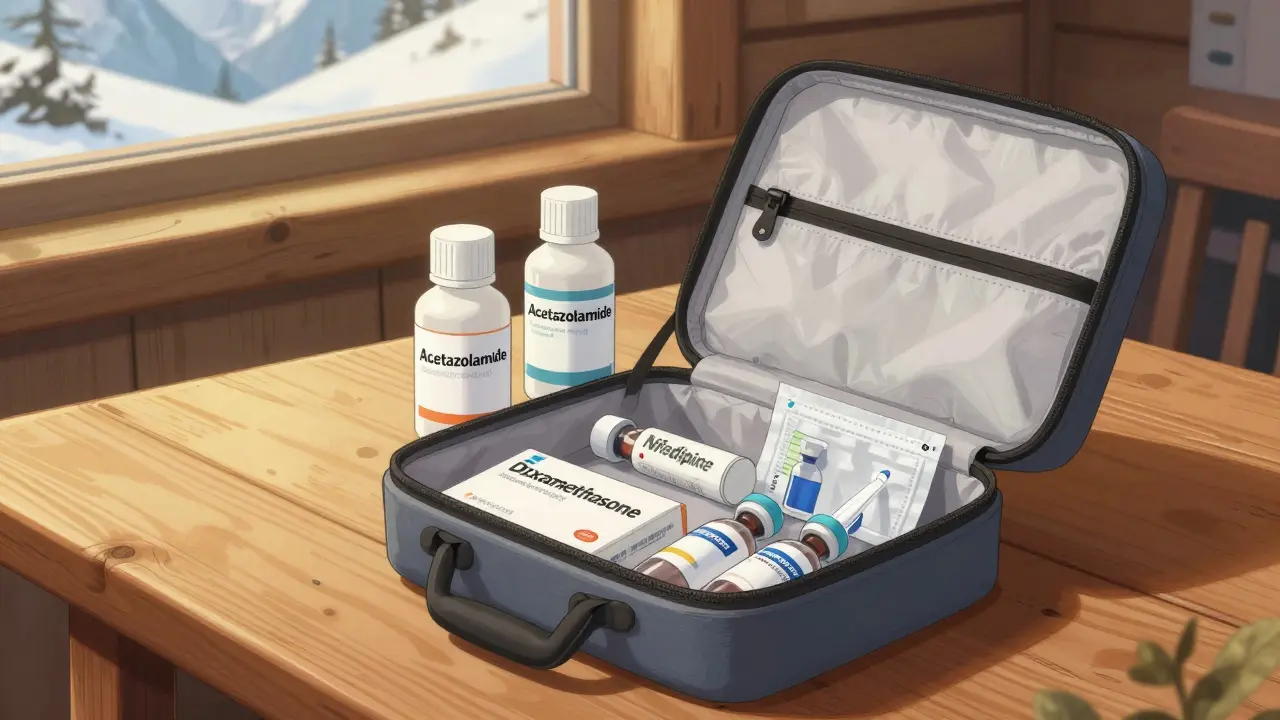
| Acetazolamide (Diamox) | Prevention of AMS | 125 mg twice daily, starting 1 day before ascent | Increased urination (67% of users), tingling in extremities |
| Dexamethasone | Treatment of severe AMS/HACE | 8 mg initial dose, then 4 mg every 6 hours | Mood changes, increased appetite, insomnia |
| Nifedipine | Treatment of HAPE (lung fluid) | Extended-release 20 mg every 12 hours | Low blood pressure, dizziness, flushing |
| Ibuprofen | Symptom relief (headache) | 400 mg tablets as needed | Stomach irritation, kidney stress |
Acetazolamide (Diamox) is the gold standard for prevention. It works by making your blood slightly more acidic, which triggers your brain to breathe faster and deeper, helping you absorb more oxygen. However, it is a sulfa drug. If you have a sulfa allergy (affecting about 3-6% of people), you cannot take it. In that case, discuss alternatives with your doctor, as there are few effective substitutes for prevention.
For emergencies, Dexamethasone and Nifedipine are life-saving but should only be used under strict guidance. Dexamethasone treats High Altitude Cerebral Edema (brain swelling), while Nifedipine treats High Altitude Pulmonary Edema (lung fluid). These are not casual remedies. They require immediate descent alongside medication. Never self-diagnose HACE or HAPE without professional training, but always have these meds accessible if recommended by your physician.
Gastrointestinal Health: The Silent Trip-Killer
While everyone worries about altitude, diarrhea is actually the most common illness on treks like Everest Base Camp, affecting approximately 60% of visitors. Most cases occur between 9,000 and 14,000 feet due to contaminated water sources and weakened immune systems at altitude.
Your kit must include:
- Azithromycin: An antibiotic for bacterial diarrhea. Standard protocol is 500 mg daily for 3 days. Carry this only if prescribed, as misuse contributes to resistance.
- Loperamide (Imodium): For symptom control. Use sparingly to avoid trapping toxins in the gut.
- Oral Rehydration Salts (ORS): Water alone isn't enough when you are losing electrolytes. Dehydration worsens altitude sickness significantly. Aim to drink 4-5 liters of water daily, but pair it with ORS packets.
- Diphenhydramine: An antihistamine (25-50 mg) that can help with nausea and sleep issues, though caution is advised as sedatives can depress breathing at high altitudes.
Remember: 78% of diarrhea cases happen in the mid-altitude zone. Treat it early. Ignoring mild symptoms can lead to severe dehydration, which mimics and exacerbates AMS symptoms, creating a dangerous feedback loop.
Managing Chronic Conditions at Altitude
If you have diabetes, asthma, or heart conditions, the stakes are higher. Extreme cold and low pressure affect both your body and your equipment.
Diabetes Management: Insulin degrades rapidly in cold temperatures. Below 32°F (0°C), insulin potency can drop by 25% within 24 hours. You need specialized insulated containers, not just a regular bag. Keep your current supply close to your body heat inside your jacket. Also, be aware that glucometers become unreliable in extreme cold. Error rates jump to 18% at 14°F (-10°C). Consider using strips stored in your pocket to warm them up before testing, or rely on continuous glucose monitors (CGMs) which are generally more robust in variable climates.
Asthma: Cold, dry air is a major trigger. Ensure you have your rescue inhaler (e.g., Albuterol) easily accessible. One trekker shared a story of needing an extra inhaler just to handle the final push to a summit because the cold air triggered severe bronchospasm. Plan for 20% more usage than normal.
Packing and Legal Logistics
Having the right meds is useless if you lose them or get stopped at customs. Follow these rules strictly:
- Original Containers Only: Never transfer pills to generic pill boxes. Customs officials worldwide require original pharmacy labels showing your name, the doctor's name, and the dosage. This proves the medication is for personal use.
- Physician’s Letter: Carry a signed letter from your doctor explaining your condition and the necessity of each medication. For controlled substances (like strong painkillers or ADHD meds), you may need additional forms from bodies like the International Narcotics Control Board. About 17% of trekking groups report needing this step.
- Split Your Supply: Do not put all your medications in one bag. Keep a full week’s supply in your carry-on luggage and another portion in your checked bag or base camp stash. If your main bag gets lost or delayed, you are not stranded.
- Waterproofing: Humidity and rain are constant threats. Use waterproof, sealed bags inside your pack. Moisture ruins blister plasters and dissolves pills.
When to Descend: The Golden Rule
No medication replaces descent. If you experience severe headache, vomiting, confusion, or loss of coordination, you have High Altitude Cerebral Edema (HACE) or Pulmonary Edema (HAPE). These are fatal if ignored.
Medications like Dexamethasone are bridges to allow you to descend safely, not cures that let you continue upward. Many pilgrims refuse to turn back due to religious devotion, but local doctors emphasize that "simply turning away pilgrims... without proper assessment is inadvisable." Conversely, continuing upward with symptoms is suicide. Know your limits. If your symptoms do not improve within 2-4 hours of taking medication and resting, you must go down. Immediately.
Recent campaigns, such as Nepal’s 2021 Altitude Sickness Prevention Campaign, have distributed 15,000 medication kits and educational materials, reducing hospitalizations by 22%. This shows that knowledge saves lives. Be part of that statistic by preparing thoroughly, packing smartly, and respecting the mountain’s power over your physiology.
Can I buy altitude sickness medication locally on the trek?
It is risky to rely on local availability. Research indicates that 89% of health camps along pilgrimage routes lack essential medications like acetazolamide or nifedipine. While some larger towns in Nepal or Peru may have pharmacies, stock is inconsistent, and counterfeit drugs are a concern. Always bring your own supply from home.
How long does it take for Diamox to work?
Acetazolamide (Diamox) begins working within 2 hours of ingestion, but its full preventive effect builds over 24-48 hours. This is why guidelines recommend starting the dosage one day before you begin ascending. It helps your body adapt to lower oxygen levels by increasing your respiratory rate.
What should I do if my insulin freezes?
If insulin freezes, it may clump and lose effectiveness. Do not use frozen insulin. Thaw it slowly at room temperature (not in hot water) and inspect it. If it looks cloudy or clumpy, discard it. Always keep your current vial or pen close to your body heat to prevent freezing, and carry a backup supply in an insulated container.
Is it safe to take sleeping pills at high altitude?
Generally, no. Sedatives and sleeping pills can suppress your breathing drive, which is already compromised at high altitude. This increases the risk of hypoxia (low oxygen) during sleep. If you struggle with sleep, consult your doctor for non-sedative alternatives or very cautious, low-dose recommendations tailored to your health profile.
Do I need a Gammow Bag for my trek?
For individual trekkers, no. Gammow Bags (hyperbaric bags) are heavy, expensive, and require technical setup. They are typically stocked at fixed base camps or remote research stations. As a traveler, your primary tool for treating severe altitude edema is immediate descent. Rely on your guide team to know the location of the nearest Gammow Bag facility rather than carrying one yourself.