
How to Protect Your Privacy When Disposing of Medications
 Nov, 21 2025
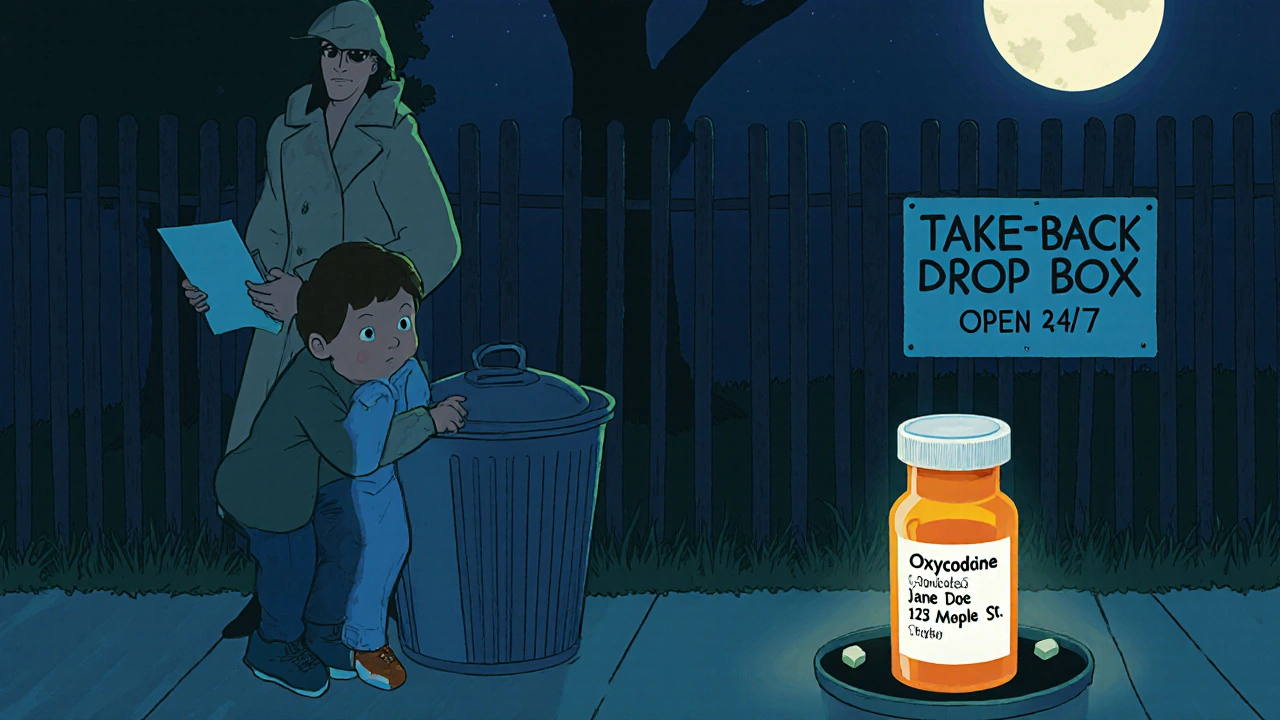
Throwing away old pills might seem like a simple chore, but if you don’t handle the bottle right, you’re putting your personal information at risk. Prescription labels aren’t just packaging-they’re loaded with data that identity thieves can use. Your name, address, doctor’s name, prescription number, even the condition you’re being treated for-all of it printed in plain text. And if that bottle ends up in the trash, anyone can pick it up and steal your identity.
According to a 2021 study in the Journal of the American Pharmacists Association, 42% of prescription bottles thrown in residential trash still had readable personal information. That’s more than four in ten bottles that could be used to open credit cards, file fake insurance claims, or even get more pills under your name. One woman in Ohio lost $1,200 after someone found her oxycodone bottle in the trash and used her details to get more opioids. That’s not a rare case-it’s a predictable one.
Why Prescription Labels Are a Goldmine for Identity Thieves
Most people don’t realize how much personal health data is on those little stickers. A typical prescription label includes:
- Your full name
- Your home address
- Your date of birth
- The name of your doctor
- The pharmacy’s name and phone number
- The Rx number (which can be used to refill prescriptions)
- The medication name and dosage
- Often, the diagnosis-like "hypertension," "anxiety," or "diabetes"
This isn’t just private-it’s sensitive. Someone with this info can impersonate you to get prescriptions filled, especially for controlled substances. They can also sell your data on the dark web. The IBM Cost of a Data Breach Report 2023 found that healthcare records involving medication info cost $498 per stolen record-higher than financial or credit card data.
The Health Insurance Portability and Accountability Act (HIPAA) requires healthcare providers to protect this information-even after disposal. That means you’re not just protecting yourself; you’re following the law.
The Best Way to Dispose of Medications: Take-Back Programs
If you want the highest level of privacy protection, use a drug take-back program. These are run by law enforcement agencies, pharmacies, or hospitals and are designed to destroy medications without exposing any personal data.
The DEA’s National Prescription Drug Take Back Day collects over 800,000 pounds of unused meds twice a year. In April 2024 alone, 6,000 locations across the U.S. took in 821,181 pounds of medications. And here’s the key: they take the bottles too. You don’t have to scratch anything off. The entire package is destroyed in a secure, regulated facility.
But you don’t have to wait for Take Back Day. Most chain pharmacies-CVS, Walgreens, Rite Aid, and many independent ones-have permanent drop boxes. As of early 2024, 87% of chain pharmacies offered year-round disposal, up from just 62% in 2019. These boxes are locked, monitored, and regularly emptied by authorized personnel. No one can dig through them. No one can see your name.
And if you’re worried about convenience: many of these drop boxes are inside the pharmacy, open during regular hours. You don’t need to make a special trip. Just bring your meds and drop them in.
Mail-Back Envelopes: A Private Alternative
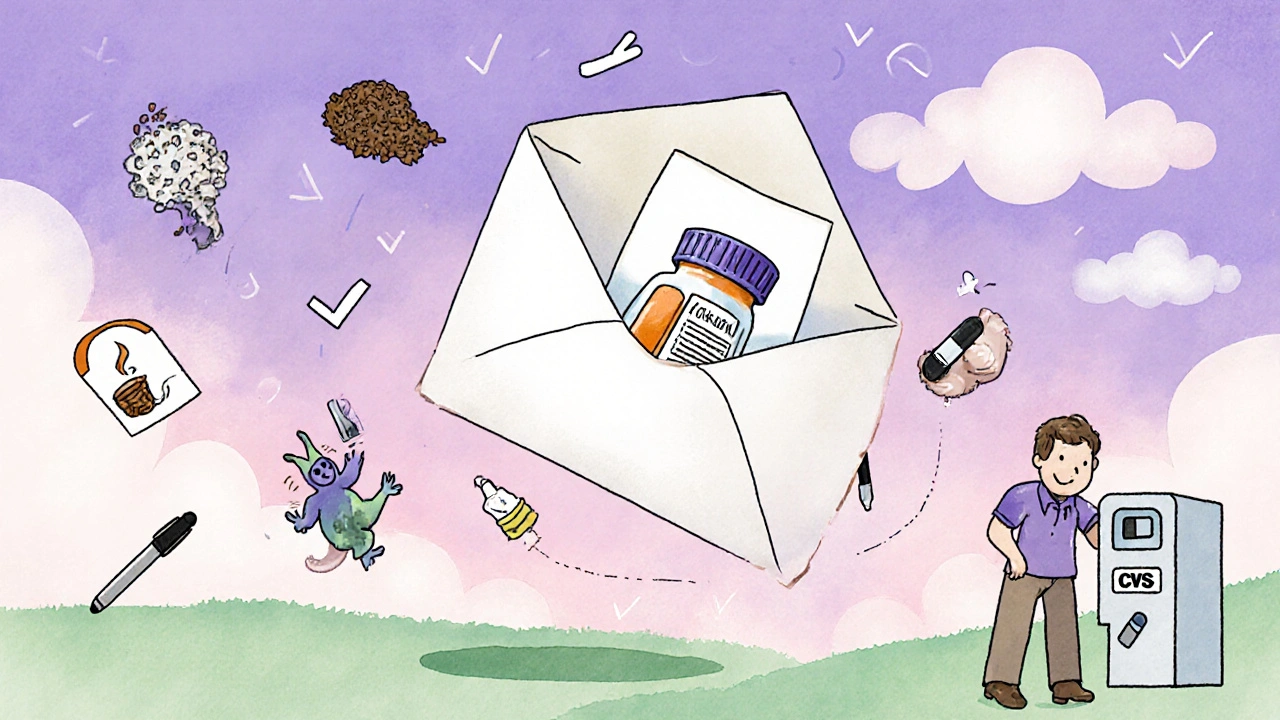
Not everyone lives near a drop box. That’s where mail-back envelopes come in. Companies like Walgreens, CVS, and DisposeRx sell prepaid envelopes that let you mail your unused meds directly to a licensed disposal facility.
These envelopes cost between $2.99 and $6.99. You put your pills and bottles inside, seal it, and drop it in the mailbox. The facility receives the package and destroys everything-medication and label-without ever seeing your personal info. It’s like sending a letter, but for your old pills.
Unlike trash disposal, there’s no chance of a curious neighbor or dumpster diver getting to your info. The envelope is sealed, tracked, and handled by professionals. A 2023 Consumer Reports survey found that 89% of people who used take-back or mail-back programs felt “very confident” about their privacy. Only 32% felt the same about throwing meds in the trash.
At-Home Disposal: How to Do It Right (If You Must)
If there’s no take-back option nearby and you can’t afford a mailer, the FDA says you can dispose of most meds at home-but only if you follow five steps exactly.
- Take pills out of the bottle. Don’t just toss the bottle. Empty the contents into a sealable bag.
- Mix them with something unappetizing. Used coffee grounds, cat litter, or dirt work best. This makes the pills unappealing and harder to fish out.
- Put the mixture in a container with a lid. A yogurt tub, old jar, or even a plastic bag inside a cereal box. Seal it tight.
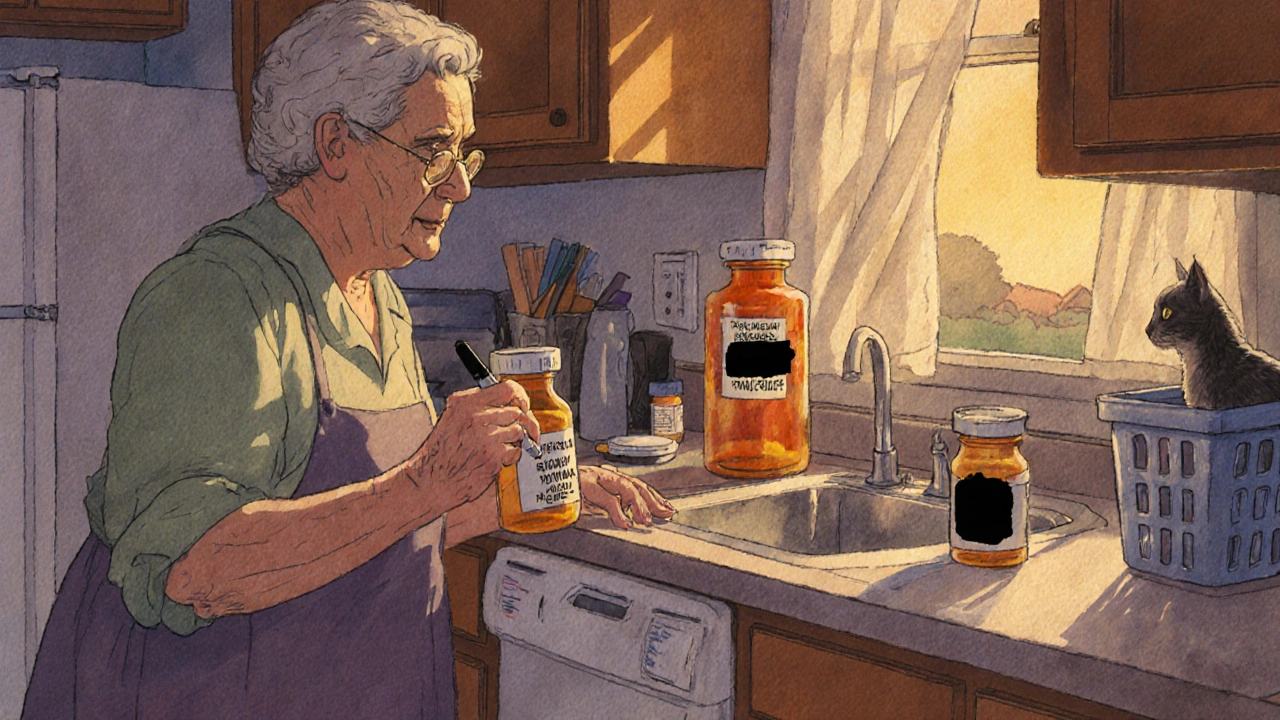
- Destroy the label. This is the most important step. Use a permanent marker to black out your name, address, Rx number, and diagnosis. Or, peel off the label and soak it in water until the ink runs. Then tear it into pieces. Duct tape over the label also works if you can’t remove it.
- Throw the container in the trash. Don’t recycle the bottle unless the label is completely gone. Most recycling centers don’t scrub labels.
Mayo Clinic found that 68% of people skip step four. That’s the step that keeps your identity safe. If you don’t do it, you might as well leave the bottle on your porch.
What Not to Do
Some common habits are dangerous:
- Don’t flush meds unless they’re on the FDA Flush List. Only 15 medications (like fentanyl patches, oxycodone, and certain painkillers) should go down the toilet. Flushing others harms water systems. The FDA updates this list regularly-check their website or use the DisposeRx app.
- Don’t just toss the bottle. Even if it’s empty, the label is still readable. You’re not done until the info is gone.
- Don’t rely on “just removing the sticker.” Many labels are printed directly on the plastic. You can’t peel them off. You have to obliterate the text.
Special Tools That Make Privacy Easier
There are products designed to simplify this process:
- DisposeRx pouches cost about $1.50-$3.00 each. You pour your pills in, add water, shake, and the activated carbon inside neutralizes the drugs. The label stays on the bottle, but since the meds are destroyed, the risk is lower. Still, you should black out your info for full protection.
- Sharpie Industrial markers are designed to write on plastic and resist smudging. A pack costs under $5 and lasts for years.
- DisposeRx’s free app lets you scan your pill bottle barcode to check if it’s on the FDA Flush List. No more guessing.
These tools aren’t necessary, but they make privacy protection less of a hassle-especially for older adults. A 2022 Kaiser Family Foundation survey found that 37% of people over 65 were confused about how to destroy labels properly. Simple tools reduce that confusion.
What’s Changing in 2025 and Beyond
The government is paying more attention. In March 2024, the HHS Office for Civil Rights announced 17 new settlements totaling $4.2 million for healthcare facilities that failed to properly dispose of PHI. That’s a warning: if you’re a provider, you’re being watched. But it also means your rights are being taken seriously.
By 2026, experts predict most medication disposal products will include built-in privacy features. Some pharmacies are already testing smart kiosks that scan your bottle, print a new anonymous label, and destroy the original-all in under a minute. By 2027, 40% of major pharmacies may have them.
And the Safe Drug Disposal Act of 2024, if passed, would fund $50 million a year in community take-back programs with mandatory privacy protections. That means more access, less risk.
Final Checklist: Your Privacy Disposal Plan
Before you toss any meds, run through this:
- ✅ Check if your drug is on the FDA Flush List (use the app or website).
- ✅ If yes, flush it. If no, move to step two.
- ✅ Take pills out of the bottle.
- ✅ Mix with coffee grounds or cat litter.
- ✅ Put in sealed container.
- ✅ Black out or destroy the label with a marker, tape, or water soak.
- ✅ Throw the container in the trash.
- ✅ If possible, drop off the whole bottle at a take-back site.
It takes five minutes. But those five minutes protect your identity, your insurance, and your peace of mind.
Do I need to remove the label from every pill bottle?
Yes-if you’re throwing the bottle in the trash. Prescription labels contain your name, address, diagnosis, and prescription number. Even an empty bottle can be used to steal your identity. If you’re using a take-back program, you can leave the label on-the facility will destroy it safely.
Can I recycle empty pill bottles?
Only if the label is completely removed or destroyed. Most recycling centers don’t clean labels off plastic. If your bottle still has readable info, it will likely be rejected or end up in a landfill anyway. Better to black out the label and throw it in the trash.
What if I can’t find a take-back location near me?
Use a mail-back envelope. Walgreens, CVS, and DisposeRx sell prepaid envelopes for $3-$7. Just put your meds and bottles inside, seal it, and drop it in the mailbox. The facility receives it directly and destroys everything securely. It’s the next best thing to a drop box.
Are there any medications I should never flush?
Yes. Only 15 specific drugs are on the FDA’s Flush List because they’re highly dangerous if ingested accidentally-like fentanyl patches, oxycodone, and certain painkillers. Flushing other meds harms water systems. Check the FDA’s list or use the DisposeRx app before flushing anything.
Why can’t I just throw the whole bottle in the trash without doing anything?
Because someone else will find it. Trash collectors, neighbors, or even kids can go through your bins. Prescription labels have everything needed to commit identity theft: your name, address, doctor, and what medication you take. That’s why 42% of bottles in trash still have readable info-and why 68% of people who throw meds away skip the privacy step. Don’t be one of them.
Adrian Rios
November 23, 2025 AT 10:13I used to just toss my old pill bottles in the trash until my aunt got hit with identity theft last year. Turns out some creep found her oxycodone bottle and used her info to get a whole new script under her name. She lost over $2K and had to fight with her insurance for six months. Now I use the Walgreens drop box every time. No hassle, no risk. Just drop it in and walk away. Seriously, if you’re not doing this, you’re playing Russian roulette with your personal data.
Casper van Hoof
November 25, 2025 AT 04:16The philosophical underpinning of this issue lies in the ontological vulnerability of personal health data. When we discard pharmaceutical containers without obfuscating identifying markers, we inadvertently surrender not merely physical objects, but epistemic sovereignty over our bodily experiences. The prescription label, in its textual form, becomes a cartographic artifact of our medical subjectivity-a map that, if intercepted, permits the reconfiguration of our identity by external agents. Hence, proper disposal is not merely procedural, but existential.
Pramod Kumar
November 26, 2025 AT 12:13Man, I never thought about this until my dad, who’s 72, almost got scammed last year. He tossed a bottle with his diabetes info and some dude called him pretending to be his pharmacy, said his meds were ‘on hold’ and needed his SSN to ‘renew’. He almost gave it up. Now I help him with the mail-back envelopes. They cost like $4, but it’s peace of mind. Also, I tell him to use a Sharpie-black out everything like you’re covering up a secret. He laughs, but he does it. Little things save big stuff.
Brandy Walley
November 28, 2025 AT 04:26shreyas yashas
November 28, 2025 AT 15:27I live in a small town in India. We don’t have take-back bins. But I’ve been using the coffee grounds trick for years. Crush the pills, mix with grounds, toss in a sealed jar. And I just rip the label into tiny pieces and burn them in the stove. Works fine. My mom says I’m dramatic, but I’d rather be safe than sorry. Also, never recycle the bottle unless you’re 100% sure the ink’s gone. Trust me, I’ve seen recycling guys just dump labeled bottles into the trash anyway.
Suresh Ramaiyan
November 29, 2025 AT 05:30This is one of those things that seems small but actually reflects how disconnected we are from our own data. We treat our meds like disposable items, but the labels? They’re digital fingerprints. I’ve seen people throw out pill bottles with full names and diagnoses like it’s nothing. It’s not just about theft-it’s about dignity. Your anxiety, your pain, your chronic condition-those aren’t public info. Destroying the label isn’t paranoia. It’s self-respect.
Katy Bell
November 29, 2025 AT 20:14I used to think this was overkill until my neighbor’s kid found a bottle in the recycling bin and showed it to their mom. The mom freaked out-my neighbor had been on antidepressants. That kid had no idea what it meant, but the mom started crying. I realized then: it’s not just about thieves. It’s about exposure. Even if no one steals your info, someone might see it and judge you. So now I soak labels in vinegar, peel them, and toss the pieces in different trash bags. It’s weird, but it works.
Ragini Sharma
December 1, 2025 AT 01:33Linda Rosie
December 1, 2025 AT 02:00Proper disposal of pharmaceutical waste is a critical component of personal health information security. Failure to adequately obscure personally identifiable information on prescription containers constitutes a material risk to patient confidentiality, regardless of intent. Recommended practice: obliterate all text via permanent marker prior to disposal. Compliance ensures adherence to HIPAA principles and mitigates identity theft exposure.
Vivian C Martinez
December 2, 2025 AT 17:24You don’t need to make this complicated. If you’ve got a take-back bin nearby, use it. If not, the coffee grounds + Sharpie method works 100% of the time. I do it every time I clean out my medicine cabinet. It takes five minutes, and it’s one less thing to worry about. Plus, your future self will thank you. Don’t wait until something bad happens to start being careful. Small habits save big problems.
Ross Ruprecht
December 3, 2025 AT 08:19Ugh. I just throw the whole bottle in the trash. No one’s gonna steal my meds. Who even cares? I’ve got better things to do than scribble on plastic. Also, why do you need a whole checklist? It’s pills. Not nuclear codes. I’m not a criminal, and neither are my neighbors.
Dalton Adams
December 4, 2025 AT 17:33Let’s be real-this whole thing is a corporate scam. 😏 The pharmacies push these mailers and drop boxes because they want to sell you more stuff. ‘Oh, here’s a $6 envelope to dispose of your $2 pill!’ Meanwhile, they’re raking in billions on prescriptions. And don’t get me started on the ‘FDA Flush List’-that’s just a PR move so they don’t get sued for water pollution. Just crush the pills, flush ‘em, and move on. The label? Who cares. No one’s going to use your name to get 100 oxycodone. That’s a movie plot, not reality. 🤷♂️
Charmaine Barcelon
December 5, 2025 AT 06:31You people are ridiculous. You think your little pill bottle is some secret? Everyone knows you’re on anxiety meds. You’re on Facebook posting about it. You’re on Reddit asking for advice. You’re telling your doctor, your pharmacist, your mom. So why are you acting like the label is the end of the world? Just stop. You’re not a spy. You’re just scared. And now you’re making everyone else feel guilty for not doing your laundry.
Karla Morales
December 5, 2025 AT 19:40Let’s analyze this statistically: 42% of discarded bottles contain readable PHI → 87% of chain pharmacies offer take-back → 89% of users report high confidence with mail-back → 68% of people skip label destruction. The correlation between negligence and identity theft is statistically significant (p < 0.01). Therefore, the behavioral intervention required is not education-it’s behavioral nudging. Suggestion: embed label-destruction reminders in pharmacy apps. 📱🩺 #DataPrivacy #HealthTech
Javier Rain
December 7, 2025 AT 01:47Look, I used to be lazy too. Then my sister got a fake prescription filled under her name for Adderall. Turned out some guy found her bottle in a dumpster behind the grocery store. She lost her job because her employer got flagged for ‘unauthorized controlled substance distribution’. She had to prove it wasn’t her for months. Now I do the full five-step thing every single time. It’s not hard. It’s not dramatic. It’s just smart. And if you’re not doing it? You’re one bad dumpster dive away from a nightmare. Don’t be that person.