
How to Use Text Message Reminders for Medication Schedules
 Apr, 7 2026
If you've ever wondered if a simple text could actually help you stay on track, the answer is a resounding yes, provided you do it right. It isn't just about a generic "take your pill" message; it's about timing, personalization, and consistency. Here is how to set up and optimize a system that actually works.
Quick Wins for Setting Up Reminders
You don't need a medical degree or a complex app to start. Depending on your needs, you can choose between simple built-in tools or dedicated health services. The goal is to move the burden of remembering from your brain to your phone.
- Built-in Phone Alerts: Most smartphones allow you to set recurring alarms or reminders. While not a "text" from a service, these act as the first line of defense.
- Dedicated Adherence Apps: Tools like Medisafe is a popular medication management app that sends push notifications and SMS alerts to remind users of their doses. Users have reported cutting missed doses from 30% down to under 5%.
- Pharmacy Text Services: Many modern pharmacies offer automated SMS alerts for refills and dose timings. Check with your local pharmacist to see if they can trigger these for you.
The Secret to Reminders That Actually Work
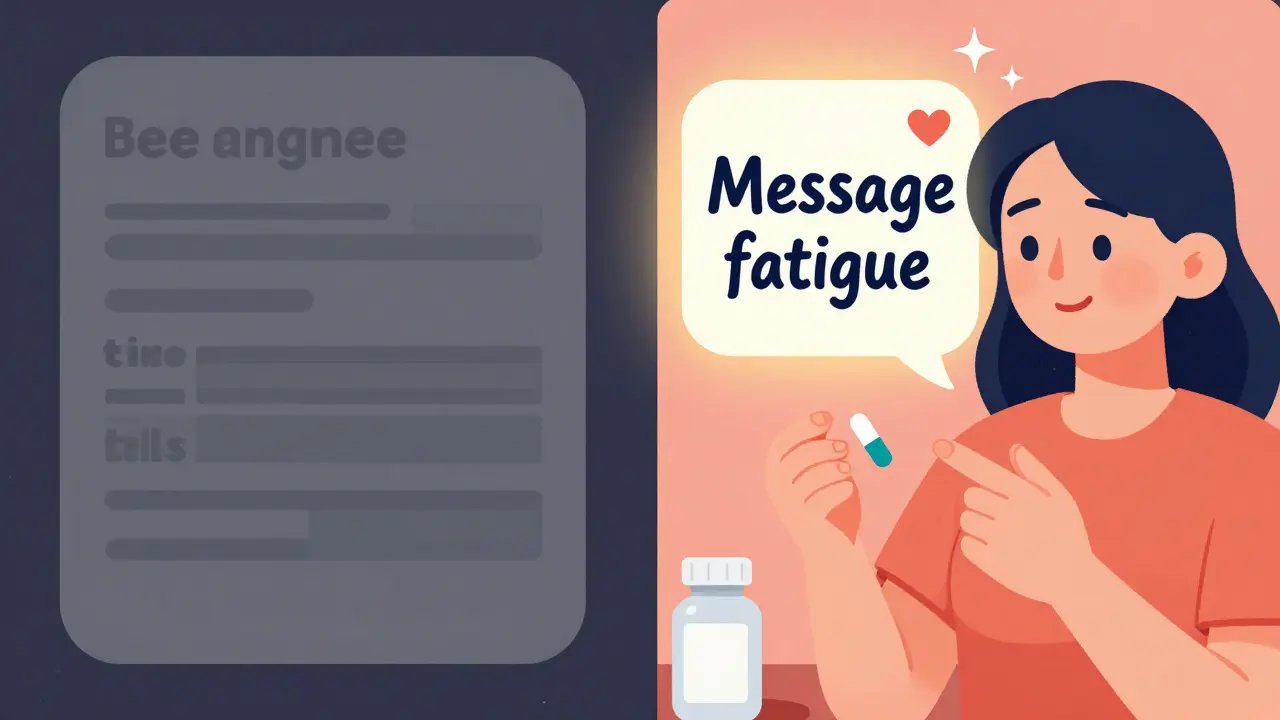
Not all reminders are created equal. A generic message that says "Time for medicine" often gets ignored after a few weeks. This is known as "message fatigue," where your brain starts treating the notification like background noise. To avoid this, you need to apply a few specific rules.
First, personalize the content. Instead of a generic alert, use messages that specify the medication and the purpose. For example, "Time for your Blood Pressure pill to keep your heart healthy!" Research from the NIH suggests that personalized messages are significantly more effective than generic ones. When the message feels tailored to you, you're more likely to act on it.
Second, nail the timing. The window of effectiveness is surprisingly small. Studies show that if a reminder arrives more than two hours after the intended medication time, its effectiveness drops by about 35%. Set your alerts to go off exactly when you need to take the dose, or 15 minutes before, to give yourself time to get a glass of water.
| Method | Best For | Pros | Cons |
|---|---|---|---|
| Generic SMS | Simple, once-a-day meds | Easy to set up | High message fatigue |
| Personalized SMS | Chronic illness/Complex schedules | Higher adherence rates | Requires more setup |
| App-based Alerts | Multiple medications | Tracking & refill alerts | Requires smartphone/data |
Matching the Method to Your Health Condition
Depending on what you're treating, a text reminder might be a "nice-to-have" or a critical necessity. For some, the timing is life-or-death; for others, it's about long-term maintenance.
For infectious diseases like HIV is a chronic condition caused by the human immunodeficiency virus that requires strict lifelong adherence to antiretroviral therapy. In these cases, text reminders are incredibly powerful because missing even a few doses can lead to drug resistance. Data shows that a huge percentage of HIV treatment programs now use these digital nudges because the impact is so direct.
On the other hand, managing cardiovascular issues like high blood pressure can be trickier. While daily reminders help many, some large-scale studies, including a 2023 JAMA trial of over 9,000 patients, found that simple texts alone might not sustain long-term refill adherence for heart disease over a full year. If you're dealing with a complex chronic condition, use text reminders as a starting point, but pair them with other habits, like keeping your pill organizer next to your coffee maker.
Avoiding the "Notification Trap"
The biggest enemy of the digital reminder is the "snooze" button. We've all done it-swiped away a notification promising to do it in five minutes, only to forget entirely. To stop this, you need to change how you interact with your phone.
- Create a Physical Trigger: When the text hits, don't just acknowledge it. Use the phone as a trigger to physically move toward your medication. If the phone is in your hand, you're already halfway there.
- Vary the Tone: If you're setting your own reminders, change the wording every few weeks. Switch from "Take your meds" to "Heart health time!" to keep your brain from tuning out the alert.
- Audit Your System: Every month, ask yourself: "Am I still seeing these?" If you've started ignoring the texts, it's time to change the notification sound or the timing.
Integrating Reminders Into Your Clinical Care
You don't have to do this alone. Your healthcare provider can be a huge asset in making your medication schedules foolproof. When you visit your doctor, ask them about "integrated adherence support."
Some advanced health systems now link their Electronic Health Records (EHR) is digital versions of a patient's paper chart, allowing for automated tracking of medication refills and gaps in therapy. This means the clinic can actually see if you've missed a refill and send you a nudge automatically. This "closed-loop" system is far more effective than a standalone alarm because it's based on actual pharmacy data, not just a timer.
Do text reminders really work better than just trying to remember?
Yes. While results vary by condition, some studies have shown a 14% improvement in adherence over a year when using text reminders compared to standard care. They are especially effective for time-critical medications.
What should I do if I get tired of the messages?
This is called message fatigue. To fix it, try changing the wording of the reminders, adjusting the timing by 15-30 minutes, or switching the alert sound. Personalizing the message to reflect a health goal also helps keep you engaged.
Are there any risks to using these services?
The main risk is over-reliance. A text reminder confirms the message was delivered, not that the medication was actually swallowed. Always use reminders as a support tool, not a replacement for a conscious routine.
Can my pharmacy set these up for me?
Many pharmacies now offer automated SMS alerts for refills and adherence. Ask your pharmacist specifically about "digital adherence tools" or "text refill reminders."
Is a specialized app better than a simple text?
For most people, an app like Medisafe provides more value because it tracks which doses were taken and warns you when you're running low on pills, whereas a simple text is just a one-way notification.
Next Steps for Better Adherence
If you're just starting, don't try to automate everything at once. Start with your most critical medication-the one that causes the most trouble if missed. Set up a personalized text reminder for that single dose and track your success for two weeks.
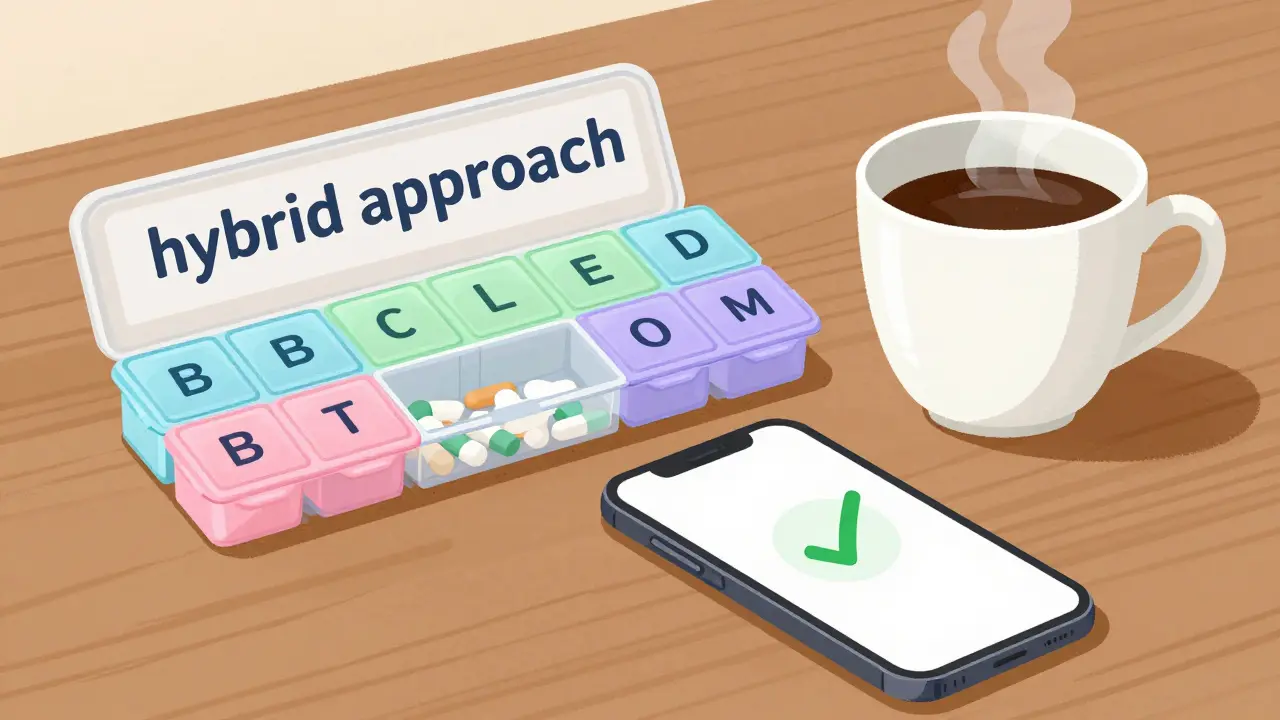
If you find that the texts aren't enough, it might be time to look into a "hybrid approach." This means combining your phone alerts with a physical pill organizer. When the text hits your phone, look at the organizer to confirm the dose is gone. This double-verification system removes the guesswork and ensures that "I thought I took it" doesn't become a dangerous mistake.
Vivek Hattangadi
April 9, 2026 AT 05:08This is such a great way to handle things! I've actually tried a similar system for my parents and it totally changed their daily routine. The idea of personalization is key because it makes it feel less like a chore and more like a health goal. Let's all try to share more of these little life hacks here!
Daniel Trezub
April 10, 2026 AT 10:51Pretty basic stuff, really. Anyone with a phone already knows how to set an alarm, so calling this a "system" is a bit of a stretch, don't you think? It's just a glorified timer.
Rauf Ronald
April 11, 2026 AT 13:46Spot on! I've seen a ton of people struggle with complex regimens and a simple nudge can literally be a lifesaver. If you're feeling stuck, just start with one pill and build the habit from there. You've got this!
Del Bourne
April 12, 2026 AT 12:35The mention of message fatigue is an excellent point. In my experience, integrating these alerts with a physical habit, such as placing your water glass by the bed, creates a much stronger mental link. It is the synergy between the digital prompt and the physical environment that ensures success over the long term.
Rupert McKelvie
April 14, 2026 AT 09:52Really helpful advice here. It is wonderful to see how simple technology can improve quality of life for so many people. Keep it up.
Windy Phillips
April 16, 2026 AT 06:34Oh, so we are just relying on a little beep-beep from a phone now... how quaint... I suppose some people just lack the basic discipline to remember their own health, but I'm sure this will work for those who really cannot manage... naturally...
Kathleen Painter
April 17, 2026 AT 03:43I think it's really important to remember that everyone's journey with health is different and some of us just need a bit more support than others in our daily lives. I've always felt that as long as we are moving toward a healthier version of ourselves, the method we use-whether it's a fancy app or a handwritten note on the fridge-doesn't actually matter that much in the end. It's all about finding a rhythm that feels peaceful and sustainable for your own specific lifestyle and needs, rather than forcing yourself into a rigid system that might actually cause more stress than it solves, so just take your time with it and be gentle with yourself while you're figuring out what works best for you.
Nikhil Bhatia
April 19, 2026 AT 02:46Too much reading for a simple tip.
Ruth Swansburg
April 19, 2026 AT 13:18Stay focused on your goals! Consistency is everything. You can achieve this!