
Irritable Bowel Syndrome: How the Gut-Brain Axis Drives Symptoms and Relief
 May, 9 2026
Does your stomach cramp up right before a big meeting? Do you feel bloated after a stressful weekend? If so, you are not just imagining it. Your brain is talking to your gut, and for millions of people with Irritable Bowel Syndrome (IBS), that conversation has gone horribly wrong.
For decades, doctors treated IBS as a simple digestive issue. They prescribed laxatives or anti-diarrheals and hoped for the best. But we now know that view is outdated. IBS is actually a disorder of the gut-brain axis, the complex communication network linking your central nervous system and your intestinal tract. Understanding this connection is the key to finding real relief, moving beyond temporary fixes to long-term management.
The Broken Conversation: What Is the Gut-Brain Axis?
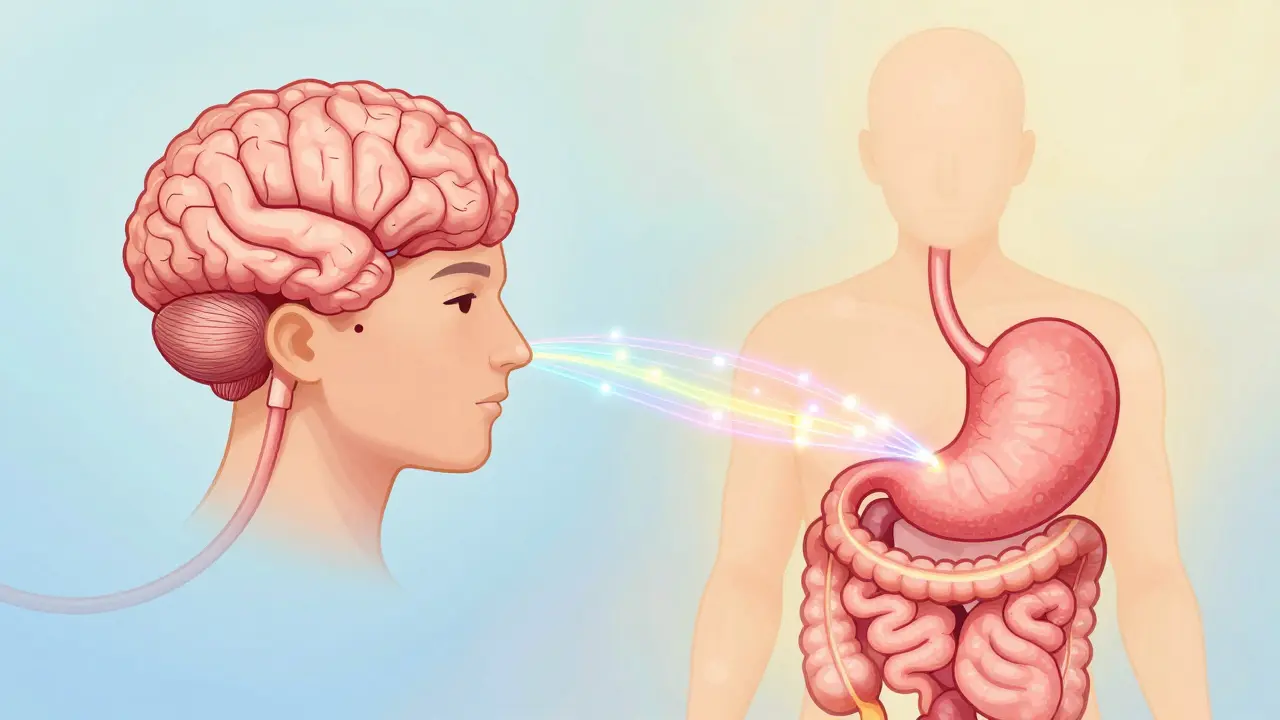
Your gut and brain are in constant contact. This isn't a metaphor; it's biology. The gut-brain axis operates through three main pathways: neural signals traveling via the vagus nerve, hormonal messages, and immune system mediators. Think of it like a high-speed fiber optic cable running between your head and your belly.
In a healthy person, this system regulates digestion, mood, and pain perception seamlessly. In someone with IBS, the lines get crossed. Research published in Molecular Psychiatry (2023) shows that structural changes occur in the brains of IBS patients. For example, they often have increased gray matter density in the hypothalamus-the area responsible for stress responses-and decreased density in the prefrontal cortex, which helps regulate emotions and pain. This means your brain is literally wired to amplify pain signals coming from your gut.
This explains why stress triggers symptoms. When you are anxious, your brain sends distress signals down the vagus nerve. Your gut interprets these signals as a threat, slowing down motility (causing constipation) or speeding it up (causing diarrhea). It also increases visceral hypersensitivity, meaning normal gas movement feels like sharp pain. You aren't "making it up"; your nervous system is overreacting to standard digestive processes.
Why Serotonin Matters More Than You Think
If you think serotonin is just about mood, think again. About 95% of your body's serotonin is produced in your gut, not your brain. These enterochromaffin cells release serotonin to control bowel movements. In IBS, this balance is thrown off.
Studies show that patients with diarrhea-predominant IBS (IBS-D) have significantly higher levels of mucosal serotonin compared to healthy controls. This excess serotonin speeds up transit time, leading to urgent, loose stools. Conversely, those with constipation-predominant IBS (IBS-C) often have reduced serotonin availability, causing sluggish motility. This discovery has led to targeted treatments like 5-HT3 antagonists (e.g., alosetron) for IBS-D and 5-HT4 agonists (e.g., prucalopride) for IBS-C, which directly address this chemical imbalance rather than just masking symptoms.

Dietary Strategies: Beyond "Just Avoid Dairy"
Generic advice like "eat more fiber" can sometimes make IBS worse because certain fibers ferment in the gut, producing gas that stretches the intestinal wall. This stretching triggers the hypersensitive nerves mentioned earlier. This is where the low-FODMAP diet comes in.
FODMAPs are short-chain carbohydrates (fermentable oligosaccharides, disaccharides, monosaccharides, and polyols) that are poorly absorbed in the small intestine. When they reach the large intestine, bacteria ferment them rapidly, creating gas and drawing water into the gut. Clinical trials show that a low-FODMAP diet improves symptoms in 50-76% of patients. However, it is not a lifelong sentence. It is a diagnostic tool.
- Elimination Phase: Strictly avoid high-FODMAP foods for 4-6 weeks. This includes onions, garlic, wheat, certain fruits like apples, and dairy with lactose.
- Reintroduction Phase: Systematically challenge specific food groups to identify your personal triggers. You might tolerate onions but not garlic, or vice versa.
- Personalization Phase: Create a sustainable diet that avoids only your specific triggers while maximizing nutritional variety.
Working with a registered dietitian is crucial here. Without guidance, many people stay in the elimination phase too long, risking nutrient deficiencies and worsening their relationship with food.
Calm the Nerves: Hypnotherapy and Stress Management
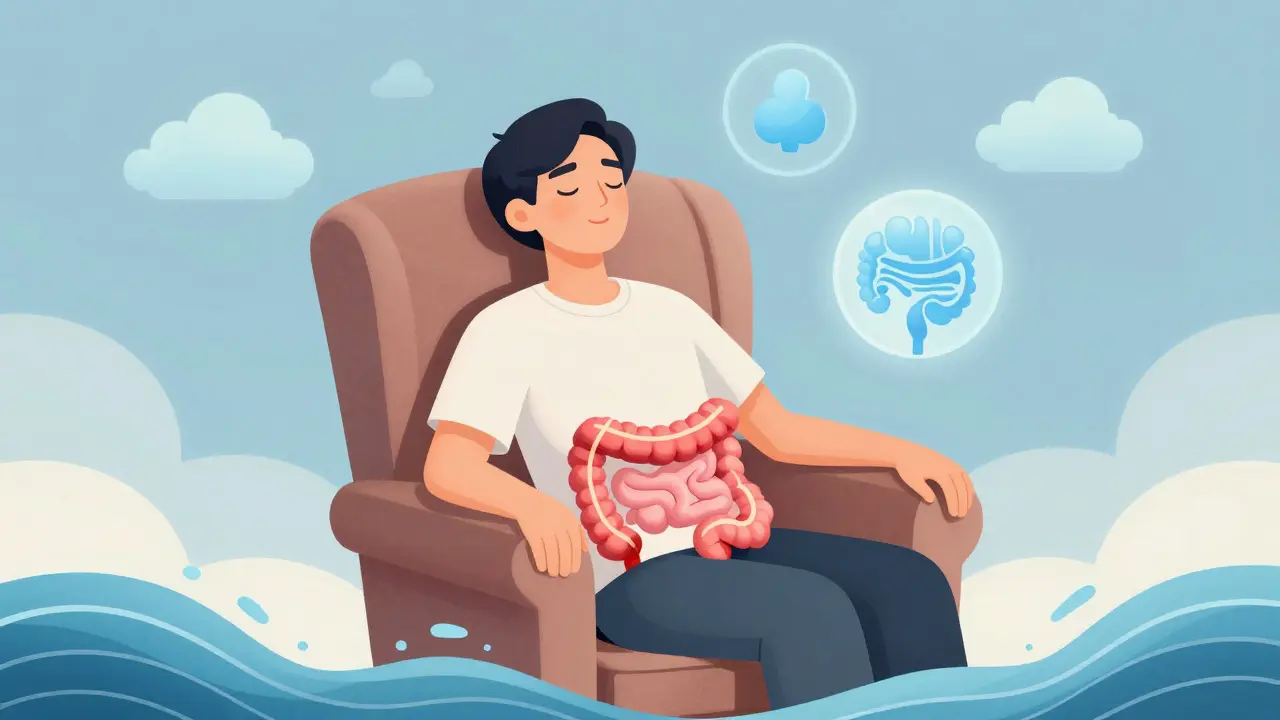
If the problem is a miscommunication between the brain and gut, why not fix the signal at the source? Gut-directed hypnotherapy does exactly that. Unlike traditional talk therapy, this technique uses guided imagery and relaxation to retrain the brain's interpretation of gut signals.
Randomized controlled trials demonstrate response rates of 70-80%, significantly outperforming standard medical care alone. The effects are durable, often lasting months after treatment ends. While access can be limited due to cost and provider availability, digital apps offering guided hypnosis are becoming more common, making this evidence-based approach more accessible.
Other neuromodulation techniques include transcutaneous vagus nerve stimulation (tVNS), which uses mild electrical currents to calm the vagus nerve. Pilot studies show promising results for reducing abdominal pain, though larger trials are still underway.
Microbiome Manipulation: Probiotics and FMT
Your gut microbiome plays a role in signaling the brain. An imbalance in bacterial populations can lead to inflammation and altered neurotransmitter production. While probiotics are widely marketed, not all strains work for IBS. Evidence supports specific strains, such as Bifidobacterium infantis 35624, which has shown a 30-40% improvement in global symptoms compared to placebo.
Fecal microbiota transplantation (FMT), once reserved for severe infections, is being studied for IBS. Results vary widely (20-60% response rates) depending on donor selection and administration methods. Because of this variability and regulatory hurdles, FMT remains largely experimental for IBS, though research continues to refine protocols.
| Therapy Type | Mechanism of Action | Effectiveness Rate | Key Considerations |
|---|---|---|---|
| Low-FODMAP Diet | Reduces fermentation and gas production | 50-76% | Requires dietitian supervision; not for long-term use without reintroduction |
| Gut-Directed Hypnotherapy | Retrains brain-gut signal processing | 70-80% | High efficacy; limited provider access; high upfront cost |
| Targeted Probiotics | Modulates microbiome and immune response | 30-40% | Strain-specific; must look for clinical trial evidence |
| Serotonergic Agents | Adjusts serotonin receptor activity | 45-60% | Prescription only; potential side effects; risk monitoring required |
Navigating Treatment: A Stepped Approach
There is no one-size-fits-all cure for IBS. The American College of Gastroenterology recommends a stepped-care model. Start with education about the gut-brain axis-understanding the mechanism itself reduces anxiety and improves adherence. Next, implement dietary changes like the low-FODMAP diet under professional guidance. If symptoms persist, move to neuromodulation (hypnotherapy) or pharmacotherapy targeting specific pathways (like serotonin).
New biomarkers, such as the VisceralSense™ panel, aim to predict treatment response by measuring microbial metabolites. While still emerging, these tools promise a future of personalized medicine, where treatment is tailored to your unique biological profile rather than trial-and-error.
Is IBS a mental illness?
No. IBS is a physical disorder involving the digestive system. However, because the gut and brain are closely linked via the gut-brain axis, psychological factors like stress and anxiety can worsen physical symptoms. Treating the mind helps the body, but that doesn't mean the pain is "all in your head."
How long does the low-FODMAP diet take to work?
Most people see improvement within 2-4 weeks of strict elimination. However, the full process, including reintroduction to identify specific triggers, takes 3-6 months. It is essential to follow the reintroduction phase to avoid unnecessary long-term restrictions.
Can hypnotherapy really cure IBS?
While "cure" is a strong word, gut-directed hypnotherapy offers significant, long-lasting symptom relief for many patients. Studies show 70-80% response rates, with benefits sustained even after sessions end. It works by calming the overactive nerve signals between the gut and brain.
What are the best probiotics for IBS?
Not all probiotics are equal. Look for strains with clinical evidence, such as Bifidobacterium infantis 35624 or Lactobacillus plantarum. Avoid generic multi-strain blends unless they cite specific studies supporting their efficacy for IBS symptoms.
When should I see a specialist?
If over-the-counter remedies and basic dietary changes fail, consult a gastroenterologist. Seek immediate care if you experience red flags like unexplained weight loss, blood in stool, anemia, or onset of symptoms after age 50, as these may indicate conditions other than IBS.