
Kava and Liver Health: Safety with Other Medications
 Dec, 25 2025
Kava Medication Interaction Checker
Check Your Kava Risk
Kava can cause serious liver damage when combined with medications. This tool helps you determine if kava is safe to use with your current medications based on FDA guidelines.
Many people turn to kava as a natural way to ease anxiety, stress, or trouble sleeping. It’s been used for thousands of years in the South Pacific, where it’s brewed into a calming drink during community gatherings. Today, you can find it in capsules, teas, and tinctures in health stores across the U.S. But here’s the problem most people don’t talk about: kava can seriously damage your liver - especially when mixed with other medications.
Why Kava Can Hurt Your Liver
Kava’s active ingredients, called kavalactones, work on the brain to create a relaxed feeling - similar to anti-anxiety meds like Xanax, but without the same risk of addiction. That’s why it’s popular. But while it may calm your nerves, it’s hard on your liver. The liver breaks down almost everything you take - pills, alcohol, supplements. Kava interferes with that process. It blocks key enzymes (CYP3A4, CYP2C9, CYP2C19) that your liver uses to clear drugs from your system. When those enzymes are blocked, other medications build up in your body. That’s dangerous. It can turn a normal dose of blood pressure medicine, antidepressant, or painkiller into a toxic overload. Worse, kava drains your liver’s main antioxidant - glutathione. Without enough of it, your liver cells start dying. That’s how liver injury starts. And once it begins, it can spiral fast. One case documented in the NCBI LiverTox database showed a person’s ALT (a liver enzyme) jumping from a normal 17 U/L to over 2,400 U/L in just a few weeks. That’s a 140x increase. They needed a liver transplant.Not All Kava Is the Same
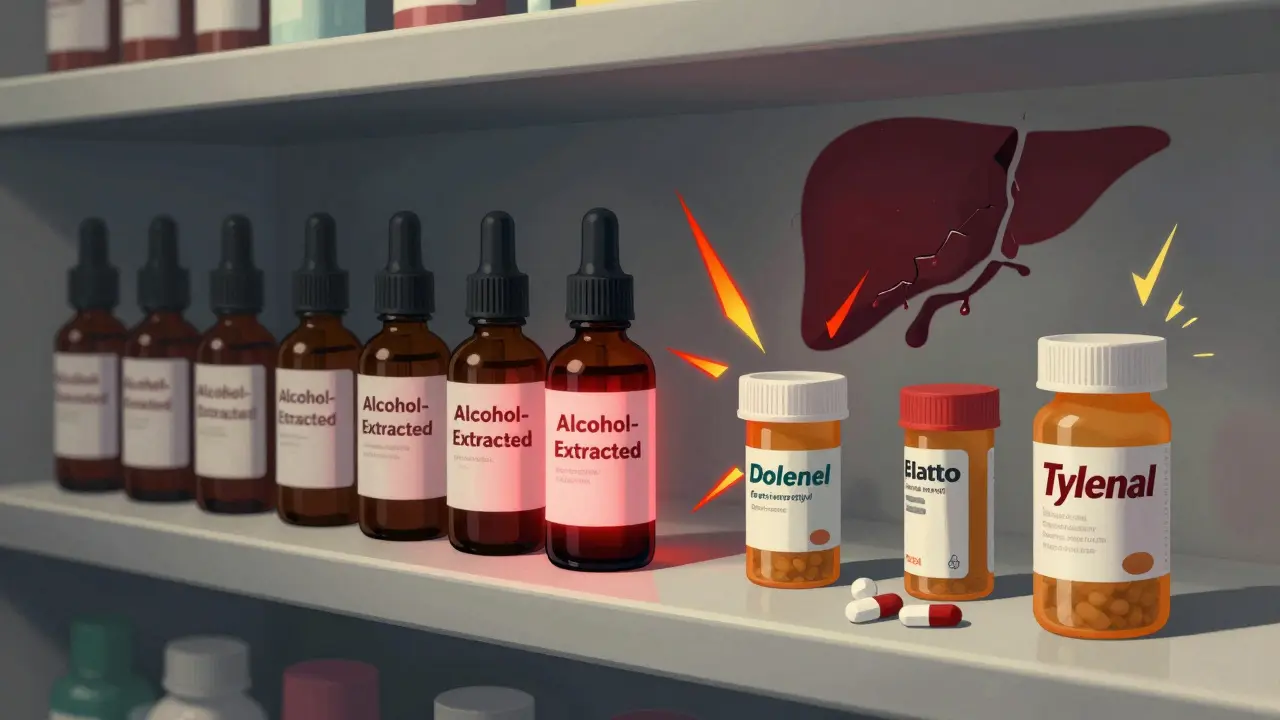
Here’s something most users don’t realize: the way kava is made matters more than the plant itself. Traditional Pacific Island preparations use cold water to extract kavalactones from the root. That method has been used safely for centuries. No major liver damage reports from those communities. But the kava sold in U.S. stores? Most of it is made with alcohol, acetone, or other organic solvents. These extracts pull out more than just kavalactones - they pull out flavokawains and other compounds that are directly toxic to liver cells. Studies show these solvent-based extracts are linked to over 90% of the reported liver injuries. The FDA’s 2020 report confirmed this: German and Swiss cases of liver failure almost all came from ethanolic or acetonic extracts. Water-based kava? Almost none. If you’re using kava, check the label. Look for “water-extracted” or “traditional preparation.” If it doesn’t say, assume it’s risky.Medications That Dangerously Mix With Kava
If you’re on any of these, kava is not safe:- Antidepressants - SSRIs like sertraline, SNRIs like venlafaxine
- Anxiolytics - Benzodiazepines like lorazepam, alprazolam
- Pain relievers - Acetaminophen (Tylenol), even at normal doses
- Blood pressure meds - Beta-blockers, ACE inhibitors
- Hormonal birth control - Norgestimate, ethinyl estradiol
- Migraine meds - Rizatriptan (Maxalt)
- Statins - Atorvastatin, simvastatin
- Anticoagulants - Warfarin, apixaban
Alcohol Makes It Worse - A Lot Worse
Mixing kava with alcohol? That’s like pouring gasoline on a fire. Both alcohol and kava stress the liver. Together, they multiply the damage. The CDC reported 11 cases of liver failure linked to kava between 1999 and 2002. Nearly all involved alcohol use. Even moderate drinking - one or two drinks a day - raises your risk dramatically. If you drink alcohol regularly, don’t take kava. Period. If you’re trying to cut back on alcohol for anxiety, kava isn’t the replacement. It’s a trap.Who Should Never Take Kava
Even if you’re not on meds, kava isn’t safe for everyone:- If you have any liver condition - hepatitis, fatty liver, cirrhosis
- If you’ve ever had elevated liver enzymes
- If you’re over 60 - liver function slows with age
- If you have a family history of liver disease
- If you’re genetically prone to slow drug metabolism - a known risk factor
What to Do If You’ve Been Taking Kava
If you’ve been using kava - even for a few weeks - and you’re on other medications, here’s what to do:- Stop kava immediately. Don’t wait for symptoms.
- Get a liver panel. Ask your doctor for ALT, AST, bilirubin, and GGT tests. Normal ALT is under 17 U/L. Above 40? That’s a red flag.
- Tell your doctor you took kava. Many patients don’t mention supplements. But doctors need to know. Liver damage from kava can look like viral hepatitis or alcohol abuse. Without knowing you took kava, they might miss it.
- Don’t restart. Even if your liver tests return to normal, re-exposure can cause worse damage. One case had a patient who restarted kava after recovery - and went into liver failure again within 8 weeks.
What About Natural Alternatives?
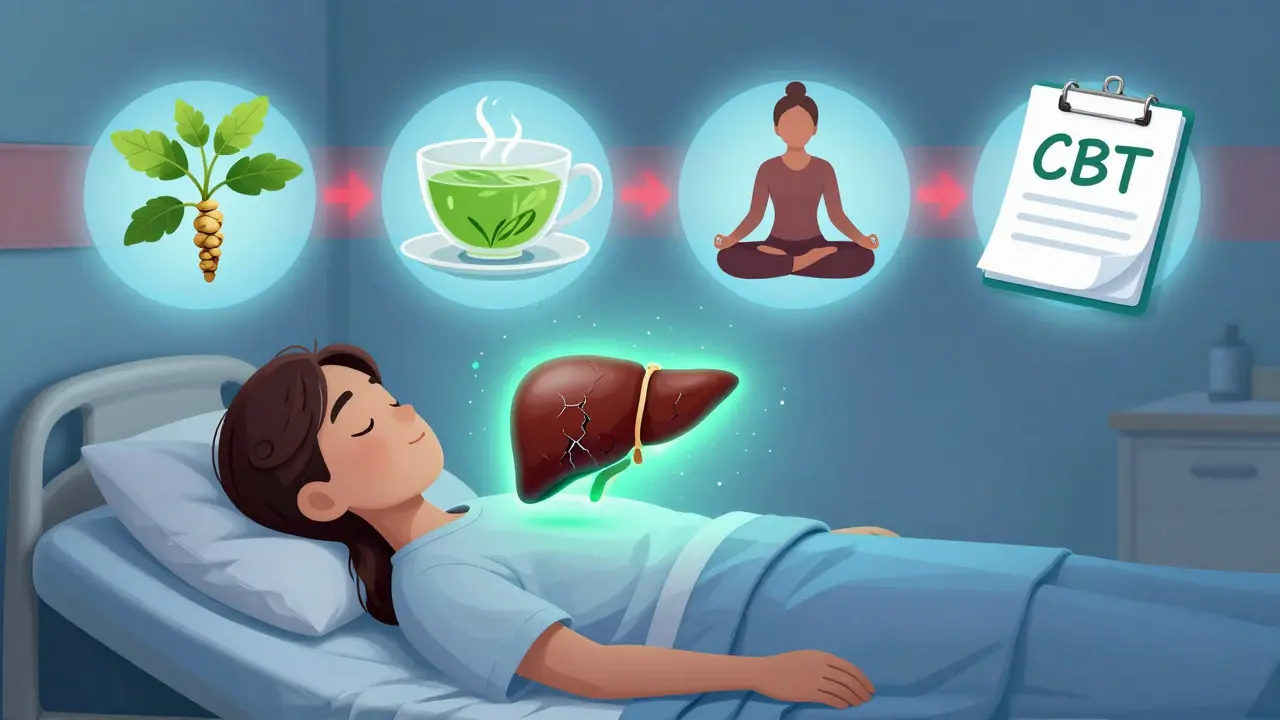
If you want to manage anxiety without risking your liver, here are safer options:- Valerian root - mild sedative, low liver risk, studied for sleep
- L-theanine - amino acid in green tea, promotes calm without drowsiness
- Passionflower - gentle anxiolytic, few documented liver interactions
- Mindfulness and breathing exercises - proven to reduce cortisol and anxiety long-term
- Cognitive behavioral therapy (CBT) - gold standard for anxiety, no side effects
The Bigger Picture
The global kava market is worth over $1 billion. Sales in the U.S. grew 18% in 2021. But behind the numbers are real people - some of them young, healthy, and trusting supplements because they’re labeled “natural.” The truth? “Natural” doesn’t mean safe. Kava isn’t the only supplement with this problem. But it’s one of the most dangerous. The WHO, FDA, and liver specialists all agree: the risk isn’t theoretical. It’s documented. It’s repeated. It’s deadly. Regulators in Europe, Canada, and Australia have banned or restricted kava. The U.S. hasn’t - but that doesn’t mean it’s safe. It means the burden is on you to protect yourself.Final Advice
If you’re thinking about trying kava for anxiety:- Don’t.
- If you’re already using it, stop.
- If you’re on any prescription or over-the-counter meds, kava is a ticking time bomb.
- There are better, safer ways to feel calm.
Can kava cause liver damage even if I don’t take other medications?
Yes. While combining kava with other drugs greatly increases the risk, liver damage has been reported in people who took kava alone. The main culprits are organic solvent extracts (alcohol-based), high doses, long-term use, and genetic factors that affect how your liver processes toxins. Even without other medications, kava can deplete glutathione and directly harm liver cells.
Is water-extracted kava safe to use with medications?
Even water-extracted kava isn’t safe with medications. While it carries a lower risk of liver damage than alcohol-based extracts, it still inhibits the same liver enzymes (CYP3A4, CYP2C9, CYP2C19) that process most drugs. This means it can still cause dangerous buildups of medications like blood pressure pills, antidepressants, or statins. If you’re on any prescription, avoid kava entirely - regardless of extraction method.
How long does it take for kava to damage the liver?
Liver damage can appear as early as 2-4 weeks, but most cases show up between 8 and 20 weeks of regular use. One documented case saw liver enzymes rise sharply after 16 weeks. The damage often starts silently - no symptoms at first. By the time jaundice or nausea appears, the injury is already severe. Regular liver tests are the only way to catch it early.
Should I get my liver tested before taking kava?
You shouldn’t take kava at all if you’re on medications. But if you’re considering it anyway, get a baseline liver panel (ALT, AST, bilirubin, GGT) before starting. Then test again after 4-6 weeks. If any enzyme rises above normal, stop immediately. But the best advice? Skip kava. The risks outweigh any potential benefits, especially with so many safer alternatives available.
Can kava interact with over-the-counter drugs like Tylenol?
Yes. Acetaminophen (Tylenol) is already processed by the liver and can cause damage at high doses. Kava blocks the enzymes that help break it down, so even a normal dose of Tylenol can become toxic when taken with kava. Multiple liver failure cases involved both kava and acetaminophen. Never combine them.
Why is kava still sold in the U.S. if it’s so dangerous?
In the U.S., supplements like kava are regulated under the Dietary Supplement Health and Education Act (DSHEA), which doesn’t require proof of safety before sale. The FDA can only act after harm is documented. Despite issuing advisories since 2002 and confirming risks in 2020, the agency hasn’t banned kava. That means the responsibility falls on consumers to research the risks - and most don’t.
Are there any safe doses of kava?
There’s no proven safe dose when combined with medications. Even low doses (60-100 mg kavalactones) have triggered liver enzyme spikes in sensitive individuals. The FDA and AASLD recommend avoiding kava entirely if you take any drug metabolized by CYP enzymes. For people not on meds, occasional use of water-extracted kava may carry lower risk - but no dose is truly risk-free. The safest dose is zero.
Ellie Stretshberry
December 26, 2025 AT 02:55i just started taking kava last month for sleep and now i’m freaking out lol
christian ebongue
December 27, 2025 AT 20:18lol so kava’s the new energy drink for anxious millennials? 🤡
Angela Spagnolo
December 28, 2025 AT 09:48i read this whole thing and just cried... i’ve been taking kava for 6 months with my antidepressants... i didn’t know... i’m so scared now. i’m calling my doctor tomorrow. thank you for posting this. i didn’t even realize how much i trusted the word ‘natural’.
Zina Constantin
December 29, 2025 AT 08:17As someone raised in a Greek-American household where ‘natural’ meant ‘grandma’s herbal tea’ and ‘supplements’ meant ‘vitamins from the pharmacy,’ this hits different. Kava isn’t some mystical cure-it’s a chemical with consequences. The fact that we market it like a spa day while ignoring the liver damage is a tragedy. My cousin had a transplant at 32 because she thought ‘it’s just a plant.’ Don’t let your wellness journey become someone else’s obituary.
SHAKTI BHARDWAJ
December 29, 2025 AT 17:17OMG YOU’RE ALL PANICKING OVER A PLANT?? I’VE BEEN TAKING KAVA FOR 10 YEARS WITH ALCOHOL AND TYLENOL AND I’M FINE!! YOU PEOPLE ARE JUST WEAK!! THIS IS JUST BIG PHARMA FEAR TACTICS!! 🤬
Kuldipsinh Rathod
December 30, 2025 AT 05:27bro i took kava for 3 months, no meds, just water extract, felt chill af. liver was fine. i got tested. maybe its not everyone? maybe its just the bad extracts?
Jay Ara
December 30, 2025 AT 13:00imagine trusting a supplement from a random online store like its a yoga retreat. i used to buy kava from amazon without checking the label. now i read every ingredient like its a contract. thanks for the wake up call.
carissa projo
December 31, 2025 AT 12:48It’s funny how we treat plants like magic wands when they’re just biology. Kava doesn’t care if you call it ‘ancient wisdom’ or ‘holistic healing.’ It just reacts with your liver like any other molecule. Maybe the real question isn’t ‘is it safe?’ but ‘why do we think we’re exempt from biology?’
Shreyash Gupta
January 2, 2026 AT 09:35lol i took kava with my zoloft and now i’m ‘chill’ and my liver is ‘chilling’ too 😎
Jody Kennedy
January 2, 2026 AT 21:18just stopped kava after reading this. switched to l-theanine and honestly? better sleep, no brain fog. why did i wait so long? 🙃
Dan Alatepe
January 4, 2026 AT 10:53my cousin went to the ER with yellow eyes after kava + ibuprofen… they thought it was hepatitis… turned out it was the ‘natural anxiety cure’ she bought at Whole Foods. now she’s on a waiting list for a transplant. don’t be her.