
Key Medication Safety Terms Patients Should Know and Use
 Jan, 15 2026
Every year, over 1.5 million people in the U.S. end up in the emergency room because of medication mistakes. Many of these aren’t accidents-they’re preventable. The biggest reason? Patients don’t know the basic safety terms that could save their lives. You don’t need to be a doctor to protect yourself. You just need to know a few key words and how to use them.
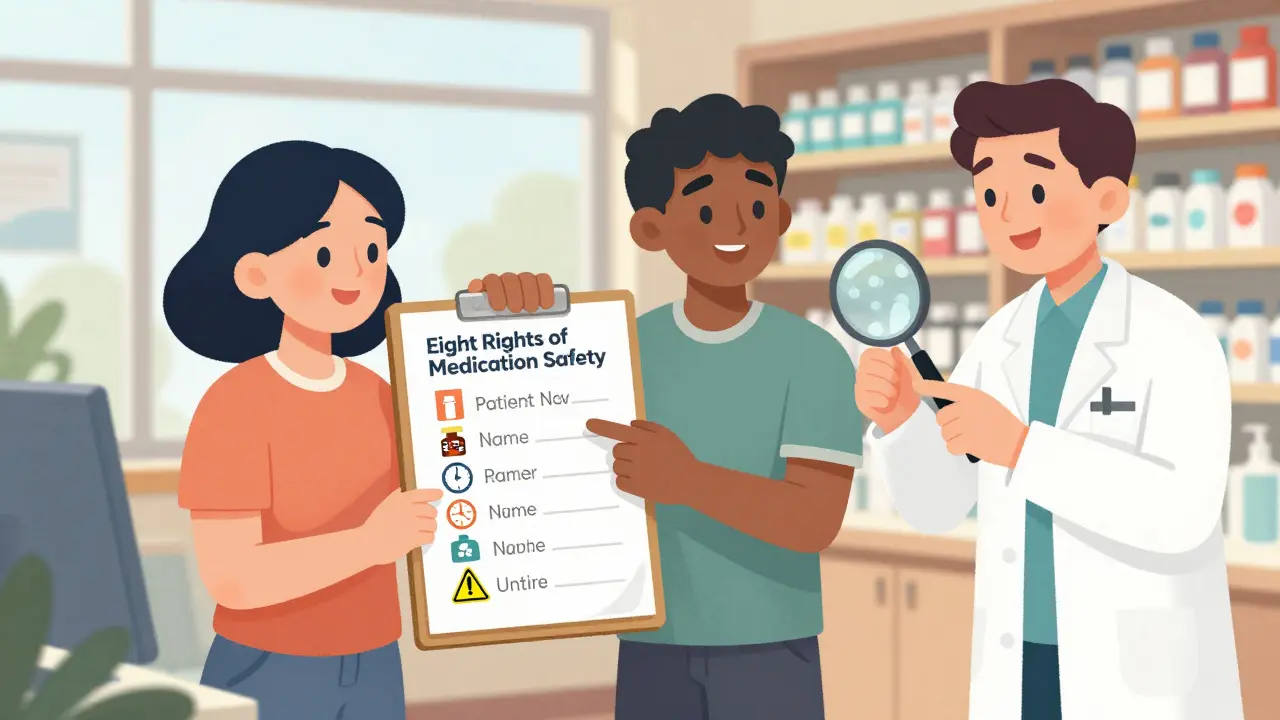
What Are the Eight Rights of Medication Safety?
The foundation of medication safety isn’t a complicated algorithm or a high-tech app. It’s a simple checklist called the Eight Rights. These aren’t suggestions. They’re your rights as a patient. If you can ask about each one, you cut your risk of harm by nearly half.
- Right patient - They must confirm your name and date of birth before giving you anything. No exceptions. If they only ask for your first name, say no.
- Right medication - Ask: "Is this the generic or brand name?" Many errors happen because drugs sound alike, like hydralazine and hydroxyzine. Don’t assume the label is correct.
- Right dose - If it’s a liquid, ask how many milliliters or teaspoons you should take. Pediatric doses are especially tricky-15% of mistakes in kids come from wrong measurements.
- Right route - Is this pill meant to be swallowed, placed under the tongue, or injected? Giving an IV drug by mouth can kill you. Always confirm how it’s supposed to be taken.
- Right time - Are you supposed to take this with food? At night? Every 6 hours? Write it down or use a phone app. People who track their times are 42% more likely to take meds correctly.
- Right reason - This is the most powerful one. Ask: "Why am I taking this?" If you can’t answer that, you’re at risk of taking something you don’t need. Studies show this single question reduces inappropriate prescriptions by 28%.
- Right documentation - Did they write it down? If you’re given a shot in the hospital, ask if it was logged. If it wasn’t, someone else might give you another one by accident.
- Right response - Are you feeling better? Or worse? Track side effects. If you get dizzy, swollen, or break out in a rash, tell someone. Patients who monitor their reactions cut severe reactions by 35%.
What Is an Adverse Drug Event?
An adverse drug event (ADE) isn’t just a side effect. It’s any harm caused by a medicine-whether it’s the wrong dose, the wrong drug, or just bad timing. That includes allergic reactions, overdoses, and interactions with other pills or foods.
Not all side effects are ADEs. If you get a little drowsy from an antihistamine, that’s expected. But if you start bleeding after taking blood thinners without knowing why, that’s an ADE. The CDC says ADEs are one of the biggest preventable dangers in healthcare today.
Here’s what you can do: Keep a list of every pill, vitamin, and supplement you take. Bring it to every appointment. If you’re unsure whether a symptom is normal, don’t wait. Call your pharmacist. They’re trained to spot ADEs before they become emergencies.
What Are High-Alert Medications?
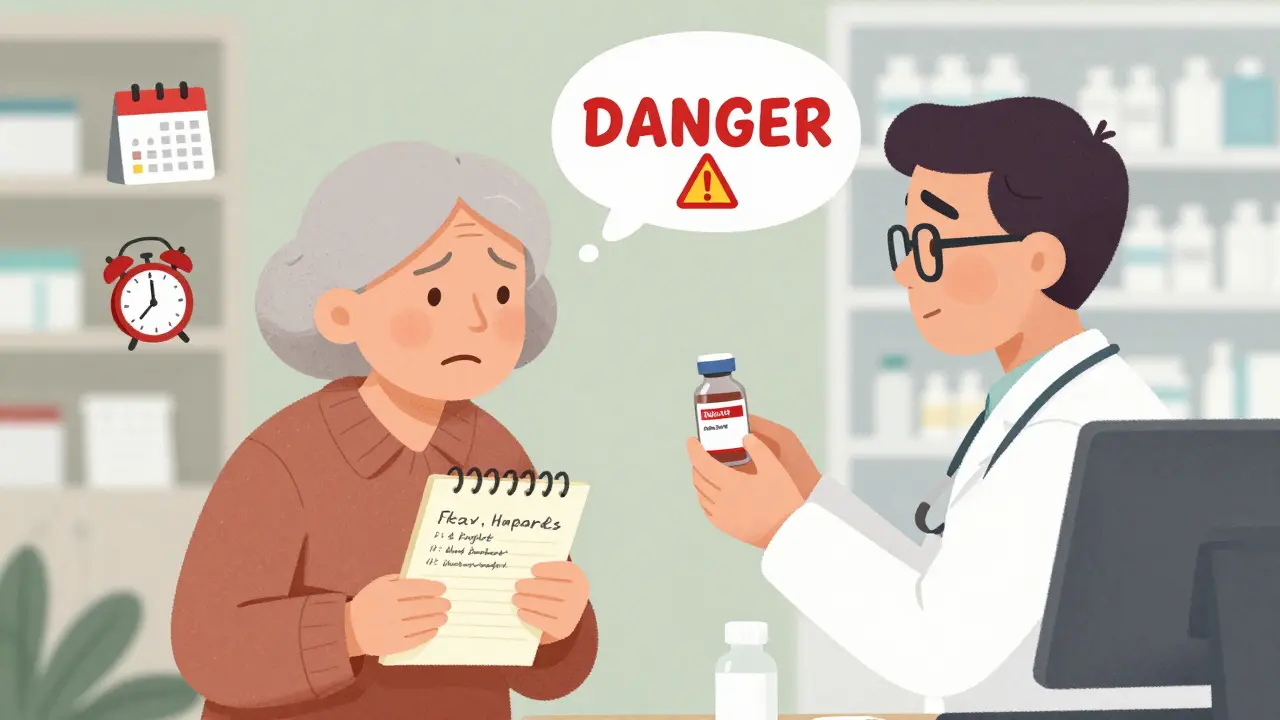
Some drugs are more dangerous than others-not because they’re weak, but because a tiny mistake can kill you. These are called high-alert medications.
The Institute for Safe Medication Practices (ISMP) lists these as top risks:
- Insulin (too much can cause coma)
- Warfarin and other blood thinners (too little can cause clots; too much can cause bleeding)
- Opioids like oxycodone or morphine (overdose stops breathing)
- IV potassium (if given too fast, it stops your heart)
- Chemotherapy drugs
These aren’t rare. One in three fatal medication errors involves one of these. If you’re prescribed any of these, ask: "Why is this considered high-risk? What should I watch for?" Don’t let staff rush you. Take your time. Read the warning labels. If you’re unsure, call your pharmacist before you take the first dose.
What’s a Close Call?
A close call is when something almost went wrong-but didn’t. Maybe the nurse caught the wrong drug before giving it. Maybe your pharmacist spotted a dosage error. These aren’t failures. They’re warnings.
Most people ignore close calls. They think, "Thank goodness nothing happened." But that’s exactly when you should speak up. Tell your doctor or pharmacist: "This almost happened to me. Can we make sure it doesn’t happen again?"
Hospitals track close calls to fix systems. But if you don’t report them, they never know the problem exists. Your voice helps prevent the next person’s tragedy.
What Is a Sentinel Event?
A sentence event is the worst-case scenario: death or serious injury caused by a medication error. The Joint Commission, which certifies hospitals, defines these as events that demand immediate investigation.
Examples include:
- A patient dies after being given the wrong insulin dose
- Someone has a stroke because they were given the wrong blood thinner
- A child is given adult-strength medicine
You won’t hear about these often. But when they happen, hospitals are required to review them publicly. The good news? If you understand the Eight Rights, you’re far less likely to be part of one.
How to Use These Terms in Real Life
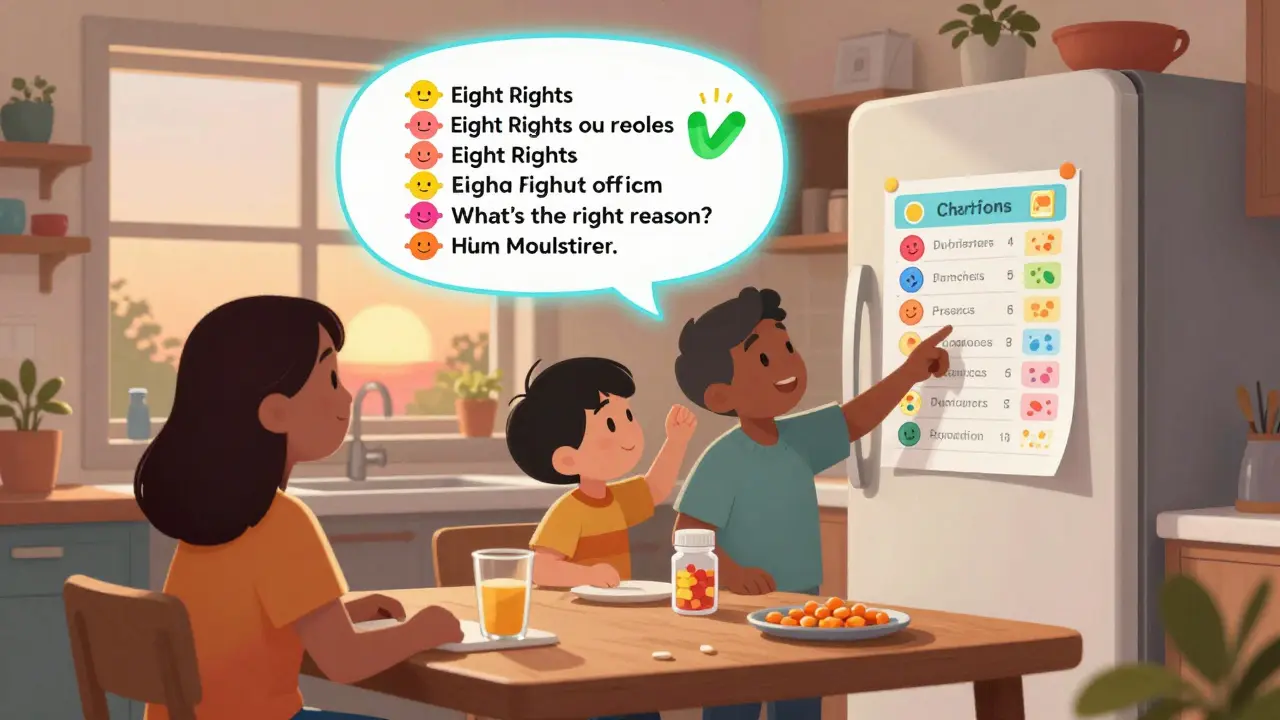
Knowing these terms isn’t enough. You have to use them. Here’s how:
- Before you leave the doctor’s office, say: "Can you please confirm the Eight Rights for this prescription?"
- When picking up your medicine at the pharmacy, ask: "Is this the right drug, dose, and reason?"
- Set phone alarms for the right time. Use apps like Medisafe-they’re designed to check each of the Eight Rights before reminding you.
- Keep a small notebook. Write down: what you took, when, why, and how you felt. Bring it to every visit.
- If something feels off, don’t wait. Call your pharmacist. They’re paid to answer your questions, even if you’re not their regular patient.
One woman in Bristol, UK, saved her own life this way. She was given a new blood pressure pill. She didn’t know the name. She didn’t know why. She asked the pharmacist: "What’s the right reason for this?" The pharmacist realized the prescription was meant for someone else. The error was caught before she took it.
Why This Matters More Than Ever
In 2026, we’re taking more medicines than ever. Older adults often take five or more pills a day. Chronic conditions are common. New drugs come out every year. The system is complex. But you don’t have to be lost in it.
The CDC and FDA set a goal: by 2030, 90% of patients should know at least five of these safety terms. Right now, only 43% do. That gap is dangerous. But it’s also your opportunity.
If you learn these terms, you’re not just protecting yourself. You’re helping the whole system work better. When patients ask the right questions, doctors listen. Pharmacists double-check. Nurses slow down.
You are not a passive recipient of care. You are the last line of defense. And your voice matters.
What should I do if I don’t understand a medication term my doctor uses?
Say: "I’m not sure what that means. Can you explain it in simpler terms?" You have the right to understand everything about your medicine. Don’t nod along just to be polite. Write it down or ask to see it in writing. If you’re still unsure, call your pharmacist-they’re trained to break down complex terms.
Can I use these terms even if I’m not in a hospital?
Absolutely. These terms apply everywhere: your doctor’s office, the pharmacy, at home, even when you’re talking to a family caregiver. You can ask your pharmacist at the counter, your nurse during a home visit, or your care coordinator over the phone. Any time you’re given a new medicine, use the Eight Rights checklist.
Is it okay to ask the same question more than once?
Yes. Never feel bad about asking. Mistakes happen when people assume someone else checked. If you’re not sure, ask again. Even if you already asked the doctor, ask the nurse. Ask the pharmacist. Multiple checks save lives. The more people who verify, the safer you are.
What if I’m taking vitamins or supplements? Do these terms still apply?
Yes. Supplements can cause serious interactions. St. John’s Wort can make birth control fail. Vitamin K can cancel out blood thinners. Every pill, powder, or drop you take counts. Include them in your list. Ask your pharmacist if any of your supplements interact with your prescriptions.
How do I know if a medication is a high-alert drug?
Ask your pharmacist directly: "Is this a high-alert medication?" They’ll know. You can also check the ISMP’s public list online. Common ones include insulin, opioids, blood thinners, and chemotherapy drugs. If it’s one of these, ask for a printed warning sheet and make sure you understand the signs of overdose or reaction.
Why is the right reason so important?
Many people take medications they don’t need because they never asked why. A 2018 study found 28% of prescriptions were given for reasons that didn’t match the patient’s diagnosis. If you know why you’re taking something, you’ll notice if it stops working-or if it’s causing harm. It also helps you avoid taking duplicates. For example, you might be given two pills that both treat high blood pressure, but you’d never know unless you asked the reason.
What to Do Next
Start today. Pick one term-maybe "right reason"-and use it at your next appointment. Write it on a sticky note. Say it out loud. You don’t need to memorize all eight at once. Just start asking.
Keep a simple list of your meds: name, dose, reason, time. Update it every time something changes. Share it with a family member or caregiver. If you’re alone, record it on your phone.
Medication safety isn’t about trusting the system. It’s about making sure the system works for you. And you have the power to make that happen.
Bobbi-Marie Nova
January 17, 2026 AT 09:54Okay but like… why does it take a blog post for me to realize I’ve been swallowing pills like candy for 12 years without asking why? I’m 37 and just learned ‘right reason’ isn’t just a fancy phrase. I’m printing this out and taping it to my pill organizer. Also, my cat now knows when I’m taking meds because I say ‘right route?’ out loud. She judges me.
Allen Davidson
January 17, 2026 AT 17:54This is the most practical healthcare advice I’ve read in years. No fluff. Just actionable stuff. I’ve been telling my elderly parents to ask these questions for years-they think I’m being pushy. But now I’m sending them this exact list. If you’re not using the Eight Rights, you’re gambling with your life. Period.
Samyak Shertok
January 18, 2026 AT 14:35Oh wow. So the entire U.S. healthcare system is just a giant game of telephone where the patient is the last person to hear the message? And we’re supposed to be the ‘last line of defense’? That’s not empowerment-that’s systemic abandonment dressed up as a self-help checklist. If you need a 10-point checklist to not die from a pill, maybe the system shouldn’t exist like this. 🤷♂️
Corey Sawchuk
January 19, 2026 AT 02:22Good list. I’ve been doing the right reason thing since my last ER trip. Turns out I was on two different blood pressure meds for the same thing. My doc didn’t even know. Pharmacist caught it. I just asked ‘why am I taking this?’ and boom. Saved me $120 a month and a possible stroke. Simple. Free. Effective.
Nick Cole
January 19, 2026 AT 10:05I work in a hospital pharmacy. We see this every day. Patients don’t ask because they’re scared of sounding dumb. But here’s the truth: the more you ask, the more we respect you. I’ve had patients who asked about the Eight Rights get their meds double-checked by three people. You’re not being difficult-you’re making us better.
Riya Katyal
January 20, 2026 AT 18:43Wow. So you’re saying I’m not supposed to just trust the doctor? Like… what if they’re wrong? What if they’re lying? What if this is all just a Big Pharma cover-up to keep us dependent? I mean… have you seen the commercials? I’m not taking anything until I get a signed affidavit from the moon.
Henry Ip
January 22, 2026 AT 13:47Love this. I started using the Eight Rights with my mom’s meds after she almost took her neighbor’s thyroid pill. Now we have a little checklist on the fridge. She says it makes her feel in control. I say it makes me sleep better. Win-win.
waneta rozwan
January 24, 2026 AT 02:57Oh please. You think asking questions is going to fix the fact that your doctor spends 7 minutes with you and then hands you a script for something you’ve never heard of? This is just victim-blaming wrapped in a pretty bow. The real problem? No one has time to learn this stuff because they’re working two jobs and can’t afford to miss a shift. Stop pretending empowerment is enough.
Nicholas Gabriel
January 24, 2026 AT 04:07Thank you for writing this. Seriously. I’m a nurse, and I’ve seen too many patients suffer because they didn’t know to ask. I keep a laminated copy of the Eight Rights on my clipboard. I hand it out to every new patient. I even teach it to their family members. You’re not just a patient-you’re a partner. And partners ask questions. Don’t be shy.
Cheryl Griffith
January 24, 2026 AT 16:28I had a close call last month. I was given a new antibiotic. I didn’t feel like asking-just wanted to get home. But then I remembered ‘right reason.’ So I asked my pharmacist. Turns out it was meant for my husband’s sinus infection. He had the same name, different DOB. They didn’t catch it. I did. I’m still shaking thinking about it.
swarnima singh
January 25, 2026 AT 04:37they say ask the right reason but what if the reason is… capitalism? what if the drug was made because it makes money not because it helps? i mean… i took that blood thinner for 6 months and my doc never asked if i was bleeding internally… i only found out because i passed out in the grocery store. so yeah. ask questions. but also… who’s really in charge here?
Isabella Reid
January 25, 2026 AT 20:25As someone who grew up in a culture where you never question elders or doctors, this changed everything for me. My mom used to say, ‘The doctor knows best.’ Now I say, ‘The doctor knows a lot. But I know me.’ We’ve had better conversations since. And I’m still alive. That’s a win.
Jody Fahrenkrug
January 25, 2026 AT 23:22Just printed this and put it in my wallet next to my insurance card. I’m not a medical expert. But I am the only one who knows how my body feels. Asking ‘right response?’ saved me from a bad reaction last year. I’ll keep asking. No shame.
Kasey Summerer
January 27, 2026 AT 04:098 rights? More like 8 reasons to panic. 😅 But honestly? I’m gonna start using them. My grandma’s on 12 meds. She doesn’t even know what half of them are for. Time to be the annoying grandkid who asks questions. 🙌
kanchan tiwari
January 27, 2026 AT 15:01They’re teaching us to ask questions… but what if the whole system is designed to make us ask the wrong ones? What if the ‘right reason’ is just a script written by a pharmaceutical rep? What if the pharmacist is paid to not tell you about the 37 other drugs that interact? I’m not taking anything until I get a live video call with the FDA commissioner. And even then… I’m still skeptical.