
Lifetime Savings: How Generic Medications Slash Costs for Chronic Conditions
 May, 3 2026
Living with a chronic condition like hypertension, diabetes, or asthma means you’re likely looking at decades of daily medication. For many, the price tag is just as daunting as the diagnosis itself. Brand-name drugs can drain your bank account, leading to skipped doses and worse health outcomes. But there is a straightforward way to cut those costs without sacrificing your health: switching to generic medications. These aren’t “cheaper versions” in quality-they are pharmaceutical equivalents that deliver the same therapeutic effect for a fraction of the price.
If you’ve been paying full price for brand-name prescriptions, you might be leaving thousands of dollars on the table every year. Understanding how generics work, why they are safe, and how to maximize their use can transform your lifetime healthcare spending from a financial burden into a manageable expense. Let’s break down the real numbers behind generic savings and how you can start benefiting today.
The Real Cost Difference: Brand vs. Generic
When a brand-name drug’s patent expires, other manufacturers can produce the same medication using the identical active ingredient. This competition drives prices down dramatically. According to data from East Street Pharmacy (2023), generic drugs typically cost 80-85% less than their brand-name counterparts. That’s not a small discount; it’s a massive reduction that adds up quickly over a lifetime of treatment.
| Condition | Brand-Name Drug Example | Generic Equivalent | Estimated Monthly Cost (Brand) | Estimated Monthly Cost (Generic) | Annual Savings |
|---|---|---|---|---|---|
| Hypertension | Prinivil | Lisinopril | $40 - $50 | $4 | $1,200 - $2,000 |
| Diabetes | Glucophage XR | Metformin ER | $150 | $25 | $1,350 |
| Asthma | Symbicort | Budesonide/Formoterol | $300 | $60 | $2,880 |
Take lisinopril for high blood pressure as an example. A patient sticking with the brand-name Prinivil might pay $40-$50 a month. Switching to generic lisinopril drops that cost to around $4 per month. Over ten years, that’s nearly $20,000 saved. At scale, this impact is staggering. In 2020, generics accounted for 90% of all dispensed prescriptions in the U.S., yet only 18% of total retail prescription drug expenditures ($63 billion out of $350 billion). The USC Schaeffer Center noted that U.S. use of generic and biosimilar drugs in place of branded drugs in 2020 alone saved $338 billion. Over the previous decade, estimated savings reached nearly $2.4 trillion.
Are Generics Just as Effective? The Science of Bioequivalence
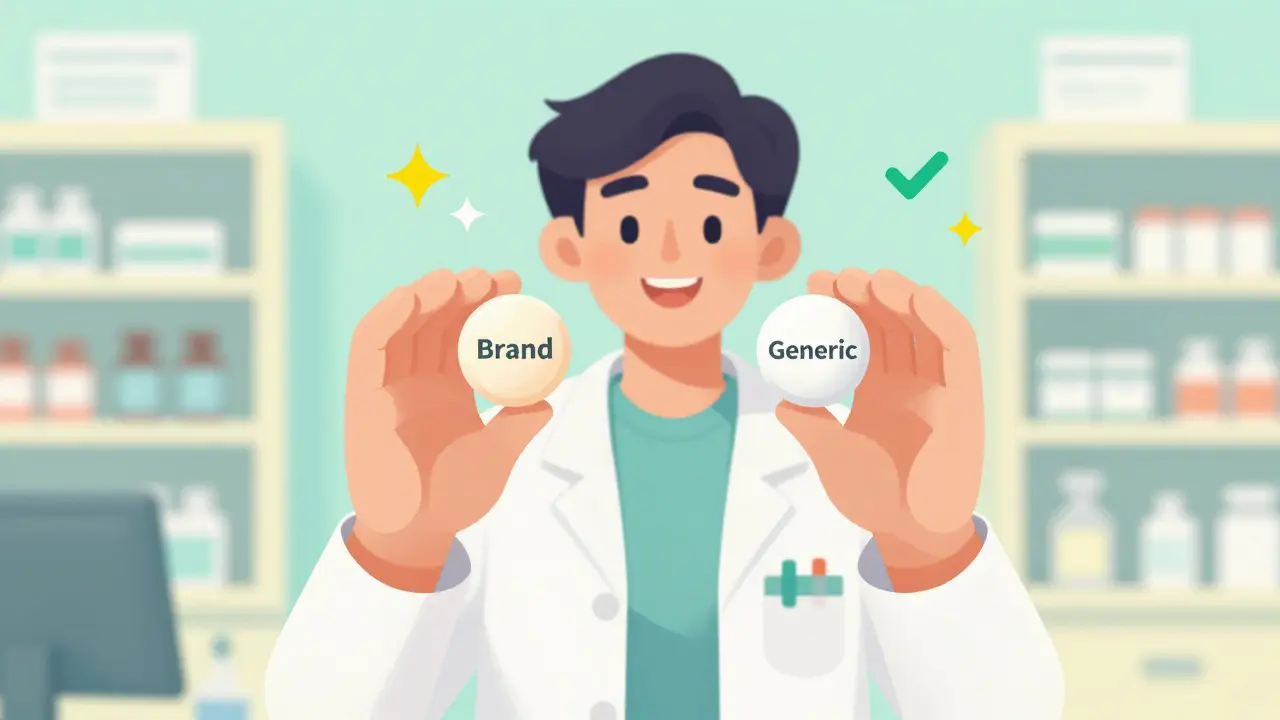
A common concern is whether cheaper means inferior. The short answer is no. The FDA requires generic drugs to demonstrate bioequivalence to brand-name counterparts. This means the generic must have the same active ingredient, strength, dosage form, and route of administration. More importantly, it must deliver the same amount of active ingredient into the bloodstream within the same timeframe as the brand-name drug.
FDA standards mandate that generic drugs fall within a 90% confidence interval of 80-125% of the brand-name drug’s pharmacokinetic parameters. As documented by Longdom Publishing (2022), this rigorous testing ensures identical therapeutic outcomes. While inactive ingredients (like fillers or dyes) may differ, these do not affect the drug’s medical efficacy. Dr. Aaron Kesselheim, Professor of Medicine at Harvard Medical School, confirmed in PMC (2020) research that "generic drugs are used to treat some of the most complex and chronic diseases, including rare and orphan conditions," debunking the myth that generics are only for simple ailments.
For most patients, the switch is seamless. However, if you have known allergies to specific dyes or binders, it’s worth discussing with your pharmacist. They can ensure the generic version doesn’t contain ingredients you’re sensitive to. But for the vast majority, the therapeutic effect is indistinguishable from the brand name.
How Lower Costs Improve Health Outcomes
It’s not just about saving money; it’s about staying healthy. High prescription costs are a major barrier to adherence. A CDC study (2012) found that 25% of rural patients reported skipping doses due to cost concerns. When people can’t afford their medication, they miss doses, leading to disease progression, hospitalizations, and emergency room visits-events that cost far more than the medication itself.
Research shows that patients initiated on generic drugs are 18-22% more likely to maintain consistent medication regimens compared to those on brand-name drugs (Drug Patent Watch, 2023). Better adherence directly translates to better health. East Street Pharmacy (2023) reported that adherent patients see 20-30% lower hospitalization rates. Furthermore, Medication Therapy Management (MTM) programs, which often focus on optimizing generic use, improve adherence rates by 15-25% and reduce medication-related problems by 30-40% (Farmington Drugs, 2023).
Consider the case of HIV/AIDS treatment in India between 2005 and 2015. Widespread availability of affordable generic drugs increased treatment adherence by 40% and reduced mortality rates by 25%. Similarly, Brazil’s government policies promoting generics for hypertension and diabetes increased medication access by 35% and reduced related healthcare costs by $1.2 billion annually. These global examples highlight the direct link between affordability, adherence, and survival.
Maximizing Your Savings: Practical Steps
To get the most out of generic medications, you need to take an active role in your care. Here’s how to ensure you’re getting the best deal:
- Ask for Generic Substitutions: Always ask your doctor, “Is there a generic equivalent available?” Most physicians prefer generics because they are cost-effective and equally effective. If your prescription specifies “dispense as written,” ask if that can be changed.
- Utilize Medication Therapy Management (MTM): MTM programs, often covered by Medicare Part D, involve a pharmacist reviewing your entire medication list. They can identify opportunities to switch to generics, adjust dosages, or eliminate redundant drugs. Care Harmony (2023) reported that patients in chronic care management programs using generic substitutions saw 30% lower out-of-pocket costs and 25% higher satisfaction scores.
- Check Insurance Formularies: Insurance plans often have tiered pricing. Generics are usually on the lowest tier, meaning your copay will be significantly lower. Compare your plan’s formulary to see which generics are preferred.
- Use Discount Programs: If you don’t have insurance or your plan has high deductibles, look into pharmacy discount cards or manufacturer assistance programs. Some pharmacies offer cash prices for generics that are lower than insured copays.
- Educate Yourself: Misconceptions about generic quality persist. Understanding the FDA’s bioequivalence requirements can help you feel confident in making the switch. Educational programs have been shown to increase patient acceptance rates by 45% in chronic disease settings (East Street Pharmacy, 2023).

Future Trends: Biosimilars and Complex Generics
The landscape of affordable medication is evolving. While traditional generics cover small-molecule drugs (like pills), biosimilars are emerging for biologic drugs, which are complex proteins used to treat conditions like rheumatoid arthritis, cancer, and multiple sclerosis. The Biologics Price Competition and Innovation Act of 2009 created pathways for these biosimilars, extending the principle of generic competition to biologics.
IQVIA forecasts that biosimilars could save the U.S. healthcare system $300 billion over the next decade. Additionally, we’re seeing a rise in “complex generics”-generics with unique delivery systems or combination therapies. While these are harder to develop, they still offer significant cost savings compared to brand-name biologics or complex formulations. The FDA’s Generic Drug User Fee Amendments (GDUFA) III, implemented through 2027, aims to accelerate approvals for these complex generics while maintaining strict quality standards.
With approximately $150 billion in brand-name drug sales facing generic competition between 2023 and 2027 (Drug Patent Watch, 2023), the window for lifetime savings is wide open. The 2022 Inflation Reduction Act also includes provisions to cap out-of-pocket costs for Medicare beneficiaries, potentially saving seniors an average of $450 annually on chronic condition medications (Care Harmony, 2023).
Addressing Common Concerns
Despite the evidence, some patients remain hesitant. Here are answers to frequent questions:
- “Do generics work differently?” No. They must meet the same strict FDA standards for safety, purity, and strength. Any perceived difference is often due to the placebo effect or variations in inactive ingredients, not the active drug.
- “Why are brand names still so expensive?” Brand-name companies invest heavily in research and development, and patents allow them exclusive rights to sell the drug for a set period (typically 20 years). Once patents expire, competition lowers prices. However, some brands maintain high prices even after generics are available due to marketing or lack of competition in certain niches.
- “Can I switch back and forth?” It’s generally safe to switch between brand and generic, but consistency is key. Try to stick with one formulation to avoid minor variations in inactive ingredients that might affect tolerance. Consult your pharmacist before making changes.
Switching to generics isn’t just a smart financial move; it’s a proven strategy for better health management. By reducing the cost barrier, you’re more likely to stay on your medication, avoid complications, and enjoy a higher quality of life. Don’t let the price of brand-name drugs dictate your health outcomes. Ask your doctor and pharmacist about generic options today.
What is the average savings when switching from brand-name to generic drugs?
On average, generic drugs cost 80-85% less than brand-name equivalents. For example, a patient taking lisinopril for hypertension could save $1,200-$2,000 annually by switching from the brand-name Prinivil to generic lisinopril.
Are generic medications as safe and effective as brand-name drugs?
Yes. The FDA requires generic drugs to demonstrate bioequivalence, meaning they must have the same active ingredient, strength, dosage form, and route of administration. They must also deliver the same amount of active ingredient into the bloodstream within the same timeframe as the brand-name drug.
How do generic drugs improve medication adherence?
Lower costs reduce the financial barrier to taking medication. Studies show that patients initiated on generic drugs are 18-22% more likely to maintain consistent medication regimens. Better adherence leads to fewer hospitalizations and improved health outcomes.
What are biosimilars, and how do they relate to generics?
Biosimilars are similar to generics but for biologic drugs, which are complex proteins used to treat conditions like rheumatoid arthritis and cancer. They offer significant cost savings and are expected to save the U.S. healthcare system $300 billion over the next decade.
Can I request a generic substitution from my doctor?
Yes. You should always ask your doctor if a generic equivalent is available. Most physicians prefer prescribing generics due to their cost-effectiveness and equal efficacy. If your prescription says “dispense as written,” you can ask your doctor to change this to allow generic substitution.
Why do brand-name drugs remain expensive after generics are available?
Brand-name companies hold patents that grant them exclusive rights to sell the drug for a set period. Even after patents expire, some brands maintain high prices due to marketing strategies or lack of competition in specific markets. However, generics provide a competitive alternative that drives down overall market prices.