
Medication Reviews: When Seniors Should Stop or Deprescribe Medicines
 Dec, 9 2025
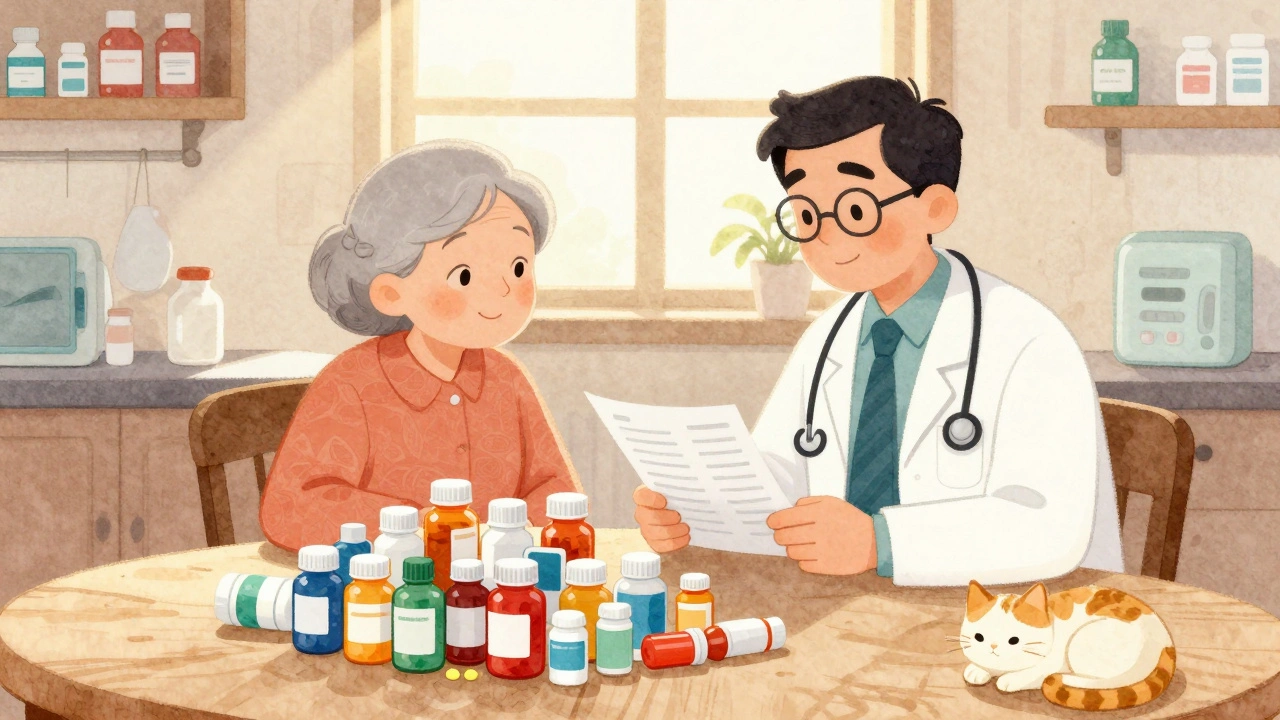
Every year, millions of older adults in the UK and beyond take more medications than they need. Some of these drugs were prescribed years ago for conditions that have since changed-or disappeared. Others were meant to prevent future problems, but now, with declining health or limited life expectancy, the risks outweigh any possible benefit. This isn’t just about taking too many pills. It’s about safety, comfort, and quality of life.
What Is Deprescribing, and Why Does It Matter?
Deprescribing isn’t just stopping a medicine. It’s a careful, planned process of reducing or stopping drugs that no longer help-or might even harm-an older person. The goal isn’t to cut pills for the sake of fewer pills. It’s to match treatment to current health goals. If someone has advanced dementia, severe frailty, or a terminal illness, taking a daily statin to prevent a heart attack five years from now doesn’t make sense. The side effects-muscle pain, liver stress, confusion-could make their current days harder. This idea isn’t new. It was first formally described in 2003 by Australian doctor Michael Woodward. Since then, research has shown that up to 30% of medications taken by seniors over 65 are unnecessary or risky. In the US, the percentage of older adults taking five or more drugs tripled between 1994 and 2014. In Scotland, the number of people on five or more prescriptions jumped from 11% to over 20% in just 15 years. These aren’t just numbers. Each one represents someone at risk of falls, confusion, kidney damage, or hospitalization from a drug reaction.When Is It Time to Review or Stop a Medication?
There are clear moments when a medication review should happen-and possibly lead to stopping a drug. Here are the top situations where deprescribing should be considered:- New symptoms appear: If a senior suddenly starts feeling dizzy, confused, weak, or nauseous after starting a new drug, it’s not always “just aging.” Many of these symptoms are classic signs of an adverse drug reaction. A medication that started six months ago might be the culprit.
- Life expectancy or health has changed: If someone has been diagnosed with late-stage cancer, advanced dementia, or heart failure with limited prognosis, preventive drugs like blood thinners, cholesterol-lowering pills, or diabetes meds often stop being helpful. The goal shifts from living longer to feeling better now.
- High-risk drugs are still being taken: Some medications are known to be especially dangerous for older adults. The American Geriatrics Society’s Beers Criteria lists these. Examples include benzodiazepines like diazepam (for anxiety or sleep), anticholinergics like diphenhydramine (found in many sleep aids and allergy meds), and long-term proton pump inhibitors (PPIs) for heartburn. These can cause falls, memory loss, or even increase the risk of dementia.
- Preventive meds with no short-term benefit: Statins, aspirin, and vaccines like shingles or pneumonia are great for healthy seniors. But if someone is 90, has multiple chronic conditions, and struggles to get out of bed, the benefit of preventing a heart attack or stroke in the next 5-10 years is theoretical. The daily pill burden and potential side effects aren’t worth it anymore.
How Do Doctors Decide What to Stop?
It’s not random. Good deprescribing follows a clear process:- Review all medications: Every pill, patch, inhaler, and injection should be listed. This includes over-the-counter drugs and supplements. Many seniors don’t realize that ibuprofen or herbal remedies can interact dangerously with prescription meds.
- Match each drug to a goal: For every medication, ask: Why was this started? Is that goal still relevant? Has the benefit faded while the risks grew?
- Use trusted tools: Clinicians use guidelines like the Beers Criteria or STOPP (Screening Tool of Older Person’s Potentially Inappropriate Prescriptions) to flag risky drugs. These aren’t just checklists-they’re based on decades of research.
- Start one at a time: Never stop multiple drugs at once. If a senior feels better after stopping one, you know it worked. If they get worse, you know which drug caused it.
- Monitor closely: After stopping a drug, watch for returning symptoms or new ones. Some drugs, like antidepressants or blood pressure meds, need to be tapered slowly to avoid withdrawal effects.
Who Should Be Involved in the Decision?
Deprescribing isn’t just the doctor’s call. It’s a team effort:- Clinical pharmacists: They’re experts in drug interactions and side effects. Many hospitals and community pharmacies now offer free medication reviews for seniors.
- The patient: Their goals matter most. Do they want to live longer, or to feel more alert, eat without nausea, or walk without falling?
- Family or caregivers: They often notice changes in behavior or function before the doctor does. They can help track symptoms after a drug is stopped.
- Primary care doctor: They coordinate everything. A geriatrician or family doctor who understands aging is key.
Too often, deprescribing doesn’t happen because no one asks. A 2023 study found that most guidelines focus on how to start medications-but almost none explain how to stop them. That’s changing. Platforms like deprescribing.org now offer free, evidence-based tools for patients and doctors, including printable guides, videos, and decision aids for common drugs like PPIs, sleep aids, and blood thinners.
What Happens When You Stop a Drug?
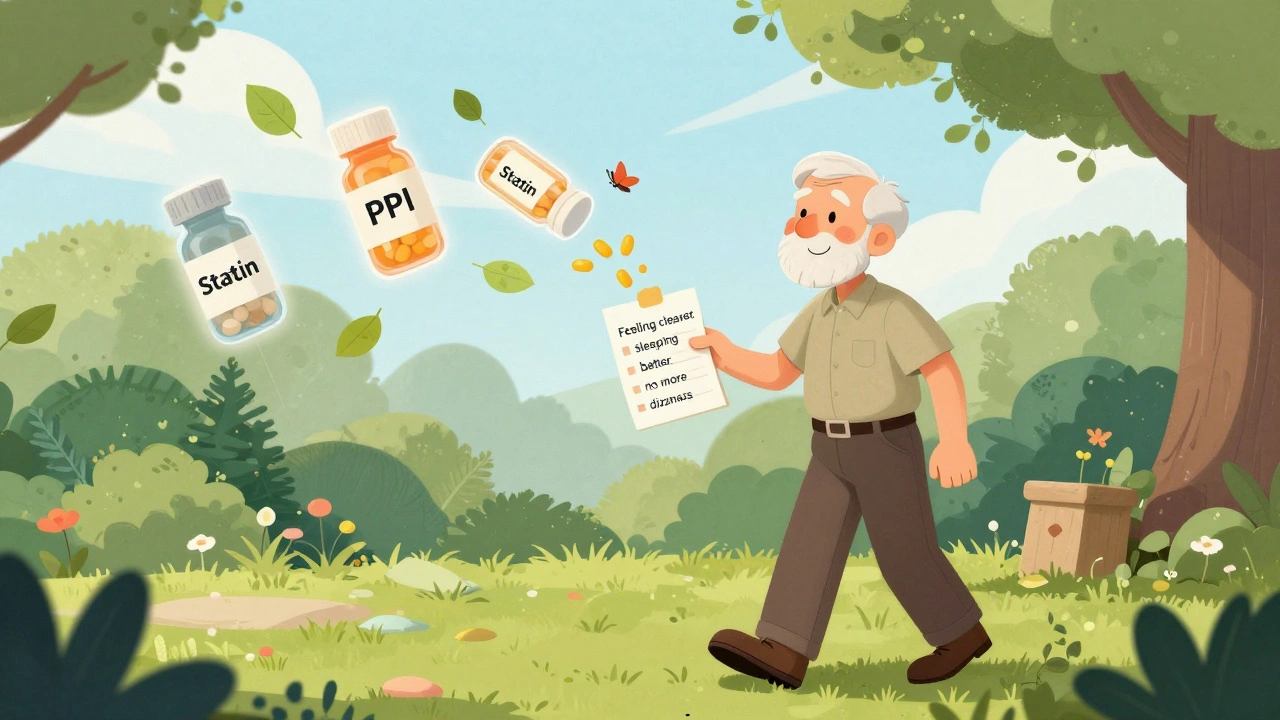
Many people worry: “If I stop this, will my condition come back worse?” The truth is, for many drugs, the answer is no.- Proton pump inhibitors (PPIs): These are often prescribed for heartburn. But after a few months, most people don’t need them. Stopping them can cause temporary heartburn, but that usually fades in 2-4 weeks. Long-term use increases risk of bone fractures, kidney disease, and infections.
- Benzodiazepines (like lorazepam): These are common for anxiety or insomnia. But they cause drowsiness, memory loss, and falls. Tapering them slowly improves sleep quality and reduces confusion in most seniors.
- Statins: For someone with no history of heart disease and limited life expectancy, stopping statins doesn’t increase risk of heart attack-it just removes daily side effects like muscle pain and fatigue.
- Antidepressants: If someone was prescribed one for grief after losing a spouse, and they’ve recovered emotionally, continuing the drug for years may not help. Stopping it under supervision often leads to no return of symptoms.
Studies show that when deprescribing is done properly, adverse drug events drop by 17-30%. Hospital readmissions fall by 12-25%. And seniors report feeling more alert, more in control, and more satisfied with their care.
What to Do If You’re Worried About Your Meds
If you or a loved one is taking five or more medications, here’s what to do next:- Make a complete list: Write down every pill, patch, cream, and supplement. Include dosages and why you take them.
- Ask your doctor: “Are all these still necessary? Is there one I could stop?” Don’t be afraid to ask this. It’s your right.
- Request a pharmacist review: Many community pharmacies in the UK offer free MedsChecks or medication reviews. Ask your local pharmacy if they do this.
- Use deprescribing.org: Download their free patient guides. They’re simple, clear, and backed by science.
- Track changes: After any change, note how you feel-energy, sleep, balance, digestion. Share this with your doctor at your next visit.
There’s no shame in stopping a drug that no longer serves you. In fact, it’s one of the most thoughtful acts of care you can take for your body as you age.
Why This Isn’t Just About Saving Money
Some think deprescribing is about cutting costs. It’s not. The real cost is in hospital stays, falls, confusion, and lost independence. In the US alone, adverse drug events in older adults cost about $30 billion a year. Many of these are preventable. But the human cost is higher: a senior who stops a sedative and can walk to the garden again. One who stops a PPI and no longer feels bloated after meals. These aren’t just clinical wins-they’re life wins.Medication reviews aren’t a sign of failure. They’re a sign of smart, personalized care. As we age, our bodies change. Our needs change. Our goals change. Our medicines should change too.
Is it safe to stop taking medications on my own?
No. Stopping certain medications suddenly-like blood pressure pills, antidepressants, or steroids-can cause serious withdrawal effects, rebound symptoms, or even life-threatening reactions. Always talk to your doctor or pharmacist first. They can help you taper safely if needed.
What if my doctor says I need to keep taking a drug?
Ask why. Request evidence: “What benefit am I getting now, and how long will it last?” If the answer is “It prevents something in the future,” ask if that future still matters given your current health and goals. You have the right to understand the risks and benefits-and to make an informed choice.
Can deprescribing make me feel worse at first?
Sometimes, yes. If you’ve been on a drug for years, your body may have adapted. Stopping it can cause temporary symptoms-like mild anxiety, sleep trouble, or stomach upset. But these usually fade within a few weeks. Your doctor should warn you about possible withdrawal effects and give you a plan to manage them.
How often should seniors have a medication review?
At least once a year, or anytime there’s a major health change-like a hospital stay, new diagnosis, fall, or change in memory or mobility. If you’re on five or more medications, consider a review every six months. Many GPs now offer annual medication reviews as part of routine care for older patients.
Are over-the-counter drugs and supplements included in deprescribing?
Absolutely. Many seniors take daily supplements like melatonin, fish oil, or herbal remedies, and over-the-counter painkillers like ibuprofen or naproxen. These can interact with prescriptions or cause harm on their own-especially with kidney or stomach issues. All of them should be reviewed during a medication check.
Jennifer Blandford
December 11, 2025 AT 06:48I had my mom go through this last year-she was on like seven meds, including that sleepy-time diphenhydramine crap. After the pharmacist helped her taper off, she started recognizing people again. Like, actually remembered my name. I cried. No joke. This isn’t just medicine-it’s getting your grandma back.
Deprescribing.org? I printed their guide and handed it to her doctor. He was kinda annoyed, but he did it. Best decision we ever made.
She’s out gardening now. No more stumbling. No more fog. Just sunflowers and tea.
Ronald Ezamaru
December 12, 2025 AT 08:10As a geriatric pharmacist, I see this every day. The biggest barrier isn’t clinical-it’s inertia. Doctors prescribe, patients take, no one questions. But when you sit down with a patient and ask, ‘What do you want your life to look like in six months?’-the answers change everything.
One 89-year-old woman stopped her statin, her PPI, and her nightly benzodiazepine. She said, ‘I just want to hear my grandkids laugh without feeling like I’m drugged.’ She did. And she’s been fine for 18 months.
Guidelines exist. Tools exist. We just need to use them.
Ryan Brady
December 12, 2025 AT 15:17Why are we even having this conversation? My dad’s 84 and he takes exactly what the doctor tells him. If you’re too old to handle meds, maybe you shouldn’t be alive. This whole ‘deprescribing’ thing sounds like liberal nonsense to get people off pills so they can die faster.
Stop trying to play God with medicine. Let the professionals do their job.
Raja Herbal
December 13, 2025 AT 13:23Oh wow, a whole article about stopping pills? In India, we don’t have enough pills to begin with. My uncle takes five different brands of aspirin because he thinks ‘more is better.’ He also drinks turmeric milk with honey and calls it ‘medicine.’
But hey, at least you guys have the luxury of overprescribing. We’re just happy when the pharmacy has the drug in stock.
Rich Paul
December 14, 2025 AT 07:21bro i was just reading this and like-statins for 90 yos?? lmao. my auntie’s on like 12 things, including a pill for the pill she takes for the other pill. she’s got dementia but still takes metformin like it’s a vitamin.
the doc told her to stop the ppi and she panicked for 2 days. then she ate a burrito and didn’t die. shocker.
also, why do we still use the term ‘deprescribing’? sounds like some corporate buzzword. just say ‘stop the dumb pills.’
Delaine Kiara
December 15, 2025 AT 08:56Let me tell you what happened to my neighbor. She was on three antidepressants, a beta-blocker, a PPI, and melatonin. Her daughter brought her to a geriatric pharmacist who said, ‘You’re not depressed-you’re lonely.’ So they stopped all the meds except one. And guess what? She started calling her kids again. Started knitting. Took up line dancing.
They didn’t just stop pills-they gave her back her life.
And now? She’s the most vibrant 87-year-old in the whole neighborhood. Who knew the answer wasn’t more drugs-it was less noise?
Gilbert Lacasandile
December 16, 2025 AT 08:07I’ve been saying this for years. My grandma was on 11 meds. We cut it down to 4. She sleeps better, walks without a cane, and doesn’t vomit after breakfast anymore. Doctors act like stopping a pill is some kind of betrayal. But if a drug isn’t helping, it’s hurting.
It’s not about being radical. It’s about being human.
Darcie Streeter-Oxland
December 16, 2025 AT 11:08While the sentiment underpinning this article is commendable, the underlying assumption-that deprescribing is a universally applicable clinical imperative-risks oversimplifying the complexities of polypharmacy in elderly populations. The absence of robust longitudinal data regarding long-term outcomes following deprescribing, particularly in frail elderly with multimorbidity, renders many recommendations speculative at best.
Furthermore, the casual invocation of patient autonomy, while rhetorically potent, often neglects the cognitive decline inherent in many geriatric patients, thereby undermining true informed consent.
Caution, not enthusiasm, must guide clinical practice in this domain.
Mona Schmidt
December 17, 2025 AT 06:08My father had a stroke last year and ended up on eight medications. We went through the deprescribing.org checklist together. We stopped his daily aspirin-he hadn’t had a heart issue in 15 years. We tapered his sleep aid. We cut his PPI after six months. He’s more alert, walks faster, and actually remembers what he had for lunch.
But here’s the thing: none of this would’ve happened if his doctor hadn’t been open to it. The real hero wasn’t the guide-it was the clinician who listened.
If you’re a doctor reading this: ask. Don’t assume. And don’t let inertia win.
Guylaine Lapointe
December 19, 2025 AT 05:57It’s so easy to say ‘stop the pills’ when you’re healthy. But what about the people who take these meds because they’re terrified of dying? What about the ones who’ve been told for decades that ‘this pill will save your life’? Now you’re telling them it was all a mistake?
Deprescribing sounds noble, but it’s emotionally devastating for many seniors. They don’t want to be told their medicine was useless. They want to feel safe.
Maybe we should stop calling it ‘deprescribing’ and start calling it ‘reassurance.’ Because what these people need isn’t fewer pills-they need to know they’re still being cared for.