
Medication Safety at Home: How to Build a Foolproof System to Prevent Errors
 Jan, 29 2026
Why Medication Mistakes Happen at Home
Most people think taking pills is simple. You open the bottle, swallow, and move on. But when you’re managing five, eight, or even twelve different medications a day - some in the morning, some at night, some with food, some without - it’s easy to mess up. And the consequences aren’t small. A missed dose, a double dose, or mixing the wrong pills can send you to the hospital. According to the CDC, medication errors are behind up to 41% of hospital admissions for older adults. That’s not just inconvenient - it’s dangerous.
It’s not just about forgetting. It’s about confusion. Is this the blue pill or the white one? Did I take my blood pressure med this morning? Is that cough syrup safe with my heart pill? These questions aren’t theoretical. A 2023 study by the Partners in Care Foundation found that 27% of older adults experience side effects like dizziness, confusion, or falls directly linked to medication mistakes. And it’s not just seniors. Anyone on multiple prescriptions - even someone in their 50s managing diabetes, cholesterol, and pain - is at risk.
The Core of a No-Mistake System: Your Medication List
Dr. Jennifer Gunter, a CDC advisor on medication safety, says this plainly: keeping an accurate, up-to-date medication list is the single most important step you can take. Not the fancy dispenser. Not the app. Not the pill box. The list.
Start with everything. Prescriptions. Over-the-counter painkillers. Vitamins. Herbal supplements. Even the occasional aspirin you take for headaches. Write it all down. Include the name, dose, how often you take it, and why you’re taking it. If you don’t know why, call your doctor. Don’t guess.
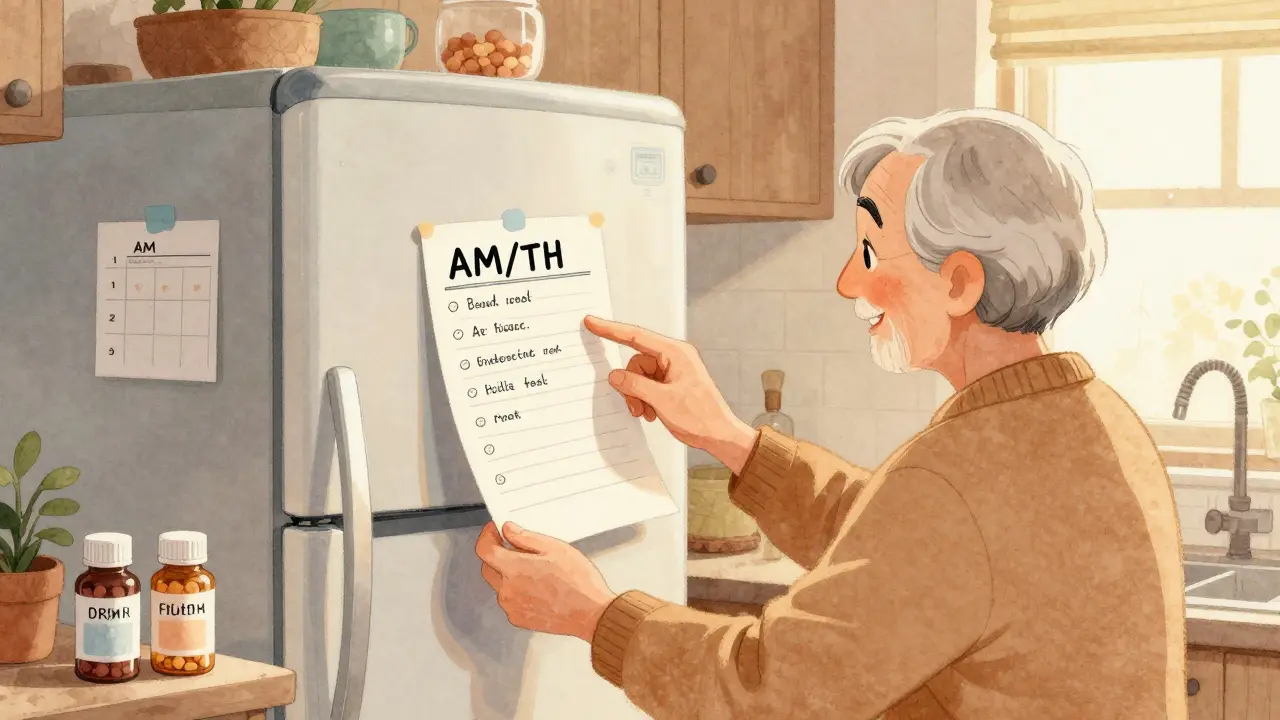
Update this list every time something changes - a new prescription, a dose increase, a pill you stopped. Keep a printed copy in your wallet and another taped to the fridge. Share it with your pharmacist and your main caregiver. When you go to the ER or see a new doctor, hand them this list. It’s your safety net.
Smart Dispensers: The Game Changer for Complex Regimens
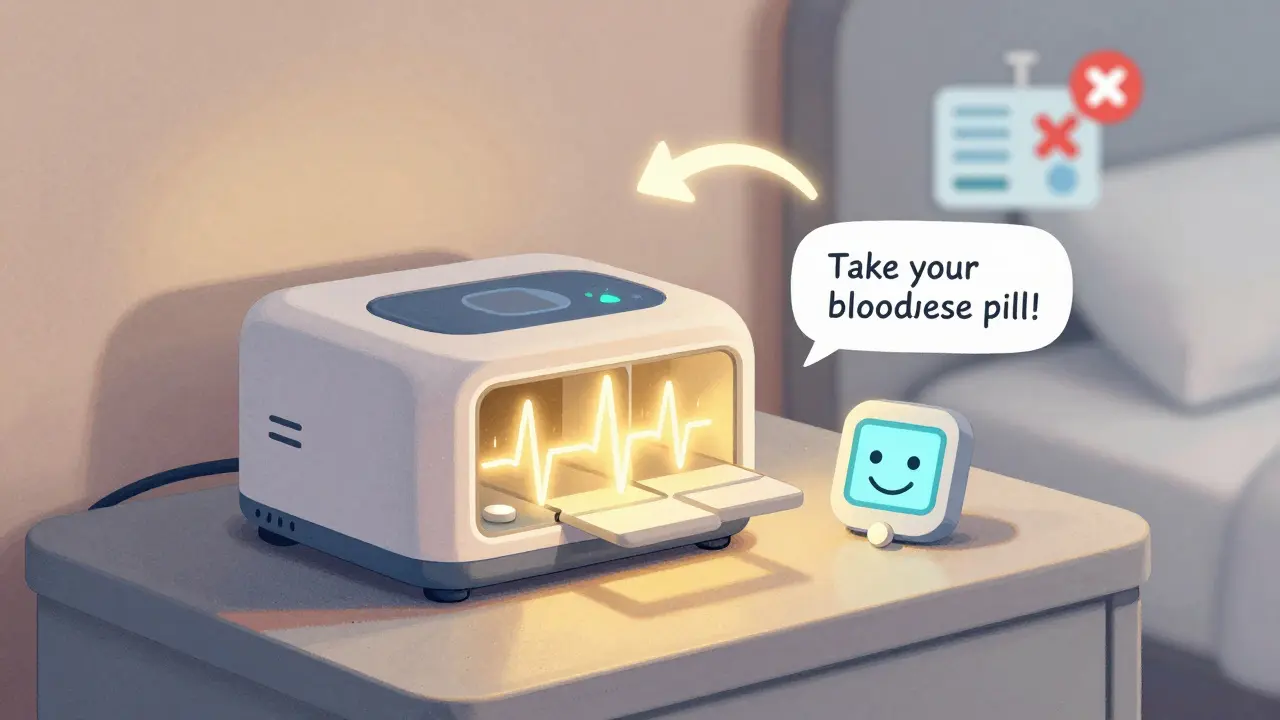
If you’re taking more than four medications a day, or if you’ve missed doses before, a smart dispenser isn’t a luxury - it’s a necessity. These aren’t just boxes with compartments. They’re mini-pharmacies that beep, flash, and even call your family if you don’t respond.
Devices like Hero or MedMinder load your pills into weekly or daily trays. At the right time, they unlock the correct compartment and play a voice reminder. If you don’t open it, they text your spouse or caregiver. In a 2022 NIH study, users with smart dispensers had a 98% adherence rate over six months. That’s nearly perfect.
They cost between $150 and $300 upfront, plus $15 to $50 a month for service. It’s not cheap. But consider this: one preventable hospital stay can cost $15,000 or more. The device pays for itself.
But here’s the catch: setup takes time. You’ll need help - from a family member, a home nurse, or tech support - to load the pills correctly. One Reddit user, caring for her 82-year-old mother, said the initial setup took three hours with the company’s support line. Don’t try to do it alone on a busy Sunday afternoon. Schedule it. Get help.
What About Simple Pill Organizers?
Those plastic AM/PM boxes that cost $10 at the drugstore? They’re fine - if you’re healthy, sharp, and take only two or three pills a day. But they don’t remind you. They don’t track. They don’t alert anyone if you skip a dose. And if you have trouble reading small print or remembering which day is which, they become part of the problem.
Don’t upgrade from a basic organizer to a smart dispenser just because it’s newer. Upgrade because you need it. If you’ve ever opened a pill box and stared at it, wondering if you already took your meds, you’re not alone. And you’re not safe.
Digital Tools: HomeMeds and the Future of Home Care
HomeMeds, launched in 2024, is one of the first platforms built specifically for home medication safety. Instead of just dispensing pills, it lets you scan your pill bottles with your phone’s camera. The app reads the label, logs the medication, and checks for dangerous interactions. It’s designed for home health workers who visit patients, but caregivers can use it too.
By Fall 2025, HomeMeds will add AI that cuts medication review time in half. That means faster updates when your doctor changes your regimen. No more handwritten notes lost in a drawer. No more guessing what the scribble on the prescription says.
These tools aren’t magic. They need to connect to your phone (iOS 12+ or Android 8+), have Wi-Fi, and get updated regularly. If your tech skills are limited, ask for help. Many local pharmacies now offer free setup for seniors.
Human Support Still Matters - Even With Tech
Technology helps. But it doesn’t replace people. A 78-year-old man in a case study on AgingCare.com used a smart dispenser and hit 96% adherence. But he still needed a home health aide to come every week to adjust his pills when his doctor changed his dosage. The machine couldn’t do that.
Medication regimens change. Allergies pop up. New conditions appear. A pill that was safe last month might clash with a new one. That’s why regular medication reviews - every 30 to 90 days - are critical. Talk to your pharmacist. Ask your doctor. Don’t wait for a crisis.
And don’t forget caregivers. If someone helps you manage your meds, make sure they’re trained. The MedPro analysis from January 2024 says home health agencies must assess staff competency. The same applies to family members. Show them your list. Walk them through the dispenser. Let them practice.
What to Avoid
- Don’t use old pill bottles. Labels fade. Dates get blurry. Transfer pills to a labeled container or use a digital system.
- Don’t ignore side effects. If you feel dizzy after taking a new pill, don’t assume it’s just aging. Call your doctor. It could be a drug interaction.
- Don’t skip doses to save money. If a pill is too expensive, talk to your pharmacist. There are patient assistance programs. Cutting doses can be more costly in the long run.
- Don’t rely on memory. Even if you’ve taken the same pills for years, your body changes. What worked at 65 might not be safe at 75.
Getting Started: Your 7-Step Plan
- Make your list. Write down every pill, supplement, and OTC drug you take. Include doses and reasons.
- Check for duplicates. Are you taking two different pills for the same thing? Ask your pharmacist.
- Sort by timing. Group pills by when you take them: morning, afternoon, evening, bedtime.
- Choose your tool. If you take four or fewer pills a day with no complexity, a simple organizer works. If it’s more - get a smart dispenser.
- Set it up with help. Don’t do it alone. Call the manufacturer. Ask a family member. Hire a home health aide for one hour.
- Teach someone else. Your spouse, sibling, or neighbor should know how to use the system in case you’re sick or away.
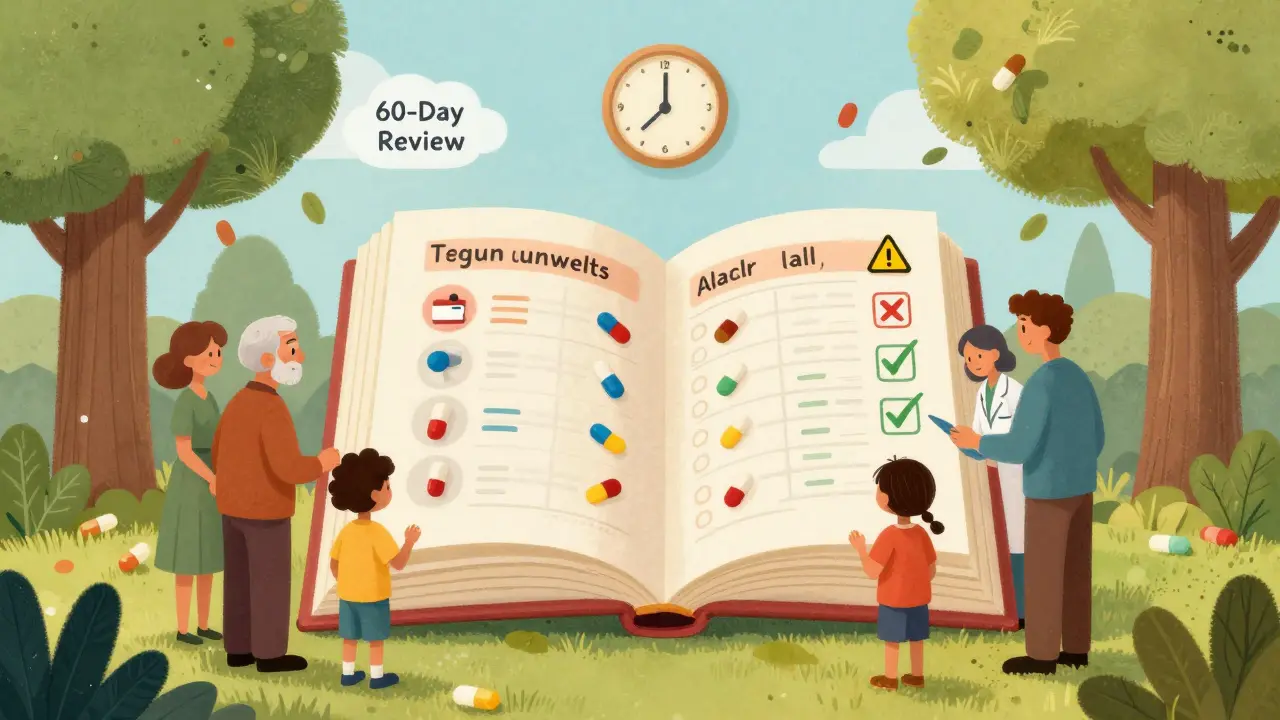
- Review every 60 days. Schedule a check-in with your pharmacist or doctor. Bring your list and your dispenser logs.
Costs and Access: What You Can Afford
Yes, smart dispensers cost money. But help is out there. Many Medicare Advantage plans now cover medication management tools - check your benefits. Some nonprofits, like the National Council on Aging, offer grants for low-income seniors to get devices. Local Area Agencies on Aging often have programs too.
Don’t let cost stop you. A $200 dispenser that prevents one hospital visit is worth it. And if you can’t afford one yet, start with the list. It’s free. And it’s the most powerful tool you have.
What’s Coming Next
The next wave of medication safety tech is already here. Voice-activated dispensers for people with poor vision. Biometric checks that confirm it’s really you taking the pill. AI that flags dangerous drug combos before they happen. By 2027, most premium systems will have these features.
But the biggest change won’t be in the device. It’ll be in how systems talk to each other. Right now, only 32% of home medication tools can connect to your doctor’s electronic records. That’s changing. Soon, when your doctor updates your prescription, your dispenser will update automatically. No more waiting for a phone call or a paper notice.
Final Thought: Safety Isn’t a Product - It’s a Habit
Medication safety isn’t about buying the fanciest gadget. It’s about building habits. Knowing what you take. When you take it. Why you take it. And who to call when something doesn’t feel right.
Start today. Write your list. Talk to someone. Don’t wait for a mistake to happen. The system you build now won’t just keep you safe - it’ll give you peace of mind. And that’s worth more than any device.
Lisa McCluskey
January 30, 2026 AT 14:08owori patrick
February 1, 2026 AT 00:57Mike Rose
February 1, 2026 AT 13:22Russ Kelemen
February 1, 2026 AT 19:08Diksha Srivastava
February 2, 2026 AT 17:03Sarah Blevins
February 2, 2026 AT 21:00Melissa Cogswell
February 3, 2026 AT 00:54Holly Robin
February 3, 2026 AT 12:10