
Mental Illness and Medication Interactions: Understanding Complex Polypharmacy
 Dec, 24 2025
Polypharmacy Risk Assessment Tool
Assess Your Risk of Medication Interactions
This tool helps you understand potential risks of taking multiple psychiatric medications based on your specific situation. It does not provide medical advice but helps inform your conversations with healthcare providers.
Your Risk Assessment
Disclaimer: This assessment is for informational purposes only and does not constitute medical advice. Always consult with your healthcare provider before making changes to your medication regimen.
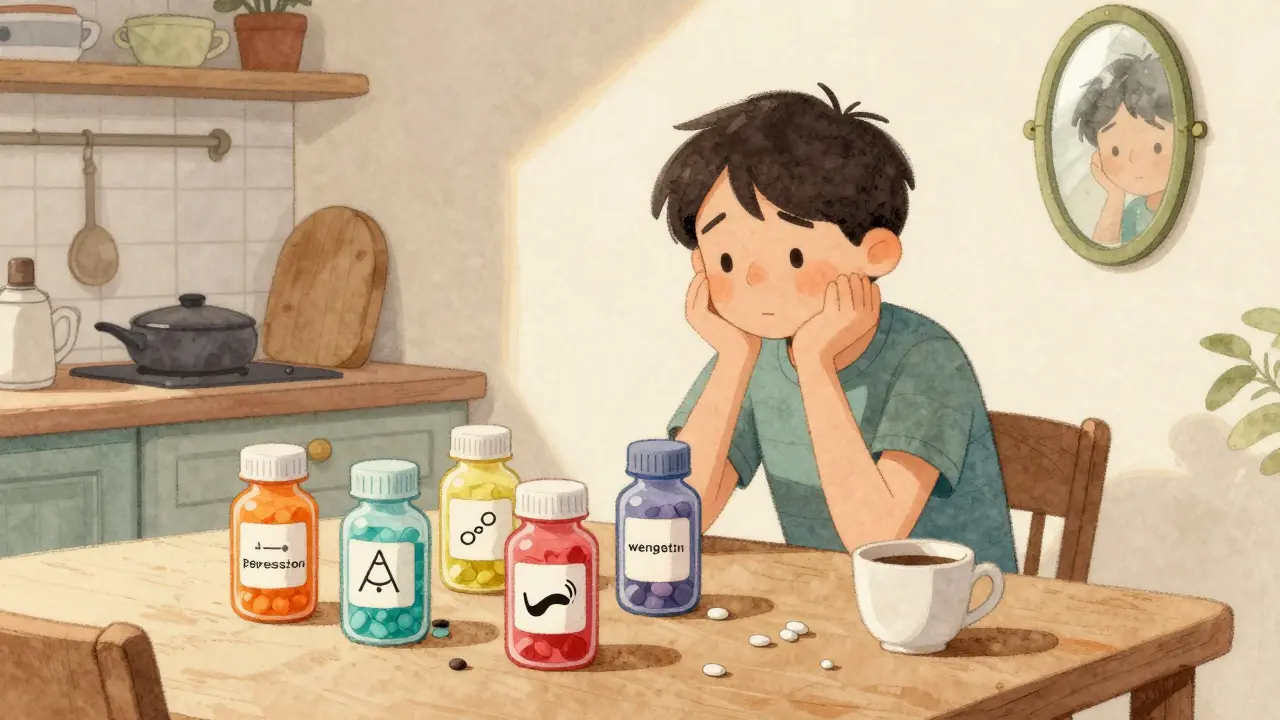
Imagine taking five different pills just to feel stable. One for depression, another for anxiety, a third to control sleep, a fourth to manage weight gain from the first two, and a fifth to calm tremors caused by the antipsychotic. This isn’t rare. It’s the reality for too many people with serious mental illness today. Psychiatric polypharmacy-the use of two or more psychiatric drugs at once-has become the norm, not the exception. But while it’s often meant to help, it’s also putting patients at risk without clear proof it’s working better than simpler treatments.
Why Do Doctors Prescribe So Many Medications?
It starts with good intentions. When someone doesn’t respond to one antidepressant, the next step is often adding another. When mood swings keep coming back despite lithium, an antipsychotic gets thrown in. When sleep won’t improve, a sedative is added. For patients with schizophrenia, bipolar disorder, or treatment-resistant depression, this can feel like the only path forward. But research shows this approach has spiraled out of control.
Between 1999 and 2005, the rate of people with schizophrenia taking two or more antipsychotics jumped from 3.3% to 13.7% among Medicaid enrollees. That’s a fourfold increase. In mood disorders, the number of people on three or more psychiatric meds rose from 3.3% in the late 1970s to nearly 44% by the mid-1990s. These aren’t isolated cases. They’re trends. And they’re happening even though most of these combinations haven’t been proven effective in large, rigorous studies.
The problem isn’t always the patient. It’s the system. Primary care doctors, overwhelmed and under-resourced, often prescribe psychiatric meds without specialist input. A 2024 study found that 37.2% of patients receiving mental health care in non-specialist settings had complex polypharmacy-meaning five or more medications, including those for physical conditions like diabetes or high blood pressure. These drugs don’t just pile up; they interact.
What Happens When Medications Clash?
Every pill you take affects your liver, kidneys, brain chemistry, and heart. When you stack five or more psychiatric drugs, the chances of dangerous interactions go up dramatically. Some combinations can cause:
- Excessive sedation, leading to falls and accidents, especially in older adults
- QT prolongation-a heart rhythm problem that can trigger sudden cardiac arrest
- Severe weight gain and metabolic syndrome, increasing diabetes and heart disease risk
- Tremors, muscle stiffness, and involuntary movements from dopamine-blocking drugs
- Serotonin syndrome, a rare but life-threatening reaction from too much serotonin buildup
One 2022 study found that patients on multiple psychiatric meds were 30-50% more likely to suffer serious side effects than those on single drugs. And it’s not just about the drugs themselves. Many people with mental illness also have diabetes, high blood pressure, or kidney disease. Their heart meds, diabetes pills, or cholesterol drugs can react badly with psychiatric ones. The CDC found that people on five or more medications-common in this group-reported significantly lower physical quality of life, even if their mood seemed stable.
When Is Polypharmacy Actually Helpful?
Not all multiple-medication use is bad. There are times when it makes sense. For example:
- Adding bupropion to an SSRI like citalopram for someone who’s only partially improved
- Using a mood stabilizer like valproate with an antipsychotic during acute mania
- Prescribing a short-term benzodiazepine alongside an antidepressant for severe anxiety in early treatment
- Combining an antipsychotic with an antidepressant when depression comes with hallucinations or delusions
These are supported by clinical trials. But too often, doctors use two antipsychotics together-not because evidence says it works, but because they’ve seen it in case reports or heard a colleague do it. The American Psychiatric Association says this practice lacks strong evidence. Yet it’s still common.
One study in an Early Psychosis Intervention Programme showed that when clinicians followed a strict treatment algorithm, antipsychotic polypharmacy dropped from 483 patients to just 68 over a few years. That’s not magic. That’s structure. When you have clear rules about when to add or remove a drug, you avoid unnecessary stacking.

Older Adults Are at the Highest Risk
People over 65 with schizophrenia or bipolar disorder are being hit hardest. Their bodies process drugs slower. Their kidneys and liver don’t clear medications the way they used to. They’re also more likely to be on heart meds, painkillers, or blood thinners. The result? A perfect storm for dangerous interactions.
A 2023 review in Frontiers in Pharmacology found that older adults with schizophrenia are getting more non-antipsychotic drugs-not fewer. That means they’re on five, six, even seven medications. And no one’s tracking how they all work together. The risks? Falls, confusion, kidney failure, and even early death. Yet, guidelines still treat them like younger patients, ignoring how aging changes drug metabolism.
What Can Be Done? The Path to Safer Treatment
It’s not about stopping all meds. It’s about stopping the right ones-and doing it safely.
One successful project tracked patients over 18 months and slowly reduced their psychiatric meds under close supervision. The results? Fewer side effects, better sleep, improved blood pressure, lower cholesterol, and better mood scores on the PHQ-9 and GAD-7 scales. Patients didn’t crash. They stabilized. But it took time, patience, and a plan.
Here’s what works:
- Start with a full medication review. Every six months, sit down with a psychiatrist or pharmacist and ask: Why is each drug here? Is it still needed?
- Use pharmacogenomic testing. Some clinics now test your genes to see how you metabolize drugs. This can prevent trial-and-error prescribing. Studies show it cuts adverse reactions by up to half.
- Deprescribe slowly. Never stop a drug cold turkey. Taper one at a time, over weeks or months. Watch for rebound symptoms.
- Use non-drug tools. Therapy, exercise, sleep hygiene, and social support can reduce the need for meds. CBT for psychosis, for example, can cut antipsychotic doses in half for some people.
- Ask for a care coordinator. If you’re on five or more meds, you need someone to connect your psychiatrist, GP, and pharmacist. Most hospitals don’t offer this-but you can ask.

The Bigger Picture: Why This Keeps Happening
There’s a reason polypharmacy keeps growing. Drug companies promote combinations. Insurance often covers multiple meds but not long-term therapy. Doctors are pressured to fix symptoms fast. And patients? They’re told, “We’re doing everything we can.” But sometimes, doing everything means doing too much.
By 2025, 62% of academic medical centers plan to launch formal deprescribing programs. That’s progress. But 78% of clinics still don’t have standardized protocols. And 65% of doctors fear destabilizing patients if they reduce meds. That fear is real-but it shouldn’t stop us from trying.
Real improvement comes when we shift from adding to removing. When we ask: What’s the simplest regimen that still keeps me safe and stable? Not What’s the next drug to try?
Complexity isn’t always better. Sometimes, it’s just louder.
Is it safe to take multiple psychiatric medications at the same time?
It can be, but only when each medication has a clear, evidence-based reason to be there. Taking multiple drugs increases the risk of dangerous interactions, side effects, and long-term health problems like heart disease or diabetes. Many combinations-especially two antipsychotics-are not supported by strong research. Always ask your doctor why each drug is prescribed and whether it’s still necessary.
Can I stop one of my psychiatric meds on my own?
Never stop a psychiatric medication suddenly. Doing so can cause withdrawal symptoms, rebound anxiety, depression, or even psychosis. If you want to reduce or stop a drug, talk to your doctor first. They can help you taper slowly and safely, monitoring your symptoms as you go. Most people who taper correctly stay stable-or even feel better.
How do I know if I’m on too many medications?
You may be on too many if you’re taking five or more medications total, especially if you’re experiencing side effects like dizziness, weight gain, tremors, or extreme fatigue. Another sign is if you can’t explain why you’re taking each drug. Ask your doctor or pharmacist to review your list. If they can’t tell you the purpose of each one, it’s time to reassess.
Does pharmacogenomic testing really help reduce polypharmacy?
Yes. Pharmacogenomic testing looks at your genes to see how your body breaks down certain drugs. This helps doctors avoid medications that might cause side effects or not work for you. Studies show it reduces adverse reactions by 30-50% in psychiatric patients. While it’s not a magic fix, it cuts down trial-and-error prescribing-which is a major driver of polypharmacy.
What should I ask my doctor about my meds?
Ask: Why am I taking this drug? Is there evidence it works for my condition? Can we try reducing or removing one? Are there non-drug options I could try instead? What are the risks if I keep taking all of them? Write down your questions ahead of time. Bring a list of every pill, supplement, and over-the-counter drug you take. If your doctor dismisses your concerns, ask for a referral to a psychiatric pharmacist or a specialist in geriatric mental health.
Are there alternatives to taking more pills for mental illness?
Absolutely. Evidence-based therapies like cognitive behavioral therapy (CBT), dialectical behavior therapy (DBT), and trauma-focused therapy can be as effective as medication for many conditions. Regular exercise, consistent sleep, mindfulness, and social connection also improve mental health. For some people, reducing medication while increasing therapy leads to better long-term outcomes than adding more pills.
What’s Next?
If you’re managing multiple psychiatric meds, your next step is simple: schedule a medication review. Bring your full list to your psychiatrist, pharmacist, or primary care provider. Ask if any drugs can be safely reduced. Don’t wait until you’re having side effects. Prevention is better than damage control.
The goal isn’t to be pill-free. It’s to be rightly medicated. Less can be more. And sometimes, the most powerful medicine is the courage to question what’s been prescribed.
Oluwatosin Ayodele
December 24, 2025 AT 17:18Let’s be real - polypharmacy isn’t a treatment strategy, it’s a cover-up for lazy psychiatry. I’ve seen docs throw five drugs at someone because they didn’t want to sit through a 45-minute therapy session. The system rewards volume, not outcomes. And don’t get me started on how pharma reps hand out free lunches to GPs who prescribe like they’re ordering pizza.
Jason Jasper
December 25, 2025 AT 19:09I’ve been on three meds for depression and anxiety for six years. My doctor finally agreed to drop one last year - benzo. I was terrified. But after three months of tapering, my brain didn’t melt. I sleep better. My hands don’t shake. I wish someone had told me earlier that less can be more. Not everyone needs a pharmacy on their nightstand.
Mussin Machhour
December 27, 2025 AT 04:23Yo, if you’re on five psychiatric meds and still feel like a zombie, maybe the problem isn’t your brain - it’s the algorithm. I used to think meds were magic bullets. Then I started doing yoga, got a dog, and cut sugar. My anxiety didn’t vanish, but my tremors did. And no, I didn’t stop my SSRIs. I just stopped letting them run the show.
Winni Victor
December 28, 2025 AT 16:41Oh sweet jesus another ‘meds are bad’ manifesto. Let me guess - you’re the kind of person who thinks therapy is for people who can’t ‘just be happy’? Meanwhile, my cousin’s on seven drugs and she’s holding down a job, raising two kids, and not stabbing anyone. Maybe your ‘simpler regimen’ is just your privilege talking.
Christopher King
December 29, 2025 AT 18:41They don’t want you to know this, but the real reason polypharmacy is so common? The FDA doesn’t test drug combos. Big Pharma doesn’t fund studies on drug reduction - it doesn’t sell pills. And the DSM? It’s a marketing manual disguised as science. They want you dependent. They want you on lifelong cocktails. Wake up. The system isn’t broken - it’s designed this way.
Zabihullah Saleh
December 30, 2025 AT 10:14Back in Nigeria, my uncle took one pill for his depression. One. He walked to church every Sunday, drank bitter leaf tea, and talked to his ancestors. He lived to 87. Here, we give people five pills and call it ‘evidence-based.’ We’ve outsourced healing to chemistry. But the soul doesn’t metabolize like a liver. Maybe we need less science and more humanity.
Sophie Stallkind
December 30, 2025 AT 14:33It is imperative to underscore that the clinical management of psychiatric polypharmacy necessitates a multidisciplinary approach, incorporating pharmacological review, patient education, and longitudinal monitoring. The absence of standardized deprescribing protocols in primary care settings constitutes a significant gap in the continuum of mental health care delivery. It is recommended that institutions implement formalized medication reconciliation procedures at biannual intervals.
Katherine Blumhardt
December 31, 2025 AT 19:21i just got off 6 meds last year and my skin broke out and i cried every day for 3 weeks but now im sleeping 8 hours and my brain feels like its not full of static?? idk if this is right but i feel like i finally know who i am again??
sagar patel
January 1, 2026 AT 21:14Pharmacogenomic testing is overhyped. My genes say I’m a slow metabolizer. My doctor still gave me two SSRIs. Said ‘we’ll see what works.’ So now I’m on five drugs and my liver is a cautionary tale. No test fixes a broken system.
Linda B.
January 3, 2026 AT 08:30Of course they say ‘less is more’ - because the same people who profit from prescribing are now selling ‘deprescribing’ as a new trend. It’s all about branding. They just switched the product. Same pills, different label. Wake up. They’ll never let you go free.
Bailey Adkison
January 3, 2026 AT 11:08You people act like taking meds is a moral failure. I’m on four drugs. I’m functional. I pay taxes. I hold a job. If your solution is ‘just do yoga and stop being weak’ then you’ve never had a panic attack in a grocery store. Stop shaming people who are trying to survive.
Michael Dillon
January 4, 2026 AT 21:00Okay but have you ever met someone on 7 meds who actually got better? Like, truly better? Or did they just stop screaming in public? I’ve seen too many people on cocktail regimens who are just… quieter. Not healed. Just sedated. That’s not treatment. That’s containment.
Gary Hartung
January 5, 2026 AT 05:21Let’s not pretend this is about ‘evidence.’ This is about the commodification of human suffering. The DSM-5 was written by people with ties to pharma. The ‘treatment algorithms’? Corporate flowcharts disguised as science. And now we’re supposed to trust the same people who sold us opioids to fix our depression with more pills? The irony is thicker than my antipsychotic syrup.
Ben Harris
January 6, 2026 AT 22:26I’ve been on 5 meds for 11 years. I tried to taper once. I ended up in the ER with hallucinations. So now I take them. And I’m not ashamed. I’m not a failure. I’m not broken. I’m just someone who needs help. And if that help comes in a pill, then fine. Don’t tell me to ‘find myself’ when I can’t even get out of bed without a muscle relaxant.