
Nasal Antihistamine Sprays: Benefits, Side Effects, and How They Compare to Other Allergy Treatments
 Nov, 16 2025
Allergy Symptom Assessment Tool
This tool helps you determine if nasal antihistamine sprays are the right solution for your allergy symptoms based on your specific situation. Answer the questions below to get personalized recommendations.
Nasal antihistamine sprays offer fast, targeted relief for runny noses, sneezing, and itchy nasal passages caused by allergies. Unlike oral antihistamines that circulate through your whole body, these sprays deliver medication directly to your nasal passages-where the allergy reaction happens. This means quicker results and fewer drowsy side effects for many people. But they’re not magic. They come with their own quirks: a bitter taste, nasal burning, and sometimes a steep price tag. If you’ve tried oral meds and still feel like your nose won’t quit, or if you hate feeling groggy after taking pills, this could be your next move.
How Nasal Antihistamine Sprays Work
Allergies happen when your immune system overreacts to harmless stuff like pollen, dust, or pet dander. Your body releases histamine, a chemical that triggers swelling, mucus, sneezing, and itching. Nasal antihistamine sprays block histamine receptors right in your nose. That stops the signal before it turns into a dripping nose or a sneezing fit.
The two main active ingredients are azelastine (found in Astepro and Astelin) and olopatadine (Patanase). Azelastine is the most common. It doesn’t just block histamine-it also stabilizes mast cells, which are the ones that release histamine in the first place. This dual action makes it especially effective for people with sudden, intense symptoms.
Most sprays start working in 15 to 30 minutes. You don’t have to wait days like you do with steroid sprays. That’s why many people reach for them during allergy season when symptoms flare up fast. A 2023 study showed azelastine reduces nasal symptoms by 70-80% compared to placebo. For many, that’s the difference between being able to work or having to stay home.
Who Benefits Most from Nasal Antihistamine Sprays?
These sprays shine for people whose main problem is a runny nose. If your nose is dripping, you’re sneezing nonstop, or your eyes water when you step outside, this is likely your best bet. The American Academy of Otolaryngic Allergy says nasal antihistamines are “good at treating the runny nose aspect of allergies.”
They’re especially useful for:
- People with seasonal allergies (pollen in spring and fall)
- Those who get quick, intense flare-ups
- Anyone who can’t tolerate the drowsiness from oral antihistamines like cetirizine or diphenhydramine
- People who’ve tried steroid sprays but still have a runny nose
They’re less effective for long-term congestion or chronic inflammation-that’s where steroid sprays like Flonase or Nasacort win. But if your nose is running like a faucet, nasal antihistamines are faster and more direct.
Side Effects: What to Expect
These sprays aren’t side effect-free. The most common complaints aren’t dangerous, but they’re annoying enough that many people quit using them.
Bitter taste is the #1 issue. About 85% of negative reviews on drug sites mention it. You don’t swallow the spray, but some drips down your throat. That’s when the bitter, chemical taste hits. Many users solve this by drinking orange juice, lemon water, or chewing gum right after spraying.
Nasal burning or stinging happens to about 25% of first-time users. It usually fades after 3-5 days. If it doesn’t, you might be spraying too hard or aiming at the center of your nose. The trick? Tilt your head slightly forward and aim the nozzle toward the outer wall of your nostril-not the middle. That reduces irritation and lowers the risk of nosebleeds (which occur in about 15% of users).
Other less common side effects include:
- Dry nose
- Sore throat
- Headache
- Nosebleeds (rare, but more likely if you blow your nose too hard after using it)
Unlike oral antihistamines, these sprays rarely cause drowsiness. In fact, less than 5% of users report feeling sleepy. That’s a big plus if you need to drive, work, or focus.
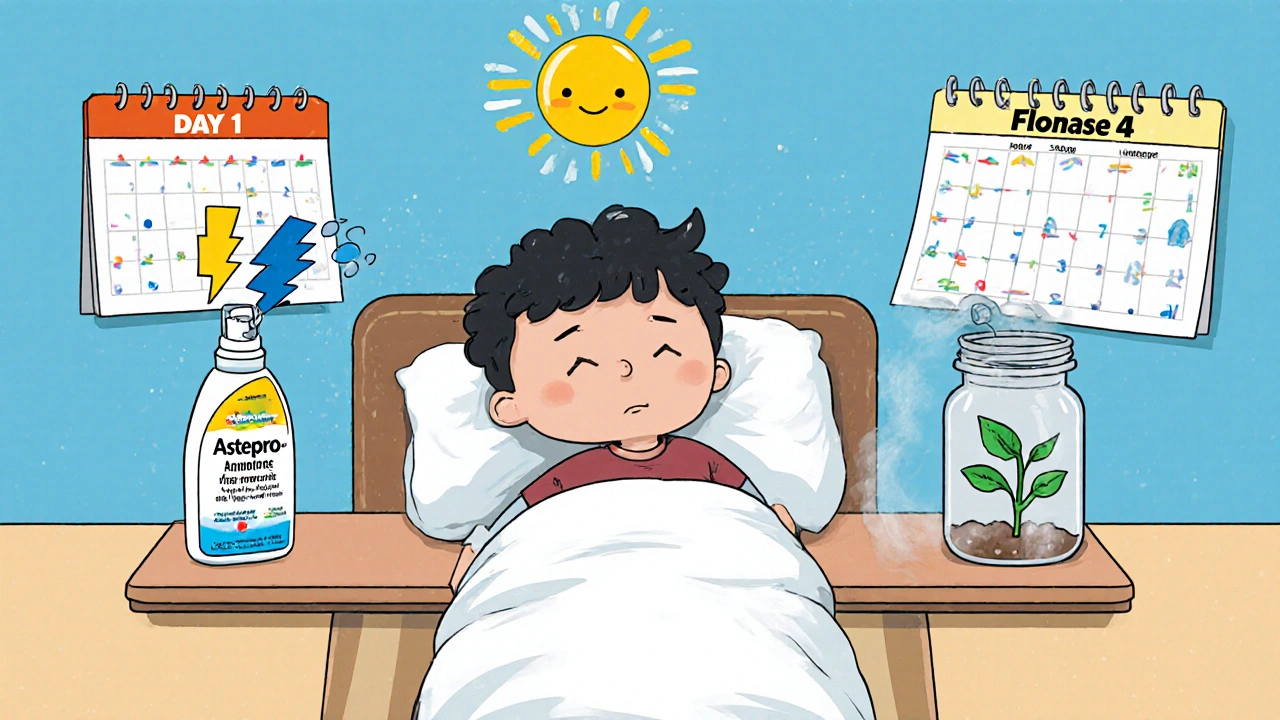
Nasal Antihistamines vs. Other Allergy Treatments
Here’s how they stack up against the most common alternatives:
| Treatment Type | Speed of Relief | Best For | Common Side Effects | Cost (30-day supply) |
|---|---|---|---|---|
| Nasal Antihistamine (Astepro) | 15-30 minutes | Runny nose, sneezing | Bitter taste, nasal burning | $25-$35 (OTC) |
| Nasal Steroid (Flonase) | 3-7 days | Congestion, inflammation | Nosebleeds, dryness | $15-$20 (generic) |
| Oral Antihistamine (Zyrtec) | 1-3 hours | General allergy symptoms | Drowsiness, dry mouth | $10-$15 (generic) |
| Decongestant Spray (Afrin) | 10 minutes | Severe congestion | Rebound congestion (if used >3 days) | $10-$15 |
Nasal antihistamines beat oral ones in speed and local targeting. They’re better than steroid sprays if you need instant relief. But they don’t reduce swelling like steroids do. That’s why allergists often recommend using them together: a steroid spray in the morning for congestion, and an antihistamine spray at night for the runny nose.
Decongestant sprays like Afrin give instant relief but are dangerous long-term. Using them more than three days in a row can cause your nose to swell even more when you stop-called rebound congestion. Nasal antihistamines don’t have that risk.
How to Use Them Right
Getting the most out of these sprays isn’t just about buying the right product-it’s about using it correctly.
- Prime the pump before first use: Spray it 5-6 times into the air until you see a fine mist.
- Shake the bottle well before each use.
- Tilt your head slightly forward-don’t tilt it back.
- Aim away from the center of your nose. Point the nozzle toward your ear, not your septum.
- Don’t sniff hard after spraying. Let the medicine settle.
- Wait 5 minutes before blowing your nose.
- Drink citrus juice or chew gum after to mask the bitter taste.
Using saline spray 15 minutes before your antihistamine can reduce burning and dryness. A 2022 survey found this simple trick cut irritation complaints by 40%.
Most people need 3-4 days of consistent use to feel the full effect. Don’t give up after one day. It’s not like a decongestant that works instantly.
Cost and Accessibility
Astepro (azelastine 0.1%) is available over-the-counter in the U.S. and costs about $25-$35 per bottle. That’s a lot cheaper than the prescription version (Astelin), which can run $300 without insurance.
Generic versions are starting to appear, but they’re not widespread yet. If you’re paying full price, check coupon sites like GoodRx-they often have discounts that bring the cost down to $20 or less.
Compare that to Flonase Sensimist, which is $20 for a generic version. But Flonase takes days to work. If you need fast relief, the extra cost of the antihistamine spray might be worth it.

What’s New in 2025?
The field is evolving. In June 2023, a new version of azelastine was approved with encapsulation technology that traps the bitter taste until it’s absorbed. Early trials showed taste-related dropouts dropped from 28% to 12%.
There’s also a new once-daily olopatadine spray in late-stage trials. If approved, it could replace the current twice-daily dosing and improve adherence.
And now there’s Dymista-a combination spray with both azelastine and fluticasone. It’s FDA-approved and targets both runny nose and congestion in one bottle. It’s expensive (over $400 without insurance), but for people with severe, mixed symptoms, it’s a game-changer.
When to Avoid Them
Nasal antihistamine sprays aren’t for everyone:
- If you’ve had nose surgery or have a nasal injury, talk to your doctor first.
- If you’re pregnant or breastfeeding, check with your provider-though azelastine is considered low risk.
- If you’re under 12, most OTC versions aren’t approved yet. Prescription versions may be used under supervision.
- If you’re sensitive to the bitter taste and refuse to try solutions like citrus juice, you’ll likely quit before it works.
They’re also not ideal for year-round (perennial) allergies. Studies show they’re about 10% less effective for dust mites or pet dander than for pollen.
Final Thoughts
Nasal antihistamine sprays are a smart tool for fast, targeted allergy relief-especially if your biggest problem is a runny nose. They’re faster than steroids, less sedating than oral pills, and safer than decongestant sprays.
Yes, the taste is gross. Yes, your nose might sting at first. But for most people, those issues fade with time and proper use. If you’ve tried everything else and still can’t breathe comfortably during allergy season, this could be the missing piece.
Start with OTC Astepro. Use it correctly. Give it 3-4 days. If it works, keep it. If not, talk to your doctor about combining it with a steroid spray-or trying something else entirely.
There’s no one-size-fits-all allergy treatment. But for millions of people with runny noses, nasal antihistamine sprays are changing how they live through allergy season.
Jessica Healey
November 18, 2025 AT 16:35I tried Astepro last spring and thought I was gonna die from the bitter taste. Like, why does it taste like a chemistry lab exploded in my mouth? I started chewing gum right after and it saved my sanity. Also, aim the nozzle toward your ear, not the middle-that one tip alone cut my nose burning in half.
Gordon Mcdonough
November 18, 2025 AT 20:08Ugh this is why america is falling apart-people pay $30 for a spray that makes your nose burn instead of just taking a Zyrtec like normal people. I mean, we got cheap generics for a reason. Why are we all so weak now? Also I didn't even know this was OTC now? Guess they're just selling us more junk to keep us hooked.
Levi Hobbs
November 20, 2025 AT 14:29Just wanted to add that using saline spray 15 minutes before the antihistamine really does help-my ENT recommended it, and I’ve noticed a 50% drop in irritation. Also, don’t skip priming the pump! I did once and thought the bottle was broken. Turns out I just needed to spray it five times into the air. Small things, big difference.
henry mariono
November 21, 2025 AT 18:21I’ve been using this for two seasons now. The taste still sucks. But I don’t feel like a zombie at work anymore. That’s worth it. I also don’t blow my nose right away anymore. Just let it sit. It’s weird how such a small habit change made such a big difference.
Sridhar Suvarna
November 22, 2025 AT 21:26From India, I can confirm this works wonders for seasonal pollen. We have terrible tree pollen here in March, and oral meds make me drowsy. This spray? Fast, effective, and no brain fog. The bitter taste? Yes. But I drink lime water after. Small price for breathing properly. Also, avoid aiming at septum-nosebleeds are no joke.
Joseph Peel
November 24, 2025 AT 13:37The 2023 study showing 70-80% symptom reduction is compelling. But I’m curious about long-term mucosal effects. There’s limited data beyond 12 months of daily use. Also, the combination spray Dymista-while expensive-is clinically superior for mixed symptoms. Worth considering if you have both congestion and rhinorrhea.
Kelsey Robertson
November 26, 2025 AT 08:05Of course they’re pushing this spray-pharma knows people hate feeling groggy, so they sell them a $30 bottle that burns their nose and tastes like regret. Meanwhile, the real solution is avoiding allergens entirely… but that’s too inconvenient for the dopamine-addicted, screen-staring masses who live in sealed plastic boxes with their HVAC on 24/7.
Joseph Townsend
November 26, 2025 AT 22:57This spray didn’t just help my allergies-it saved my marriage. My wife used to hate when I sneezed all night like a dying seal. Now? I spray, I sleep, she sleeps. No more midnight nose-blasting symphonies. Also, the taste? Yeah, it’s like licking a battery. But I’ve learned to love it. It’s my little ritual. My nasal knight in shining spray.
Bill Machi
November 28, 2025 AT 06:33Look, I don’t care if it’s OTC or not. If you’re spending $30 on a nasal spray because you’re too lazy to take a pill, you’re part of the problem. Also, ‘bitter taste’? Grow up. Life is bitter. Your nose is gonna burn. Your throat is gonna taste like regret. That’s adulthood. And yet, somehow, we’re still surprised when things don’t come with a sugar coating.
Elia DOnald Maluleke
November 28, 2025 AT 11:56In the grand tapestry of human suffering, nasal spray bitterness is but a whisper. Yet, in this whisper, we find the dignity of self-care. The sting? A reminder that healing is not always gentle. The taste? A testament to the body’s resistance to artificial intervention. I have used this spray for three winters. It does not cure. It does not conquer. But it allows me to breathe… and in that breath, I find peace.
satya pradeep
November 29, 2025 AT 03:29Bro I used this last year and thought it was garbage till I did the saline thing. Like, wash your nose first then spray. Game changer. Also, the OTC version is legit. I got it at Walmart for $22. No need to go fancy. And yeah, the taste? Worst part. But I drink mango juice after. Works better than orange. Just saying.
Prem Hungry
November 29, 2025 AT 13:20Dear friend, I commend your courage in seeking relief. Nasal antihistamine sprays, though not without minor discomfort, represent a scientific advancement worthy of appreciation. Let us not forget: medicine is not always pleasant, but it is often necessary. I have recommended this to three colleagues, all of whom now breathe easier. May your sinuses be clear, and your mornings, peaceful.
Leslie Douglas-Churchwell
November 29, 2025 AT 16:01Let’s be real-this is all part of the Big Pharma psyop. They want you addicted to sprays so you never fix the root cause: mold in your apartment, glyphosate in your water, 5G triggering histamine release. Also, the ‘bitter taste’? That’s not the drug-that’s your body rejecting the synthetic toxins. Try a neti pot with Himalayan salt and a crystal grid. It’s cheaper and spiritually aligned. 🌿✨
shubham seth
November 30, 2025 AT 01:28Wow, so you’re telling me we’re paying $30 to get a chemical burn and a bad aftertaste? And this is better than a $10 pill? I’m sorry, but this is just capitalism exploiting desperate people. You’re not ‘getting relief’-you’re being scammed. The real solution? Move to Antarctica. No pollen. No sprays. No bullshit.
Kathryn Ware
December 1, 2025 AT 15:12Just wanted to share a tip that saved me: if you’re using this at night, put a tiny drop of peppermint oil on your pillowcase-just a drop! It helps with the lingering bitter taste and actually makes breathing feel easier. Also, I started using it with a humidifier in my room, and the dryness side effect disappeared. I’ve been using it for 18 months now and honestly, I don’t know how I lived without it. The first week was rough, but now it’s just part of my routine. I even bought a backup bottle last week. You’ve got this. 💪🌸