
Paragraph IV Patent Challenges: How Generic Drug Makers Beat Brand Patents
 Mar, 8 2026
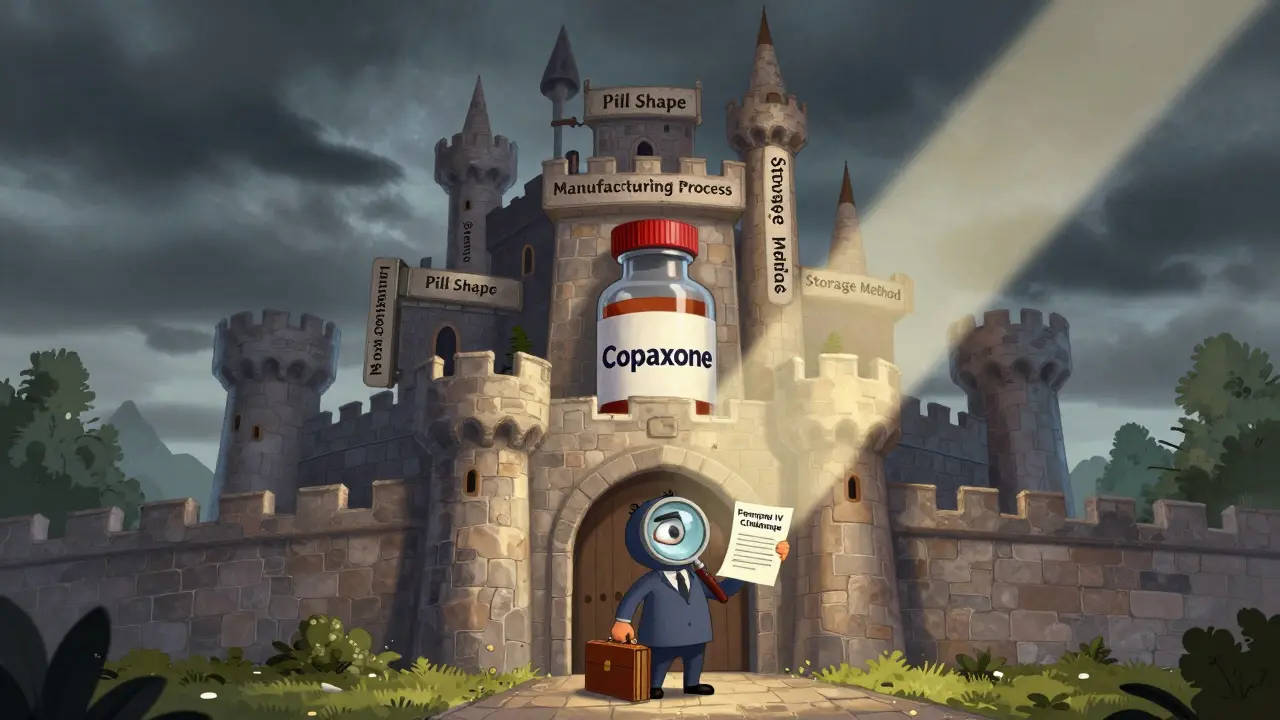
When a brand-name drug like Copaxone or EpiPen hits the market, it comes with a wall of patents-sometimes over 40 of them. These aren’t just one or two patents protecting the core invention. They’re layers: patents on the pill shape, the manufacturing process, the delivery device, even the way it’s stored. This wall is called a "patent thicket," and it’s designed to keep generic versions off the market for as long as possible. But there’s a legal loophole built right into U.S. drug law that lets generic manufacturers break through that wall. It’s called a Paragraph IV challenge, and it’s how 90% of the prescriptions filled in the U.S. end up being generic drugs.
How the Paragraph IV Challenge Works
Back in 1984, Congress passed the Hatch-Waxman Act to fix a broken system. Before then, generic drugs made up only 19% of prescriptions. Brand companies had a monopoly for years, even after their patents expired, because the FDA had no clear way to approve cheaper versions. Hatch-Waxman changed that. It created a fast-track approval process for generics called the Abbreviated New Drug Application (ANDA). But here’s the key part: if a generic company believes a brand’s patent is invalid or won’t be infringed, it can file what’s called a Paragraph IV certification.
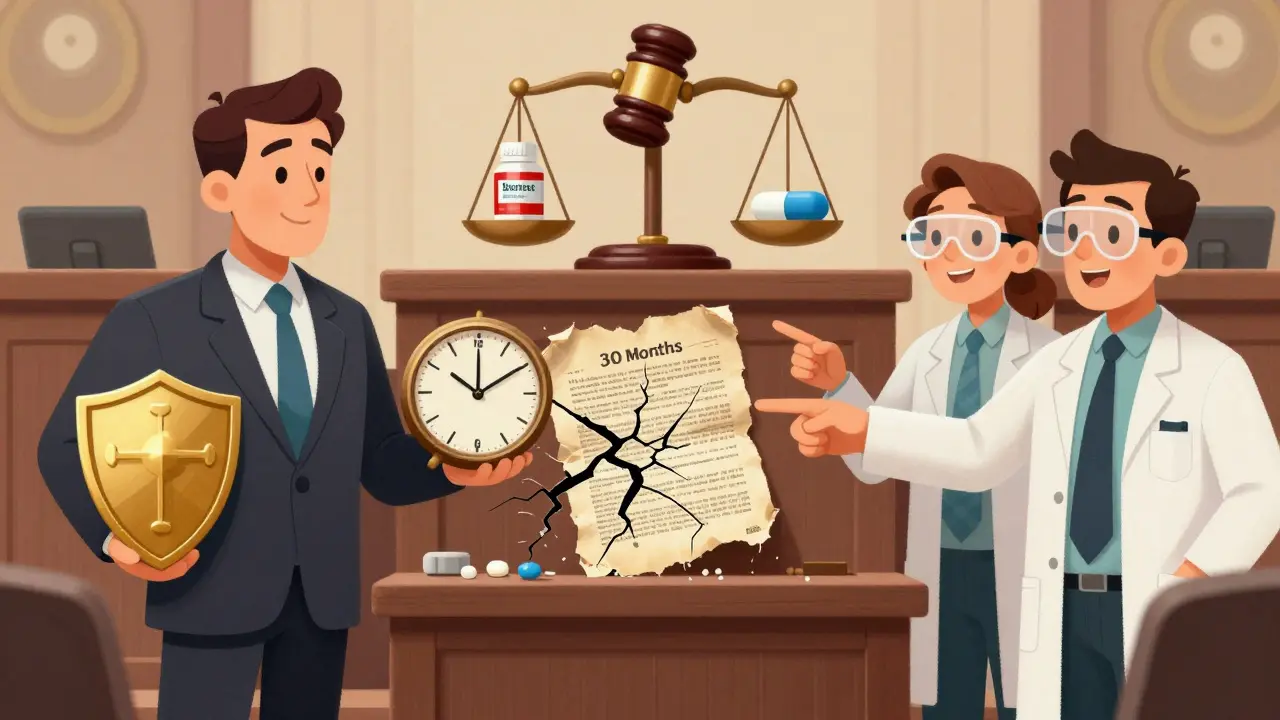
This isn’t just a statement. It’s a legal shot across the bow. When a generic company files an ANDA with a Paragraph IV certification, it’s saying to the brand: "We’re going to make this drug, and we think your patent doesn’t hold up." Under the law, this counts as an "artificial act of infringement." That means the brand company gets 45 days to sue. If they don’t sue within that window, the generic can be approved right away. If they do sue, the FDA can’t approve the generic for 30 months-but that clock can stop early if the court rules the patent is invalid.
The generic maker has to prove one of three things: the patent is invalid (it shouldn’t have been granted), unenforceable (the brand cheated the patent office), or won’t be infringed (their version works differently). This isn’t guesswork. Companies hire teams of patent lawyers, scientists, and former FDA officials to comb through decades of research, old patents, and lab data to find a weakness. Sometimes it’s an old study from the 1970s that shows the drug’s formula was already public. Other times, it’s a flaw in how the patent was written-too broad, too obvious, or based on prior art.
The 180-Day Exclusivity Prize
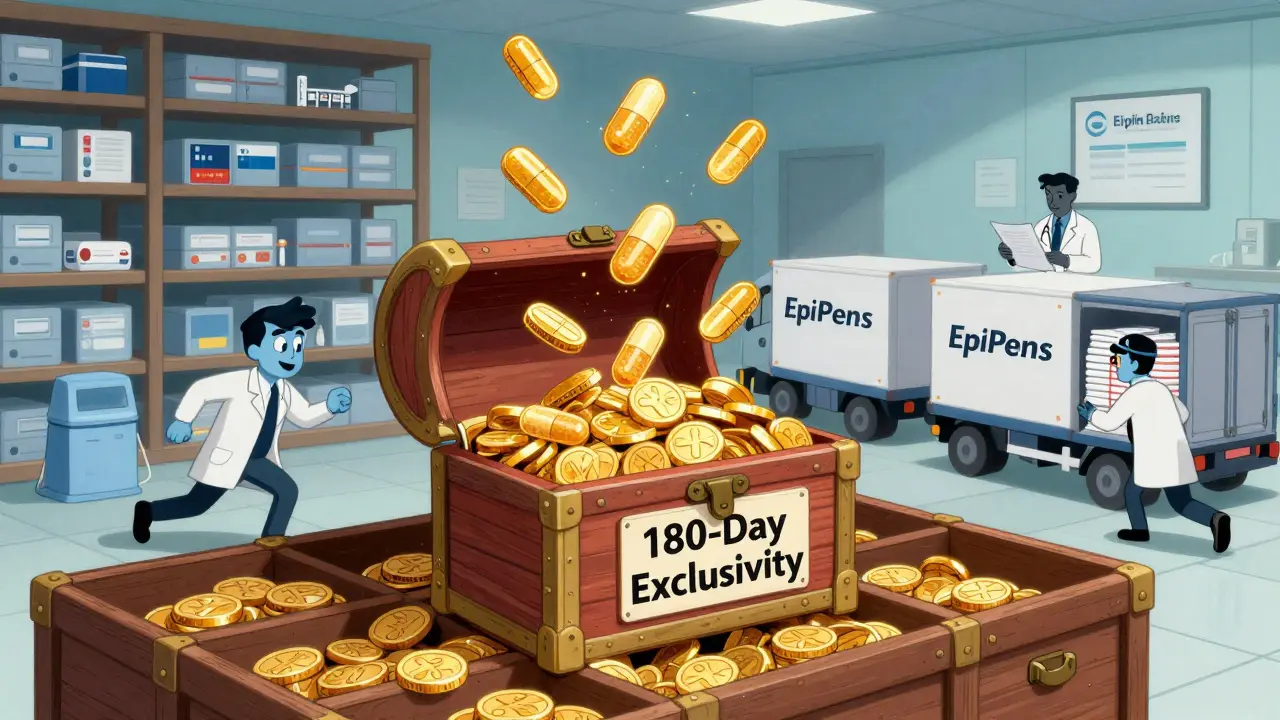
Why would a generic company risk a multi-million-dollar lawsuit? Because the reward is huge. The first company to file a successful Paragraph IV challenge gets 180 days of market exclusivity. During that time, no other generic can enter the market. That means they get to sell the drug alone, at a steep discount to the brand version, and capture 70-80% of the generic market.
Think about it: if a brand drug sells for $500 a month and 100,000 people take it, that’s $50 million a month in sales. A generic might sell for $30. Even at $30, the first filer makes tens of millions before competitors even show up. Teva made over $1.2 billion during its 180-day window for generic Copaxone in 2017. Mylan captured 75% of the EpiPen generic market in 2016, turning a $200 million investment into over $1 billion in revenue.
This exclusivity is why companies fight so hard. It’s not just about profit-it’s about survival. For many generic manufacturers, one successful Paragraph IV challenge can fund years of research and development. That’s why 72% of these cases settle before trial. Both sides know the stakes. The brand doesn’t want to lose and open the floodgates. The generic doesn’t want to lose and lose millions in legal fees.
How Brands Fight Back
Brand companies didn’t sit back and let this system work in their favor. They got smarter. Today, they file dozens of patents on a single drug-some legitimate, some thin. A patent on the color of the pill? A patent on the way it’s packaged? A patent on a minor change to the dosage form? These are called "evergreening" tactics. The FDA’s own data shows that 15% of brand drugs have more than 10 patents listed in the Orange Book. That’s not innovation-it’s obstruction.
Some brands even change the drug slightly-switch from a tablet to a liquid, add a new inactive ingredient, or tweak the release mechanism-and then file a new patent. This is called "product hopping." In 2019, Allergan was sued for doing this with Restasis, delaying generics for years. The FTC called it anti-competitive. Courts are starting to crack down, but it’s still happening.
Another tactic? "Pay-for-delay." For years, brand companies would pay generic manufacturers to stay off the market. They’d offer cash, supply deals, or future royalties in exchange for delaying the launch. In 2013, the Supreme Court ruled in Actavis v. FTC that these deals could violate antitrust law. Since then, the number of pay-for-delay deals dropped from 78% to 68%. But they didn’t disappear. Now, instead of outright payments, settlements include complex terms like "delayed entry"-the generic agrees to enter only 75 days before the patent expires. It’s still a delay, just disguised.
The Cost of Winning
Winning a Paragraph IV challenge isn’t cheap. In 2000, the average legal cost was $5 million. By 2022, it had jumped to $15.7 million. Why? Because patent litigation has become a full-scale war. Each side brings in expert witnesses, runs complex simulations, files hundreds of motions, and spends months in discovery. A single case can take 32 months to resolve-longer than the 30-month statutory stay.
And it’s not just legal fees. The generic company has to be ready to launch on day one. That means building manufacturing lines, securing raw materials, and training staff-all before they even know if they’ll win. Teva spent $200 million upgrading its facilities before it even got the green light for its Provenge generic. If they lose, they lose everything. That’s why only the biggest generic companies can afford to play. In 2022, the top 10 companies filed 68% of all Paragraph IV challenges. Smaller players? They can’t risk it.
What’s Changing Now?
The game is shifting. In 2023, the FDA tightened rules on how patents can be listed in the Orange Book. They now require more proof that a patent actually covers the drug’s active ingredient or method of use. As a result, drugs approved after 2020 have 23% fewer patents than those approved before. That’s a big win for generics.
The 2022 Inflation Reduction Act added another twist. It lets Medicare negotiate prices for the 10 most expensive drugs. That means brand companies now have a stronger incentive to let generics in sooner-because if they don’t, the government will cut their prices anyway. Analysts predict a 15-20% spike in Paragraph IV challenges for these high-cost drugs by 2025.
And then there’s "patent cliff stacking." Instead of challenging just one patent, smart generics now file multiple challenges over time. Hikma Pharmaceuticals did this with Novo Nordisk’s Victoza. They challenged one patent, got in, then waited for the next one to expire and challenged again. This lets them stay in the market longer than the 180-day exclusivity period allows.
The FTC is watching closely. In 2023, they took action against Endo International for filing "sham" patents-patents that had no real technical basis, just meant to delay generics. This signals a new era: regulators are no longer turning a blind eye.
Why It Matters
Every Paragraph IV challenge saves patients money. The FTC estimates that each successful challenge saves consumers $13.7 billion per drug. Since 1990, these challenges have saved over $1.2 trillion. That’s not just corporate profit-it’s insulin, heart meds, cancer drugs, and inhalers that millions can afford.
But the system is under strain. The average time from brand launch to generic entry is 5.2 years. That’s faster than before Hatch-Waxman, but still too slow. And with drug prices rising, every extra month of monopoly costs patients thousands.
The Paragraph IV system was designed to balance innovation and access. It still does-but only if the rules are enforced. Right now, the balance is tipping. Brands are building taller walls. Generics are finding new ways to break through. And patients? They’re the ones who win-or lose-depending on which side wins the fight.
What is a Paragraph IV certification?
A Paragraph IV certification is a legal statement filed by a generic drug company with the FDA as part of its Abbreviated New Drug Application (ANDA). It claims that a brand-name drug’s patent is invalid, unenforceable, or won’t be infringed by the generic version. This triggers a 45-day window for the brand company to sue for patent infringement.
Why do generic companies risk a lawsuit to file a Paragraph IV challenge?
Because the first company to successfully challenge a patent gets 180 days of exclusive rights to sell the generic version. During that time, they face no competition and can capture 70-80% of the market. This exclusivity can generate hundreds of millions in revenue, making the high legal costs worth the risk.
How long does a Paragraph IV challenge take?
The process can take 2-4 years. If the brand sues within 45 days, the FDA can’t approve the generic for up to 30 months. But if the court rules the patent is invalid before then, approval happens earlier. Most cases settle before trial, but litigation still averages 32 months-longer than the legal stay.
Can brand companies stop a Paragraph IV challenge?
They can delay it, but not stop it. By suing within 45 days, they trigger a 30-month regulatory stay. They can also try to extend protection with new patents, product changes, or settlement deals that delay generic entry. But if the patent is truly invalid, the court will eventually rule in favor of the generic.
What’s the difference between a Paragraph IV challenge and an IPR?
A Paragraph IV challenge happens in federal district court and is tied to FDA approval. An Inter Partes Review (IPR) happens before the Patent Trial and Appeal Board (PTAB) and is a separate patent validity proceeding. IPRs are faster (18 months) but don’t trigger FDA approval delays. Many generic companies use both: IPR to weaken the patent, then Paragraph IV to force FDA approval.
Janelle Pearl
March 9, 2026 AT 12:13And yeah, the 180-day exclusivity? Totally unfair to smaller players, but at least it gets the ball rolling. Without that carrot, no one would risk the legal war.
APRIL HARRINGTON
March 10, 2026 AT 05:05Dan Mayer
March 10, 2026 AT 10:09Also the FTC data is outdated. 2023 filings dropped 18% because of the new FDA rules. Thats not a win thats a slowdown.
Peter Kovac
March 11, 2026 AT 13:23And don’t get me started on Teva. They’ve filed more Paragraph IVs than any other company. They’re not a hero. They’re a monopoly factory.
Robert Bliss
March 12, 2026 AT 19:01Leon Hallal
March 13, 2026 AT 23:16Samantha Fierro
March 15, 2026 AT 09:44The real failure isn’t the Paragraph IV challenge-it’s the lack of consistent enforcement against evergreening and pay-for-delay. We have the tools. We just need the will.
rafeq khlo
March 16, 2026 AT 04:46Philip Mattawashish
March 17, 2026 AT 11:30Patent attorneys are the new Wall Street. They don’t make drugs. They make legal fiction. And we call it progress?
Wake up. The system isn’t broken. It’s working exactly how the 1% designed it.
Ray Foret Jr.
March 19, 2026 AT 04:19Morgan Dodgen
March 19, 2026 AT 04:42Big Pharma owns the patents. Big Law owns the litigation. Big Finance owns the generic companies. And the rest of us? We’re just the ones who pay for it.
And don’t even get me started on the 2022 IRA. Medicare negotiating prices? That’s just the government playing hardball so Big Pharma can quietly sell their generics to their own subsidiaries. 😏
Tom Sanders
March 20, 2026 AT 03:54Judith Manzano
March 21, 2026 AT 12:25Also, thanks for explaining the 180-day exclusivity. I always thought it was just a reward, but now I see it’s also a bottleneck. Kinda sad, really.