
Parkinson’s Disease: Tremor, Stiffness, and Dopamine Replacement
 Mar, 15 2026
When someone with Parkinson’s disease moves their hand, it’s not always because they want to. Sometimes, their hand shakes on its own - even when they’re resting. That’s the tremor - a quiet, rhythmic shake that starts in one finger, one arm, and often spreads. It’s not just an annoyance. It’s the body’s first loud signal that something inside the brain has gone wrong.
Parkinson’s disease isn’t one single problem. It’s a chain reaction. The brain slowly loses the cells that make dopamine, a chemical messenger that tells your muscles when and how to move. By the time symptoms show up, you’ve already lost 60% to 80% of those cells. That’s why tremor, stiffness, and slow movement don’t come out of nowhere. They’re the result of a long, quiet breakdown.
The Tremor That Doesn’t Go Away
The tremor in Parkinson’s isn’t like the shake you get from caffeine or nerves. It’s a resting tremor. That means it shows up when you’re not doing anything - sitting, watching TV, or holding your coffee cup. The classic sign is the "pill-rolling" motion: thumb and forefinger rubbing together like you’re rolling a tiny pill. It’s usually on one side first. Only later does it spread to the other hand, or even the foot.
Here’s what’s strange: the tremor often disappears when you move your hand on purpose. Try picking up a spoon. The shaking stops. It comes back when you put it down. That’s because the brain’s movement circuits are still working when you’re trying to do something. But when you’re idle, the damaged pathways can’t keep things steady.
Stress, fatigue, or strong emotions can make it worse. A 2022 study from Yale Medicine found that about 80% of people with Parkinson’s experience this kind of tremor. For many, it’s the first thing that makes them go to the doctor. But it’s not the only symptom - and for some, it’s not even the worst.
Stiffness That Feels Like Concrete
Imagine your muscles are wrapped in thick, heavy bands. That’s what stiffness, or rigidity, feels like. It’s not just tightness. It’s resistance. When a doctor moves your arm or leg during an exam, it doesn’t glide smoothly. It catches and releases - like a gear stuck in a rusty lock. That’s called "cogwheel rigidity." Sometimes it’s smoother, like pushing through lead - "lead-pipe" stiffness.
This stiffness doesn’t just make movement hard. It makes everyday things impossible. Buttoning a shirt? Difficult. Writing your name? The letters get smaller and shaky. Tying shoelaces? Forget it. Parkinson’s UK found that 73% of people struggle with these small tasks within the first three years after diagnosis.
And it’s painful. Muscle cramps, especially in the legs or feet, are common. Some people wake up with a foot twisted in a cramp they can’t uncurl. Others feel constant aching in their shoulders or neck. The stiffness isn’t just about movement - it’s about comfort, sleep, and dignity.
The root cause? Dopamine loss in the basal ganglia. This part of the brain is like a traffic controller for movement. Without enough dopamine, the signals get crossed. Muscles that should relax stay tense. Movements that should be smooth become stiff and slow.
Dopamine Replacement: The Lifeline
There’s no cure for Parkinson’s. But there is a way to fix the problem - at least for a while. Replace the missing dopamine. That’s the goal of dopamine replacement therapy.
The gold standard is levodopa. It’s not dopamine itself. It’s a chemical your brain can turn into dopamine. But levodopa alone won’t work. If you take it by itself, your body converts it into dopamine too early - in your stomach and blood - before it reaches the brain. That causes nausea, dizziness, and wasted doses.
So it’s always paired with carbidopa. Carbidopa blocks that early conversion. It lets levodopa pass through to the brain, where it’s needed. The standard pill is 4 parts levodopa to 1 part carbidopa. This combo has been around since 1970, and it still works better than anything else.
About 75% of people see major improvement within 30 to 60 minutes of taking it. Movements get smoother. Stiffness eases. Tremor fades. For many, it’s like turning on a light after years in the dark. This is called the "honeymoon period" - usually lasting 5 to 10 years.

The Cost of Long-Term Use
But dopamine replacement isn’t perfect. Over time, the brain changes. The pills don’t last as long. You start to feel the effects wearing off before your next dose. That’s "wearing-off." Then comes the unpredictable "on-off" fluctuation - one moment you’re moving fine, the next you’re frozen.
And then there’s dyskinesia. That’s the involuntary waving, twisting, or jerking movements that happen when levodopa levels peak. It looks like dancing. It’s not fun. It can be embarrassing. It can make it harder to hold a cup or walk without stumbling.
A 2022 review in the Journal of Parkinson’s Disease found that 40% to 50% of people on long-term levodopa develop these motor complications. Dr. Alberto Espay, a neurologist at the University of Cincinnati, put it bluntly: "Levodopa remains the most effective treatment, but its long-term side effects often become more disabling than the disease itself."
That’s why doctors now start low and go slow. Instead of jumping to 500 mg a day, many begin with 100 mg once or twice daily. The goal isn’t to eliminate every tremor - it’s to keep symptoms manageable without triggering dyskinesia too early.
Alternatives to Levodopa
Not everyone can tolerate levodopa. Some people are too young, or their symptoms aren’t severe enough yet. That’s where dopamine agonists come in - drugs like pramipexole and ropinirole. These don’t become dopamine. They mimic it by directly activating dopamine receptors in the brain.
They’re less powerful than levodopa - about 30% to 50% as effective. But they’re less likely to cause dyskinesia early on. That’s why some doctors prescribe them first for people under 60. A 2023 Mayo Clinic report found that 60% of patients eventually end up on both levodopa and a dopamine agonist as the disease progresses.
But agonists have their own problems. They can cause sudden sleep attacks, hallucinations, or impulse control issues - like gambling or shopping compulsions. One patient on Reddit shared: "I didn’t realize I was spending $12,000 on online auctions until my wife found the credit card statements."
Timing, Meals, and Life with Medication
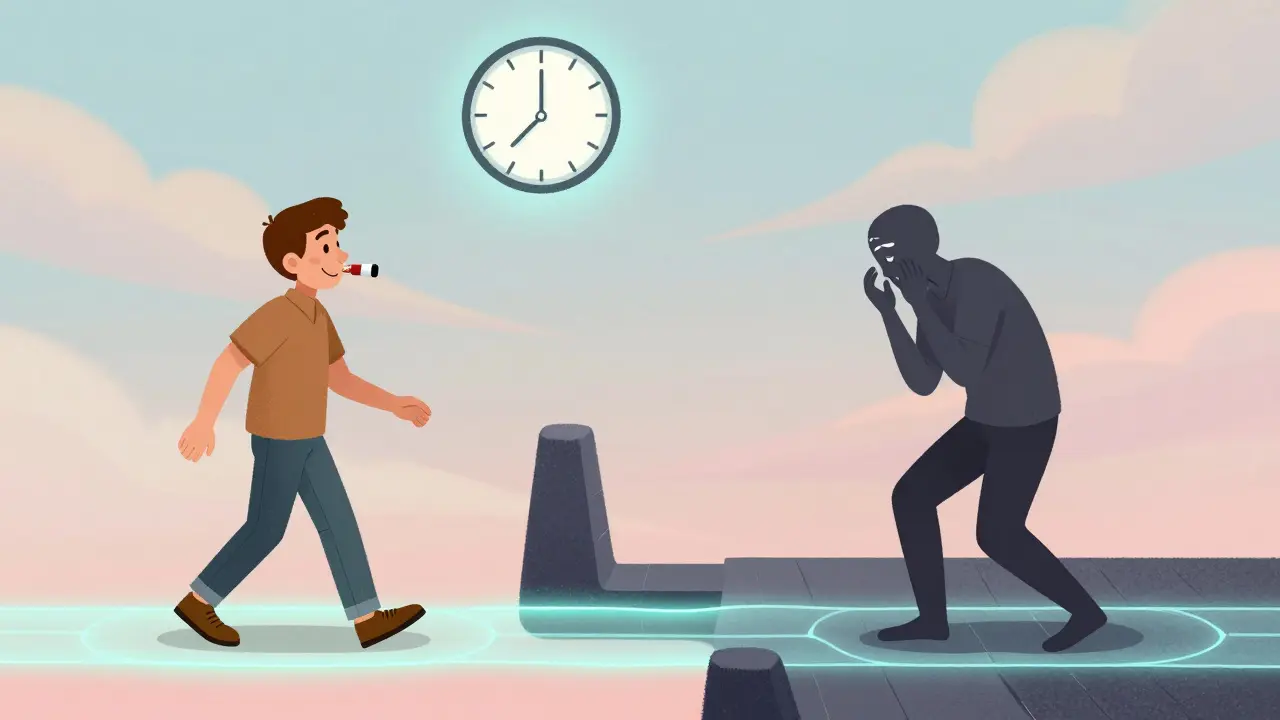
Managing Parkinson’s meds isn’t just about taking pills. It’s about timing. Levodopa competes with amino acids from protein for a ride into the brain. High-protein meals - steak, eggs, cheese - can block absorption. That’s why many patients eat low-protein breakfasts and save protein for dinner.
Some take their pills 30 minutes before meals. Others use extended-release versions like Rytary, which last longer and reduce the number of daily doses. But Rytary costs $5,800 a year. The generic version? Around $600. Not everyone can afford the difference.
And it’s not just about money. A 2023 Parkinson’s Foundation report found that 78% of patients need help from caregivers to manage their medication schedule. Early on, it’s 15 minutes a day. By mid-stage, it’s 45 minutes. That’s a full hour a week just to keep the pills straight.
For some, the biggest challenge isn’t the tremor or the stiffness - it’s the clock. "When do I take the next pill?" "Will I be stuck on the toilet because I’m frozen?" "Will I be able to walk to the car when I need to?" These questions shape every hour.
New Frontiers in Treatment
The future isn’t just better pills. It’s smarter delivery. In 2018, the FDA approved Inbrija - a levodopa inhaler. You breathe it in during an "off" episode. It works in 10 minutes. But it costs $3,700 a month.
More promising is subcutaneous infusion. A pump under the skin slowly drips levodopa-carbidopa into your body, like insulin for diabetes. The RESTORE-1 trial in 2022 showed patients gained 2.5 more "on" hours each day. No more sudden freezes. No more waiting for pills to kick in.
Gene therapy is also being tested - inserting genes into the brain to help it make its own dopamine. But these are still experimental. No one knows if they’ll work long-term.
Meanwhile, researchers are looking at genes. Variants in COMT and MAO-B enzymes might predict who responds best to which drug. That could lead to personalized dopamine therapy - not a one-size-fits-all pill, but a treatment tailored to your DNA.
What Patients Really Say
On the Parkinson’s Foundation’s online forum, one user, "ParkinDad," wrote: "After 8 years on levodopa, my good hours are down to 2 or 3 per dose. The dyskinesia is worse than the shaking ever was."
Another, "SilverLining2022," said: "I started on pramipexole right after diagnosis. Five years later, I still drive, cook, and play with my grandkids. No major side effects."
PatientsLikeMe data shows levodopa gets a 7.2/10 for effectiveness - but only 5.8/10 for side effects. Over 60% report nausea. 42% get dizzy. 38% have dyskinesia. And 56% say the hardest part isn’t the symptoms - it’s the timing.
There’s no perfect solution. But there are options. And understanding how tremor, stiffness, and dopamine replacement work together is the first step to taking control.
Is Parkinson’s tremor the same as essential tremor?
No. Essential tremor happens during movement - like when you’re holding a cup or writing. Parkinson’s tremor is most noticeable at rest. Essential tremor often runs in families and doesn’t cause stiffness or slow movement. Parkinson’s tremor is usually one-sided at first; essential tremor is often symmetrical. A neurologist can tell the difference with a simple exam.
Can you stop taking levodopa if side effects are bad?
Never stop levodopa suddenly. That can trigger a dangerous condition called neuroleptic malignant syndrome - high fever, muscle rigidity, confusion. If side effects are too much, talk to your doctor. They can lower the dose, switch to extended-release, or add another medication to help. But stopping cold is dangerous.
Does dopamine replacement slow down Parkinson’s progression?
No. Dopamine replacement only treats symptoms. It doesn’t stop the brain cells from dying. That’s why it’s called symptomatic therapy. The disease keeps progressing, even if you feel better. That’s why researchers are now focused on drugs that might actually protect neurons - not just replace dopamine.
Why do some people get dyskinesia and others don’t?
It’s a mix of genetics, dose, and timing. People who start levodopa younger, take higher doses, or have been on it longer are more likely to develop dyskinesia. But even two people with the same dose and age can have very different outcomes. That’s why doctors now use a "start low, go slow" approach - to delay or avoid it altogether.
Are there non-medication ways to help with stiffness and tremor?
Yes. Physical therapy, tai chi, and dance therapy (like tango) have been shown to improve balance, flexibility, and movement control. Regular exercise can reduce stiffness and improve quality of life - even if it doesn’t replace medication. Speech therapy helps with voice softening, and occupational therapy can make daily tasks easier. Medication is key, but movement is powerful too.
Emma Nicolls
March 16, 2026 AT 05:15Also why is protein such a nightmare? I miss steak
Jimmy V
March 17, 2026 AT 01:09Richard Harris
March 18, 2026 AT 04:57Kandace Bennett
March 19, 2026 AT 10:18Shruti Chaturvedi
March 19, 2026 AT 22:46Katherine Rodriguez
March 20, 2026 AT 20:45Devin Ersoy
March 22, 2026 AT 01:42Scott Smith
March 22, 2026 AT 23:20Sally Lloyd
March 24, 2026 AT 13:49Adam M
March 26, 2026 AT 03:42Leah Dobbin
March 27, 2026 AT 09:18Alex MC
March 28, 2026 AT 21:39rakesh sabharwal
March 29, 2026 AT 09:52