
Predictable vs Unpredictable Side Effects: Understanding Drug Safety
 Nov, 28 2025
Predictable Side Effect Risk Estimator
Assess Your Medication Risk
Enter your medication details to see your risk level
When you take a pill, you expect it to help. But sometimes, it does something unexpected - and harmful. That’s called a side effect. Not all side effects are the same. Some you can see coming. Others strike out of nowhere. Knowing the difference isn’t just academic - it can save your life.
Predictable Side Effects: The Ones You Can See Coming
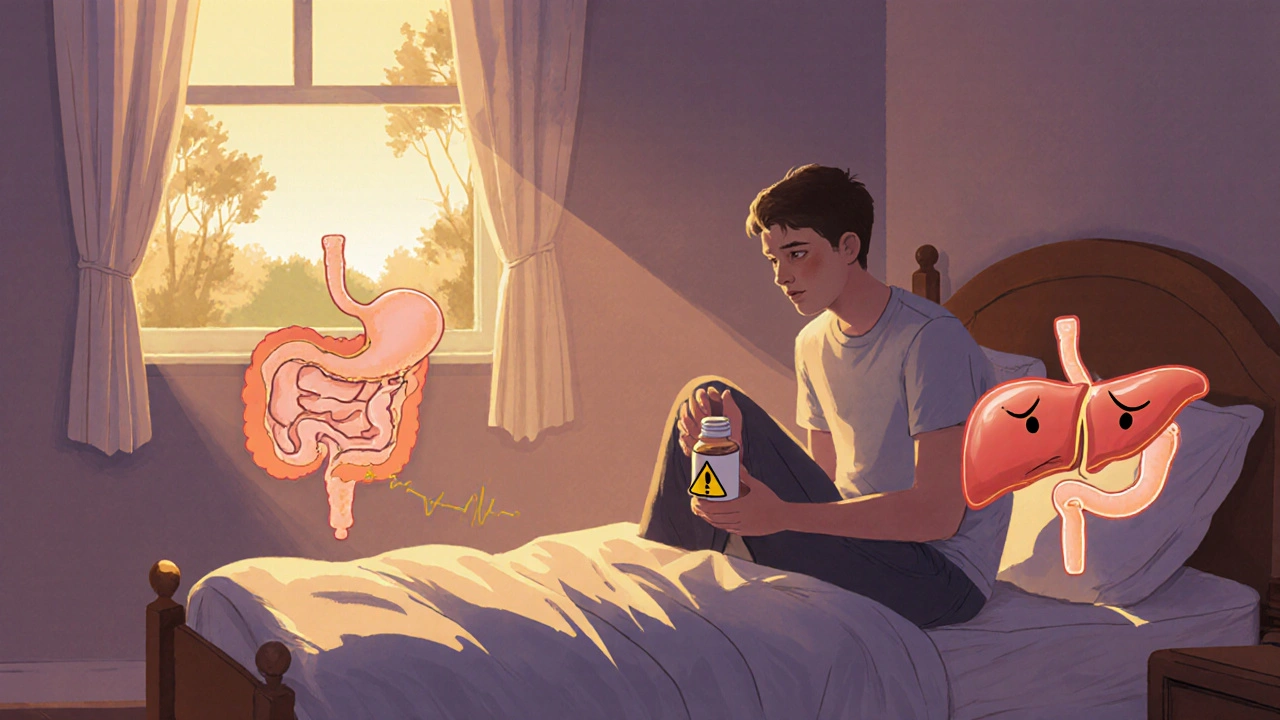
Predictable side effects, also called Type A reactions, make up 75 to 80% of all adverse drug reactions. These aren’t surprises. They happen because the drug does exactly what it’s supposed to do - just too much, or in the wrong place.
Take NSAIDs, like ibuprofen or naproxen. They reduce inflammation and pain by blocking certain enzymes. But those same enzymes also protect your stomach lining. So when you take them, especially long-term or in high doses, stomach bleeding becomes a real risk. Studies show the chance of bleeding jumps from 1-2% at normal doses to 10-15% at high doses. That’s not random. That’s predictable.
Same with blood pressure meds. If you take too much, your pressure can drop too low. Or opioids - they calm pain, but they also slow your breathing. That’s why overdose kills. These reactions are tied directly to the drug’s mechanism. They’re dose-dependent. Lower the dose, and the side effect usually fades. Stop the drug, and it’s gone.
These are the side effects doctors expect. They’re listed in the patient leaflet. They’re why your pharmacist asks if you’ve had stomach issues before. They’re why labs check your kidneys or liver after starting a new drug. You can manage them. You can avoid them. You just need to know what to watch for.
Unpredictable Side Effects: When the Body Betrays You
Then there are the ones no one sees coming. Type B reactions. They make up only 20-25% of all side effects, but they’re responsible for most of the serious, life-threatening ones.
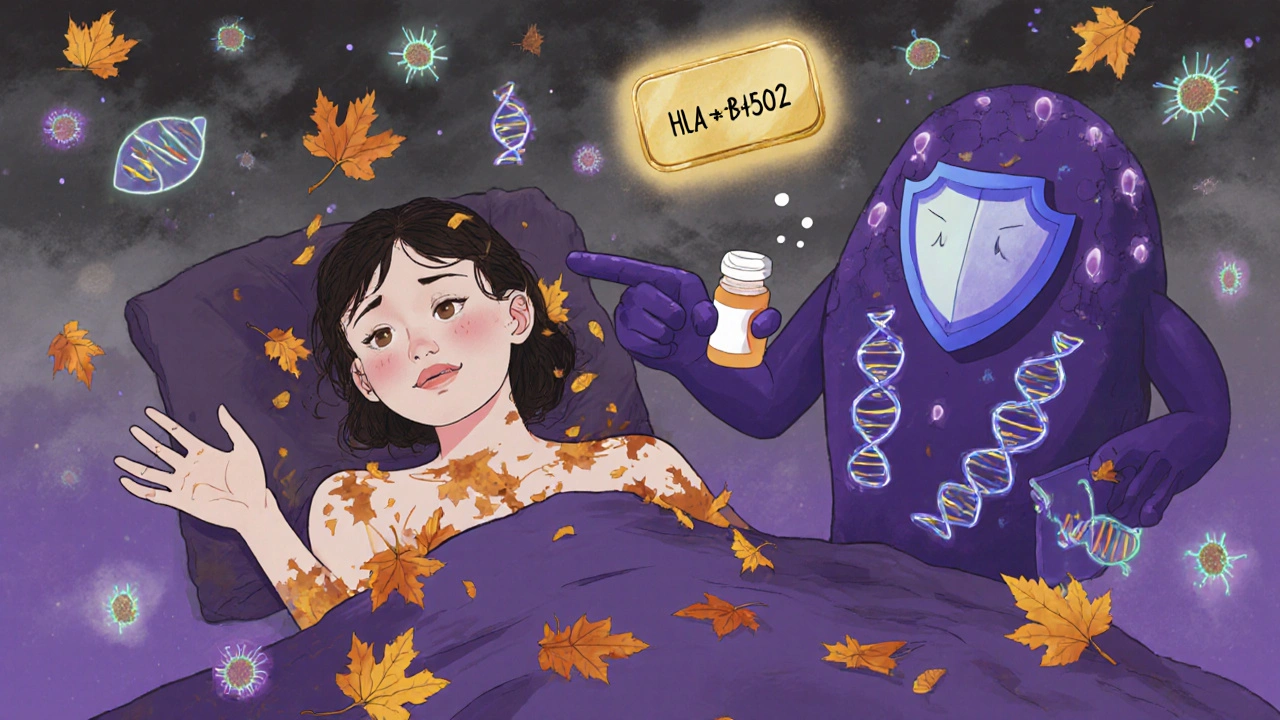
These aren’t about dosage. A healthy 24-year-old can take one pill of a common antibiotic - sulfamethoxazole - and wake up with skin peeling off their body. That’s toxic epidermal necrolysis, a Type B reaction. No overdose. No prior warning. Just a body that turned on itself.
Why? It’s often genetic. Some people carry a gene variant called HLA-B*1502. If they take carbamazepine (a seizure drug), they have a 1 in 10,000 chance of developing Stevens-Johnson syndrome - a blistering, life-threatening skin reaction. In Han Chinese populations, this risk is even higher. But if you don’t have the gene? You can take the same drug with zero risk.
Penicillin allergies are another classic example. One sip of amoxicillin, and your throat swells. You’re having anaphylaxis. No one knew you were sensitive until that moment. No test beforehand. No way to predict it - unless you’ve had a reaction before.
These reactions are not caused by the drug’s intended action. They’re like a glitch in your immune system. Sometimes it’s an allergic response. Sometimes it’s your body misidentifying the drug as a threat. And because it’s random, you can’t prevent it with dose control. Only by knowing your own history - or your DNA - can you avoid them.
The Real Cost of Surprise Reactions
Unpredictable side effects might be rare, but they’re expensive. In the U.S., treating all adverse drug reactions costs $30.1 billion a year. Predictable ones take up $22.6 billion. Unpredictable ones? $7.5 billion. That’s because when a Type B reaction hits, it often means ICU stays, skin grafts, months of recovery, and sometimes death.
Between 2009 and 2019, 15 out of 24 drugs pulled from the U.S. market were because of unpredictable reactions. Not because they didn’t work. Not because they were overused. But because they killed people in ways no one could foresee.
That’s why the FDA requires special safety programs - called REMS - for drugs with high Type B risk. Abacavir, for example, can’t be prescribed unless you’ve been tested for the HLA-B*5701 gene first. If you have it? You don’t get the drug. Simple. Life-saving.
But here’s the problem: we only have genetic tests for a small fraction of these reactions. Right now, pharmacogenomic testing catches about 30% of the severe Type B reactions. That means 70% still come out of nowhere.
What You Can Do
Knowing the difference helps you ask better questions.
- If your doctor prescribes a new drug, ask: “Is this side effect common and expected? Or is it rare and unpredictable?”
- If you’ve had a bad reaction before, tell your doctor - even if it was years ago. That history matters.
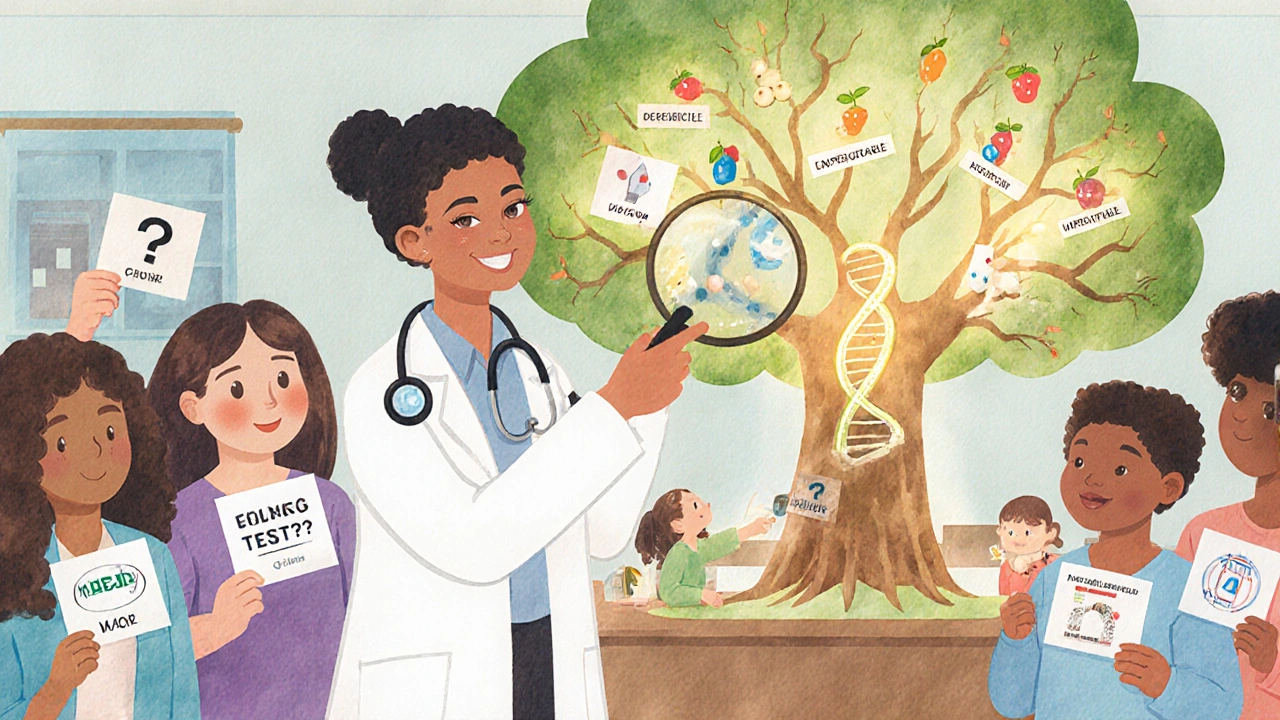
- Ask if genetic testing is available. For some drugs - like abacavir, carbamazepine, or warfarin - it’s standard. For others, it’s not yet routine, but it might be worth asking about.
- Watch for sudden rashes, swelling, blistering, or unexplained fever. These aren’t normal. Call your doctor immediately.
Most predictable side effects can be managed. You might feel dizzy at first. Your stomach might be upset. But if you report it early, your doctor can adjust the dose or switch you to something else.
Unpredictable ones? You can’t manage them once they start. You have to stop them before they start. That’s why awareness and communication are your best tools.
What’s Changing
Things are getting better - slowly.
More hospitals are doing genetic screening. In 2015, only 5% of U.S. hospitals tested for drug-gene interactions. By 2023, that number jumped to 38%. That’s progress.
AI is helping too. Google Health trained a system on 10 million electronic health records. It got 89% accurate at spotting predictable side effects. But for unpredictable ones? Only 47%. That shows how hard they are to predict. They’re not just about genes. They’re about how your genes, your environment, your infections, your stress levels - all of it - interact in ways we don’t yet understand.
The NIH’s All of Us program has found 17 new gene-drug links since 2023. That includes a connection between HLA-B*15:02 and phenytoin in people outside of Asia - something no one expected. Every new discovery means fewer surprises.
The goal? Reduce severe unpredictable reactions by 50% by 2030. It’s ambitious. But with better testing, better data, and better communication, it’s possible.
Bottom Line
Not all side effects are created equal. Some are like a bad mood after coffee - annoying, but you know it’s coming. Others are like a lightning strike - rare, sudden, and devastating.
Knowing which is which helps you take control. You can’t prevent every reaction. But you can reduce your risk. By asking questions. By sharing your history. By understanding what your body might be hiding.
Medicines save lives. But they can also hurt. The key isn’t avoiding them. It’s understanding them.
What’s the difference between predictable and unpredictable side effects?
Predictable side effects (Type A) happen because of how the drug works in the body - they’re dose-related and common. Examples include stomach upset from NSAIDs or dizziness from blood pressure meds. Unpredictable side effects (Type B) are rare, not tied to dose, and often caused by genetics or immune reactions - like severe skin rashes or anaphylaxis. You can’t predict them without testing.
Can I be tested for unpredictable side effects before taking a drug?
Yes - but only for certain drugs. Testing is standard before taking abacavir (for HIV) or carbamazepine (for seizures) if you’re of Asian descent, because of known gene links like HLA-B*5701 or HLA-B*1502. For other drugs, testing isn’t routine yet. Talk to your doctor if you have a family history of bad reactions or if you’ve had one yourself.
Are predictable side effects dangerous?
Most aren’t life-threatening. They’re annoying or uncomfortable - nausea, drowsiness, dry mouth. But some can be serious if ignored. For example, long-term NSAID use can cause internal bleeding, especially in older adults or those with ulcers. The key is catching them early and adjusting the dose or switching meds.
Why do some people have bad reactions and others don’t?
It’s often genetics. Your DNA affects how your body breaks down drugs and how your immune system responds. Some people have gene variants that make them more likely to have a severe reaction. Others don’t. Environmental factors like infections, other medications, or even gut health can also play a role - which is why unpredictable reactions are so hard to forecast.
What should I do if I think I’m having a side effect?
Don’t ignore it. Note the symptoms, when they started, and how they relate to your dose. For predictable side effects (like mild nausea), call your doctor - they might adjust your dose. For unpredictable signs (rash, swelling, trouble breathing, blistering skin), stop the drug and seek emergency care immediately. These can be life-threatening.
Are newer drugs safer than older ones?
Not necessarily. New drugs go through trials, but those trials involve thousands - not millions - of people. Rare reactions (Type B) often only show up after widespread use. That’s why the FDA monitors drugs for years after approval. Older drugs may have more known risks, but we also know how to manage them better.
Josh Evans
November 30, 2025 AT 00:54I’ve been on NSAIDs for years for my back pain and never thought twice until my cousin had a bleed. Now I always ask my doc about the risks. Seriously, people don’t realize how common these predictable side effects are. Just because it’s listed doesn’t mean you’re warned hard enough.
Allison Reed
November 30, 2025 AT 22:40This is such an important breakdown. I work in patient advocacy and see too many people terrified of meds because they don’t understand the difference between ‘annoying’ and ‘life-threatening.’ You made it clear without scare tactics. Thank you for writing this.
Jacob Keil
December 2, 2025 AT 14:23lol so drugs are just magic beans and your genes are the fairy godmother? we’ve been lied to since day one. the pharmaceutical industry doesn’t want you to know your body is a battlefield and they’re just selling bandages with price tags. wake up sheeple. dna isn’t destiny it’s a trap.
Rosy Wilkens
December 3, 2025 AT 15:47Did you know the FDA approves drugs based on corporate lobbying? The ‘unpredictable’ reactions? They’re not unpredictable-they’re covered up. The HLA tests? Only required because lawsuits forced them. If you think this system protects you, you’re delusional. They’re testing on you. Every pill is an experiment.
Andrea Jones
December 4, 2025 AT 06:23So basically, if you’re lucky enough to not have the bad gene, you’re golden? That’s like winning the lottery while everyone else plays Russian roulette with their meds. I mean… cool? But also terrifying. Why aren’t we all getting screened? Is it cost? Or just… laziness?
Justina Maynard
December 4, 2025 AT 08:40I had a rash after amoxicillin when I was 8. My mom didn’t tell anyone because ‘it went away.’ Fast forward 15 years, I get prescribed it again for a sinus infection. Swelling. ER. ICU. Now I carry a medical alert bracelet. If you’ve ever had *anything* weird after a drug? Say it. Even if it was ‘nothing.’ It’s never nothing.
Evelyn Salazar Garcia
December 4, 2025 AT 23:26USA spends too much on medicine. Just don’t take pills. Exercise. Eat veggies. Problem solved.
Clay Johnson
December 5, 2025 AT 16:11Genetics dictate fate. The body remembers what the mind forgets. A pill is not a solution. It is a signal. And the signal is noise.
Jermaine Jordan
December 6, 2025 AT 10:13Let me tell you something that keeps me up at night: We’re one gene mutation away from a national health crisis. Imagine if 1 in 100 people reacted to a common painkiller with full-body necrosis. No warning. No test. Just death. This isn’t sci-fi. It’s happening right now. And we’re still treating it like a footnote.
Chetan Chauhan
December 8, 2025 AT 07:20lol predictabe side effects? in india we call them 'free side effects' because doctor always say 'ye to normal hai' and you die. also why only usa has testing? in india we just give 10 pills and hope for best. also hla test cost 10000 rupees. who can afford? also why not test everyone? because pharma company dont want to lose sales.
Phil Thornton
December 9, 2025 AT 04:06My cousin took carbamazepine and ended up in a burn unit. They didn’t test him. He’s fine now. But he won’t touch meds again. Ever. This isn’t science. It’s roulette with your skin.
Pranab Daulagupu
December 9, 2025 AT 23:17Pharmacogenomics is the future. We’re at the cusp of personalized medicine. The data is there. The tech is scalable. What’s missing is infrastructure and policy. If we invest now, we can prevent 70% of Type B reactions by 2030. It’s not just possible-it’s inevitable.