
Seized Counterfeit Medications: Real Cases and Key Lessons
 Aug, 29 2026
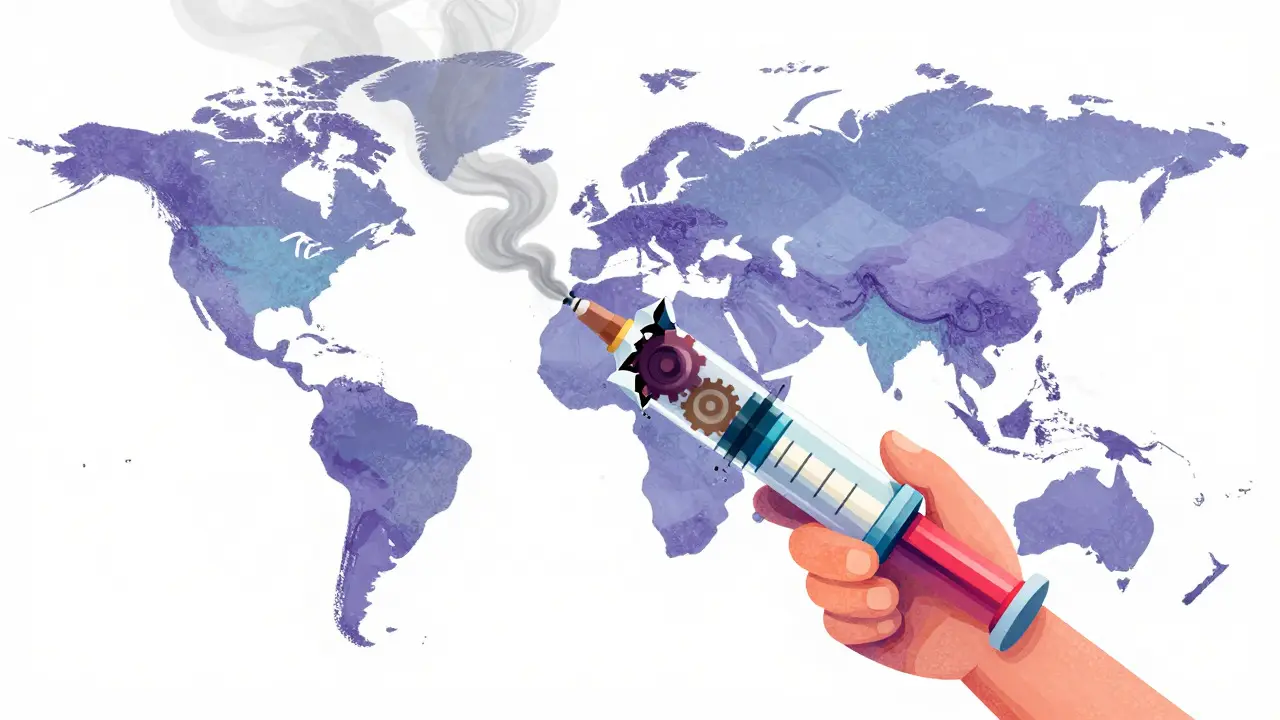
You might think you're buying a life-saving diabetes drug or a trendy weight-loss injection from a reputable source. But what if the pen in your hand contains nothing but saline, industrial solvents, or worse? In 2024 alone, law enforcement agencies across 136 countries documented over 6,400 incidents of pharmaceutical counterfeiting. That’s not just a statistic; it’s thousands of patients putting their health at risk based on packaging that looks perfect but hides a dangerous secret.
The problem isn't slowing down. It's getting smarter. Criminal networks are no longer just slapping fake labels on bottles. They’re shipping unassembled parts to local warehouses to assemble fakes closer to the consumer, making detection harder. From Interpol's massive global sweeps to small-town pharmacy fines, the landscape of seized counterfeit medications tells a story of evolving threats and hard-won lessons. Here is what the recent data reveals about who is being fooled, how they are being fooled, and what we can learn from these high-stakes cases.
The Scale of the Crisis: More Than Just Fake Pills
When we talk about counterfeit drugs, most people picture fake aspirin. But the reality is far more complex and expensive. According to the Pharmaceutical Security Institute (PSI), global authorities recorded 6,424 distinct incidents of pharmaceutical crime in 2024. These weren't minor infractions. They involved 2,428 different types of medicines, spanning everything from basic painkillers to high-value oncology drugs and biologics.
Why does this matter to you? Because the volume is staggering. In 2025, Interpol’s Operation Pangea XVI coordinated with authorities in 90 countries. The result? 769 arrests, the dismantling of 123 criminal groups, and the seizure of 50.4 million doses of unapproved or counterfeit medicines. They also shut down roughly 13,000 illegal websites and social media channels. This wasn't a one-off raid; it was a coordinated global effort to choke off supply lines that have been feeding consumers for years.
The economic stakes are equally high. The OECD estimates that the global trade in fake goods hit $467 billion in recent years. While clothing and shoes make up the bulk of that number, hazardous fakes like medicines are growing fast. In the U.S., India has emerged as the top country of origin for counterfeit pharmaceuticals seized at the border, surpassing China in specific categories. This shift highlights how criminals adapt to enforcement pressure, moving production hubs when scrutiny increases in one region.
The New Targets: Why Weight-Loss Drugs Are Hot Property
If you’ve been on social media lately, you know everyone is talking about GLP-1 agonists like Ozempic and Semaglutide. This popularity has made them prime targets for counterfeiters. The National Association of Boards of Pharmacy (NABP) reports that weight-loss drugs are among the most frequently counterfeited therapeutic categories today.
In August 2025, U.S. Customs and Border Protection (CBP) intercepted 16,740 counterfeit pre-filled injectable pens. These shipments originated primarily from Hong Kong, China, Colombia, and Korea, destined for 40 states. The sophistication is alarming. Some fakes contained no active ingredient at all. Others contained dangerous contaminants like heavy metals or industrial solvents. One verified healthcare professional reported treating a patient with severe cellulitis caused by counterfeit dermal fillers purchased online. The packaging was nearly indistinguishable from the real thing, but the contents were unknown particulates.
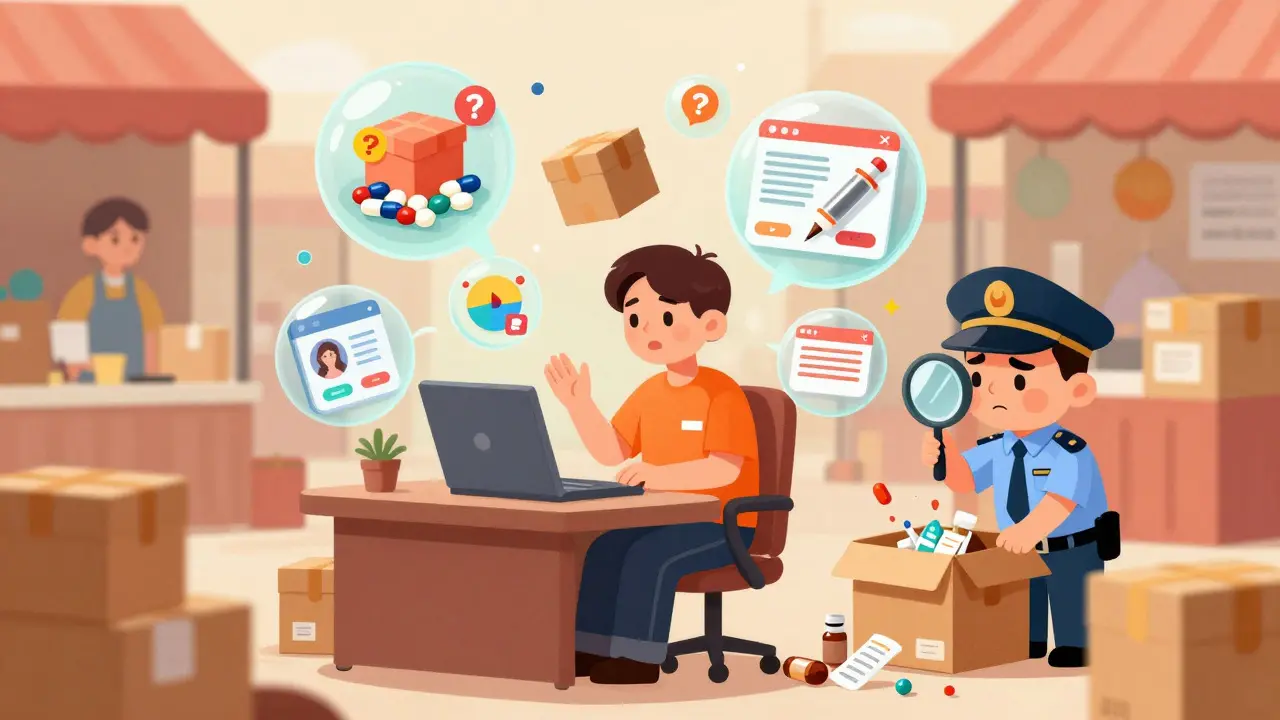
How are people getting scammed? The NABP identified three main channels:
- Online Marketplaces: Platforms like Etsy account for 47% of illicit sales, where individual sellers often lack rigorous verification.
- Direct Ordering: 31% of buyers order directly from illegal manufacturers who set up convincing but fraudulent websites.
- Foreign Providers: 22% come from foreign providers offering look-alike counterfeits that bypass traditional import checks.
Case Studies: When Enforcement Hits Home
Data is useful, but specific cases show the human cost and legal complexity. Let’s look at a few recent examples that illustrate the variety of risks.
| Location/Agency | Action Taken | Details | Lesson Learned |
|---|---|---|---|
| Cincinnati CBP (USA) | Seized $3.5M in pharma | August 2025; large-scale freight shipment. | Bulk shipments remain a major vector despite parcel trends. |
| Iowa Pharmacy | Fined $25,000 | Sold counterfeit Ozempic. | Even licensed pharmacies can be tricked by sophisticated fakes. |
| Gqeberha Police (South Africa) | Seized R2.2M ($118k) worth | Counterfeit medicines found in distribution hub. | Africa is a growing target market for low-quality imports. |
| Nigeria NAFDAC | Shut down facility | Illegal herbal medicine production in Kaduna. | Unregulated "natural" products carry similar risks. |
| U.S. DOJ | Indicted 70+ defendants | $17M Medicaid fraud; $9.5M in fake meds sold online. | Insurance fraud often accompanies counterfeit sales. |
The Iowa case is particularly sobering. A licensed pharmacy, bound by strict regulations, still managed to sell counterfeit Ozempic. This suggests that visual inspection alone is no longer enough. If a professional can miss it, an average consumer shopping on Instagram certainly will.
Meanwhile, the DOJ case involving over 70 defendants shows the intersection of fraud and health. These individuals didn't just sell bad pills; they defrauded Medicaid of $17 million while selling $9.5 million in counterfeit medications, including $3 million worth of fake HIV treatments. For patients relying on consistent viral loads, swapping a real medication for a fake one can lead to treatment resistance and severe health setbacks.
The Regulatory Gap: What Can Be Seized?
Here is a critical lesson learned from recent operations: not every "bad" drug is a "counterfeit" drug in the eyes of the law. Dr. Carmen Catizone, Executive Director of the NABP, highlighted a significant loophole during an August 2025 presentation. She noted that CBP officers cannot seize medications that merely violate the Federal Food, Drug, and Cosmetic Act (FDCA). To be seized at the border, a product must be proven to be counterfeit-meaning it infringes on a trademark or is deliberately misrepresented.
This distinction matters. If a manufacturer ships a generic version of a drug that hasn't been approved by the FDA yet, but doesn't fake the brand name, CBP might let it through. It’s an unapproved drug, yes, but not necessarily a counterfeit. This gap allows many substandard or unsafe products to slip into the U.S. market under the radar. Consumers often assume that if it passes customs, it’s safe. That assumption is dangerously flawed.
Criminals are exploiting this. They are increasingly using "localisation" strategies. Instead of shipping finished boxes from China, they ship loose vials, caps, and labels separately. Local teams assemble them in the destination country. By the time the box reaches the consumer, it looks authentic, but the components may have been sourced from different, unregulated factories. Interpol notes that this complicates detection because no single shipment looks suspicious enough to trigger a full audit.
Lessons for Patients and Providers
So, what should you take away from these seizures? First, trust your instincts and your sources. The FDA’s MedWatch database saw a 43% year-over-year increase in adverse event reports linked to suspected counterfeit medications in early 2025. Most of these reports concerned weight-loss drugs and cosmetic injectables.
Here are practical steps to protect yourself:
- Verify the Seller: Stick to licensed pharmacies. Look for the Verified Internet Pharmacy Practice Sites (VIPPS) seal or equivalent national accreditation. Avoid social media ads that promise instant delivery without a prescription check.
- Inspect the Packaging: Check for spelling errors, blurry logos, or inconsistent font sizes. However, remember that high-end fakes are getting better at this. Don’t rely solely on visuals.
- Check the Lot Number: Many legitimate manufacturers allow you to enter the lot number and expiration date on their website to verify authenticity. Do this before taking the first dose.
- Be Wary of Prices: If a price seems too good to be true, it probably is. Counterfeiters compete on price. Legitimate supply chains have fixed costs that prevent massive discounts on branded drugs.
For healthcare providers, the lesson is vigilance. Ask patients where they bought their medication. If a patient on a stable regimen suddenly experiences side effects or loss of efficacy, consider the possibility of a counterfeit or substandard product. Reporting these incidents to the FDA or relevant national agency helps build the data map that law enforcement uses to target future raids.
The Future of Fraud: Tech and Trends
The battle against counterfeit drugs is becoming a tech race. Criminals are leveraging new technologies to avoid detection, and enforcers are responding in kind. Blockchain-based tracking systems piloted by major pharmaceutical companies have reduced counterfeit incidents by 37% in some trials. These systems create an immutable record of a drug’s journey from factory to shelf, making it much harder to insert fakes into the chain.
However, the trend toward online sales continues to accelerate. The NABP forecasts that by 2026, 78% of counterfeit GLP-1 medications will be sold through social media platforms and disguised e-commerce sites. This shift moves the point of sale away from regulated pharmacies and into the wild west of digital advertising. Algorithms serve you ads for "miracle cures," and one-click purchasing removes the friction of a pharmacist consultation.
Global cooperation remains our best defense. Operations like Pangea prove that when 90 countries share intelligence, criminals lose ground. But without enhanced international standards and faster information sharing, experts predict counterfeit medication incidents could rise by 15-20% annually. The risk isn't just financial; it's catastrophic for public health, especially as we see more biologics and specialty drugs entering the crosshairs.
What is the difference between a counterfeit drug and a substandard drug?
A counterfeit drug is intentionally mislabeled with incorrect ingredients or dosage, often mimicking a brand-name product to deceive consumers. A substandard drug fails to meet quality standards due to poor manufacturing or storage conditions but may not be intentionally deceptive. Both pose health risks, but counterfeits involve fraud.
Can I tell if my medication is counterfeit just by looking at it?
Not always. Modern counterfeiters use high-quality printing and packaging materials that are visually identical to genuine products. While checking for typos or color inconsistencies helps, chemical analysis or verification via manufacturer lot numbers is often required for certainty.
Which medications are most commonly counterfeited?
Currently, weight-loss drugs (GLP-1 agonists like Ozempic), erectile dysfunction medications, Botox, dermal fillers, and HIV treatments are among the most targeted. High-demand, high-cost, and chronic-use medications are preferred by criminals for maximum profit.
Does buying online guarantee I get a fake drug?
No, but the risk is higher. Licensed online pharmacies accredited by bodies like the NABP are generally safe. The danger lies in unverified social media sellers, marketplace listings from third-party vendors, and websites that do not require a valid prescription.
What happens if I accidentally take a counterfeit medication?
Consequences vary widely. You might experience no effect (if it’s sugar pills), unexpected side effects (from wrong ingredients), or severe toxicity (from contaminants like heavy metals). Always contact your doctor immediately if you suspect your medication is fake, especially if symptoms change unexpectedly.