
Severe Hyponatremia from Medications: Recognizing Confusion, Seizures, and How to Get Care
 Jan, 5 2026
Hyponatremia Risk Assessment Tool
Assess Your Medication Risk
This tool helps you identify your risk of severe hyponatremia (low sodium) from medications. Enter your medications and age to calculate your risk level and get personalized action steps.
Watch For These Symptoms
- Headache
- Nausea
- Confusion
- Weakness or fatigue
- Seizures
- Difficulty speaking
Your Action Steps
Enter your medications and age to see personalized steps
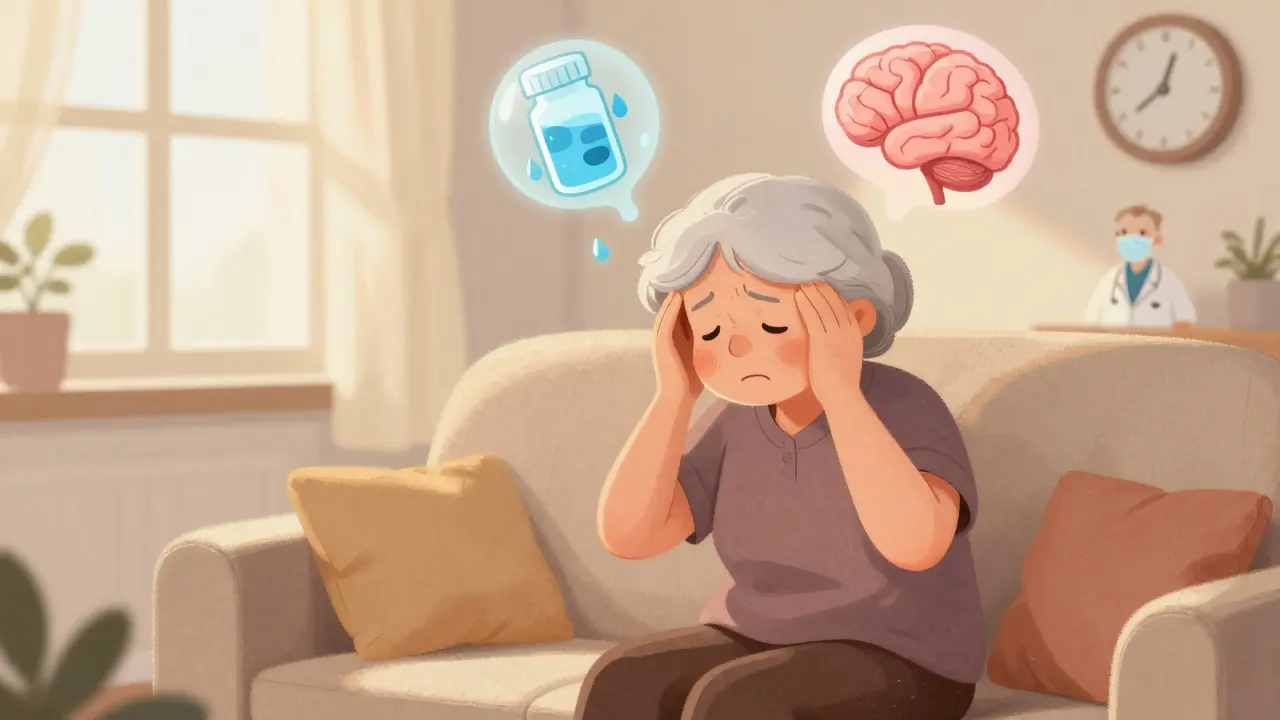
Low sodium isn’t just a lab number. When it drops too fast because of a medication, your brain starts to shut down. Confusion, headaches, nausea - these aren’t just "side effects." They’re warning signs. And if you ignore them, seizures or coma can follow in hours. This isn’t rare. Every year, thousands of people end up in the hospital because their meds messed with their sodium levels. And too often, doctors miss it until it’s too late.
What Exactly Is Severe Hyponatremia?
Hyponatremia means your blood sodium is below 135 mmol/L. Severe? That’s when it hits 120 mmol/L or lower. At this point, your cells - especially brain cells - start swelling with water. Your brain doesn’t have room to expand inside your skull. That’s when confusion turns to seizures, and seizures can turn to permanent brain damage or death.
It doesn’t happen overnight. Most cases build up over days or weeks after starting a new drug. But once sodium drops below 115 mmol/L, the risk of death jumps to 37% if you don’t get treatment fast. The brain adapts slowly to low sodium over time - but when meds cause a sudden drop, your brain can’t keep up. That’s why medication-induced hyponatremia is so dangerous.
Which Medications Cause It?
It’s not one drug. It’s a whole list. The biggest culprits:
- Diuretics (like hydrochlorothiazide) - cause 28% of cases. They flush out sodium and water, but sometimes too much water stays behind.
- SSRIs (sertraline, citalopram, fluoxetine) - account for 22%. These antidepressants trigger the body to hold onto water like a sponge.
- Antiepileptics - carbamazepine and oxcarbazepine are the worst. One study found carbamazepine increases risk by over five times.
- MAOIs, ACE inhibitors, NSAIDs - less common, but still risky.
- MDMA (ecstasy) - not a prescription, but a major cause in young adults who drink too much water while using it.
Here’s the kicker: you might not know you’re at risk. A 72-year-old woman on hydrochlorothiazide for high blood pressure? High risk. A 58-year-old man starting sertraline for depression? Also high risk. Women over 65 are 57% of severe cases. Age is the biggest factor.
How It Starts: The Silent Progression
It doesn’t begin with seizures. It begins with a headache. A little nausea. Feeling "off." Maybe you think it’s the flu. Or stress. Or aging.
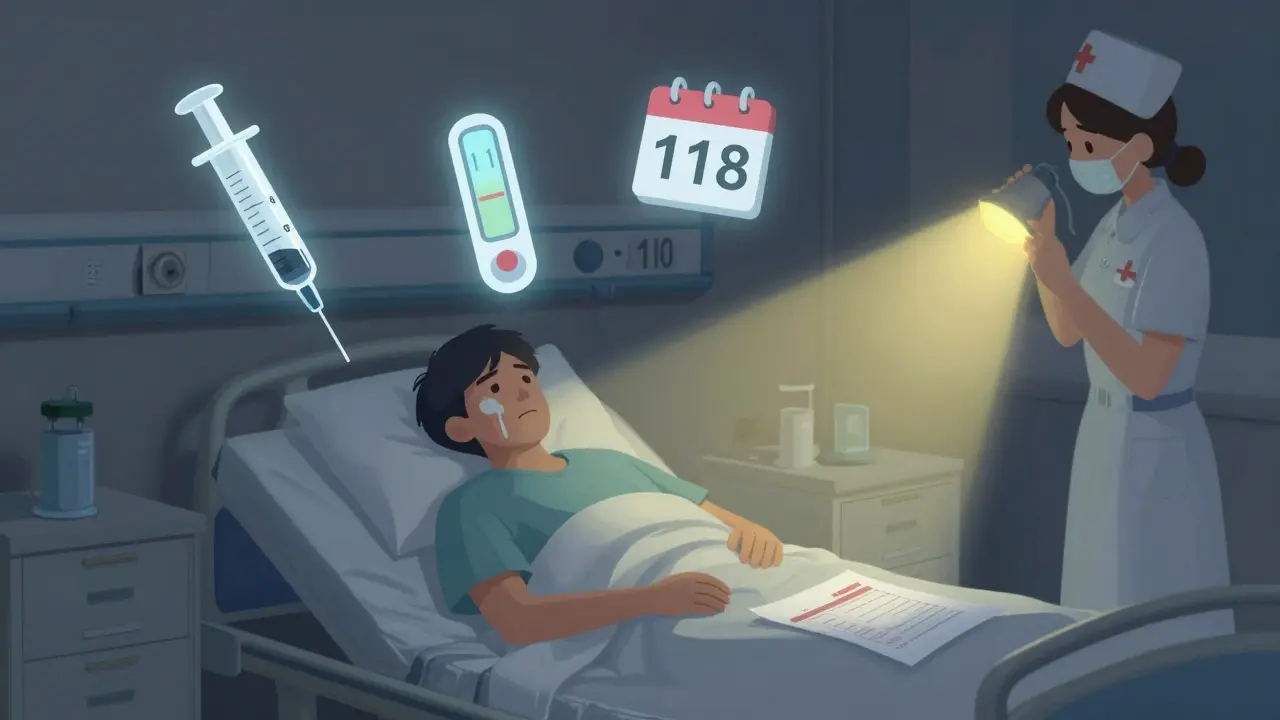
One nurse on Reddit shared a case: a patient started sertraline. Within 10 days, sodium dropped 0.8 mmol/L per day. First, mild nausea. Then dizziness. Then confusion. The doctor called it "normal side effects." Then - grand mal seizure. Sodium: 118 mmol/L.
That’s not unusual. On patient forums, 68% of people say their symptoms were dismissed. Common misdiagnoses: "flu," "anxiety," "early dementia." The symptoms look like mental health issues. That’s why so many cases slip through.
On Drugs.com, SSRIs have a 2.3-star rating - not for effectiveness, but for electrolyte problems. One review says: "My doctor didn’t warn me about this." Another: "Hospitalized for 5 days because of low sodium from citalopram."
Why It’s So Hard to Catch
Doctors aren’t trained to check sodium unless you’re vomiting or confused. But by then, it’s often too late. The American College of Emergency Physicians found 31% of cases are misdiagnosed in ERs.
Here’s the truth: no one checks sodium routinely after starting a new med. That’s the flaw. The FDA says high-risk drugs need monitoring. But only 63% of doctors follow that advice. In community clinics? Just 47% do. In academic hospitals? 82%.
And here’s the worst part: 73% of severe cases happen within the first 30 days of starting the drug. That’s the window. If you don’t check sodium during that time, you’re gambling with someone’s brain.
What to Do: Prevention and Early Action
It’s not complicated. You can prevent most of these cases.
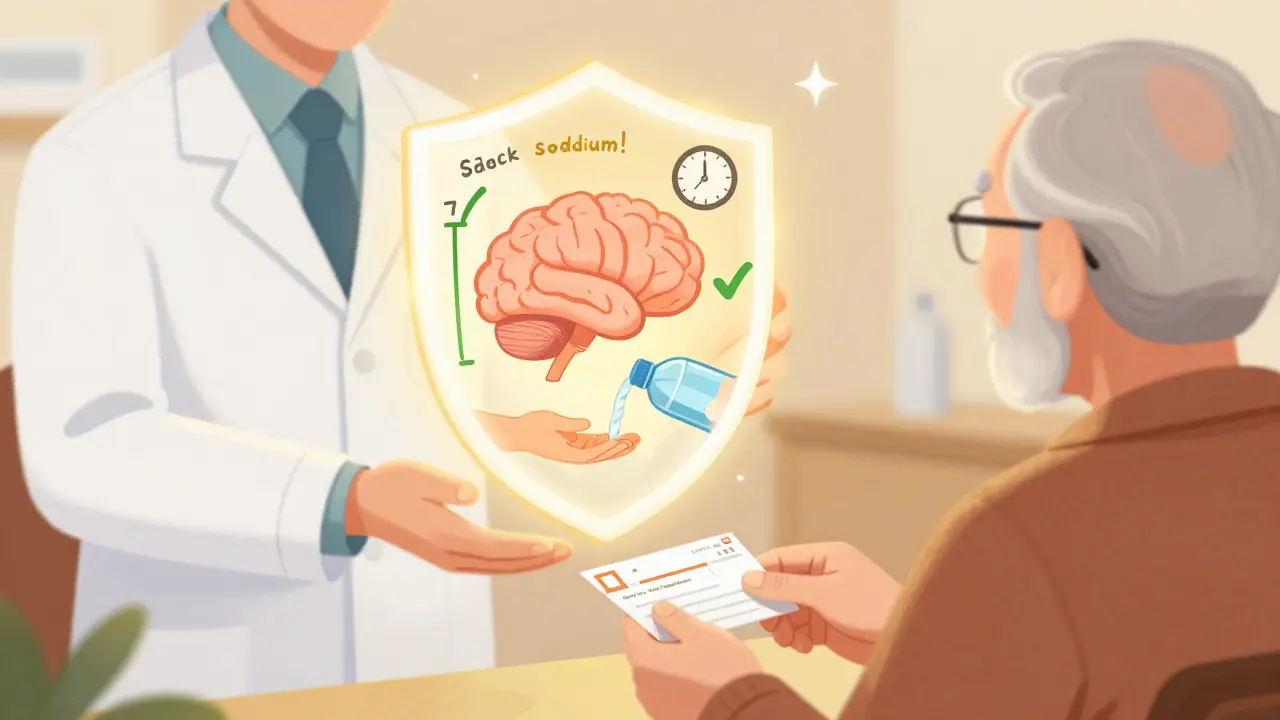
- Check sodium within 7 days of starting any high-risk drug - especially if you’re over 65.
- Repeat every 3-5 days for the first month.
- Know the symptoms: Headache, nausea, fatigue, confusion, muscle cramps, dizziness. Not "just side effects."
- Ask your pharmacist. One Mayo Clinic patient said their pharmacist caught a dangerous interaction before they even filled the oxcarbazepine prescription. Saved them from what happened to their sister.
- Don’t drink excessive water. Especially if you’re on SSRIs or diuretics. Your body can’t handle it.
The American Geriatrics Society says routine sodium checks for seniors on these meds aren’t optional. They’re standard care.
How It’s Treated - And Why Speed Matters
If sodium is below 120 mmol/L and you have seizures or altered mental status, you need hospital care. Fast.
The goal isn’t to fix it quickly - it’s to fix it safely. Raising sodium too fast can cause osmotic demyelination syndrome - a condition where your brain cells lose their protective coating. That leads to permanent paralysis, speech loss, or locked-in syndrome. It happens in 9% of cases where correction is too aggressive.
Doctors now follow guidelines: correct no more than 4-8 mmol/L in 24 hours. Some say 6, others say up to 10. But no one says: "Fix it now."
New drugs like tolvaptan (Samsca), approved in November 2023, help by making you pee out water without losing sodium. They cut correction time by 34% compared to old methods.
But the real win? Catching it early. If you treat it within 24 hours, recovery rate is 92%. Wait 48 hours? It drops to 67%.
What’s Changing - And What’s Not
There’s progress. The European Medicines Agency now requires pharmacists to educate patients on sodium risks when dispensing high-risk meds. The FDA added stronger warnings to 27 drugs. AI tools at Mayo Clinic can now predict hyponatremia risk 72 hours before symptoms show - by analyzing lab trends and medication history.
But the system is still broken. In community clinics, most patients still get no sodium check. Prescriptions are written, and no one follows up. The cost? $473 million a year in the U.S. alone. And it’s rising - because more people are on SSRIs and diuretics than ever.
There’s no excuse. We know who’s at risk. We know when it happens. We know how to stop it. Yet, 15-20% of cases are still missed - because we treat symptoms, not causes.
Final Warning: The Clock Starts at Day One
The National Hyponatremia Foundation says this: "The window between confusion and seizures can be as short as 6-8 hours."
That’s not a month. Not a week. Six to eight hours.
If you’re on one of these drugs - or caring for someone who is - don’t wait for a seizure. Don’t wait for a hospital visit. Ask for a blood test. Ask if your sodium has been checked. If your doctor says "it’s fine," ask: "When was the last time we checked?"
Low sodium doesn’t announce itself with a siren. It whispers. And if you don’t listen, your brain pays the price.
Saylor Frye
January 6, 2026 AT 01:50Look, if you're on SSRIs and not getting your sodium checked within a week, you're basically letting your brain slowly drown in a tub of water while your doctor scrolls through TikTok. It's not rocket science. The data's been out for years. Yet here we are, 2025, and people are still getting admitted for seizures because someone thought 'mild nausea' meant 'need more coffee.'
Wesley Pereira
January 7, 2026 AT 01:01Bro, the real issue isn't the meds-it's the systemic laziness. Pharmaco-kinetics 101: if a drug alters fluid balance, monitor electrolytes. But nope. Docs are on 15-min visits. Nurses are understaffed. Labs get ignored. It's not negligence-it's structural collapse wrapped in a white coat. And don't get me started on how 'anxiety' gets thrown at every older woman who says she feels 'off.'
My aunt got diagnosed with 'early dementia' after 3 weeks on sertraline. Turned out her sodium was 116. She's fine now. But she lost 4 months of her life to misdiagnosis. That's not medical error. That's institutional apathy.
Lily Lilyy
January 8, 2026 AT 22:31Thank you for sharing this. I am so grateful for people who speak up like this. Many of us are scared to ask questions, but your words help us feel brave. Please keep educating others. Your voice matters. We are all learning together, and this is so important for our health.
Susan Arlene
January 9, 2026 AT 12:09Joann Absi
January 9, 2026 AT 18:15THIS IS WHY AMERICA IS FALLING APART 😭🇺🇸
Our doctors are too busy taking selfies with their new Teslas to care about old people! 💀
SSRIs are just chemical warfare disguised as therapy! 🧠⚡
And don't even get me started on how Big Pharma pays off the FDA! 🤑💊
My cousin died from this and they called it 'natural causes' 😭😭😭
WE NEED REVOLUTION! NOT MORE PILLS!
Mukesh Pareek
January 10, 2026 AT 03:21Let me clarify this with clinical precision. Hyponatremia from SSRIs is a Class I iatrogenic event with a well-defined pharmacodynamic mechanism: V2 receptor agonism leading to aquaporin-2 upregulation. The real problem is not diagnostic neglect-it's the lack of baseline electrolyte profiling in geriatric polypharmacy cohorts. In India, we mandate sodium checks at day 3 and day 7 for all new psychotropics in patients >60. Why? Because we don't wait for seizures to act. Your system is reactive. Ours is preemptive.
Also, MDMA cases? That's not a medication issue. That's a behavioral failure. Stop blaming drugs. Blame the kids who drink 3 liters of water at a rave.
Ashley S
January 11, 2026 AT 06:31This is why I don't trust doctors. They just hand out pills like candy and never check if they're killing you. My neighbor took citalopram and ended up in the hospital. They didn't even test her sodium until she had a seizure. It's all about profit. They don't care if you live or die. Just as long as you keep buying meds.
Jeane Hendrix
January 13, 2026 AT 01:29Wesley, you nailed it. I work in a community clinic and we only check sodium on 38% of high-risk patients. The EHR doesn't even flag it unless you manually add a reminder. We're drowning in paperwork but missing the most basic safety step. I've had to personally call 3 patients back after starting sertraline because I caught it on my own checklist. No one else was looking.
And Joann-yes, Big Pharma is guilty. But the real failure is that we have the tools (AI risk models, pharmacist alerts, guidelines) and still don't use them. It's not malice. It's inertia. We need systems, not just outrage.
Also-Saylor? You're right. It's not complex. But complexity is the luxury of academic hospitals. In rural clinics? We're lucky if the lab opens before noon.