
Social Anxiety Disorder: How Beta-Blockers and Behavioral Therapy Work Together
 Mar, 3 2026
Imagine standing backstage, heart pounding, hands shaking, voice trembling - all because you have to speak in front of a room. This isn’t stage fright. For more than 12% of adults in the U.S., this is a daily reality called social anxiety disorder. It’s not just being shy. It’s a persistent, overwhelming fear of being judged, embarrassed, or humiliated in social situations. And while therapy and medication are often recommended, there’s one surprising combo that’s helping people get through high-pressure moments: beta-blockers and behavioral therapy.
What Beta-Blockers Actually Do (And What They Don’t)
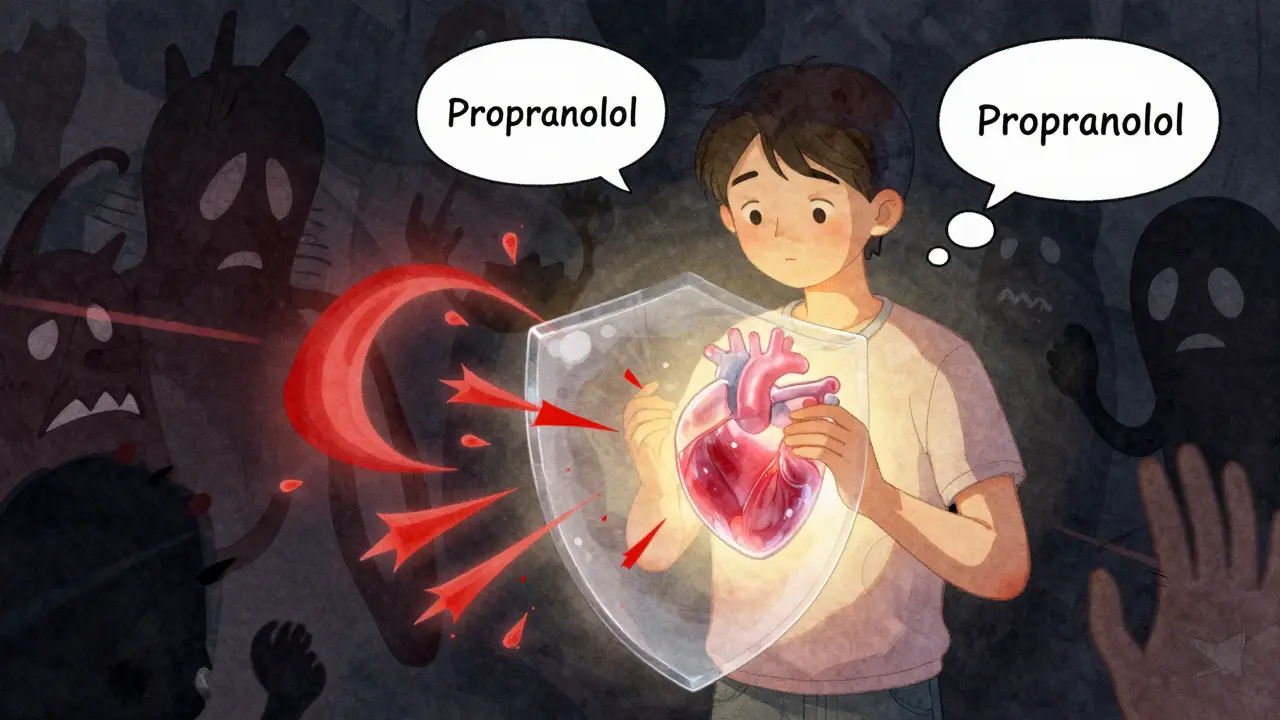
Beta-blockers like propranolol were never designed to treat anxiety. They were made for heart conditions - high blood pressure, irregular heartbeat, chest pain. But in the 1970s, researchers noticed something odd: musicians taking propranolol before performances didn’t just have steadier hearts - their hands stopped shaking, their voices stopped quivering, and they felt calmer. Not because they were less anxious in their heads, but because their bodies weren’t screaming at them.
Here’s how it works: when you’re scared, your body floods with adrenaline. Your heart races. Your palms sweat. Your muscles tense. Beta-blockers block the receptors that adrenaline binds to. That means your heart doesn’t spike. Your hands don’t tremble. Your voice stays steady. It’s like turning down the volume on your body’s panic alarm.
But here’s the catch: beta-blockers do nothing for the thoughts. They don’t stop you from thinking, “Everyone’s judging me,” or “I’m going to mess up.” They don’t reduce fear of future conversations, awkward silences, or being watched. They only calm the physical symptoms. That’s why they’re not a cure - they’re a tool.
When Beta-Blockers Work Best
Propranolol works fast. Take it 60 to 90 minutes before a stressful event, and its effects kick in within 30 to 60 minutes. Peak levels hit around the 90-minute mark. The dose? Usually 10mg to 40mg - low enough to avoid side effects, high enough to make a difference.
Studies show it cuts heart rate by 15 to 25 beats per minute. Hand tremors drop by 30 to 40%. Sweating decreases by about a quarter. In one study of professional musicians, 7 out of 10 reported being able to perform after years of avoiding auditions because of shaking hands.
It’s most effective in predictable, time-limited situations:
- Public speaking (TEDx talks, presentations, lectures)
- Job interviews
- Performance events (music, theater, dance)
- Wedding speeches
- First dates or difficult conversations
For someone who dreads speaking up in meetings but doesn’t avoid them entirely, beta-blockers can be life-changing. One Reddit user wrote: “40mg before my TEDx talk reduced my shaking from obvious to barely noticeable. I didn’t feel calm - but I didn’t feel like I was going to collapse either.”
Why Beta-Blockers Alone Don’t Fix Social Anxiety
Here’s where things get tricky. If you have social anxiety disorder - meaning you avoid parties, skip work events, dread eating in public, or freeze during casual chats - beta-blockers won’t help much. A 2023 meta-analysis of 10 studies found no significant benefit over placebo for generalized social anxiety. The physical symptoms? Maybe. The fear? Still there.
Think of it like using painkillers for a broken leg. They help you walk, but they don’t fix the fracture. Beta-blockers help you show up - but they don’t teach you how to feel safe in social settings. That’s where behavioral therapy comes in.
How Behavioral Therapy Changes the Brain
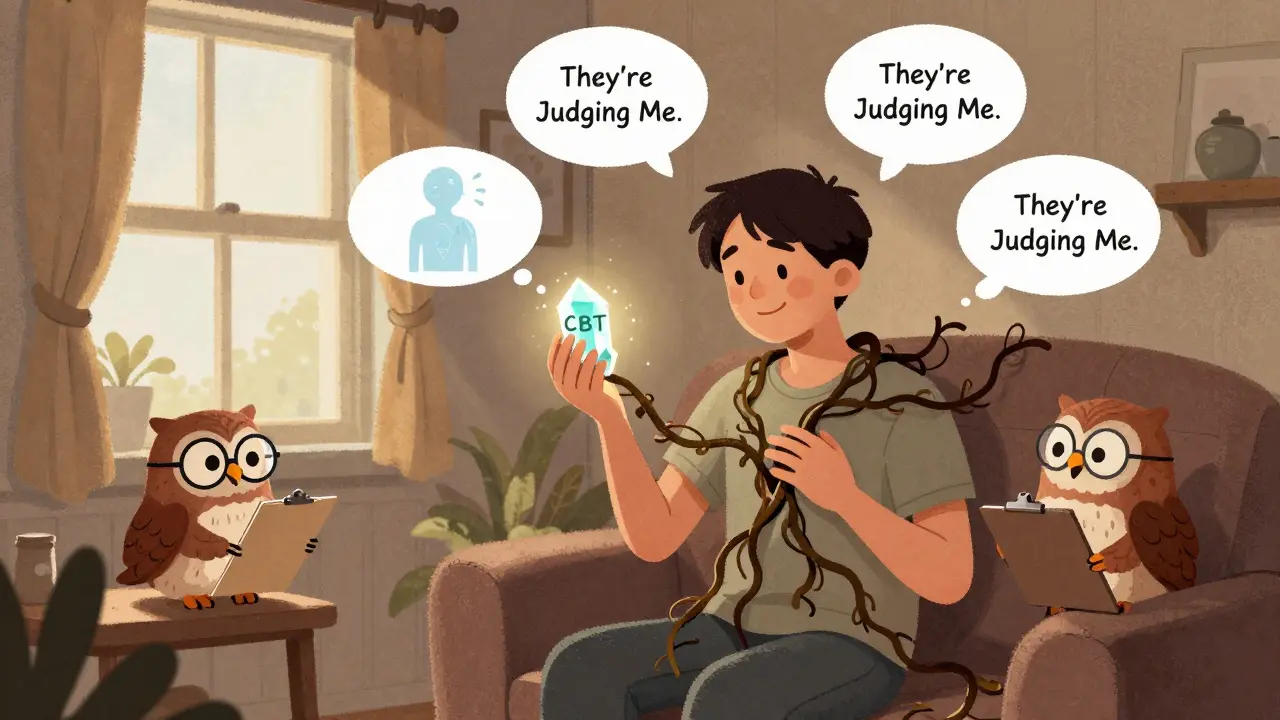
Cognitive behavioral therapy (CBT) is the gold standard for treating social anxiety disorder. It’s not about talking about your childhood. It’s about rewiring how you think and behave in social situations.
A typical CBT program lasts 12 to 16 weeks. Each session, you:
- Identify distorted thoughts (“They think I’m weird”)
- Test them with real-world experiments (“What if I speak up and no one reacts?”)
- Gradually face feared situations (starting with saying hello to a neighbor, ending with giving a speech)
- Learn to tolerate discomfort instead of avoiding it
After treatment, 50 to 60% of people reach remission - meaning their anxiety no longer controls their life. That’s not temporary. That’s lasting change.
And here’s the key insight: beta-blockers make CBT work better. If you’re too physically overwhelmed to even try a conversation, therapy can’t stick. But if you take propranolol before a practice session, your body doesn’t sabotage you. You can focus on learning, not surviving.
The Real Power Combo: Beta-Blockers + Therapy
Dr. Ellen Vora, a psychiatrist, puts it simply: “Beta-blockers give you the physical stability to attend feared situations - and that’s when real change happens.”
Imagine this: You’re afraid of team meetings. Every time you speak, your voice cracks. Your hands shake. You feel like everyone’s staring. You avoid speaking up. That’s the cycle.
With therapy alone, you might spend weeks practicing breathing and thought-challenging. But your body keeps screaming “RUN!”
With beta-blockers, you take 20mg before your next meeting. Your heart stays steady. Your hands don’t shake. You speak. Someone nods. No one laughs. You survive. That’s a win. And now, your brain starts learning: “It wasn’t as bad as I thought.”
Over time, you need the pill less. You start speaking up without it. You don’t need it for coffee chats. You don’t need it for phone calls. The therapy rewired your fear. The beta-blocker just gave you the space to do it.

Side Effects and Who Should Avoid Them
Beta-blockers are generally safe - but not for everyone. Common side effects include:
- Fatigue (reported by 35% of users)
- Dizziness (28%)
- Cold hands or feet (22%)
- Low blood pressure
They’re risky if you have:
- Asthma or COPD (can tighten airways)
- Diabetes (can hide low blood sugar symptoms like shakiness or sweating)
- Heart block or very slow heart rate
Cost is low - generic propranolol runs $4 to $10 per dose. Most insurance covers it. But here’s the problem: doctors rarely get training on using beta-blockers for anxiety. The FDA label only covers heart conditions. So, you need to ask for it - and be ready to explain why.
Why Beta-Blockers Are Still Prescribed So Often
Despite weak evidence for long-term social anxiety, prescriptions for beta-blockers for anxiety rose 47% between 2003 and 2018. Why? Because therapy is hard to get.
Only 43% of U.S. counties have enough mental health providers. A single CBT session costs $100 to $200 without insurance. Many people can’t wait months for a therapist. Beta-blockers? You can get them in one visit. They’re cheap. They work fast. They’re easy.
But they’re not a substitute. They’re a bridge.
What’s Next?
The National Institute of Mental Health is launching a $2.3 million trial in 2024 to finally answer: Does propranolol really help performance anxiety? They’ll test 300 people across 15 sites. Results could change guidelines.
Meanwhile, digital CBT apps like Woebot Health are showing 52% remission rates in studies - faster, cheaper, and more accessible than in-person therapy. That’s the future.
Beta-blockers aren’t going away. But their role is narrowing. They’re not for everyone with social anxiety. They’re for those who need to show up - and need their body to stop betraying them.
If you’re stuck in a loop of physical panic before events - and you’re ready to work on the fear underneath - talk to your doctor. Ask about propranolol. Ask about CBT. And don’t settle for one without the other.
Can beta-blockers cure social anxiety disorder?
No. Beta-blockers only reduce physical symptoms like shaking, rapid heartbeat, and sweating. They don’t change the thoughts or fears that drive social anxiety disorder. For long-term improvement, therapy like cognitive behavioral therapy (CBT) is required to rewire how you think about social situations.
Is propranolol addictive?
No. Unlike benzodiazepines (like Xanax), propranolol has no potential for dependence or addiction. You don’t build tolerance, and stopping it doesn’t cause withdrawal. That’s why it’s often preferred over other anxiety medications for occasional use.
How long does propranolol last for anxiety?
Effects typically last 3 to 4 hours. It’s taken 60 to 90 minutes before an event, with peak blood levels around the 90-minute mark. It’s not meant for all-day anxiety - only for specific, scheduled situations like speeches, interviews, or performances.
Can I take beta-blockers with therapy?
Yes - and many therapists encourage it. Beta-blockers help reduce physical symptoms so you can focus during therapy exercises. For example, if you’re practicing speaking in front of a mirror or a small group, the pill can help you stay calm enough to learn, not just survive the experience.
Are there natural alternatives to beta-blockers for performance anxiety?
Some people try magnesium, L-theanine, or breathing techniques - and they can help mild anxiety. But none have the same fast, targeted effect on heart rate and tremors as propranolol. For high-stakes situations like public speaking, nothing else works as reliably. Natural options are best used alongside, not instead of, proven methods.
Why isn’t beta-blocker use for anxiety FDA-approved?
Beta-blockers were approved for heart conditions decades ago. Using them for anxiety is considered “off-label,” which is legal and common in medicine. But pharmaceutical companies haven’t funded large trials for anxiety because they can’t patent generic drugs like propranolol - so there’s no profit motive. Evidence still exists, but it’s mostly from independent studies and clinical experience.
Milad Jawabra
March 5, 2026 AT 11:21Therapy? Yeah, I did 12 weeks of CBT. But without the beta-blocker, I couldn't even get through the first exposure exercise. My body was screaming 'RUN' before my brain even finished thinking 'I should speak up.'
Stop treating this like a moral failing. Your body isn't broken - it's just overreacting. And sometimes you need a chemical pause button to retrain it.
Shivam Pawa
March 5, 2026 AT 13:38Also dont forget the cold hands side effect. Winter here got worse. But worth it.
Donna Zurick
March 6, 2026 AT 22:01Therapy followed. Now I do Zoom calls without the pill. Took 6 months. But I did it.
PS. I’m still scared. But now I’m scared and speaking. That’s progress.
Tobias Mösl
March 8, 2026 AT 17:43People are popping beta-blockers like candy because they’re too lazy to ‘face their fears’ - which is just code for ‘I don’t want to do the hard work of being human.’
They want a chemical fix for social discomfort. What’s next? Pills for awkward silences? Anti-anxiety spray for small talk?
This isn’t medicine. This is emotional cowardice wrapped in a prescription.
And don’t even get me started on how pharma’s pushing this off-label nonsense because they can’t patent it. It’s a scam. A lazy, corporate, feel-good scam.
tatiana verdesoto
March 9, 2026 AT 02:12Then I found a therapist who said, ‘Try the pill first. Then we’ll work on why you think they’re judging you.’
It worked. Not because I stopped being anxious. But because I stopped being paralyzed.
And now? I’ve given three presentations. No pills. Just me.
You don’t need to be fearless. You just need to be able to show up.
Ethan Zeeb
March 11, 2026 AT 02:11I’ve seen people use this as a crutch for years. They take it for every meeting, every date, every social thing. They never build resilience. They just numb the symptoms.
Therapy isn’t optional. It’s the only thing that changes the wiring. The pill? It’s a temporary bridge. Don’t camp on it.
Darren Torpey
March 12, 2026 AT 16:21Beta-blockers? They’re like turning down the volume. The alarm still blares - but now you can hear your own thoughts.
Therapy? That’s the guy who comes in, finds the faulty wiring, and rewires the whole system.
You don’t need to silence the alarm. You need to fix the damn circuit.
And hey - if you need to turn the volume down while you’re rewiring? Go for it. No shame.
Lebogang kekana
March 13, 2026 AT 16:30Propranolol changed everything. I spoke. I didn’t die. I didn’t vomit. I didn’t run.
That’s all I needed. One win. One moment where my body didn’t betray me.
Therapy came after. Now I don’t need the pill for team chats. But I still take it for client pitches.
It’s not weakness. It’s strategy.
Jessica Chaloux
March 14, 2026 AT 00:09My hands didn’t shake. My voice didn’t crack. I said what I needed to say.
And for the first time ever… I felt like I wasn’t broken.
Thank you for writing this. I’m not alone. 🥹
Mariah Carle
March 15, 2026 AT 21:03We don’t ask: ‘Why does the body scream?’ We ask: ‘How do we shut it up?’
Therapy is the path. But the pill? It’s the first step on a path we’ve forgotten how to walk.
Maybe the real disorder isn’t social anxiety… it’s our collective refusal to sit with discomfort.
Or maybe I’m just overthinking. 🤔
Justin Rodriguez
March 16, 2026 AT 07:33Every single one said the same thing: ‘I couldn’t do the exposure work until I stopped shaking.’
It’s not a crutch. It’s an enabler of growth.
And yes - the goal is to stop needing it. But that doesn’t mean you’re weak for using it while you’re learning.
Progress > perfection.
Raman Kapri
March 16, 2026 AT 18:58Placebo-controlled trials show no significant difference for generalized social anxiety.
And why are we promoting off-label use without proper guidelines?
This is dangerous. People with asthma or diabetes are being prescribed this without proper screening.
And the FDA doesn’t approve it because the evidence isn’t there.
Stop romanticizing pharmacological shortcuts.
Tildi Fletes
March 17, 2026 AT 05:04Multiple randomized controlled trials from the 1980s to 2020 demonstrate statistically significant reduction in physiological markers - heart rate variability, galvanic skin response, tremor amplitude - under controlled conditions.
Therapy remains the gold standard for long-term symptom remission. However, pharmacological adjuncts are not merely palliative; they are neurobehavioral facilitators.
Dismissing this as ‘chemical cowardice’ reflects a fundamental misunderstanding of neurophysiology and behavioral conditioning.
- Dr. Tildi Fletes, Clinical Psychopharmacology Research Group