
Specialty Pharmacy and Generics: Key Practice Challenges and Opportunities
 Jan, 9 2026
When you think of a pharmacy, you might picture a neighborhood store handing out pills for high blood pressure or antibiotics. But specialty pharmacy is a whole different world. These pharmacies handle drugs that cost thousands a month, need refrigeration, require injections or infusions, and treat serious, lifelong conditions like cancer, multiple sclerosis, and rheumatoid arthritis. And now, as more of these expensive drugs lose patent protection, generics and biosimilars are starting to enter the mix-bringing both savings and serious new challenges.
What Makes Specialty Pharmacy Different?
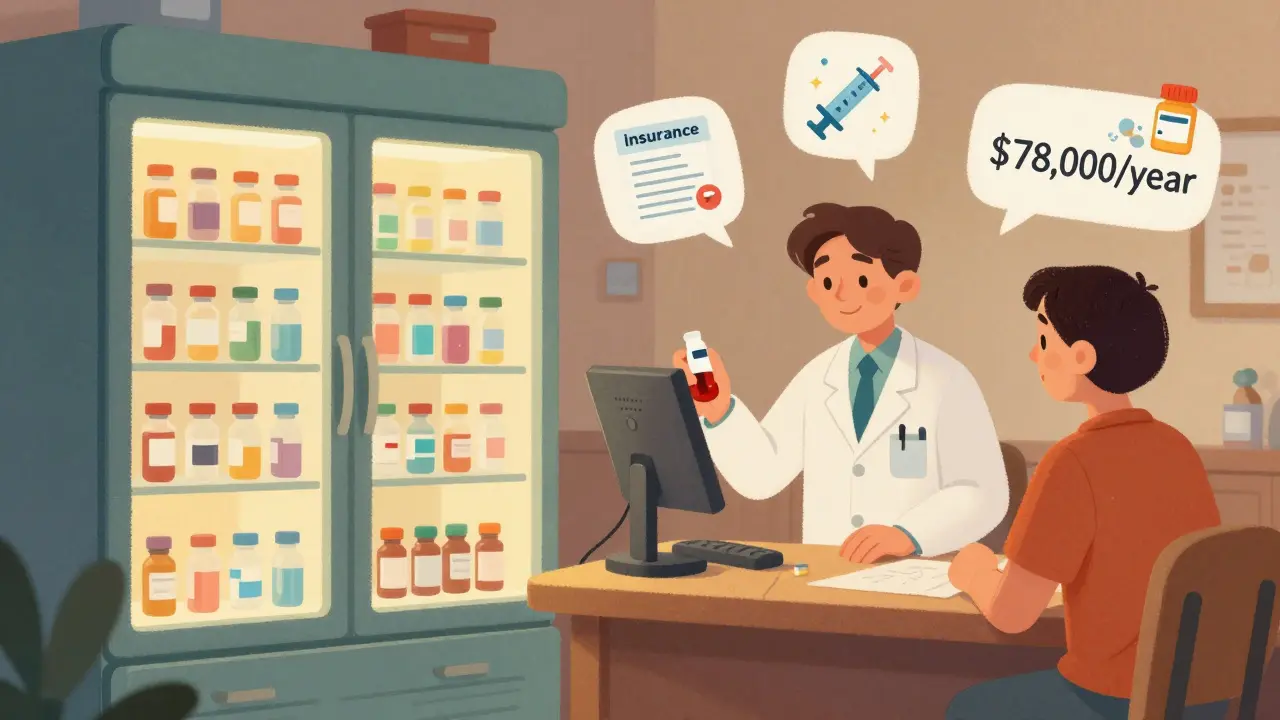
Specialty pharmacies don’t just fill prescriptions. They manage entire care journeys. A patient on a biologic for Crohn’s disease might need help with insurance approvals, training on how to self-inject, tracking side effects, and getting supplies delivered to their door. These drugs often cost over $1,000 a month. Some top-tier therapies can hit $78,000 a year. That’s not a typo. Unlike your local CVS or Walgreens, where 90% of prescriptions are filled with generics, specialty pharmacies rarely have that option. For years, most of these drugs were biologics-complex proteins made from living cells. You can’t just copy them like a pill. That’s why, until recently, there were no true generics. But that’s changing fast.Generics in Specialty: Not What You Think
When a small-molecule drug like metformin goes generic, it’s straightforward. Same active ingredient. Same pill shape. Same price-usually 80% cheaper. But when a specialty drug like Copaxone (glatiramer acetate) for multiple sclerosis went generic, the savings were huge: from $78,000 a year down to $45,000. That’s a win-for patients, for insurers, for the system. But here’s the catch: not all generics are created equal. The FDA says they must be bioequivalent. That means they deliver the same amount of medicine into the bloodstream at the same rate. But that doesn’t mean they’re identical. The inactive ingredients-fillers, dyes, coatings-can change. A patient on a generic version of levothyroxine might switch from one manufacturer to another and suddenly feel fatigued, jittery, or gain weight. Why? Because even tiny differences in absorption can throw off thyroid levels in someone who’s finely tuned. Specialty pharmacists know this. They’ve seen patients who’ve been stable for years on a brand-name drug, then get switched to a generic-and end up back in the hospital. It’s not common. But it’s common enough that many experts recommend avoiding switches for drugs with a narrow therapeutic index (NTI), where the difference between effective and toxic is razor-thin.Biosimilars: The New Frontier
Biosimilars are the closest thing to generics for biologics. They’re not exact copies-because you can’t copy a living cell-but they’re highly similar, with no clinically meaningful differences in safety or effectiveness. The FDA approved its first interchangeable biosimilar, Semglee (for insulin glargine), in 2021. Since then, dozens more have come online, including biosimilars for Humira, Enbrel, and Remicade. The potential savings? The Congressional Budget Office estimates biosimilars could save the U.S. healthcare system $54 billion over the next decade. That’s massive. But adoption is slow. Why? First, patents. Big pharma has spent millions extending exclusivity through legal loopholes. Second, reimbursement. Pharmacy Benefit Managers (PBMs) often put biosimilars on higher cost tiers, forcing patients to pay more out-of-pocket. Third, education. Many doctors still don’t feel confident prescribing them. Patients are scared. “If it’s not the same brand, will it work?” is a common question. Specialty pharmacies are on the front lines here. They’re the ones explaining to patients that a biosimilar isn’t a “cheap knockoff”-it’s a rigorously tested, FDA-approved alternative. They’re training nurses, updating protocols, and tracking outcomes.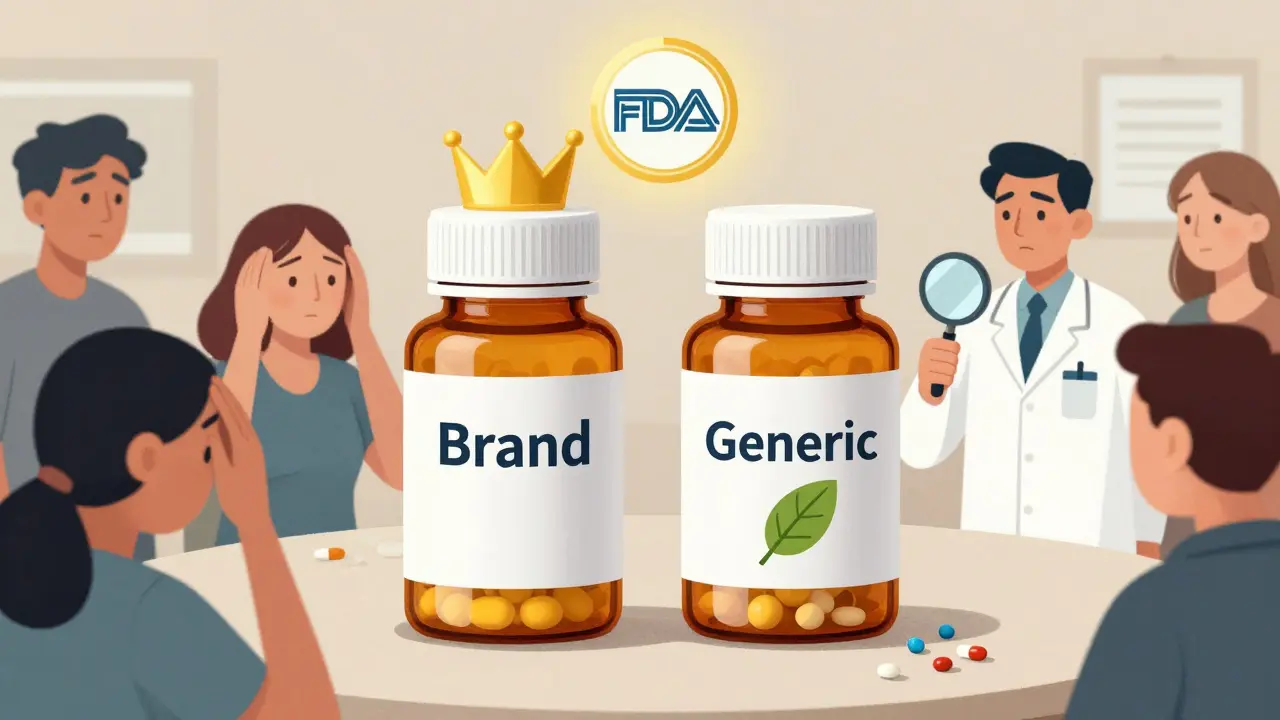
Why Specialty Pharmacies Struggle with Generics
You’d think more generics would make life easier. But in specialty pharmacy, it’s the opposite. Many PBMs measure a metric called the Generic Dispensing Ratio (GDR). If a specialty pharmacy doesn’t hit a certain GDR target-say, 70%-they get penalized. But here’s the problem: most specialty drugs still don’t have generics. So the pharmacy is being punished for doing the right thing-prescribing the only available, effective medication. On top of that, sourcing generics for specialty drugs is messy. One manufacturer might supply glatiramer acetate in vials. Another in prefilled syringes. A third in a different color capsule. Inventory becomes a nightmare. A patient who’s been stable on one version gets switched to another-and panics because the pill looks different. Pharmacists spend hours reassuring them it’s the same drug. A 2022 survey found that 78% of specialty pharmacy staff listed “managing patient concerns about generic substitutions” as a major workflow challenge. Sixty-five percent said tracking multiple manufacturers for the same product was a headache.What Specialty Pharmacies Should Do
There’s no one-size-fits-all solution, but here’s what works:- Start with your top therapies. Don’t try to switch everything. Focus on the most common, highest-cost drugs with available generics-like glatiramer acetate, interferons, or certain immunosuppressants.
- Standardize. Pick one generic manufacturer per drug, and stick with it. That cuts down on confusion, inventory chaos, and patient anxiety.
- Document exceptions. If a patient has an allergy to a specific excipient, or has had a bad reaction to a switch before, flag it in their record. Never auto-substitute.
- Monitor closely. For NTI drugs, check blood levels after a switch. Don’t assume bioequivalence means clinical equivalence.
- Educate patients upfront. Don’t wait for them to notice the pill changed. Explain it before the switch. Show them the FDA’s bioequivalence data. Use simple language: “This is the same medicine, just made by a different company. It’s been tested to work just as well.”
chandra tan
January 10, 2026 AT 20:43Man, I’ve seen this in India too-generic insulin saving lives but patients freak out because the pen looks different. We had to train nurses just to show photos of the old vs new. No one cares about bioequivalence if the pill’s a different color.
Ian Cheung
January 11, 2026 AT 05:15Specialty pharma is basically the Wild West with more paperwork and fewer cowboys. One guy I know switched from Humira to a biosimilar and now he’s hiking in Patagonia-no flare-ups, no drama. Meanwhile, his insurance company’s CFO is doing a happy dance in a corner office somewhere. Sometimes the system works, y’know?
Saumya Roy Chaudhuri
January 12, 2026 AT 15:52Let me tell you something-this isn’t about generics or biosimilars, it’s about greed. Big Pharma has been milking patients for decades with these $78,000 drugs and now that the door is open for cheaper options, they’re fighting it with lawsuits and PBM shenanigans. It’s disgusting. People are dying because they can’t afford their meds-and now they’re being punished for wanting savings?
Christine Milne
January 12, 2026 AT 21:47While I appreciate the sentiment expressed herein, I must assert, with due deference to empirical methodology and regulatory fidelity, that the conflation of bioequivalence with clinical equivalence constitutes a fundamental misapprehension of pharmacokinetic principles as codified under 21 CFR 320.24. The FDA’s approval paradigm does not, and should not, permit substitution without rigorous post-marketing surveillance. To do otherwise is to endanger public health.
lisa Bajram
January 14, 2026 AT 05:26Y’all are underestimating how much work this is on the pharmacy side. We’ve got patients calling at 11pm because their new glatiramer acetate pill is blue instead of green and they’re convinced it’s poison. We spend hours on the phone, printing FDA pamphlets, sending videos of injection techniques. And then the PBM penalizes us because our generic dispensing ratio is 42% when 80% of our meds don’t even HAVE generics. I’m exhausted. But I still love my job. 💪
Jaqueline santos bau
January 15, 2026 AT 06:34Oh my god, I had a patient last week who cried because her biosimilar looked like a candy pill. She said, 'I’ve been on this drug for 12 years-it’s part of my identity!' And I just… I just hugged her. Because that’s what we do. We don’t just hand out pills. We hold people together when their bodies are falling apart. And now we’re being asked to swap their lifelines for a cheaper version? It’s not just medicine-it’s trauma.
anthony martinez
January 16, 2026 AT 13:23So let me get this straight-PBMs penalize pharmacies for not using generics… that don’t exist? That’s like fining a guy for not having a unicorn in his garage. The system is broken. And no, I don’t have a solution. Just saying.
Mario Bros
January 16, 2026 AT 19:20My cousin’s on a biosimilar for RA now. She went from barely walking to gardening again. No side effects. Saved $50K a year. The only thing that changed? The name on the bottle. If your doctor’s scared to switch you, ask them why. Chances are, they’re just scared of change-not the medicine.
Jake Nunez
January 17, 2026 AT 13:38Back home in Texas, we had a pharmacy that switched everyone to the cheapest generic without telling anyone. Two patients ended up in the ER. One lost her job because she was too tired to show up. The pharmacy got fined. But the PBM? They just raised the GDR target. This isn’t healthcare. It’s a spreadsheet with a stethoscope.
Aurora Memo
January 17, 2026 AT 16:47As someone who’s managed chronic illness for over a decade, I’ve seen the fear around switching meds. It’s real. But I’ve also seen the relief when the cost comes down. The key isn’t to avoid change-it’s to manage it with care, transparency, and patience. I wish more providers understood that.
Kunal Majumder
January 18, 2026 AT 23:23From India: we’ve got biosimilars for everything now-Humira, Enbrel, even insulin. Prices dropped 90%. People are alive who wouldn’t have been. Sure, some panic when the packaging changes. But we train them. We show them data. We sit with them. And guess what? Most of them come back saying, 'Why did I wait so long?'
Dwayne Dickson
January 19, 2026 AT 14:48The systemic failure here lies in the misalignment between reimbursement incentives and clinical outcomes. The PBM-driven GDR metric, while ostensibly fiscally prudent, constitutes a form of algorithmic paternalism that obfuscates individualized care pathways. Without granular clinical adjudication, substitution protocols risk inducing iatrogenic harm under the guise of cost containment.
Ted Conerly
January 21, 2026 AT 06:41One thing I’ve learned: if a patient has been stable for years on a brand drug, don’t switch unless they’re ready. Period. The pharmacy’s job isn’t to hit a number-it’s to keep people alive. If your boss doesn’t get that, maybe it’s time to find a better job.
Faith Edwards
January 21, 2026 AT 18:49It is profoundly disheartening to observe the erosion of pharmaceutical integrity in service of fiscal expediency. The commodification of human health under the banner of 'affordability' betrays the sacred covenant between healer and healed. One cannot reduce the complexity of biological systems to the arithmetic of corporate balance sheets without moral consequence.