
Steroid-Induced Acne: Topical Treatments and Lifestyle Fixes
 May, 24 2026
Steroid Acne Treatment Planner
Answer these questions to receive a personalized treatment roadmap for steroid-induced acne.
Up to 20% of people on high-dose corticosteroids develop this specific type of acne. It requires different treatment than regular teenage acne.
Your Personalized Assessment
Expected Timeline
Note: This tool provides educational guidance based on general medical literature. Always consult a dermatologist before starting new treatments, especially if you are taking prescription medications.
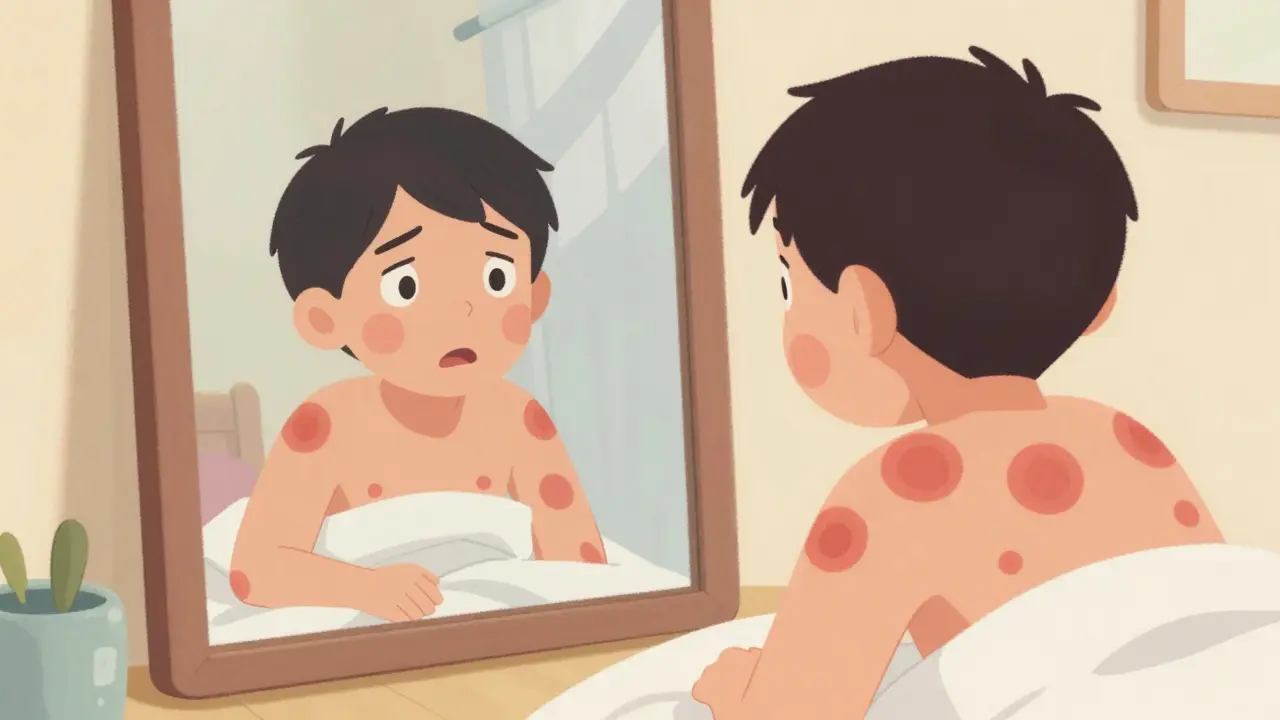
Imagine this: you’re finally getting your asthma under control or managing a chronic autoimmune flare-up with the medication your doctor prescribed. But instead of feeling better, you wake up to find your chest and back covered in uniform, angry red bumps. It looks like acne, feels like acne, but nothing you’ve used before seems to touch it. This is steroid-induced acne, a frustrating side effect that affects up to 20% of people on high-dose corticosteroids.
This isn’t your typical teenage breakout. Steroid acne is a specific dermatological reaction triggered by systemic steroids (like prednisone) or topical creams, and sometimes by anabolic steroids used in bodybuilding. It behaves differently than regular acne vulgaris, meaning your standard benzoyl peroxide wash might not cut it. Understanding why it happens and how to treat it while keeping your underlying health condition stable is key.
Why Steroids Trigger Breakouts
To fix the problem, you first need to know what’s breaking. Steroid-induced acne was first clinically documented in the early 1970s by researchers Mills, Leyden, and Kligman. Since then, we’ve learned that corticosteroids disrupt your skin’s natural balance in several ways.
First, steroids can increase the activity of your sebaceous glands, leading to more oil production. Second, recent research from Curology (2023) highlights a molecular mechanism involving Toll-like receptor 2 (TLR2). When corticosteroids affect TLR2 expression on your skin, it interacts with Propionibacterium acnes bacteria already living there. This interaction sparks inflammation pathways similar to those in regular acne, but often more aggressively.
There are also two distinct types of steroid acne to consider:
- Corticosteroid-induced acne: Caused by medical treatments for conditions like asthma, inflammatory bowel disease, or multiple sclerosis. These lesions tend to be uniform, reddish papules that turn into whiteheads.
- Anabolic steroid-induced acne: Often seen in bodybuilding, these breakouts can be more severe and resistant to treatment, sometimes leading to a rare but serious condition called acne fulminans.
In about 30-40% of cases, what looks like steroid acne is actually Malassezia folliculitis. This is caused by an overgrowth of yeast on the skin, not bacteria. It presents as itchy, small, uniform bumps on the chest and back without the blackheads or whiteheads typical of regular acne. Knowing the difference is crucial because treating fungal acne with antibiotics won’t work.
Topical Solutions That Actually Work
If you can’t stop taking your steroids-which is often the case for serious medical conditions-you need a targeted skincare routine. The landmark 1973 study in Archives of Dermatology showed that topical tretinoin is highly effective. Specifically, a 0.05% solution applied once or twice daily cleared dense comedone aggregates in 85-90% of patients within two to three months, even while they continued their steroid therapy.
Here’s how to build a topical regimen:
- Start with Tretinoin: Begin with a pea-sized amount of tretinoin 0.05% at night. Introduce it slowly (every other night) to minimize irritation, as steroids can already compromise your skin barrier.
- Add Benzoyl Peroxide: For moderate cases, use a benzoyl peroxide 5% wash on affected areas in the morning. This helps reduce bacterial load and prevents resistance.
- Treat Fungal Components: If your bumps are itchy and uniform, try ketoconazole shampoo (2%) or selenium sulfide shampoo (2.5%). Apply it to your chest and back, leave it on for 5-10 minutes, then rinse. Do this 2-3 times a week.
- Moisturize Strategically: Use non-comedogenic moisturizers to repair the skin barrier. Steroids thin the skin and disrupt its protective layer, so hydration is essential to prevent further irritation from retinoids.
Avoid harsh scrubs. Physical exfoliation can worsen inflammation in steroid acne. Stick to chemical exfoliants like salicylic acid if needed, but introduce them cautiously alongside tretinoin.
When Topicals Aren’t Enough: Oral Options
Sometimes, topical treatments aren’t enough, especially if the acne is widespread or cystic. In these cases, dermatologists may recommend oral medications. However, caution is required, particularly for those using anabolic steroids.
| Treatment | Best For | Key Considerations |
|---|---|---|
| Oral Antibiotics (e.g., Doxycycline) |
Moderate inflammatory acne | Limit use to 3-4 months to prevent antibiotic resistance. Effective for reducing inflammation quickly. |
| Spironolactone | Women with hormonal component | Anti-androgen medication starting at 25-50mg daily. Not suitable for men due to side effects. |
| Oral Isotretinoin | Severe, resistant cases | Highly effective but carries risks. Warning: Can trigger acne fulminans in anabolic steroid users. Requires iPLEDGE enrollment. |
The Cleveland Clinic notes that while antibiotics reduce bacterial load, they should not be used long-term. For women, oral contraceptives containing ethinyl estradiol and progestin can help regulate hormones that exacerbate acne. Spironolactone is another option for women, blocking androgen receptors that drive oil production.
For severe cases, oral isotretinoin is the gold standard. However, a 2021 case study published in PMC warned that isotretinoin can paradoxically worsen 'bodybuilding acne' in some patients, triggering pyogenic granuloma-like lesions. If you are using anabolic steroids, consult a dermatologist before considering isotretinoin.
Lifestyle Adjustments to Support Healing
Medication does the heavy lifting, but lifestyle choices can speed up recovery and prevent new breakouts. Here’s what you can do daily:
- Sun Protection is Non-Negotiable: Both steroids and acne treatments like tretinoin increase photosensitivity. Use a broad-spectrum SPF 30+ sunscreen daily. Sunburn can worsen post-inflammatory hyperpigmentation, leaving dark spots long after the acne clears.
- Keep Skin Clean After Sweating: Sweat traps bacteria and yeast against the skin. Shower immediately after workouts. Change out of sweaty clothes as soon as possible.
- Choose Non-Comedogenic Products: Check labels on lotions, sunscreens, and hair products. Avoid oils like coconut oil, which can clog pores and feed Malassezia yeast.
- Dietary Awareness: While diet doesn’t cause steroid acne directly, high-glycemic foods and dairy can exacerbate inflammation. Focus on whole foods, lean proteins, and plenty of vegetables to support overall skin health.
- Manage Stress: Stress increases cortisol, which can compound the effects of steroid therapy on your skin. Practice relaxation techniques like deep breathing or meditation.
Timeline and Expectations
Patience is critical. According to Dr. Amanda Oakley of DermNet NZ, steroid acne typically resolves within 4-8 weeks after discontinuing steroid therapy. But if you must continue steroids, expect a longer timeline.
Topical treatments usually take 6-8 weeks to show noticeable improvement, with full results taking up to 12 weeks. Don’t get discouraged if you don’t see changes in the first few weeks. Consistency is key. Stopping treatment too early allows the acne to rebound.
If you suspect you have Malassezia folliculitis, antifungal shampoos can show results in 2-4 weeks. If there’s no improvement after a month, see a dermatologist to confirm the diagnosis. Misdiagnosis is common, and treating fungal acne with antibacterial agents will only delay healing.
Real-World Challenges and Patient Stories
Online forums reveal the real struggles patients face. On Reddit’s r/SkincareAddiction, user 'GymBro420' reported developing severe truncal acne after six weeks of prednisone for asthma. He noted that his regular acne routine failed, but switching to tretinoin 0.05% cleared 80% of his chest lesions in eight weeks, despite continuing prednisone.
Another user, 'TransplantSurvivor', shared a six-month battle with facial and back acne after a kidney transplant. Topical clindamycin worked for only two weeks before resistance developed. Combining tretinoin with gentle cleansing became his turning point.
In bodybuilding communities, the stakes are higher. User 'SteroidCycleGuru' on Bodybuilding.com warned that isotretinoin during or immediately after anabolic steroid cycles can trigger catastrophic acne fulminans. Two of his training partners required hospitalization after attempting this combination. This highlights the importance of professional guidance when dealing with anabolic steroid-related acne.
When to See a Dermatologist
You should seek professional help if:
- Your acne is painful, cystic, or spreading rapidly.
- Over-the-counter treatments fail after 8-12 weeks.
- You suspect Malassezia folliculitis (itchy, uniform bumps).
- You are using anabolic steroids and experiencing severe breakouts.
- You notice signs of infection, such as pus, warmth, or fever.
Dermatologists can prescribe stronger topicals, oral medications, or perform procedures like corticosteroid injections for large cysts. They can also rule out other conditions that mimic steroid acne, such as rosacea or perioral dermatitis.
How long does steroid-induced acne last?
If you stop taking steroids, steroid acne typically resolves within 4-8 weeks. If you must continue steroid therapy, it can persist indefinitely without proper treatment. With consistent use of topical tretinoin and other therapies, significant improvement is usually seen within 8-12 weeks.
Can I use my regular acne cream for steroid acne?
Often, yes, but steroid acne can be more resistant. Over-the-counter benzoyl peroxide or salicylic acid may help mild cases. However, prescription-strength tretinoin is generally more effective for clearing the dense comedones associated with steroid use.
Is steroid acne contagious?
No, steroid acne itself is not contagious. However, if it is caused by Malassezia folliculitis (fungal acne), the yeast is naturally present on everyone’s skin and not considered contagious in the traditional sense. You cannot "catch" steroid acne from someone else.
Does isotretinoin work for steroid acne?
Yes, oral isotretinoin is highly effective for severe steroid-induced acne. However, it carries risks, especially for users of anabolic steroids, where it can trigger acne fulminans. It should only be used under strict dermatological supervision and requires enrollment in programs like iPLEDGE due to teratogenic risks.
What is the difference between steroid acne and regular acne?
Steroid acne lesions are typically more uniform in size and appearance, often presenting as dense clusters of red papules or whiteheads. It frequently affects the chest and upper back more prominently than the face. Regular acne vulgaris tends to have a mix of lesion types (blackheads, whiteheads, pustules, cysts) and varies more in size.
Can topical steroids cause acne?
Yes, prolonged use of potent topical corticosteroids, especially on the face, can lead to steroid-induced acne or perioral dermatitis. It is important to use topical steroids only as directed by a healthcare provider and avoid long-term continuous use on sensitive areas.
Jonhnnie john13
May 25, 2026 AT 07:34the distinction between fungal and bacterial is usually missed by amateurs who just slap benzoyl peroxide on everything
if it itches its yeast not bacteria
Ramanath Rao
May 26, 2026 AT 01:28this article is dangerously vague about the anabolic steroid risks because you are clearly targeting medical patients while ignoring the gym rat demographic entirely
why do you think that is?
is it because the data shows isotretinoin causes fulminans in 30% of bodybuilders using steroids?
you cannot separate these two groups when discussing treatment protocols
i have seen men hospitalised for this exact reason and yet here we are with a sanitized overview that sounds like it was written by a pharmaceutical rep trying to sell tretinoin without mentioning the catastrophic failures
the mechanism of TLR2 disruption is irrelevant if the patient ends up with pyogenic granulomas erupting from their back
you need to address the elephant in the room which is that most people searching for this information are not asthmatics but athletes pushing their limits
stop pretending they are the same condition
they are not
one is a side effect the other is a lifestyle choice with severe dermatological consequences
your tone is condescending to those who actually suffer the worst outcomes
irine sabrina
May 27, 2026 AT 21:13I completely understand how frustrating this can be especially when you are already dealing with another health issue
it feels like your body is betraying you at every turn
please remember that you are not alone in this struggle and many people find relief with the right combination of treatments
be gentle with yourself during this process
healing takes time and consistency is truly key
you deserve to feel comfortable in your own skin again
Gary Helminiak
May 28, 2026 AT 20:24Hey there! 👋 I wanted to add some extra context here because I've dealt with this myself when I was on prednisone for an autoimmune flare-up 🙌 It's absolutely wild how much difference the ketoconazole shampoo makes when you realize it's actually fungal acne rather than regular acne 😱 Most people don't know that Malassezia yeast feeds on certain oils so switching to squalane-based moisturizers instead of coconut oil or shea butter can be a game-changer 🚀 Also, make sure you're applying the tretinoin on completely dry skin because damp skin increases absorption and leads to massive irritation which is the last thing you want when your barrier is already compromised 💪 I found that buffering with a moisturizer first helped me tolerate the 0.05% strength much better than starting low and slow which took forever to see results ⏳ Don't forget to wash your pillowcases in hot water every two days because sweat and oil buildup there will just reinfect the cleared areas 🛁 And honestly, staying hydrated internally helps flush out some of the systemic inflammation too 💧 You've got this! 💖
dane thorp
May 30, 2026 AT 14:57The warning about isotretinoin and anabolic steroids is critical and should be bolded in every medical guideline
I have seen too many cases where users ignore this specific contraindication due to misinformation online
Please consult a specialist before combining these therapies
Michael Schurmann
June 1, 2026 AT 09:52It is amusing how this post attempts to simplify a complex dermatological phenomenon into a checklist for laypeople who likely lack the discipline to follow even basic hygiene protocols
The reference to Mills Leyden and Kligman is accurate but the application of their findings to modern anabolic steroid cycles is woefully inadequate
One does not simply apply tretinoin and expect resolution when exogenous androgens are flooding the system
The suggestion that diet plays a role is also somewhat reductive given the hormonal override occurring in these patients
However I suppose providing simplistic advice is necessary for those who cannot grasp the nuance of sebaceous gland hyperplasia versus follicular occlusion
Do try to keep up with the science next time rather than regurgitating forum anecdotes as fact
Russell Russell
June 1, 2026 AT 16:58We must look at this through the lens of holistic wellness because the skin is merely a reflection of our internal state
When we introduce synthetic hormones we disrupt the natural equilibrium of our bodies and the skin responds accordingly
This is not just a cosmetic issue but a signal from our physiology that balance has been lost
Embrace the journey of healing with patience and mindfulness
Your body knows how to heal itself if you provide the right environment
Focus on breathwork and meditation to lower cortisol levels which will support your topical treatments
You are stronger than you think and capable of overcoming this challenge
Naresh Chandra
June 1, 2026 AT 20:07I deeply empathize with anyone suffering from this condition!!
It is incredibly distressing to see such uniform breakouts appear suddenly!!!
Please ensure you are using non-comedogenic products exclusively!!!
The timeline of 8-12 weeks is realistic but requires strict adherence!!!
Do not give up hope!!!
Consistency is paramount!!!
Cyburg Adeoye
June 3, 2026 AT 15:59I am truly sorry you are experiencing this distressing side effect!!!
It is vital to understand the pathophysiology of sebaceous gland hyperactivity induced by corticosteroids!!!
The integration of antifungal agents like ketoconazole is crucial for managing Malassezia folliculitis!!!
Please maintain a supportive mindset as you navigate this therapeutic journey!!!
Collaborate closely with your dermatologist to optimize your regimen!!!
You are not alone in this community!!!