
Stevens-Johnson Syndrome and Toxic Epidermal Necrolysis: Recognizing Medication-Related Emergencies
 Jan, 21 2026
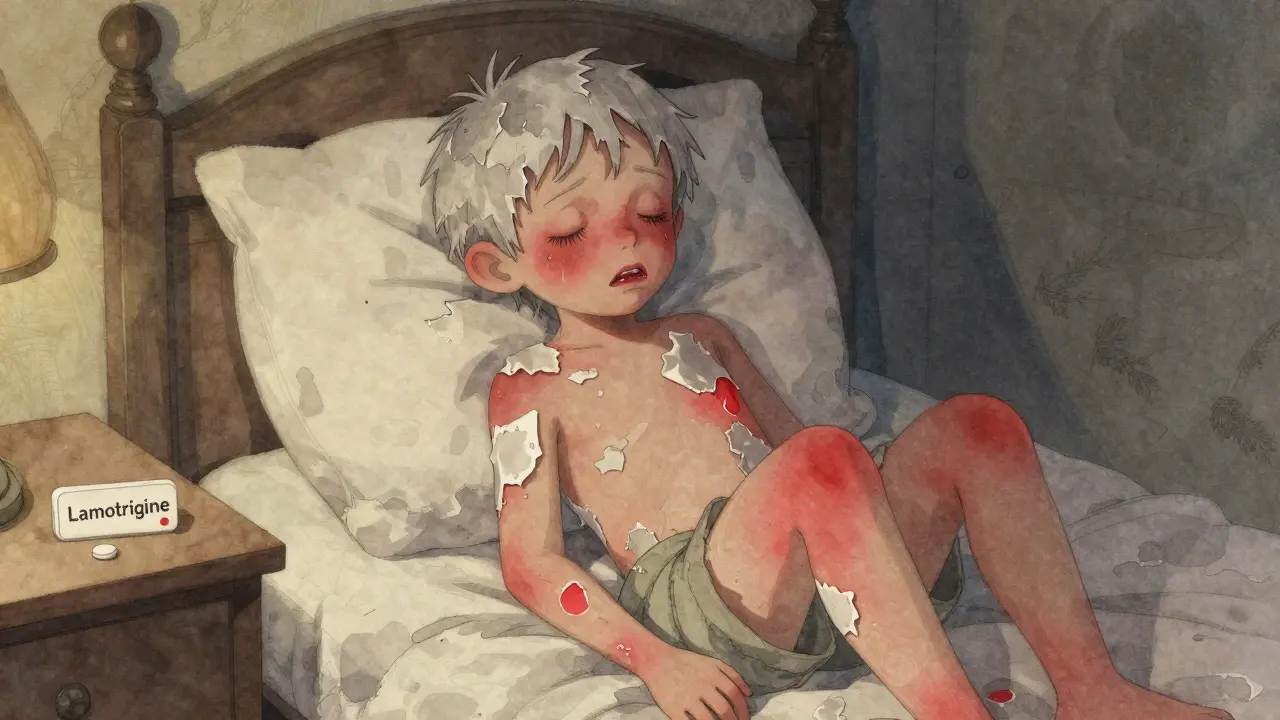
Most people take medications without a second thought. But for a tiny fraction of users, a common drug can trigger a nightmare: skin peeling off, blisters forming in the mouth and eyes, and the body shutting down. This isn’t a rare movie scene-it’s Stevens-Johnson Syndrome (SJS) and Toxic Epidermal Necrolysis (TEN), two sides of the same deadly coin. These aren’t allergies you can treat with antihistamines. They’re medical emergencies that demand immediate hospitalization-and the faster you act, the better your chances of survival.
What Exactly Are SJS and TEN?
Think of SJS and TEN as a spectrum of the same disease, defined by how much of your skin dies and peels off. SJS affects less than 10% of your body surface. TEN? That’s over 30%. Between 10% and 30%? That’s overlap syndrome. The difference isn’t just numbers-it’s survival odds. SJS has a 5% death rate. TEN? It’s over 30%.
It doesn’t start with a rash. It starts with a fever, sore throat, burning eyes, or feeling like you’ve got the flu. Then, within 1 to 3 days, a red or purplish rash appears. It spreads fast. Blisters form. Your skin starts to slough off in sheets. Mucous membranes-your mouth, eyes, throat, genitals-turn raw and ulcerated. You can’t swallow. You can’t open your eyes. Your skin, your body’s shield, is gone.
Doctors diagnose it with a skin biopsy. Under the microscope, they see full-thickness epidermal death-no inflammation, just destruction. It’s not an infection. It’s your own immune system going rogue, triggered by a drug you took days or even weeks ago.
Which Medications Trigger This?
Not every drug causes this. But some are known culprits. If you’re taking any of these, know the signs:
- Allopurinol (used for gout)
- Lamotrigine (for epilepsy and bipolar disorder)
- Carbamazepine and Phenytoin (anti-seizure meds)
- Nevirapine (HIV treatment)
- Piroxicam and Meloxicam (NSAIDs for pain)
- Sulfamethoxazole (antibiotic, often in Bactrim)
- Phenobarbital (sedative and seizure drug)
Here’s the scary part: if you’ve had SJS from one of these, you can’t take any drug in the same class again. Cross-reactivity is real. Survivors of lamotrigine-induced SJS can’t take carbamazepine or phenytoin. A penicillin reaction? Avoid cephalosporins and carbapenems. It’s not a guess-it’s a rule.
And timing matters. Most reactions happen within the first 8 weeks of starting a drug. But sometimes, they show up even after you’ve stopped. That’s why doctors warn: if you get a rash after starting a new med-even if you’ve been on it for weeks-don’t wait. Get checked.
Who’s at Higher Risk?
It’s not random. Certain people are more vulnerable:
- People with HIV or weakened immune systems from chemo
- Those who’ve had a rash from epilepsy meds before
- Anyone allergic to trimethoprim (a common antibiotic component)
- People taking sodium valproate with lamotrigine-this combo triples the risk
- Those with a family history of SJS/TEN-genetics play a role
And here’s something many don’t realize: if you stop lamotrigine for a few days-even because you’re feeling better-and then restart it at the same dose, your risk spikes. Dose titration isn’t optional. It’s life-saving.
What Happens After You’re Hospitalized?
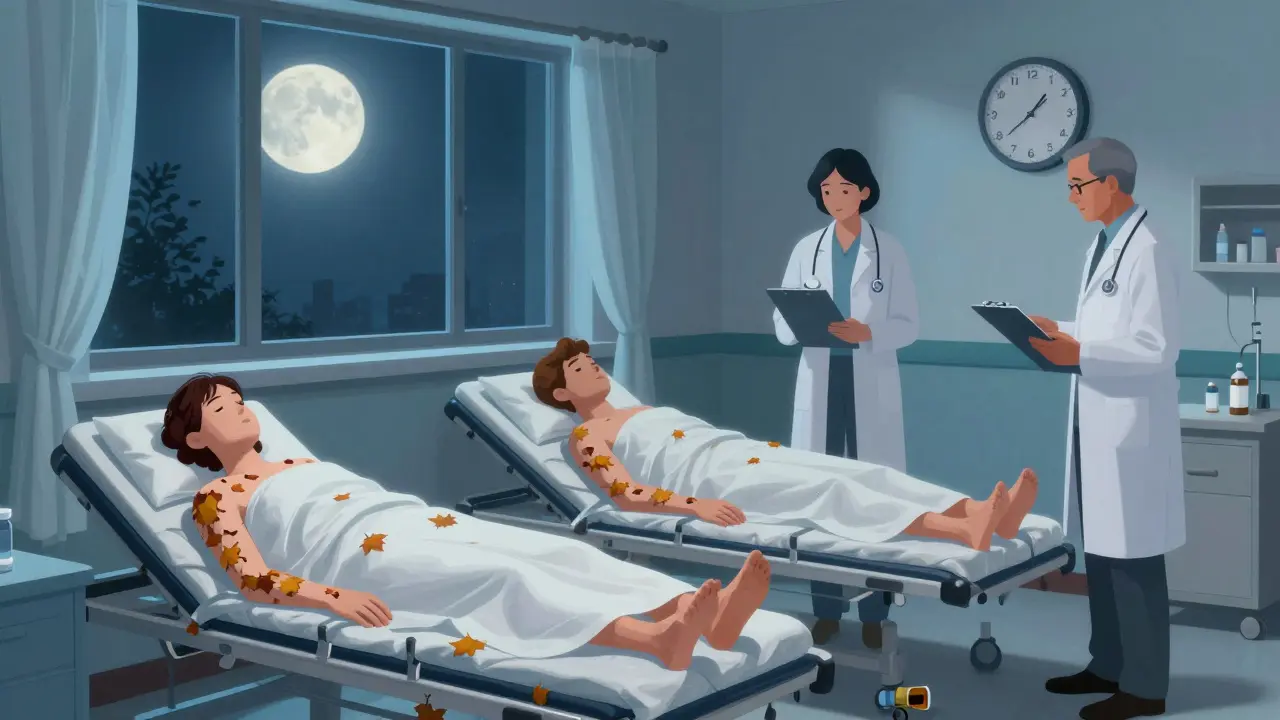
There’s no magic cure. Treatment is about support and stopping the damage. First step: stop the drug-immediately. No exceptions. Then, you’re moved to a burn unit or ICU. Why? Because your skin is gone. You’re at risk of infection, fluid loss, and organ failure.
Doctors clean your wounds, replace fluids, manage pain, and prevent infections. Some hospitals try immunomodulators like IVIG or corticosteroids, but evidence is mixed. The best treatment? Time, care, and stopping the trigger.
Survivors don’t just walk away. The damage lasts. Up to half of those who survive have permanent eye damage: dry eyes, scarring, blurred vision, even blindness. Your nails may fall off. Your scalp may thin. Your mouth becomes so dry and scarred that eating is painful. Women can develop vaginal stenosis. Men can get phimosis. Esophagus narrowing means swallowing becomes a chore.
Recovery takes months. Some need ongoing care from dermatologists, ophthalmologists, and gynecologists or urologists. One study found ocular complications need monitoring for at least a year after recovery.
When to Go to the Emergency Room
If you’re on a high-risk medication and you notice any of these, don’t wait. Don’t call your GP. Don’t wait until morning. Go to A&E now:
- A spreading red or purple rash
- Blisters on your skin
- Sores or ulcers in your mouth, eyes, or genitals
- Flu-like symptoms followed by skin peeling
That’s the NHS’s exact advice. And they’re right. Every hour counts. The sooner the drug is stopped and you’re in a specialized unit, the higher your survival rate.
How to Prevent It
There’s no screening test. No blood test can predict it. But you can reduce your risk:
- Never start a new high-risk drug without knowing the warning signs
- Follow dose titration exactly-especially with lamotrigine
- Don’t restart a drug after stopping it unless your doctor says so
- Avoid new foods or medications during the first 3 months of starting high-risk drugs-rashes from other causes can mask SJS
- If you’ve had SJS before, carry a medical alert card listing every drug you can never take again
And if you’re a caregiver? Watch for changes. A child with a fever and a rash after starting lamotrigine? That’s not just a virus. It could be SJS.
It’s Rare-But Deadly
Yes, SJS/TEN is rare. Less than five cases per million users per week. But rarity doesn’t mean safety. When it hits, it hits hard. And it doesn’t care if you’re young or old, healthy or not. One wrong pill, one missed warning, one delayed trip to the hospital-and everything changes.
Medications save lives. But they can also take them. The key isn’t avoiding all drugs. It’s knowing which ones carry hidden risks-and acting fast when something feels wrong.
If you’re prescribed one of these drugs, read the leaflet. Know the signs. Tell your family. And if you’re ever in doubt? Go to the emergency room. Better safe than sorry.
Jasmine Bryant
January 23, 2026 AT 06:48i took lamotrigine for a year and never had an issue but i never knew about the cross-reactivity thing with carbamazepine. now i’m terrified to even look at my prescription bottle. why isn’t this on the pill label??
Liberty C
January 24, 2026 AT 07:53Oh please. Another fear-mongering medical article designed to make people distrust their doctors. If you’re going to panic over every possible side effect, you might as well stop breathing. People die from falling down stairs. Should we ban stairs too? This is why America is collapsing-everyone thinks they’re a doctor after reading one blog post.
shivani acharya
January 25, 2026 AT 18:27you think this is scary? wait till you find out the pharma companies knew about this for decades and buried the data. they don’t care if you lose your skin or your eyes-they care about quarterly profits. i bet you didn’t know that allopurinol was originally developed for cancer patients and they dropped it because it turned people into walking corpses. now it’s sold in every corner store like candy. the system is rigged. your meds are poison. your doctor is complicit. you’re being slowly murdered by capitalism and you don’t even notice until your face peels off.
Hilary Miller
January 27, 2026 AT 11:27My cousin had TEN after starting Bactrim. She was in the ICU for 47 days. Now she has permanent vision damage. This needs to be taught in high school biology.
Margaret Khaemba
January 29, 2026 AT 07:59thank you for writing this. i’m a nurse and i’ve seen this firsthand. so many patients wait too long because they think it’s just a "bad rash." i wish every prescriber had to sit with a survivor for an hour before they could write these scripts.
Malik Ronquillo
January 29, 2026 AT 17:09my grandma took phenytoin for 20 years and never had a problem so this whole thing is just fear porn. stop scaring people with rare shit
Brenda King
January 30, 2026 AT 20:58my sister got SJS from meloxicam. she was 28. she lost 60% of her skin. she’s alive but she can’t cry anymore. her eyes are always dry. i wish i’d known this before she started the med. please share this. someone’s life could depend on it.
Chiraghuddin Qureshi
January 31, 2026 AT 20:13this is why i only take ayurvedic herbs now 🙏🌿 no chemicals, no risks. india knew this centuries ago.
Patrick Roth
February 1, 2026 AT 10:11actually, the real issue is that you’re all overreacting. SJS/TEN is rarer than being struck by lightning. If you’re going to avoid every drug with a 1 in a million chance, you’ll die of untreated hypertension before you ever get a rash. Also, why is everyone ignoring the fact that HIV patients are 100x more at risk? That’s the real public health priority, not fearmongering about lamotrigine.
Oren Prettyman
February 3, 2026 AT 01:44While the clinical presentation and epidemiological data presented are not without merit, one must consider the methodological limitations inherent in retrospective case studies and the potential for ascertainment bias in reporting adverse drug reactions. The causal attribution to specific pharmaceutical agents lacks the rigor of prospective, double-blind, placebo-controlled trials, which are the gold standard in pharmacovigilance. Moreover, the conflation of SJS and TEN as a spectrum disorder, while clinically convenient, obscures important pathophysiological distinctions that may inform targeted therapeutic intervention. One must question whether this article serves public health or merely amplifies pharmacophobia.
Philip House
February 3, 2026 AT 09:18you people are so weak. back in my day we took penicillin without a second thought and didn’t cry when we got a rash. this is why america’s dying. you’re all scared of your own shadows. if your skin peels off, you probably deserved it for being a hypochondriac.
Ryan Riesterer
February 3, 2026 AT 13:45epidermal necrolysis is a type IV hypersensitivity reaction mediated by cytotoxic CD8+ T-cells targeting keratinocytes. the HLA-B*15:02 allele is strongly associated with carbamazepine-induced SJS in Southeast Asian populations. genetic screening is available but underutilized. the 8-week window correlates with T-cell clonal expansion kinetics. the absence of neutrophilic infiltration on biopsy distinguishes it from infectious causes.
Mike P
February 3, 2026 AT 17:56my cousin’s kid got it from a single dose of ibuprofen. now the kid can’t eat solid food. the hospital bill was $2.3 million. i don’t care if it’s rare-when it hits, it wrecks your whole damn life. why are we still letting these drugs be sold like candy? someone needs to sue the hell out of the FDA.
Sarvesh CK
February 4, 2026 AT 22:54This is a profound reminder of the delicate balance between medical advancement and human vulnerability. The body, an intricate symphony of cellular processes, can be thrown into catastrophic dissonance by a single molecular intrusion. We place immense trust in pharmaceuticals, yet their mechanisms remain partially obscured-even to the physicians who prescribe them. Perhaps the truest form of healing lies not only in the cessation of the offending agent, but in the cultivation of collective awareness, humility, and vigilance. The tragedy of SJS/TEN is not merely clinical-it is existential. It asks us: how much control do we truly have over the substances we introduce into our being? And when we surrender to the promise of relief, at what cost do we accept the silence of the unseen?