
Supply Chain Security: How Legitimate Drugs Are Protected from Counterfeits
 Feb, 24 2026
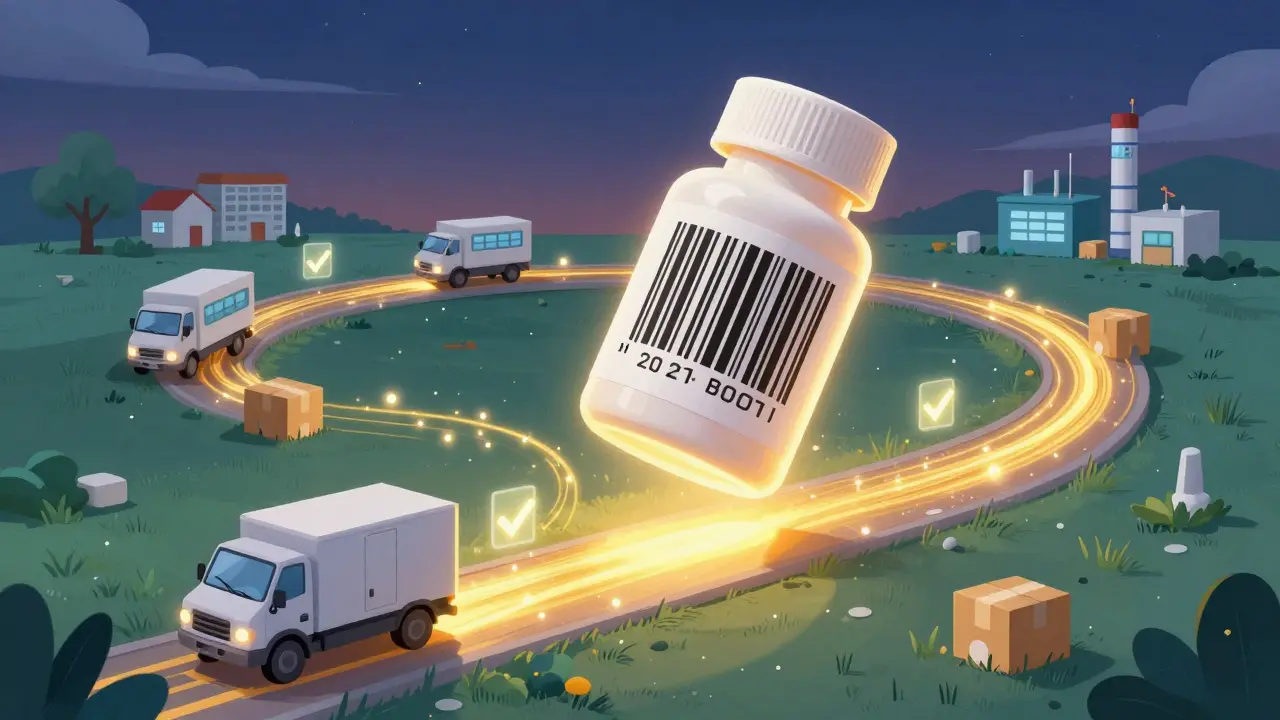
The U.S. drug supply chain moves over 5.8 billion prescription packages every year. Each one of those packages must be safe, authentic, and untampered. But every year, thousands of fake pills, contaminated batches, and stolen medications try to slip through. How do we stop them? The answer isn’t just better policing - it’s a complex, technology-driven system built over a decade, called the Drug Supply Chain Security Act (DSCSA). This isn’t about theory. It’s about real barcodes, real data, and real consequences for every pill, capsule, and vial that reaches your medicine cabinet.
What the DSCSA Actually Does
Passed in 2013, the DSCSA didn’t just add another rule - it rewrote how drugs move through the system. Before 2013, most drug tracking relied on paper invoices and manual checks. If a batch of fake blood pressure pills showed up in a pharmacy, it could take weeks to trace where they came from. Now, every prescription drug package has a unique digital fingerprint. This fingerprint - called a Unique Product Identifier (UPI) - is printed as a 2D barcode and contains four key pieces of data: the National Drug Code (NDC), a serial number, the lot number, and the expiration date. That’s over 1.2 million unique identifiers generated every single day across the U.S.
This isn’t just about putting a barcode on a box. It’s about creating a digital trail. When a drug leaves the factory, the manufacturer logs its UPI into a secure system. When it moves to a wholesaler, that wholesaler scans it and updates the chain. When it reaches a pharmacy, the pharmacist scans it again before giving it to you. If anything looks off - a mismatched serial number, a suspicious lot - the system flags it instantly.
The Four Pillars of Drug Security
The DSCSA isn’t a single tool. It’s four working parts that lock together:
- Serialization: Every package gets a unique barcode. No two are the same. This makes it nearly impossible to replicate legitimate packaging.
- Traceability: Every handoff - manufacturer to wholesaler to pharmacy - is recorded electronically. You can track a pill from the factory to your hand.
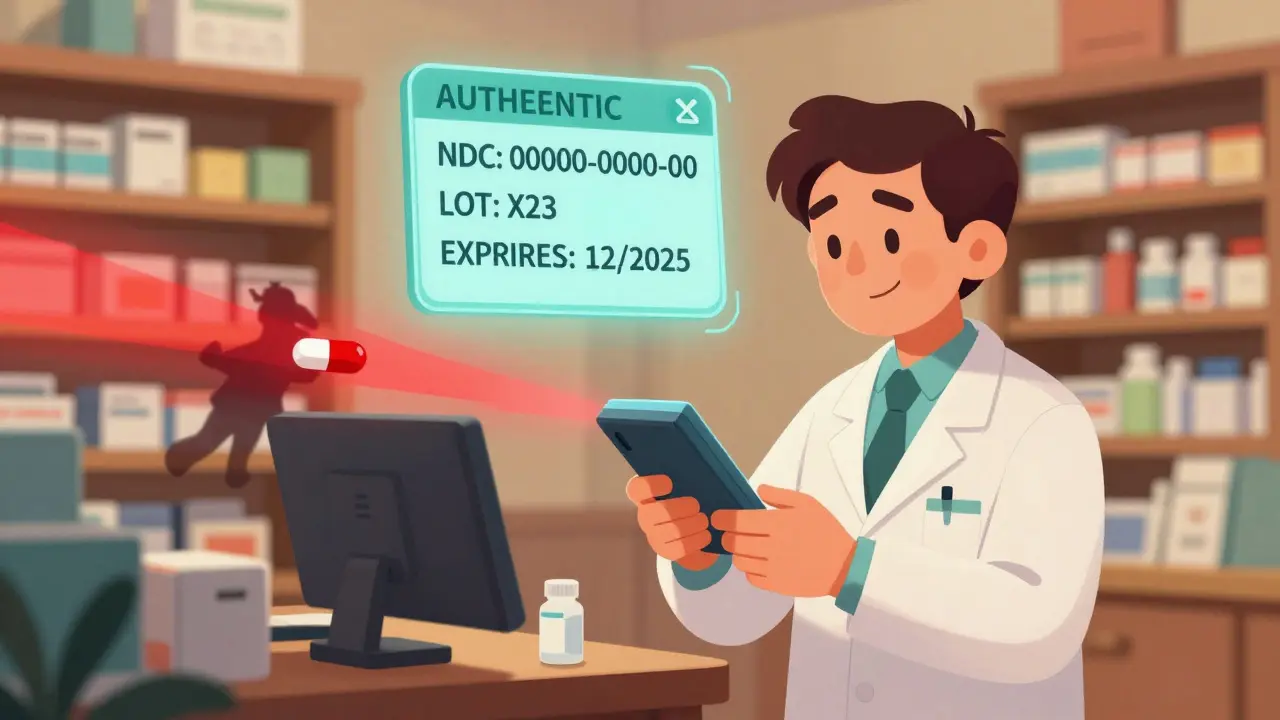
- Verification: If a pharmacy gets a suspicious package, they can scan it and instantly check its authenticity against the manufacturer’s database. This isn’t a manual call - it’s automated, real-time, and happens in under a second.
- Authorized Trading Partners (ATP): Only licensed, verified companies can legally handle prescription drugs. The FDA runs a system that checks every wholesaler, distributor, and repackager. If a company isn’t on the list, they’re shut out.
These aren’t optional. They’re mandatory. By November 2023, every trading partner had to be fully electronic. No more paper. No more manual logs. If you’re in the drug supply chain, you’re on the digital grid.
How It Stopped Fake Drugs in 2022
The numbers speak clearly. In 2014, the FDA seized over 1,100 counterfeit drug cases. By 2022, that number dropped to 412 - a 63% decline. That’s not luck. That’s the system working.
Take the 2022 infant formula crisis. When contaminated formula was discovered, the FDA didn’t have to guess where it came from. They used the DSCSA traceability system to pinpoint the exact manufacturing facility, the specific batches, and every distributor that received them. The contaminated products were pulled from shelves within 72 hours. Before DSCSA, that process took an average of 14 days. Thousands of babies were protected because of data, not guesswork.
Even during the COVID-19 vaccine rollout, the system proved its value. Over 98.7% of vaccine shipments were verified in real time. That meant no fake vials slipped into the system. No one got a placebo. No one got a dangerous batch. The infrastructure built for routine drug safety became the backbone of a national emergency response.
How It Works Behind the Scenes
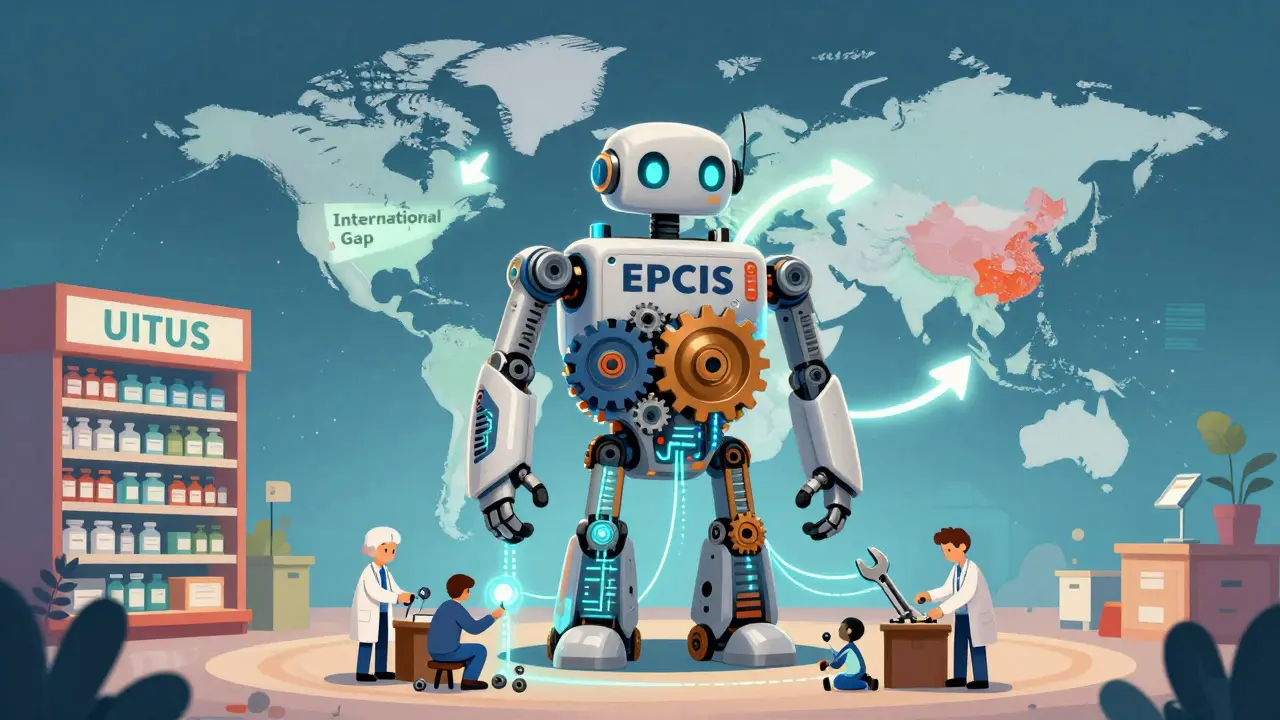
At the core of this system is a standard called EPCIS - Electronic Product Code Information Services. It’s not a company. It’s a language. Think of it like the universal translator for drug supply chains. Every manufacturer, distributor, and pharmacy uses EPCIS to send and receive data. It’s not just about scanning barcodes - it’s about sharing structured, secure, digital records.
Here’s what happens when a pharmacy receives a shipment:
- The delivery truck arrives. The pharmacist scans the outer carton - it confirms the shipment is from an authorized partner.
- They scan a sample of individual packages. Each UPI is checked against the manufacturer’s database. If the serial number doesn’t match, the system alerts them.
- If a package is flagged, it’s quarantined. The pharmacy reports it to the manufacturer and the FDA. Within 24 hours, the manufacturer investigates. Was it a printing error? Or a counterfeit?
- If confirmed fake, the system triggers a recall. All other pharmacies that received the same lot are notified. No delays. No paperwork.
This system handles over 15 million transactions daily. Its accuracy rate? 99.95%. That’s better than most banking networks.
Who’s Compliant - and Who’s Struggling
By the end of 2023, 92% of manufacturers, 87% of wholesalers, and 76% of pharmacies met full DSCSA requirements. But that last 24%? That’s where the cracks show.
Independent pharmacies with fewer than 10 employees are hit hardest. The cost to upgrade scanners, software, and staff training can run $18,500 a year. For a small pharmacy making $500,000 in profit, that’s 3.7% of their entire bottom line. Many still use old barcode readers that can’t read 2D Data Matrix codes. Some still rely on manual logs because their old pharmacy management system won’t integrate with EPCIS.
One pharmacist in Ohio told the National Community Pharmacists Association: “We spent six months just trying to get our scanner to talk to our software. We had to buy a whole new computer.”
Even big companies aren’t flawless. A 2022 FDA audit found that only 47% of wholesale distributors were consistently checking ATP status. That means some companies were still accepting drugs from unverified suppliers - a major loophole.
Where the System Still Fails
The DSCSA is powerful - but it’s not perfect. Here are the weak spots:
- Repackaged drugs: When a hospital repackages a 100-pill bottle into individual doses, the original barcode is destroyed. There’s no legal requirement to re-serialize. That’s a blind spot.
- International gaps: The U.S. system doesn’t talk well to the EU’s FMD or China’s mandatory serialization rules. A drug made in Germany and shipped to the U.S. might have two different barcodes - and neither system recognizes the other. That’s where fakes slip in.
- Cybersecurity: The 2023 Change Healthcare hack shut down DSCSA verification for 72 hours. Over 35% of U.S. pharmacies couldn’t check drugs. That’s a single point of failure.
- False positives: The system sometimes flags legitimate drugs as fake. One pharmacy reported an 8.3% false alarm rate. That means staff waste hours checking real packages.
What’s Next? The Road to 2027
The finish line is November 2027. By then, every single drug transaction in the U.S. must be electronic, interoperable, and secure. Paper trails are gone. Legacy systems are obsolete.
The FDA is pushing hard. By November 2025, all data must be in EPCIS 2.0 with JSON format - not the older XML. That’s a major upgrade for companies still using outdated tech.
Meanwhile, new tools are emerging. Some companies are testing blockchain to make the data tamper-proof. Others are using AI to spot unusual patterns - like a sudden spike in serial numbers from one supplier. A few are even adding IoT sensors to cold-chain shipments to track temperature and humidity in real time.
But the real test? Integration. Right now, there are 47 different platforms in use across the U.S. If they don’t all talk to each other by 2027, the system breaks.
Why This Matters to You
You might think, “I don’t work in pharma. Why should I care?” But here’s the truth: the system protecting your insulin, your blood thinner, your antibiotics - that’s the same system that’s keeping fake fentanyl, contaminated cough syrup, and expired vaccines off the shelves.
Every time you pick up a prescription and see the barcode on the box, know this: that tiny code is the last line of defense. It’s not magic. It’s math. It’s data. It’s thousands of people working every day to make sure what you take is real.
The next time you hear about counterfeit drugs, don’t assume it’s a distant problem. It’s not. It’s a daily battle - and the DSCSA is the weapon that’s winning it.
What is the DSCSA?
The Drug Supply Chain Security Act (DSCSA) is a U.S. federal law passed in 2013 to build a secure, electronic system that tracks prescription drugs from manufacturer to pharmacy. Its goal is to prevent counterfeit, stolen, or contaminated drugs from entering the supply chain by requiring serialization, traceability, verification, and verification of authorized trading partners.
How does serialization protect drugs?
Serialization assigns a unique digital code - including a serial number, lot number, expiration date, and NDC - to every drug package. This code is printed as a 2D barcode. When scanned at any point in the supply chain, it can be verified against the manufacturer’s database. If the code doesn’t match or has been used before, the system flags it as suspect.
What is EPCIS and why does it matter?
EPCIS stands for Electronic Product Code Information Services. It’s a global GS1 standard that allows companies to share digital transaction data - like who shipped what, when, and to whom. Without EPCIS, the DSCSA wouldn’t work. It’s the common language that lets manufacturers, wholesalers, and pharmacies exchange traceability data instantly and securely.
Are counterfeit drugs still a problem in the U.S.?
Yes, but far less than before. Since the DSCSA began, counterfeit drug seizures dropped by 63% from 2014 to 2022. However, threats still exist - especially from international sources and repackaged products. The system catches most, but not all, fake drugs. Continuous upgrades and enforcement are critical.
Why are small pharmacies struggling with DSCSA compliance?
Small pharmacies often lack the budget and IT resources to upgrade scanners, software, and staff training. The cost of compliance can reach $18,500 per year - a significant burden for businesses with thin profit margins. Many still use outdated systems that can’t read 2D barcodes or integrate with EPCIS, making full compliance difficult without external support.
Brandice Valentino
February 25, 2026 AT 15:43Larry Zerpa
February 26, 2026 AT 02:52Nandini Wagh
February 26, 2026 AT 17:53Steven Pam
February 27, 2026 AT 06:39Timothy Haroutunian
February 28, 2026 AT 14:42Erin Pinheiro
March 2, 2026 AT 12:40Michael FItzpatrick
March 3, 2026 AT 23:16Alfred Noble
March 5, 2026 AT 04:12Emily Wolff
March 5, 2026 AT 18:58Lou Suito
March 6, 2026 AT 14:37Lisandra Lautert
March 7, 2026 AT 07:36Cory L
March 7, 2026 AT 08:00Bhaskar Anand
March 8, 2026 AT 09:45kirti juneja
March 9, 2026 AT 23:00