
Switching from Brand to Generic: What Patients Should Expect
 Feb, 2 2026
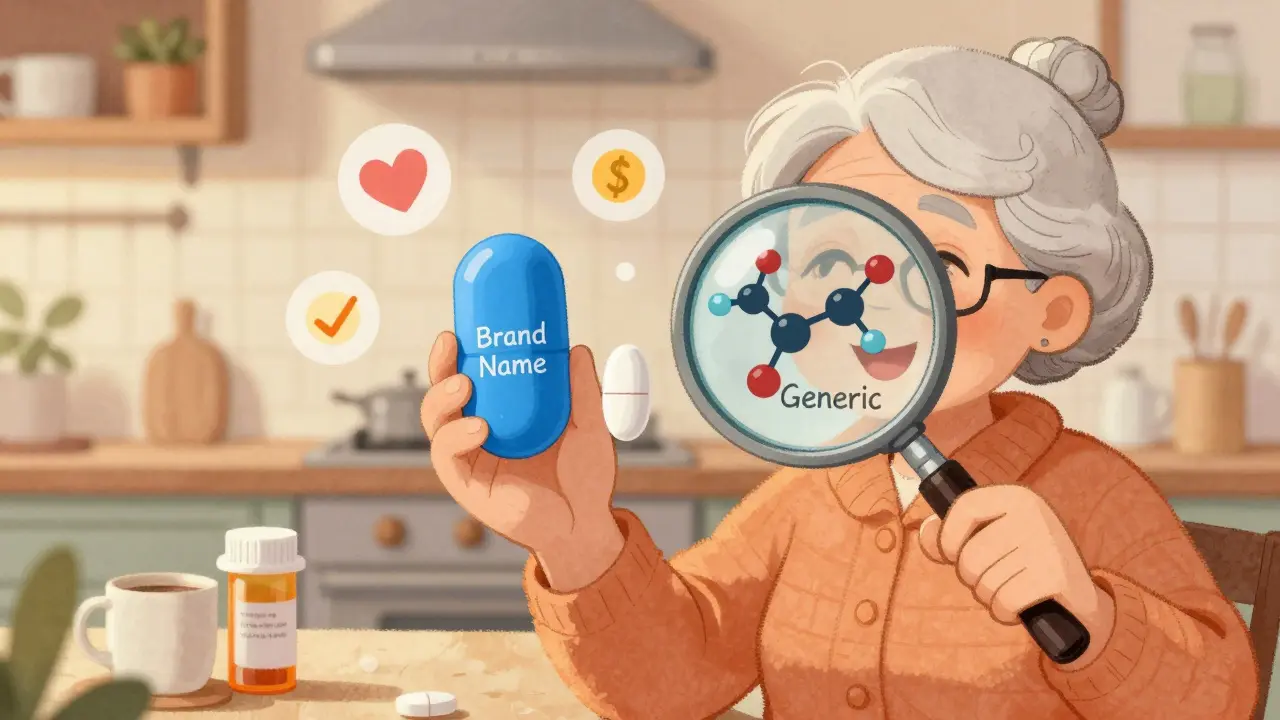
When your pharmacist hands you a pill that looks completely different from what you’ve been taking, it’s normal to feel unsure. Maybe it’s a smaller tablet, a different color, or even a weird shape. You might wonder: Is this really the same thing? The answer is yes - most of the time. Generic drugs are not cheap imitations. They are FDA-approved copies of brand-name medications, built to work exactly the same way in your body.
What Makes a Generic Drug the Same?
Every generic drug must contain the same active ingredient, in the same strength, and delivered the same way as the brand-name version. That means if you’re taking 10 mg of lisinopril for high blood pressure, the generic version has exactly 10 mg of lisinopril - no more, no less. The FDA requires that generics match the brand in how quickly and completely the body absorbs the medicine. This is tested through bioequivalence studies, where blood levels of the drug are measured over time. The FDA’s rule? The generic’s absorption must fall within 80% to 125% of the brand’s. In practice, most generics are within 4% of the original - barely any difference at all.
It’s not just about the active ingredient. Generics must also match the brand in dosage form - whether it’s a tablet, capsule, liquid, or injection. The labeling, warnings, and instructions are identical. The only things that can legally be different? The color, shape, size, and inactive ingredients like dyes, fillers, or preservatives. These changes are required by trademark law so generics don’t look exactly like the brand. That’s why your blue 10 mg pill became a white oval. It’s not a different drug. It’s just a different appearance.
How Much Money Do You Save?
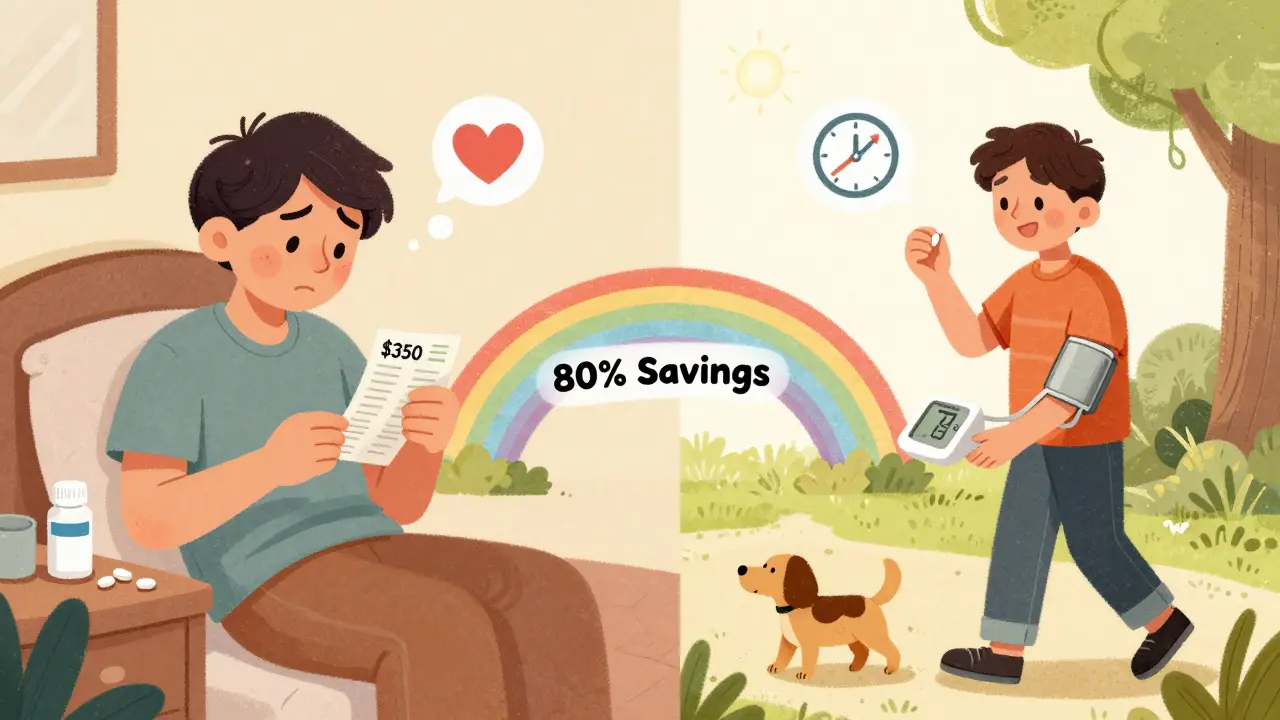
The biggest reason people switch is cost. Brand-name drugs can cost hundreds of dollars a month. Generics? Often under $20. According to data from the U.S. Centers for Medicare & Medicaid Services, patients save an average of $378 per prescription annually by choosing generics. For someone on multiple medications, that adds up to over $1,200 a year. GoodRx found that generics cost 80% to 85% less than their brand-name counterparts. That’s not a small discount - it’s life-changing for people who used to skip doses because they couldn’t afford their meds.
Maria Rodriguez from Phoenix stopped taking her cholesterol pill because it cost $350 a month. After switching to the generic - which cost $15 - she started taking it every day. “It works exactly the same,” she told ABC15. That’s not an isolated story. Kaiser Permanente found that diabetic patients on generic metformin had a 78% adherence rate, compared to just 63% on the brand-name version, Glucophage. When the price drops, people actually take their medicine.
When Might a Generic Not Work the Same?
Most of the time, generics work just as well. A major 2019 study in JAMA Internal Medicine reviewed over 2,000 clinical trials and found that generics performed identically to brand-name drugs in 88% of cases. But there are exceptions. The FDA flags certain drugs as having a “narrow therapeutic index” - meaning even tiny changes in blood levels can cause problems. These include:
- Levothyroxine (for thyroid conditions)
- Warfarin (a blood thinner)
- Phenytoin and carbamazepine (for seizures)
In these cases, some patients report changes after switching. The American Epilepsy Society found that 12.7% of patients switching between different generic versions of antiseizure drugs had breakthrough seizures, compared to only 4.3% who stayed on one version. That’s why neurologists like Dr. Robert Graham at Cedars-Sinai say: if you’re stable on one generic, don’t switch brands unless you have to. Some generic manufacturers make slightly different versions, and your body may respond better to one than another.
Another area where generics can be tricky? Complex delivery systems. Inhalers, topical creams, and patches rely on precise formulation to deliver the drug correctly. In 2020, the FDA warned that some generic versions of Advair Diskus didn’t disperse the powder the same way as the brand. That doesn’t mean all generics are bad - just that these types of drugs need extra scrutiny.
What You Might Notice After Switching
Most people feel no difference. But some notice small things:
- Appearance: Different color, shape, or size. This is normal. Don’t assume it’s a different drug.
- Side effects: Rarely, an inactive ingredient (like a dye or filler) might cause a reaction. If you’re allergic to red dye #40 or lactose, check the label.
- Effectiveness: If your condition seems worse - like higher blood pressure, more anxiety, or more seizures - it’s worth talking to your doctor.
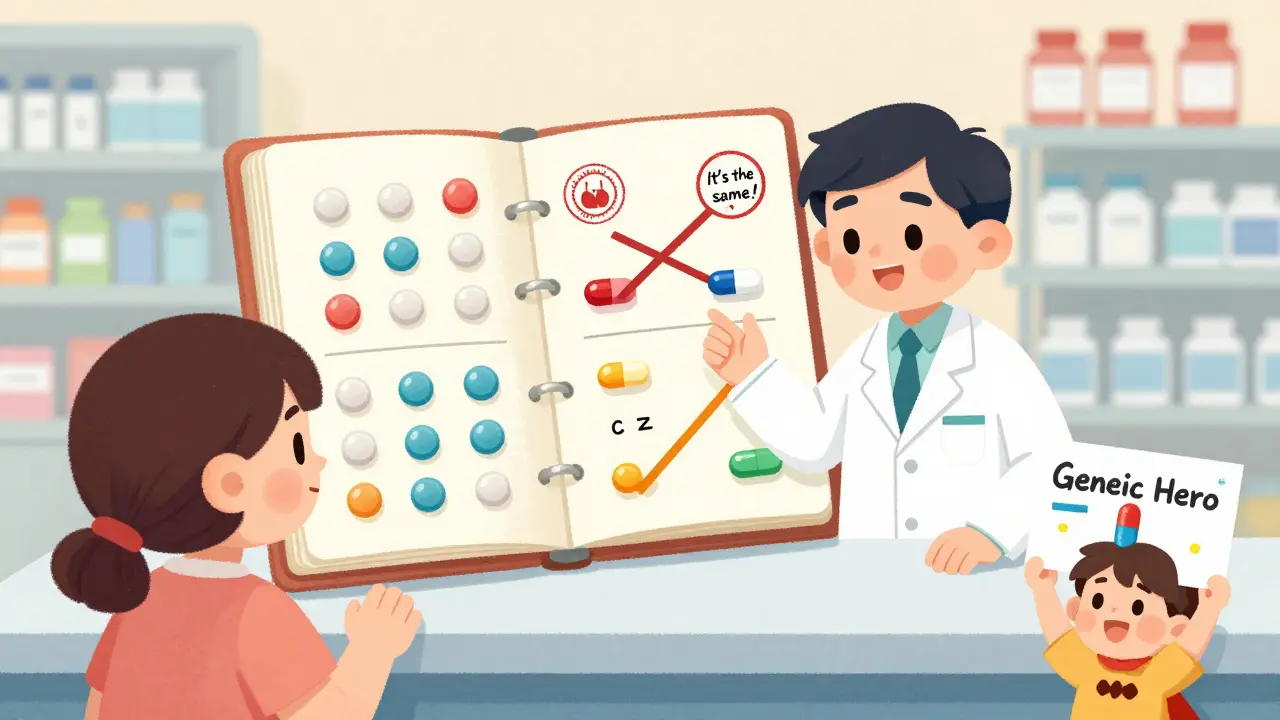
One case from the Patient Safety Reporting System involved an 82-year-old woman who accidentally took two pills because the new generic looked nothing like her old one. She didn’t realize it was the same medicine. That’s why pharmacists are required to explain the switch - usually in a 5- to 7-minute conversation. They’ll tell you what changed and what to watch for.
What You Should Do When Switching
Switching to a generic is usually safe. But here’s how to make sure it goes smoothly:
- Ask your pharmacist: Confirm it’s the same medication. Ask if the inactive ingredients could affect you - especially if you have allergies.
- Read the Patient Package Insert: By law, every generic must come with this. It lists all ingredients, including dyes and fillers.
- Track your symptoms: For the first two weeks, keep a simple log. Note any new side effects or changes in how you feel. For blood pressure, check your numbers. For diabetes, track fasting glucose. For mood or seizures, use a simple scale like PHQ-9 or GAD-7.
- Don’t panic if you feel different: Sometimes, it’s just your mind adjusting to a new pill. But if symptoms persist, call your doctor.
- Stick with one generic brand: If you’re on a narrow therapeutic index drug, try to keep using the same manufacturer’s version. If your pharmacy switches it again, ask them to stick with the one that worked.
Why Do Doctors Recommend Generics?
Most doctors push for generics - not because they’re cheaper for the pharmacy, but because they’re better for patients. The 2022 American Medical Association survey found that 78% of physicians automatically prescribe generics when available. Why? Because they’ve seen the data. A 2022 study by Northwestern University analyzed 1.2 million patient records and found no meaningful difference in outcomes between brand and generic heart medications. Dr. Ameet Nagpal, the lead researcher, said: “The science is clear. Generics work.”
The FDA’s former director, Dr. Janet Woodcock, put it simply: “Generic drugs have the same quality, strength, purity, and stability as brand-name drugs. They work the same way.”
And the numbers back it up. As of late 2023, 90% of all prescriptions filled in the U.S. were for generics - but they made up only 20% of total drug spending. That’s the power of generics: they save money without sacrificing care.
What’s Changing in 2024 and Beyond
The landscape is shifting. New generic versions of expensive drugs like Humira (adalimumab) hit the U.S. market in January 2024 after patent expiration. These aren’t just pills - they’re biosimilars, which are complex biologic drugs. They’re not exact copies, but they’re close enough to be approved as safe and effective. They cost 15% to 30% less than the brand.
The FDA is also pushing for better labeling. By 2025, generic drug labels must clearly list all inactive ingredients - especially allergens. Right now, only 37% of labels do this well, according to a University of Michigan study. That’s changing.
Medicare will cover all FDA-approved generics without prior authorization starting in 2024. That means no more paperwork delays. And the Congressional Budget Office predicts that by 2030, 95% of prescriptions will be for generics.
Final Thoughts
Switching from brand to generic isn’t a compromise. It’s a smart, safe, and often life-improving choice. For most people, the medicine works the same. The only real difference? The price tag. If you’ve been skipping doses because of cost, switching to a generic could be the first step toward better health.
But don’t ignore the small signs. If you feel worse after the switch, don’t assume it’s all in your head. Talk to your doctor. Keep track. Ask questions. Your body knows when something’s off - even if it’s just a different color pill.
Are generic drugs as effective as brand-name drugs?
Yes, for most medications. The FDA requires generics to have the same active ingredient, strength, dosage form, and absorption rate as the brand-name version. Studies show they work the same in 88% of cases. The only exceptions are narrow therapeutic index drugs like levothyroxine, warfarin, and certain seizure medications, where even small changes can matter.
Why do generic pills look different?
Trademark laws require generic drugs to look different from the brand-name version. That means changes in color, shape, size, or markings. These differences are only cosmetic. The active ingredient and how your body absorbs it remain identical. Don’t confuse appearance with effectiveness.
Can generic drugs cause new side effects?
Rarely. Side effects usually come from the active ingredient, which is the same. But some people react to inactive ingredients like dyes, fillers, or preservatives. If you have allergies - especially to red dye, lactose, or gluten - check the label. If you notice new symptoms after switching, report them to your doctor.
Should I avoid generics for chronic conditions?
No - generics are often better for chronic conditions because they’re cheaper, and people are more likely to take them. Studies show higher adherence rates with generics. For conditions like high blood pressure, diabetes, or high cholesterol, generics are the recommended first choice. Only avoid them if you’ve had a bad reaction to a specific generic version.
How do I know if my generic is working?
Monitor your condition closely for the first two weeks. For blood pressure, check readings daily. For diabetes, track fasting glucose. For mood or seizures, use simple scales like PHQ-9 or GAD-7. If your numbers change significantly - or you feel worse - contact your doctor. Otherwise, you’re likely doing fine.
Can I ask for the brand instead of the generic?
Yes. You can always ask your doctor to write “Dispense as Written” or “Do Not Substitute” on the prescription. But you’ll pay more - often a lot more. Insurance may not cover it unless there’s a medical reason. If you’re stable on a generic, switching back to brand isn’t usually necessary.
What if my pharmacy switches my generic without telling me?
Pharmacies can legally substitute one generic for another unless your doctor says otherwise. If the pill looks different, ask if it’s still the same medication. Some people respond better to one manufacturer’s version than another - especially with seizure or thyroid meds. If you notice changes, ask your pharmacist to stick with the version that worked before.
Coy Huffman
February 4, 2026 AT 08:50Amit Jain
February 4, 2026 AT 20:38Keith Harris
February 5, 2026 AT 07:37Kunal Kaushik
February 6, 2026 AT 01:29Prajwal Manjunath Shanthappa
February 6, 2026 AT 21:58Wendy Lamb
February 8, 2026 AT 21:02Antwonette Robinson
February 9, 2026 AT 10:23Ed Mackey
February 10, 2026 AT 06:39Katherine Urbahn
February 11, 2026 AT 22:25