
The Orange Book: Understanding Therapeutic Equivalence and Generic Drug Substitution
 Jan, 4 2026
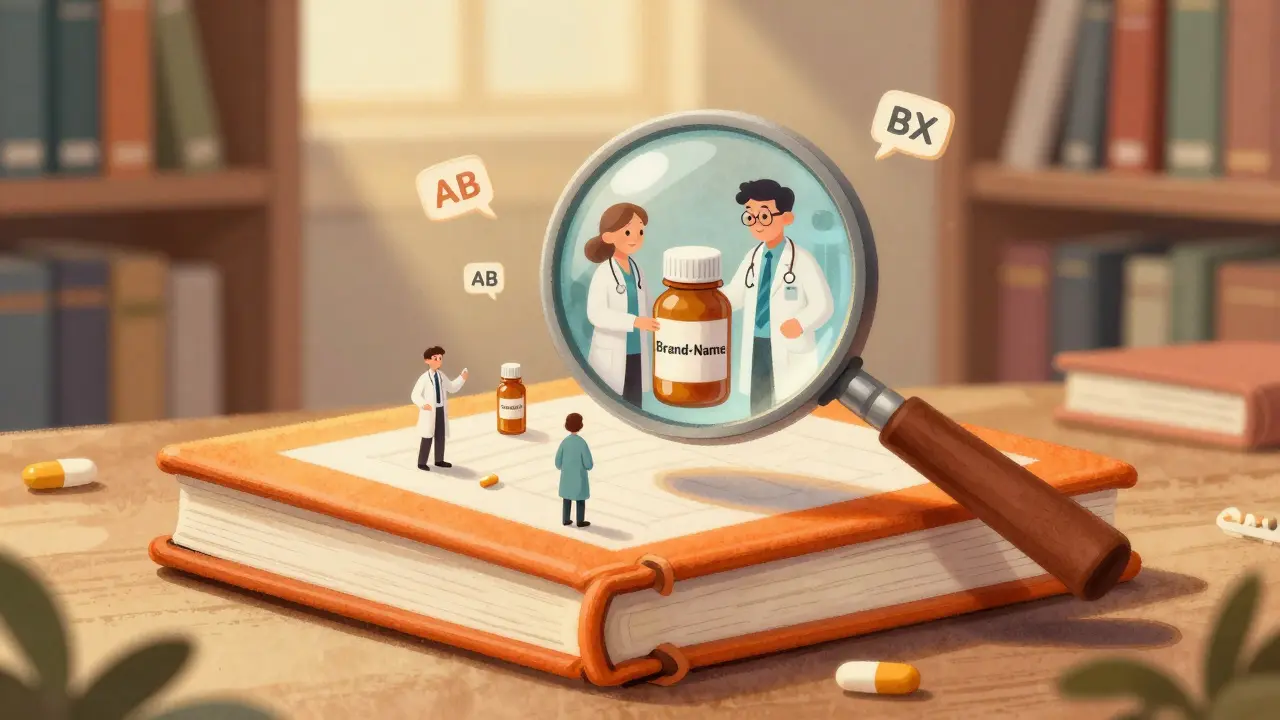
The Orange Book isn’t a novel you read for fun-it’s the most important reference pharmacists, doctors, and insurers use every day to decide whether a generic drug can safely replace a brand-name one. Published by the U.S. Food and Drug Administration (FDA), the official title is Approved Drug Products with Therapeutic Equivalence Evaluations, but everyone calls it the Orange Book because of its bright orange cover. First released in 1980, it was created to make sure patients get affordable medications without sacrificing safety or effectiveness. Today, it’s the backbone of how over 90% of prescriptions in the U.S. are filled with generics.
What Makes a Generic Drug Truly Equivalent?
Not all generic drugs are created equal. The Orange Book doesn’t just list generics-it judges them. For a generic to be considered therapeutically equivalent to the brand-name drug, it must meet three strict standards: pharmaceutical equivalence, bioequivalence, and FDA approval under the same quality rules.
Pharmaceutical equivalence means the generic has the exact same active ingredient, strength, dosage form (like tablet or injection), and route of administration (oral, topical, etc.) as the original. It also has to meet the same purity and quality standards set by official pharmacopeias.
Bioequivalence is where things get technical but critical. It means the generic drug enters your bloodstream at the same rate and to the same extent as the brand-name version. If your body absorbs the drug differently-even slightly-it could mean the medicine doesn’t work as well, or worse, causes side effects. The FDA tests this using blood samples from healthy volunteers, comparing how quickly and completely the drug is absorbed.
Only if a drug passes both these tests-and is made in a facility that follows Current Good Manufacturing Practices-is it labeled as therapeutically equivalent.
The TE Code System: Decoding the Letters
The Orange Book doesn’t just say “yes” or “no.” It uses a simple but powerful coding system: Therapeutic Equivalence (TE) codes. These two-letter codes tell you exactly where a drug stands.
All therapeutically equivalent drugs start with an “A.” For example, an “AB” code means the drug has been proven bioequivalent with no known issues. That’s the gold standard. If you see “AN,” it’s an antibiotic approved under an Abbreviated New Drug Application (ANDA) but with no direct bioequivalence study-still considered equivalent based on other evidence. “AO” is for oral solutions that meet equivalence criteria but aren’t tested the same way as tablets.
Then there are the “B” codes. These mean the FDA does not consider the drug therapeutically equivalent. “BX” is the most common-used when there’s not enough data to prove equivalence, often with complex products like inhalers or topical creams. “BC” and “BD” indicate potential bioequivalence problems, meaning substitution could be risky.
These codes aren’t just for pharmacists. Insurance companies use them to decide which drugs to cover. Pharmacy benefit managers (PBMs) often block payment for “B”-coded drugs unless the prescriber specifically says “Dispense as Written.”
How the Orange Book Shapes the Drug Market
The Orange Book didn’t just help generics enter the market-it changed the entire system. Thanks to the Hatch-Waxman Act of 1984, generic manufacturers could skip expensive clinical trials if they proved equivalence to the brand-name drug. This opened the floodgates.
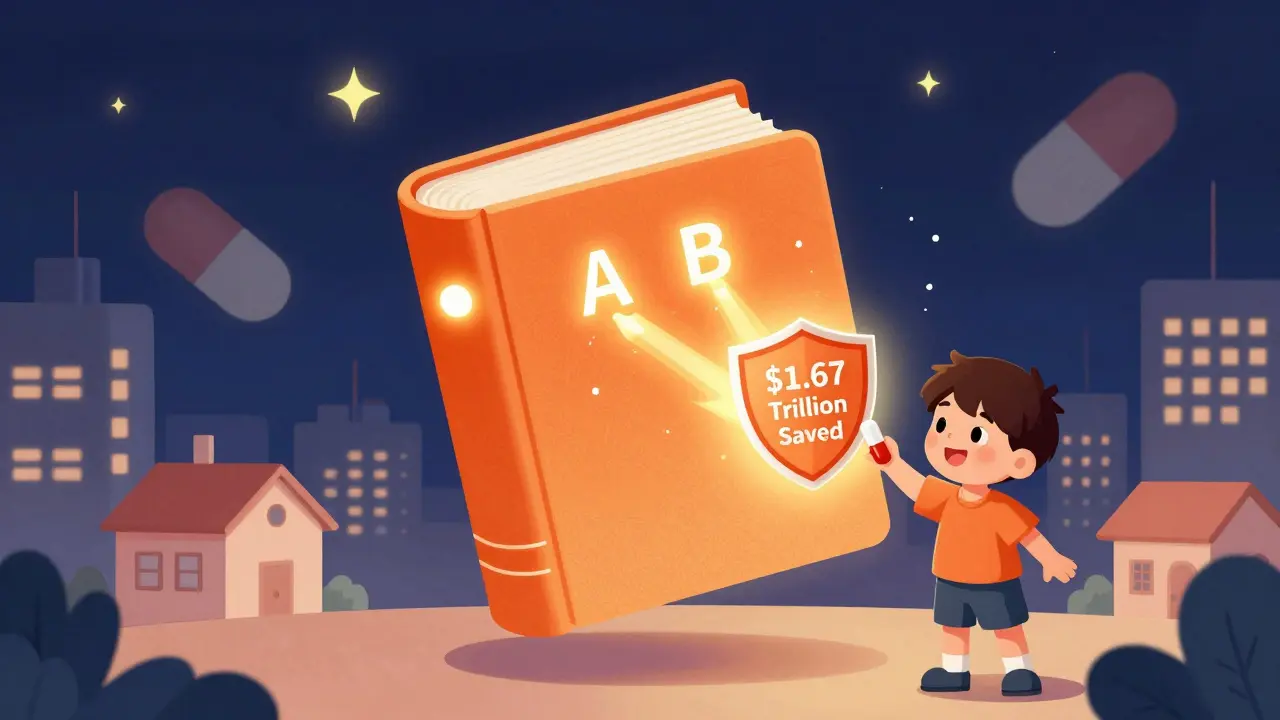
Today, generics make up 90.7% of all prescriptions filled in the U.S., but they cost only about 23% of what brand-name drugs do. Over the last decade, this system saved Americans an estimated $1.67 trillion in drug spending. That’s not just a statistic-it’s money in patients’ pockets, lower premiums, and less strain on hospitals.
But it’s not perfect. Some drugs are harder to copy. Inhalers, injectables, and topical creams have complex delivery systems. Even small differences in how the drug is sprayed or absorbed can change outcomes. The FDA has been updating its guidance for these “complex generics,” making sure TE codes still reflect real-world safety.

Real-World Problems: When the Code Gets Confusing
Despite its importance, the Orange Book isn’t always easy to use. A 2023 survey of pharmacists found that 67% found the TE code system “moderately to extremely difficult” to interpret without training. In states with mandatory substitution laws, pharmacists are required to swap brand for generic unless the doctor says otherwise. But if the TE code is unclear-say, a “BC” code-many pharmacists hesitate.
One Walgreens report from early 2022 showed that incorrect TE code interpretation led to $1.2 million in rejected insurance claims across over 5,000 stores. Patients got their prescriptions filled, but the pharmacy didn’t get paid. That’s a huge financial hit.
On the flip side, CVS Health built an automated system in 2021 that checks TE codes in real time. It cut substitution errors by 63% and saved $47 million a year. That’s the power of getting it right.
Who Uses the Orange Book-and How
Pharmacists rely on it daily. The FDA estimates they spend about 12.7 minutes per complex prescription checking the Orange Book. That adds up. Many community pharmacies now use digital tools that pull TE codes directly from the FDA’s online database, which updates every month.
Doctors use it too. When prescribing, they may check if a generic is available and approved. Some even write “Dispense as Written” if they’re unsure about a drug’s equivalence-especially for drugs with a narrow therapeutic index, like warfarin or levothyroxine, where tiny changes in blood levels can cause serious problems.
Insurance companies and PBMs use TE codes to build their formularies. If a drug has an “A” code, it’s usually preferred. If it’s “B,” it may be excluded unless there’s no alternative.
Even state boards of pharmacy require TE code verification before allowing substitution. Every single one of them does, according to a 2022 survey by the National Association of Boards of Pharmacy.
What’s Changing in 2024 and Beyond
The FDA is upgrading the Orange Book. The old print version and basic website are being replaced by a modern, searchable digital platform set to launch fully in Q2 2024. The new version will include application numbers, applicant names, and drug strengths-all in one place. It will also make it easier to track which products have been discontinued or withdrawn.
Another big shift is happening with combination products-drugs that come with a device, like an inhaler or auto-injector. The FDA now says the device doesn’t have to be identical, but the clinical effect must be the same. That’s a big deal. It means generics can use different delivery systems as long as they deliver the drug the same way.
Looking ahead, biosimilars-generic versions of biologic drugs like insulin or rheumatoid arthritis treatments-are growing fast. They’re not in the Orange Book yet, but they follow similar rules. By 2028, they could be worth over $50 billion in the U.S. market.
Why This Matters to You
If you take a generic drug, you’re using the Orange Book every day. It’s why your $4 prescription at the pharmacy works just as well as the $200 brand-name version. It’s why your insurance covers it. It’s why you don’t have to worry that the generic is weaker or unsafe.
But if you’re on a drug with a narrow therapeutic index-or if you’ve noticed your medication doesn’t seem to work the same after switching generics-ask your pharmacist. Check the TE code. Ask if it’s “AB” or “BX.” Don’t assume it’s fine. The system works, but only if you understand it.
The Orange Book isn’t flashy. It doesn’t make headlines. But every day, it keeps millions of people healthy and saves billions of dollars. It’s a quiet hero of modern medicine.
What is the Orange Book and who publishes it?
The Orange Book is the official FDA publication titled Approved Drug Products with Therapeutic Equivalence Evaluations. It lists all drug products approved by the U.S. Food and Drug Administration and evaluates whether generic versions are therapeutically equivalent to their brand-name counterparts. It is published and updated monthly by the FDA.
What does an 'AB' code mean in the Orange Book?
An 'AB' code means the drug is therapeutically equivalent to the brand-name drug. It has been proven to be pharmaceutically equivalent and bioequivalent, with no known or potential bioequivalence issues. Pharmacists can substitute it without a doctor’s approval in most states.
Can all generic drugs be substituted for brand-name drugs?
No. Only drugs with an 'A' code in the Orange Book are considered therapeutically equivalent and eligible for substitution. Drugs with 'B' codes-like 'BX,' 'BC,' or 'BD'-are not considered interchangeable due to potential bioequivalence problems, especially with complex products like inhalers or topical creams.
Why do some pharmacists hesitate to substitute generics?
Some pharmacists hesitate because TE codes can be confusing, especially for complex drugs like inhalers or narrow therapeutic index medications. In states with mandatory substitution laws, misreading a 'BC' or 'BX' code can lead to rejected insurance claims or patient safety concerns. Many pharmacists say they need more training to interpret the codes confidently.
How often is the Orange Book updated?
The Orange Book is updated monthly. The FDA releases new editions each month, adding newly approved drugs, removing discontinued ones, and revising TE codes based on new data. The most recent version as of September 2023 included over 15,000 approved drug products.
Are biosimilars included in the Orange Book?
No, biosimilars are not listed in the Orange Book. They are regulated under a different pathway and are tracked separately by the FDA. The Orange Book focuses on small-molecule generic drugs. Biosimilars, which are complex biologic drugs, have their own reference database called the Purple Book.
How can I check a drug’s therapeutic equivalence code?
You can search for a drug’s TE code using the FDA’s free online Orange Book database, which is updated monthly. Simply enter the brand name, generic name, or active ingredient. Many pharmacy software systems also pull this data automatically. Pharmacists can also use printed copies, but the digital version is faster and more accurate.
Wesley Pereira
January 5, 2026 AT 04:03So let me get this straight - we’re trusting our lives to a bunch of letters like ‘AB’ and ‘BX’ like it’s a damn video game cheat code? 🤡 I’ve seen pharmacists squint at their screens like they’re decoding the Rosetta Stone. And don’t even get me started on PBMs playing Tetris with formularies. The system’s a house of cards built on bioequivalence studies done on 20-year-old college kids who’ve never had a chronic condition in their life.
And yet, somehow, it works? Wild.
Isaac Jules
January 6, 2026 AT 12:33LOL the Orange Book is a joke. You think ‘AB’ means safe? Try telling that to the 12% of patients who had adverse reactions after switching to generics. The FDA doesn’t test for long-term effects, only peak plasma concentration. That’s like saying two cars are ‘equivalent’ because they both hit 60mph in 7 seconds - ignoring the fact one’s brakes fail on wet roads.
And don’t even mention ‘complex generics.’ Inhalers? Topicals? Those are just FDA’s way of saying ‘we have no idea how to test these, but we’ll approve them anyway.’
Melanie Clark
January 7, 2026 AT 03:36They say generics save billions but they never tell you the real cost - the silent suffering of people whose thyroid meds stop working after a switch. Levothyroxine isn’t like ibuprofen. It’s not a pill. It’s a life sentence. And the FDA treats it like a commodity. This isn’t healthcare. It’s corporate math with a side of placebo effect. You think your doctor cares? They get kickbacks from PBMs. Wake up.
Tiffany Adjei - Opong
January 8, 2026 AT 06:14Oh please. The Orange Book is just a PR stunt. Did you know that ‘AB’ can be assigned even if the generic uses a different filler? Like, imagine two identical cars - one has soy-based glue in the dashboard, the other uses petrochemicals. Same engine. Same speed. But one gives you migraines. That’s what’s happening. And nobody checks for that. Because the FDA doesn’t regulate excipients like they do active ingredients. So yeah - ‘therapeutic equivalence’ is just a marketing term for ‘we didn’t find any lawsuits yet.’
Kiran Plaha
January 9, 2026 AT 14:24So if i take generic for blood pressure, it same as brand? Just cheaper? I think this good. People in India get same medicine. No need pay 10x. But i worry about bad ones. How to know if good or not?
Katelyn Slack
January 10, 2026 AT 03:08Just wanted to say I’ve been using the FDA’s online database for years and it’s been super reliable. My pharmacist even showed me how to search by active ingredient - way easier than looking up brand names. Also, the new digital version is gonna be a game changer. No more flipping through PDFs at 2am. 🙌
Amy Le
January 11, 2026 AT 07:14Let’s be real - this whole system is a patriotic victory lap for American capitalism. We made generics affordable, we crushed Big Pharma’s monopoly, and now we’re saving trillions. Meanwhile, other countries are still stuck with 80% brand-name prescriptions because their governments are too weak to enforce equivalence standards. The Orange Book? It’s the American way - efficient, ruthless, and quietly brilliant. 🇺🇸
Joann Absi
January 12, 2026 AT 14:09EVERYONE KNOWS THE FDA IS CORRUPT. THEY LET PHARMA COMPANIES PAY FOR THE STUDIES. THEY’RE IN BED WITH PBMS. THE ‘AB’ CODE IS A LIE. I’VE SEEN PEOPLE HOSPITALIZED AFTER SWITCHING. THEY’RE USING THE SAME EXCIPIENTS AS IN CHEAP CHINESE MEDS. THE ORANGE BOOK ISN’T A HERO - IT’S A COVER-UP. 🤫💊 #FDAFRAUD
Saylor Frye
January 12, 2026 AT 22:11It’s funny how we treat this like some sacred text. It’s just a database. A very useful one, sure. But it’s not magic. If your drug stops working after a switch, it’s not the Orange Book’s fault - it’s your body. Maybe you’re sensitive to the filler. Maybe your pharmacist misread the code. Or maybe - gasp - you’re just paranoid. Chill. The system works 99% of the time. Stop turning a regulatory tool into a conspiracy theory.