
Tizanidine and Ciprofloxacin Interaction: Why This Combo Causes Severe Hypotension
 May, 19 2026
Tizanidine Interaction Risk Checker
Patient Profile & Medications
Select the factors that apply to you or the patient being evaluated.
Ready to Assess
Select your current medications and health profile, then click "Assess Interaction Risk" to see potential dangers.
Imagine taking your usual muscle relaxant for a back spasm, only to feel dizzy, faint, and dangerously low on blood pressure after starting a common antibiotic. This isn't a rare side effect-it's a predictable, potentially life-threatening reaction that happens when Tizanidine, a widely prescribed muscle relaxant, is combined with Ciprofloxacin, a popular fluoroquinolone antibiotic. The result? A massive spike in tizanidine levels in the blood, leading to severe hypotension (dangerously low blood pressure) and excessive sedation.
This interaction is not just a theoretical risk found in textbooks. It is a documented clinical emergency that continues to occur despite clear warnings from regulatory bodies like the U.S. Food and Drug Administration (FDA). Understanding why this happens-and how to avoid it-is critical for patient safety.
The Mechanism: How Ciprofloxacin Blocks Tizanidine Metabolism
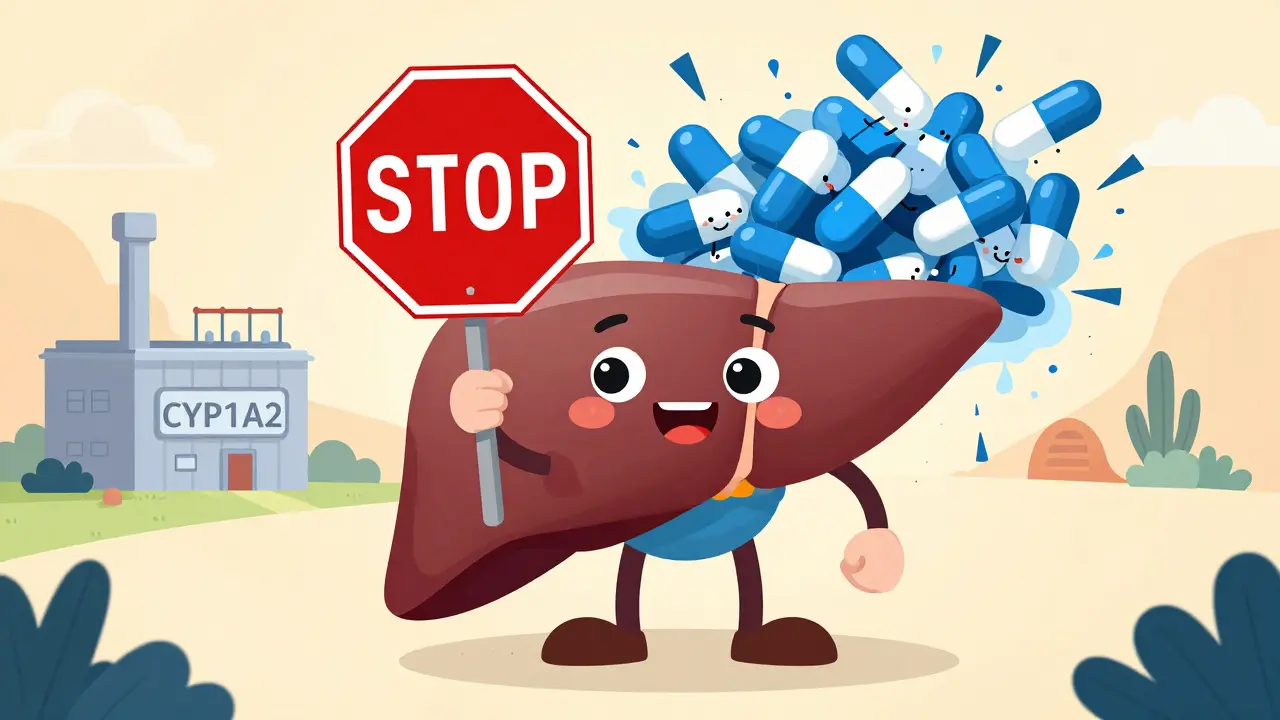
To understand why this combination is so dangerous, we need to look at how your body processes these drugs. Tizanidine is metabolized almost exclusively by an enzyme called Cytochrome P450 1A2 (CYP1A2). Think of CYP1A2 as a specific recycling plant in your liver that breaks down tizanidine so your body can eliminate it. Under normal conditions, this process keeps tizanidine levels stable and safe.
Ciprofloxacin, however, is a potent CYP1A2 inhibitor. When you take ciprofloxacin, it effectively shuts down this recycling plant. Without CYP1A2 working, tizanidine cannot be broken down. Instead, it accumulates in your bloodstream.
Research published in Clinical Pharmacology & Therapeutics shows that concurrent use of ciprofloxacin can increase tizanidine plasma concentrations by 10- to 33-fold. That is not a typo. Your body ends up with up to thirty-three times more active drug than intended. This surge overwhelms the central nervous system, causing profound sedation, and impacts the cardiovascular system, triggering severe drops in blood pressure.
Clinical Consequences: Severe Hypotension and Sedation
The primary dangers of this interaction are twofold: severe hypotension and excessive central nervous system depression.
Severe Hypotension: In clinical studies, severe hypotension is often defined as systolic blood pressure dropping to ≤70 mm Hg. This level of low blood pressure can lead to syncope (fainting), falls, fractures, and even shock. A retrospective study by Vanderbilt University Medical Center (VUMC) found a 43% increased risk of severe hypotensive events in patients who took both medications together. The adjusted odds ratio was 1.43, indicating a statistically significant danger compared to those not taking the combination.
Excessive Sedation: As tizanidine levels skyrocket, its sedative effects become unmanageable. Patients report extreme drowsiness, confusion, and inability to stay awake. This isn't just feeling tired; it's a state where the patient may not respond appropriately to their environment, increasing the risk of accidents or respiratory complications.
Data from the World Health Organization's VigiBase™ pharmacovigilance database confirms these patterns globally. Reports from over 130 countries consistently list hypotension as the most frequent cardiovascular adverse effect associated with this drug pair.
Why Tizanidine Is Uniquely Vulnerable
You might wonder why this doesn't happen with other muscle relaxants. The answer lies in metabolic redundancy. Let's compare tizanidine to Cyclobenzaprine, another common muscle relaxant.
| Feature | Tizanidine | Cyclobenzaprine |
|---|---|---|
| Primary Enzyme | CYP1A2 (95%) | CYP1A2, CYP3A4, CYP2D6 |
| Metabolic Redundancy | Low (Single pathway) | High (Multiple pathways) |
| Effect of CYP1A2 Inhibitors | Massive concentration increase (10-33x) | Moderate increase (compensated by other enzymes) |
| Risk with Ciprofloxacin | Contraindicated | Lower risk, but caution advised |
Cyclobenzaprine uses multiple cytochrome P450 pathways (including CYP3A4 and CYP2D6). If one path is blocked by an inhibitor like ciprofloxacin, the others can still process the drug. Tizanidine has no such backup. Its exclusive reliance on CYP1A2 makes it uniquely susceptible to catastrophic accumulation when that single enzyme is inhibited.
Who Is at Highest Risk?
While anyone taking this combination is at risk, certain groups face significantly higher dangers. The VUMC study identified several key factors that amplify the likelihood of severe hypotension:
- Elderly Patients: Older adults often have reduced renal function and altered drug metabolism, making them less able to handle sudden spikes in medication levels.
- Patients on Antihypertensives: Those already taking three or more blood pressure medications have less physiological reserve to compensate for the additional drop caused by tizanidine toxicity.
- High Comorbidity Burden: Patients with complex health histories, measured by scores like the Charlson/Deyo modified score, showed substantially elevated risks in real-world data.
If you fall into any of these categories, the margin for error is virtually non-existent.

Alternatives and Management Strategies
Given the severity of this interaction, the medical consensus is clear: avoid co-prescribing these medications. But what if you need treatment for both a muscle spasm and a bacterial infection?
Alternative Antibiotics: If you are on tizanidine and develop an infection (such as a urinary tract infection), ask your doctor about antibiotics that do not inhibit CYP1A2. Options like Amoxicillin or Nitrofurantoin are often effective for UTIs and do not carry this specific interaction risk.
Alternative Muscle Relaxants: If you must take ciprofloxacin for a serious infection, switch to a muscle relaxant that doesn't rely solely on CYP1A2. Cyclobenzaprine or methocarbamol may be safer options, though they should still be used with caution under medical supervision.
Discontinuation Strategy: If switching isn't possible, some clinicians recommend stopping tizanidine before starting the CYP1A2 inhibitor. Because tizanidine has a short half-life (about 2.5 hours), it clears the system relatively quickly. However, ciprofloxacin's inhibitory effect lasts longer. You would typically need to wait until the antibiotic course is finished and allow time for the enzyme activity to recover before restarting tizanidine. Always follow your doctor's specific timeline for this.
Why Does This Still Happen?
Despite FDA contraindications and EMA warnings, co-prescription remains common. Why? Often, it comes down to overlapping symptoms. A patient with chronic back pain (on tizanidine) might develop a bladder infection (requiring ciprofloxacin). In busy clinical settings, prescribers may focus on treating the acute infection without fully reviewing the long-term medication list.
Electronic Health Records (EHRs) with robust Clinical Decision Support (CDS) systems can help catch this error at the point of prescribing. Studies suggest that targeted alerts during prescription entry could significantly reduce these inappropriate combinations. Until these systems are universally flawless, patients must play an active role.
Always inform every healthcare provider-doctors, dentists, pharmacists-that you are taking tizanidine. Ask specifically: "Does this new medication interact with my current prescriptions?"