
Travel Insurance for Medication Coverage: What’s Included and How to Claim
 Aug, 8 2026
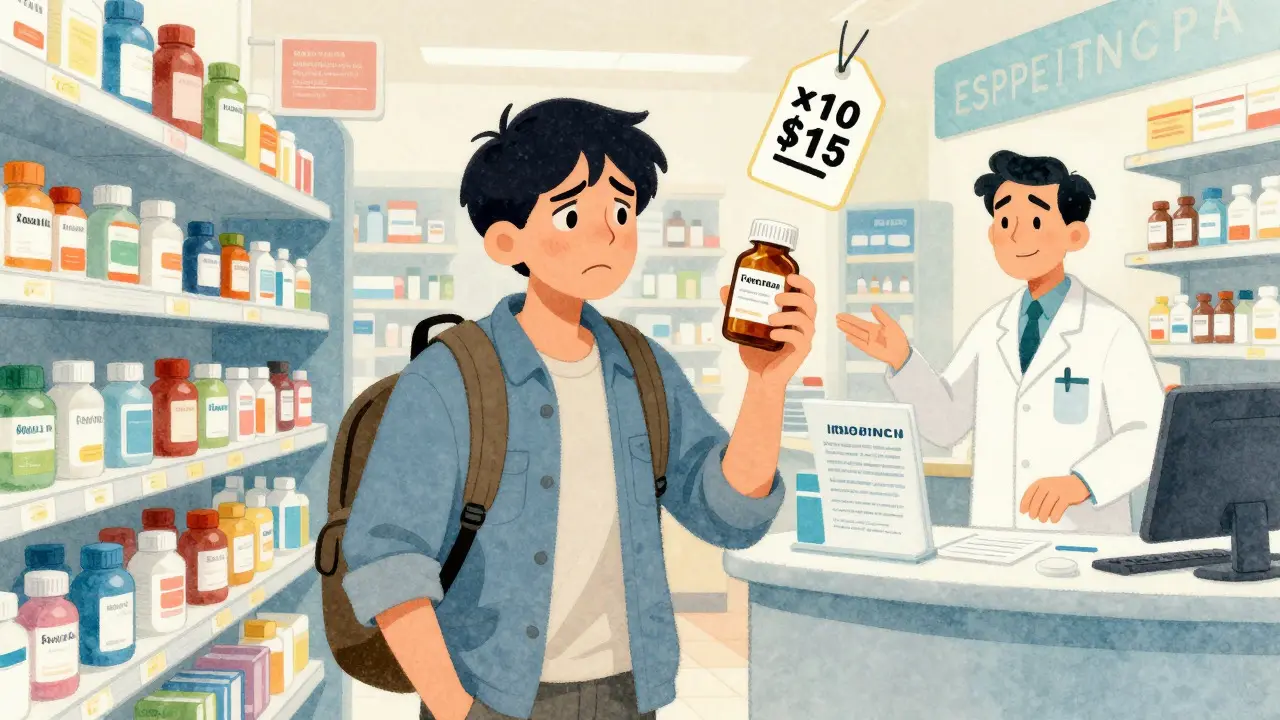
You pack your toothbrush, your passport, and maybe a few days' worth of daily meds. Then you twist your ankle in Florida or catch a nasty stomach bug in Tokyo. Suddenly, that $50 bottle of antibiotics back home costs $200 at the local pharmacy, and the doctor's visit is another shock. This is where travel insurance for medication coverage is specialized protection designed to pay for unexpected prescriptions and emergency medical care while you are away from home. It bridges the dangerous gap between your regular health plan and foreign healthcare systems.
Most people think their standard health insurance follows them everywhere. It usually doesn't. If you are visiting the United States, Europe, or even Canada, your domestic policy might cover nothing or very little. Travel insurance steps in to handle those sudden spikes in cost, specifically targeting the medications and treatments you didn't plan for but desperately need.
What Travel Insurance Actually Covers for Medications
It is crucial to understand what "medication coverage" means in this context. It is not a refill service for your routine pills. If you take blood pressure medication daily, travel insurance generally will not pay for a new supply if you run out. That is considered maintenance care, which is almost always excluded.
Instead, coverage kicks in for acute conditions. These are new illnesses or injuries that happen during your trip. Think broken bones requiring painkillers, infections needing antibiotics, or allergic reactions demanding epinephrine. According to industry data from the U.S. Travel Insurance Association (UStiA), medication costs make up about 15% of all medical claims filed by travelers. Policies typically offer coverage limits ranging from $5,000 to $250,000 per trip, depending on the plan you choose.
Here is how the math works in practice. Let's say you have a policy with a $250 deductible and an 80/20 co-insurance ratio. You break your leg and need $10,250 worth of treatment and prescriptions. You pay the first $250. The remaining $10,000 is split: the insurer pays 80% ($8,000), and you pay 20% ($2,000). Without insurance, you would be on the hook for the full $10,250.
| Feature | Typical Value / Rule | Why It Matters |
|---|---|---|
| Coverage Limit | $50k - $2M USD | Protects against catastrophic bills in high-cost countries like the US. |
| Deductible | $0 - $2,500 | The amount you pay before insurance starts covering costs. |
| Co-Insurance | 80/20 or 100% | Your share of the bill after the deductible is met. |
| Prescription Limit | 90-day supply max | Prevents hoarding; ensures meds are for immediate needs. |
| Pre-existing Conditions | Usually Excluded | Routine meds (e.g., for diabetes, hypertension) are rarely covered. |
The Pre-Existing Condition Trap
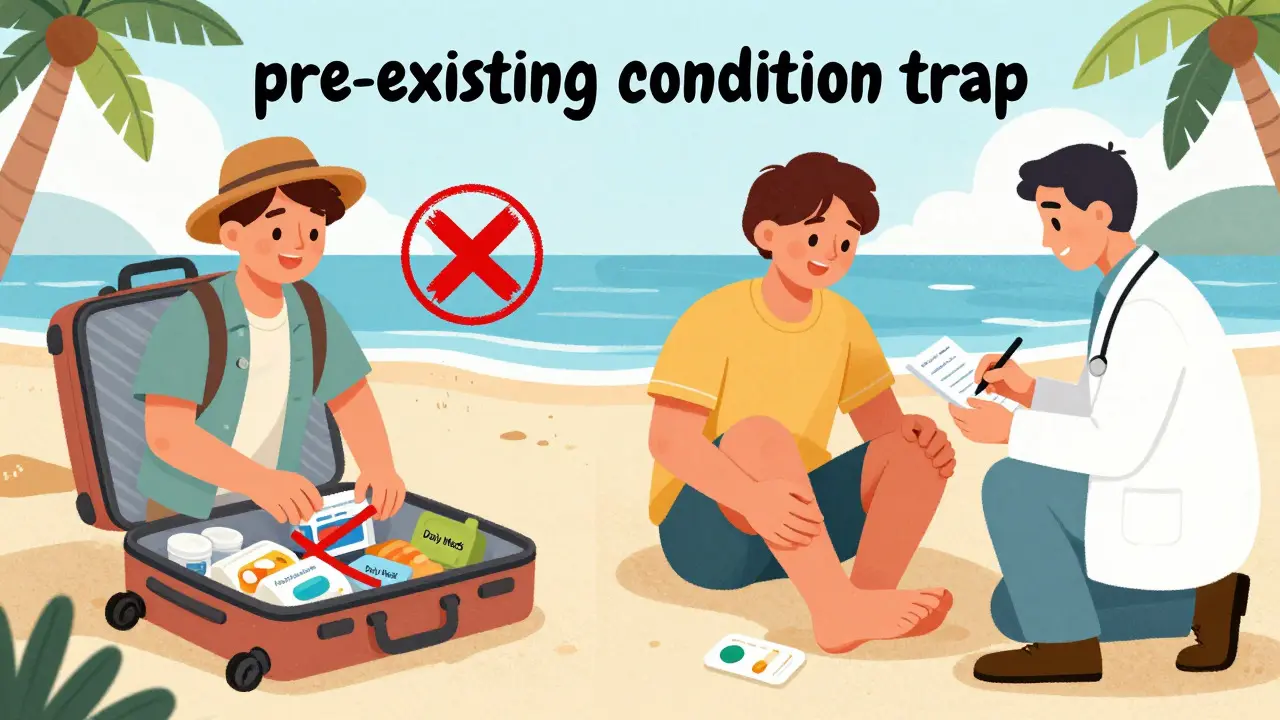
This is the biggest pitfall for travelers. If you have a chronic condition like asthma, diabetes, or heart disease, you likely take daily medication. Standard travel insurance policies explicitly exclude these "pre-existing conditions." If you lose your insulin supply, the claim will likely be denied because it is viewed as routine maintenance, not an emergency.
However, there is a way around this: the pre-existing condition waiver is an optional add-on or specific plan feature that allows coverage for flare-ups of chronic conditions if purchased within a short window of booking your trip. Only about 18% of standard plans offer this waiver. If you need it, you must buy your insurance shortly after booking your flight-often within 10 to 21 days-to qualify. Without this waiver, you are responsible for carrying enough of your own medication to last the entire trip plus a buffer for delays.
How to Get Your Medication Covered Abroad
Getting reimbursed isn't automatic. You have to follow a strict process, especially in countries with complex healthcare systems like the United States. Here is the step-by-step workflow to ensure your claim gets approved:
- See a Local Physician First: Pharmacies in many countries, particularly the US, will not dispense prescription drugs without a valid local prescription. A note from your doctor back home often isn't enough. You need to visit a clinic or urgent care center licensed in the country you are visiting.
- Get a Written Prescription: Ensure the doctor writes down the medication name, dosage, and quantity. Verbal instructions can lead to dispensing errors or claim denials.
- Check Network Pharmacies: Major insurers like IMG Global is a leading provider of international travel insurance with extensive PPO networks in the US, Allianz, and Seven Corners have partnerships with chains like CVS, Walgreens, and Rite Aid. Using these network pharmacies can sometimes allow direct billing, meaning you only pay your co-pay instead of the full price upfront.
- Keep Every Receipt: If you have to pay upfront, get an itemized receipt showing the drug name, strength, and price. Take a photo of it immediately. Lost receipts mean lost money.
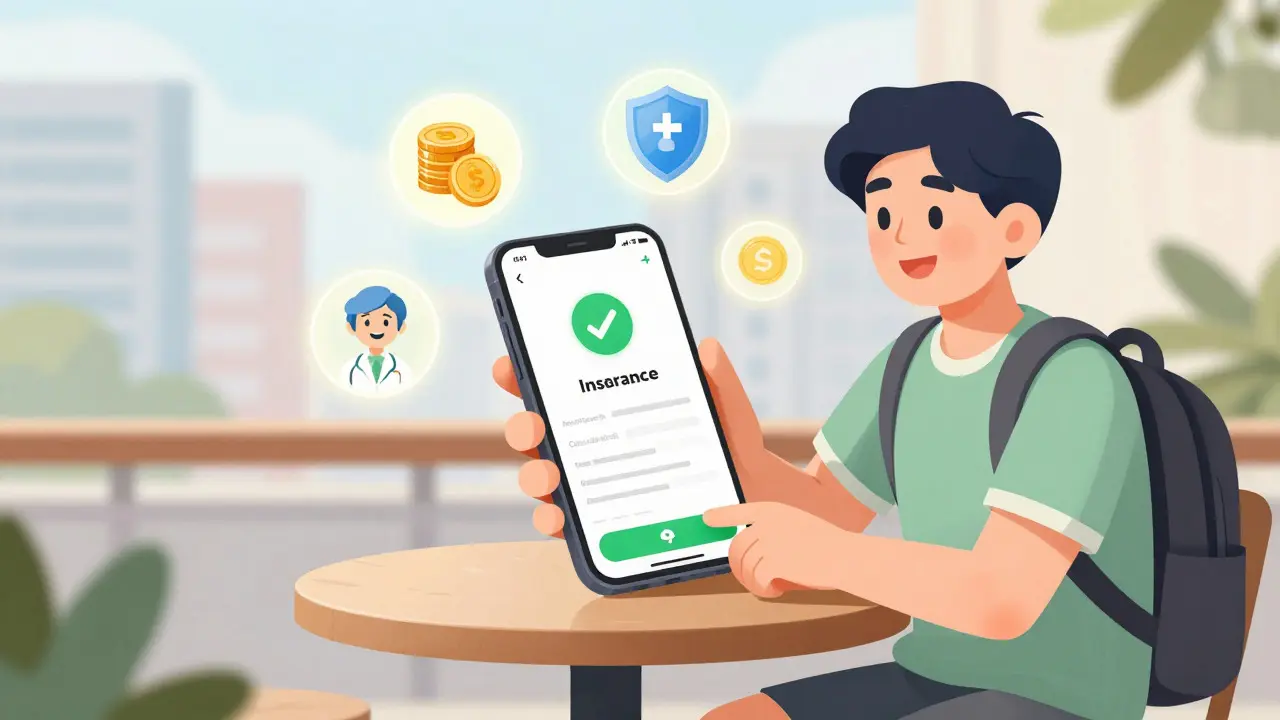
- Submit the Claim: Most insurers now have apps where you can upload photos of your prescription and receipt. Reimbursement typically takes 7 to 14 business days.
A study by the International Risk Management Institute found that travelers who visited a local physician first had a 92% claim approval rate, compared to just 67% for those who tried to use foreign prescriptions or self-medicate.
Comparing Options: Visitor Insurance vs. Credit Cards
Not all coverage is created equal. If you are traveling to the US, you might consider "Visitor Insurance," which is designed for non-citizens. Plans like Seven Corners' Trip Protection Choice offer up to $500,000 in medical coverage. On the other hand, many people rely on their credit card's built-in travel insurance.
Be careful with credit cards. While convenient, they often cap medication coverage at a mere $500 to $1,000 with high deductibles. For a serious injury requiring multiple prescriptions, this vanishes quickly. Dedicated travel insurance policies provide significantly higher limits and better support networks.
| Feature | Credit Card Travel Insurance | Dedicated Travel Policy (e.g., IMG, Allianz) |
|---|---|---|
| Medication Limit | $500 - $1,000 | $5,000 - $250,000+ |
| Deductible | Often High ($250-$500) | Flexible ($0-$2,500) |
| Network Access | Limited or None | Large PPO Networks (CVS, Walgreens, etc.) |
| Pre-existing Waivers | Rarely Available | Available on select plans |
Real-World Scenarios: Successes and Failures
Understanding how others have navigated these claims helps set realistic expectations. In March 2023, a traveler named 'TravelMed2023' broke their ankle in Florida. They needed strong painkillers and antibiotics. Because they used IMG Global, paid the $100 deductible, and submitted digital receipts via the app, they were reimbursed $1,200 in five business days. Smooth sailing.
Contrast this with 'PharmaTraveler,' who ran out of blood pressure medication while abroad. They tried to claim the $300 cost from Seven Corners. The claim was denied. Why? Because blood pressure management is a pre-existing condition, and they hadn't purchased a waiver. This highlights the critical difference between an emergency (broken ankle) and maintenance (daily BP meds).
Another common issue involves documentation. Trustpilot reviews for Allianz show that while many users praise the straightforward process, complaints arise when receipts lack detail. If the receipt just says "Pharmacy Dispensing Fee" without listing the drug name, the insurer has no proof it was medically necessary for a covered event.
Tips for a Stress-Free Claim Process
To avoid headaches, prepare before you leave. First, check if your destination has different drug regulations. Some meds available over-the-counter in one country require prescriptions in another. This triggers the need for a doctor's visit, so budget time for that.
Second, leverage telemedicine. As of early 2023, 82% of major providers offer virtual consultations. If you feel sick, you can video chat with a US-licensed doctor through your insurer's app, get a digital prescription sent directly to a nearby pharmacy, and save yourself a trip to the ER.
Finally, read the fine print on "exclusions." Look for terms like "routine care," "maintenance therapy," and "pre-existing conditions." If you see these, assume your daily pills are not covered unless you have a specific waiver. Carry extra medication in your carry-on luggage, never checked bags, to mitigate this risk.
Frequently Asked Questions
Does travel insurance cover my daily prescription medications?
Generally, no. Standard travel insurance excludes "maintenance medications" for pre-existing conditions. It only covers prescriptions for new, acute illnesses or injuries that occur during your trip. To cover chronic conditions, you must purchase a specific pre-existing condition waiver soon after booking your travel.
How much does travel insurance with medication coverage cost?
Costs vary based on age, destination, and trip length. Typically, it ranges from 4% to 10% of your total trip cost. For example, a $2,000 trip might cost $80 to $200 for comprehensive insurance including medication coverage. Older travelers may pay more due to higher risk profiles.
Can I use my home country's prescription at a pharmacy abroad?
It depends on the country. In the US, for instance, you usually need a prescription from a locally licensed physician. Foreign prescriptions are often not accepted by pharmacies. Always visit a local doctor first to get a valid local script to ensure your insurance claim is approved.
What documents do I need to file a medication claim?
You need an itemized receipt from the pharmacy showing the drug name, dosage, and price. You also need a copy of the prescription and a physician's note linking the medication to the covered illness or injury. Photos of these documents uploaded via the insurer's app are usually sufficient.
Is Medicare enough for medication coverage while traveling internationally?
No. Original Medicare provides very limited coverage abroad, mostly for emergencies near borders or on cruises. It explicitly does not cover prescription drugs purchased outside the US. Medigap plans C, D, F, G, M, and N offer some supplemental emergency coverage, but still exclude routine drugs. You need separate travel insurance for medication.
How long does reimbursement take for medication claims?
Reimbursement typically takes 7 to 14 business days after submitting complete documentation. Delays occur if receipts are missing details or if the insurer requires additional proof from a physician. Using network pharmacies with direct billing can eliminate the wait entirely.