
Type 2 Diabetes: Symptoms, Causes, and How to Manage It
 Jan, 26 2026
Many people think type 2 diabetes only affects older adults who eat too much sugar. That’s not true. It’s a complex, silent condition that can sneak up on anyone - even teenagers - and often goes unnoticed until something serious happens. By 2026, over 550 million adults worldwide live with it. In the UK alone, more than 4.7 million people have been diagnosed, and an estimated 1 million more don’t know they have it. The good news? You can stop it from getting worse. The better news? You might even reverse it.
What Are the Real Signs You Have Type 2 Diabetes?
Unlike type 1 diabetes, which hits fast and hard, type 2 creeps in. Symptoms don’t appear overnight. They build up over years. That’s why so many people are diagnosed only after a routine blood test or after having a heart attack.
The most common signs are simple but easy to ignore:
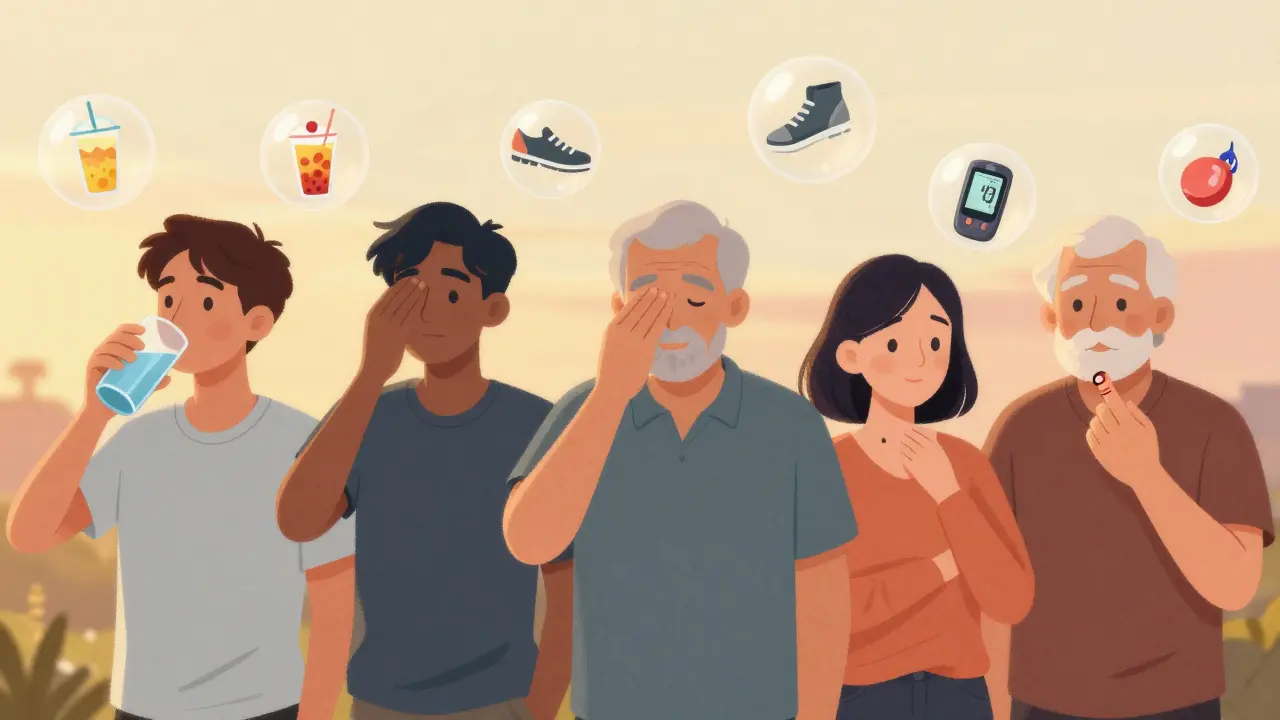
- Constant thirst - you’re drinking more water than ever, yet still feel dry
- Frequent urination - especially at night, waking up multiple times
- Extreme hunger - even after eating a full meal
- Unexplained weight loss - you’re losing pounds without trying
- Constant tiredness - no matter how much sleep you get
- Blurred vision - things look fuzzy, especially after meals
- Slow-healing cuts or sores - a small scrape takes weeks to close
- Recurrent infections - yeast infections, urinary tract infections, or skin boils
- Numbness or tingling in hands or feet - like pins and needles
There’s one visible clue doctors look for: dark, velvety patches on the neck, armpits, or groin. It’s called acanthosis nigricans. It’s not just a skin issue - it’s your body screaming that insulin isn’t working right. If you see this, don’t wait. Get tested.
And here’s the scary part: 15-20% of people with type 2 diabetes have no symptoms at all. That’s why annual blood tests matter - especially if you’re over 40, overweight, or have a family history.
Why Did This Happen to You? The Real Causes
Type 2 diabetes isn’t caused by eating too much cake. It’s caused by your body becoming blind to insulin.
Insulin is the key that lets sugar into your cells for energy. When you eat carbs, your blood sugar rises. Your pancreas releases insulin to tell your muscles and fat to soak up that sugar. But over time - especially with constant overeating, inactivity, and belly fat - your cells stop listening. This is called insulin resistance.
At first, your pancreas works overtime. It pumps out 2-3 times more insulin to compensate. But after years of this, the cells that make insulin get worn out. They start to fail. That’s when blood sugar stays high - and diabetes is diagnosed.
Here’s what actually drives this process:
- Obesity - especially fat around the abdomen - is the biggest risk. People with a BMI over 30 are 80 times more likely to develop type 2 diabetes than those with a BMI under 22.
- Lack of movement - sitting all day makes your muscles less sensitive to insulin. Just 30 minutes of walking a day cuts your risk by 30%.
- Genetics - if a parent or sibling has it, your risk jumps by 40%. Over 400 genes are linked to this condition.
- Ethnicity - Black, South Asian, Hispanic, and Native American populations develop it earlier and at lower weights than white populations.
- Aging - after 45, your muscle mass drops and fat increases. But now, kids as young as 10 are being diagnosed. The rise in sugary drinks and ultra-processed foods is to blame.
It’s not your fault. But it is your responsibility to act - because once you understand the cause, you can fix it.
What Happens If You Ignore It?
Type 2 diabetes doesn’t just mean “a little high blood sugar.” Left unchecked, it damages every system in your body.
Here’s what’s at stake:
- Heart disease - 65-80% of people with diabetes die from heart attacks or strokes. Your risk is 2-4 times higher.
- Nerve damage - 60-70% of people develop neuropathy after 10 years. That means numb feet, burning pain, or loss of sensation. That’s how foot ulcers start - and 1 in 5 leads to amputation.
- Kidney failure - diabetes causes 44% of all new cases of kidney failure in the UK and US. Dialysis becomes necessary.
- Blindness - diabetic retinopathy affects nearly 30% of people with diabetes. It’s the leading cause of blindness in working-age adults.
- Brain health - your brain needs sugar too. When blood sugar swings wildly, it increases your risk of Alzheimer’s. Some scientists now call it “type 3 diabetes.”
- Depression - people with diabetes are twice as likely to be depressed. And depression makes blood sugar harder to control.
These aren’t distant risks. They’re real, preventable outcomes - if you act early.
How to Manage Type 2 Diabetes - Without Just Taking Pills
Medication is often part of the plan - but it’s not the only part. And it’s not always the first step.
The American Diabetes Association says the goal is to keep your HbA1c below 7%. That’s a measure of your average blood sugar over 3 months. But here’s the truth: you can lower it without drugs - or with much lower doses.
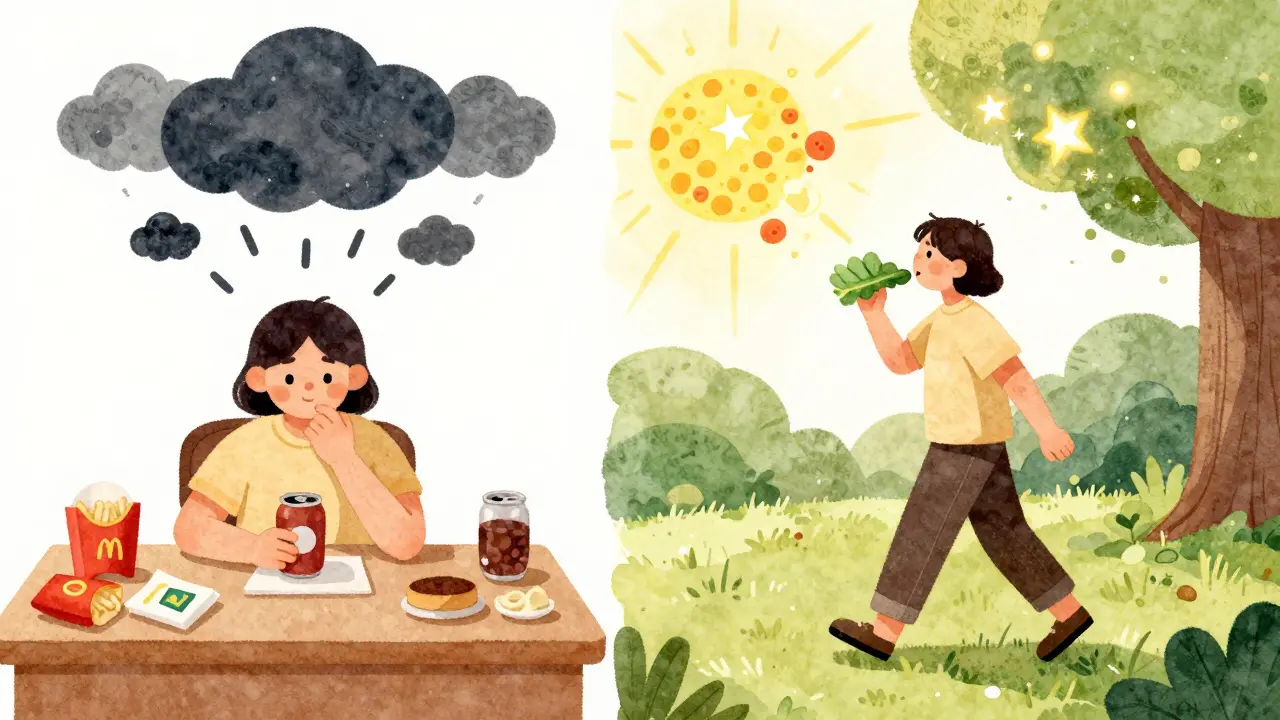
Step 1: Eat to Control Blood Sugar
Forget “low-fat diets.” What matters is what your body turns into sugar.
- Swap white bread, pasta, and rice for whole grains, legumes, and vegetables.
- Eliminate sugary drinks - soda, juice, sweetened coffee. One can a day raises your risk by 26%.
- Focus on protein and healthy fats - eggs, fish, nuts, olive oil, avocado - they don’t spike blood sugar.
- Portion control matters. A 2021 study showed that eating fewer calories - even without cutting carbs - improved insulin sensitivity.
The most powerful tool? Weight loss. Losing just 5-10% of your body weight can dramatically improve insulin sensitivity. The CDC’s National Diabetes Prevention Program found that losing 7% of your weight cuts your risk of developing diabetes by 58% - and helps reverse it if you already have it.
Step 2: Move Every Day
You don’t need to run a marathon. Just move.
- Walk 30 minutes a day, 5 days a week - that’s 150 minutes total.
- Add strength training twice a week - lifting weights or bodyweight exercises builds muscle, and muscle uses sugar like a sponge.
- Break up sitting. Stand up every 30 minutes. Even a 2-minute walk helps.
One study showed that people who walked for 10 minutes after each meal lowered their blood sugar more than those who walked once a day.
Step 3: Medications - When and Why
If diet and exercise aren’t enough, your doctor will likely start you on metformin. It’s been the first-line drug for over 60 years. It lowers blood sugar by making your liver produce less glucose and improving how your body uses insulin. Most people lose a few pounds on it, and it doesn’t cause low blood sugar.
Newer drugs are changing the game:
- GLP-1 agonists (like semaglutide) - reduce HbA1c by up to 1.6% and help you lose 3-5kg. They also protect your heart.
- SGLT2 inhibitors - help your kidneys flush out sugar through urine. They reduce heart failure risk and protect your kidneys.
- Tirzepatide - a newer dual-action drug that lowered HbA1c by over 2% and caused 11-15kg weight loss in trials.
These aren’t just pills. They’re tools that work best when paired with lifestyle changes.
Step 4: Monitor Your Blood Sugar
You don’t need to prick your finger 10 times a day. But you need to know what’s happening.
Continuous glucose monitors (CGMs) - once only for type 1 - are now covered by Medicare and NHS for many type 2 patients. They show real-time trends, not just snapshots. You’ll see how your blood sugar reacts to food, sleep, stress, and exercise. That’s powerful.
If you can’t get a CGM, check your fasting blood sugar once a week. Aim for 70-100 mg/dL. Post-meal readings should be under 140 mg/dL.
Can Type 2 Diabetes Be Reversed?
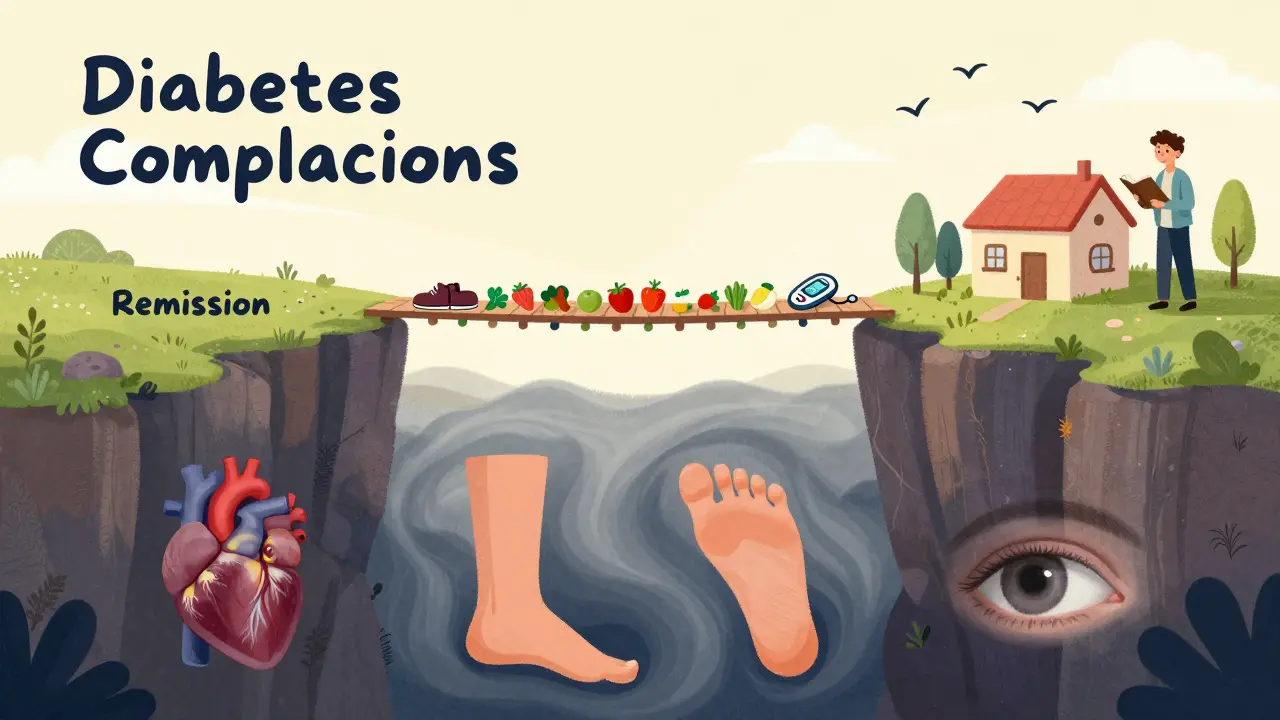
Yes. And it’s not a myth.
The DiRECT trial in the UK showed that 46% of people with type 2 diabetes for less than 6 years went into remission after a year-long program of a low-calorie diet (825-850 calories/day for 3-5 months), followed by gradual food reintroduction and ongoing support.
Remission means HbA1c is below 6.5% without any diabetes medication. It’s not a cure - your body can slip back if you return to old habits. But it’s freedom from pills, injections, and fear.
The key? Early action. The longer you’ve had high blood sugar, the harder it is to restore your pancreas. But if you’re within 5-6 years of diagnosis, your chances are good.
What’s Next? The Future of Type 2 Diabetes Care
Technology is changing everything.
- Hybrid closed-loop systems - like the MiniMed 780G - now work for type 2 diabetes. They automatically adjust insulin based on your glucose levels.
- AI-powered apps can predict blood sugar spikes based on your meals, sleep, and activity.
- Research is exploring gut bacteria, sleep quality, and stress hormones as triggers - opening new treatment paths.
But the biggest barrier isn’t science. It’s access. People in low-income areas, without healthy food options or safe places to walk, face the highest risk. That’s why community programs, policy changes, and insurance coverage matter.
What you can do now? Start small. Walk. Swap soda for water. Eat one more vegetable a day. Check your blood sugar. Talk to your doctor. You don’t need to be perfect. You just need to begin.
Can type 2 diabetes be cured?
Type 2 diabetes can go into remission - meaning blood sugar returns to normal without medication - but it’s not a permanent cure. If you gain weight or return to unhealthy habits, it can come back. Remission is most likely if you act early, lose weight, and stick with healthy changes.
Do I need to take insulin if I have type 2 diabetes?
Not always. Most people start with metformin and lifestyle changes. Insulin may be needed later if your pancreas can’t make enough anymore. But many people never need it - especially if they lose weight and stay active. Insulin isn’t a failure - it’s just another tool.
Is type 2 diabetes hereditary?
Yes, genetics play a big role. If a parent or sibling has it, your risk is 40% higher. But genes aren’t destiny. Even with a strong family history, you can delay or prevent it with weight control, movement, and healthy eating.
Can I drink alcohol with type 2 diabetes?
Yes, but carefully. Alcohol can cause blood sugar to drop, especially if you’re on insulin or certain pills. Always drink with food. Stick to dry wines, light beer, or spirits without sugary mixers. Limit to one drink a day for women, two for men.
How often should I check my blood sugar?
It depends. If you’re not on insulin, checking fasting levels once or twice a week is often enough. If you’re on medication or trying to lose weight, daily checks help you see how food and activity affect you. A continuous glucose monitor (CGM) gives the clearest picture without constant finger pricks.
What foods should I avoid with type 2 diabetes?
Avoid sugary drinks, white bread, pastries, candy, and processed snacks. These spike blood sugar fast. Also limit fruit juice, dried fruit, and refined carbs. Focus on whole foods: vegetables, lean protein, legumes, nuts, and whole grains. Portion size matters more than you think.
Can stress make type 2 diabetes worse?
Yes. Stress hormones like cortisol raise blood sugar. Chronic stress also leads to emotional eating and poor sleep - both worsen insulin resistance. Managing stress through walking, meditation, or talking to someone helps more than you’d expect.
Is type 2 diabetes the same as prediabetes?
No - prediabetes is a warning sign. Your blood sugar is higher than normal but not yet in the diabetes range. It’s your chance to stop it. With lifestyle changes, 70% of people with prediabetes never develop full type 2 diabetes.
Where Do You Go From Here?
Start today. Not tomorrow. Not next week.
Step one: Book a blood test. Ask for HbA1c, fasting glucose, and lipid panel. Don’t wait for symptoms.
Step two: Walk for 15 minutes after dinner. Every day.
Step three: Replace one sugary drink with water. Or tea. Or sparkling water with lemon.
You don’t need to overhaul your life. Just change one thing. Then another. Progress isn’t about perfection. It’s about consistency.
Type 2 diabetes doesn’t have to be a life sentence. It can be a wake-up call - and the best one you’ll ever get.
Mohammed Rizvi
January 26, 2026 AT 07:45The way this post breaks down insulin resistance is terrifyingly accurate. No sugar-shaming, no guilt-tripping - just cold, hard biology. I’ve seen cousins in India develop this by 28 after years of chai-soda-biryani cycles. No one told them it wasn’t about willpower. It’s about cellular betrayal.
eric fert
January 27, 2026 AT 16:44Let’s be real - this whole ‘reversal’ narrative is a corporate marketing ploy disguised as medical advice. The pharmaceutical industry doesn’t want you cured, they want you on metformin for life. And don’t get me started on GLP-1 agonists - those are just expensive appetite suppressants with a fancy name. The real solution? Starvation. Fasting. That’s what nature intended. But no, we need pills. Always pills.
Curtis Younker
January 28, 2026 AT 06:28Y’all need to hear this - it’s not about being perfect. It’s about showing up. I was 240 lbs, HbA1c at 8.9, and thought I’d be on insulin by 35. Started walking after dinner. Swapped soda for sparkling water. Added one veggie to every meal. One year later - 65 lbs down, HbA1c 5.4, no meds. It’s not magic. It’s momentum. You don’t have to run a marathon. Just walk. Then walk again tomorrow. And the day after that. That’s how you win.
Henry Jenkins
January 30, 2026 AT 01:40I’m curious about the genetic component here. If 400+ genes are involved, and ethnicity plays such a clear role, does that mean we’re approaching this with a one-size-fits-all model that ignores biological diversity? The CDC’s 7% weight loss stat is great for middle-class Americans with access to gyms and organic produce - but what about communities where the nearest grocery store is 20 miles away and the only affordable carbs are white rice and fried snacks? Is reversal even possible under those conditions, or are we just blaming people for systemic failure?
Dan Nichols
January 30, 2026 AT 12:49Stop calling it reversal. It’s remission. You don’t reverse diabetes like you reverse a parking ticket. You manage it. And if you think losing 5% weight is a cure you’re delusional. Also CGMs are overhyped. I’ve seen people obsess over numbers and develop orthorexia. The real issue? Sugar addiction. Not insulin resistance. Not genetics. Addiction. Fix that first.
Renia Pyles
January 31, 2026 AT 12:03Everyone’s so obsessed with ‘reversing’ diabetes like it’s some kind of trophy. Meanwhile, people are dying from amputations because they were told ‘just eat less sugar’ and their doctor didn’t give them the tools. This post is dangerously optimistic. You think walking 30 minutes fixes nerve damage? You think a CGM heals kidney failure? This isn’t motivation - it’s gaslighting. If you’re not on insulin yet, you’re lucky. Not cured.
Rakesh Kakkad
February 1, 2026 AT 06:38Respected sir/madam, I must respectfully submit that the cultural context of carbohydrate consumption in South Asia is not adequately addressed. Traditional diets such as rice-based meals with ghee and lentils are not inherently pathological. The real issue is the industrialization of food systems - the introduction of refined flour, hydrogenated oils, and high-fructose corn syrup under the guise of ‘convenience’. This is not a genetic failure. It is a colonial dietary imposition.
Nicholas Miter
February 2, 2026 AT 04:38My dad had type 2 for 15 years. Never took meds. Walked every night. Ate eggs for breakfast, chicken and broccoli for dinner. Never counted calories. Just stopped eating junk. He’s 72 now. No complications. No insulin. No drama. Just quiet consistency. You don’t need a PhD to get this right. You just need to stop lying to yourself about what ‘a little bit’ means.
Suresh Kumar Govindan
February 3, 2026 AT 15:36The notion that type 2 diabetes can be reversed is a dangerous myth propagated by wellness influencers. The pancreas does not regenerate. Beta-cell function is permanently compromised. Any improvement is compensatory, not curative. Those who claim remission are merely in a state of temporary metabolic equilibrium - a fragile illusion maintained by extreme restriction. When they return to normal eating, the disease returns. This is not science. It is hope dressed as medicine.
George Rahn
February 4, 2026 AT 10:41This article reads like a Silicon Valley pitch deck disguised as medical guidance. We’re told to walk, eat vegetables, and avoid soda - as if these are revolutionary ideas. Meanwhile, the real enemy - processed food subsidies, agricultural monopolies, and the commodification of health - is ignored. We are being sold a personal responsibility narrative to distract from corporate crime. Your diabetes isn’t your fault. The system is.
Ashley Karanja
February 5, 2026 AT 03:56I’ve been living with prediabetes for three years and this post resonated so deeply. The emotional toll is real - the guilt, the shame, the fear that you’re ‘failing’ at health. But what I’ve learned is that healing isn’t linear. Some days I eat salad, some days I eat pizza. The key is not perfection - it’s awareness. My CGM showed me that even a single slice of bread spiked me to 180. That was the moment I stopped seeing food as ‘good’ or ‘bad’ and started seeing it as data. That shift changed everything.
Karen Droege
February 6, 2026 AT 07:33Let me tell you about my sister. She was diagnosed at 31. Took metformin. Tried keto. Got depressed. Then she joined a community garden. Started walking with her kids after dinner. Learned to cook with turmeric, fenugreek, and bitter gourd - stuff her grandma used. No pills. No obsession. Just food that remembers its roots. She’s in remission now. And she’s happier than she’s been in a decade. This isn’t about willpower. It’s about connection - to your body, your culture, your soil.
rasna saha
February 7, 2026 AT 20:23I used to think diabetes was just about sugar. Then my aunt lost her toe. Now I make sure my nephew eats dal and rice instead of noodles. One change at a time. You don’t need to be perfect. Just be present.
Ashley Porter
February 9, 2026 AT 14:20The DiRECT trial’s 825-calorie diet is not scalable. It’s a clinical intervention, not a lifestyle. People who say ‘I reversed it’ on Reddit are usually under 30, have no comorbidities, and access to dietitians. The real world doesn’t work like that. This post is dangerously reductive. Also - CGMs are still $1000/month without insurance. So… good luck.
shivam utkresth
February 11, 2026 AT 01:56Back home in Kerala, my uncle’s diabetes was managed with bitter gourd juice, morning walks along the backwaters, and no meds for 12 years. No one told him about HbA1c. He just listened to his body. Maybe the answer isn’t in labs or apps - but in tradition, rhythm, and community. We lost that when we started treating health like a product to optimize.