
Understanding Irregular Heartbeat: Causes, Symptoms, and Treatments
 Dec, 1 2025
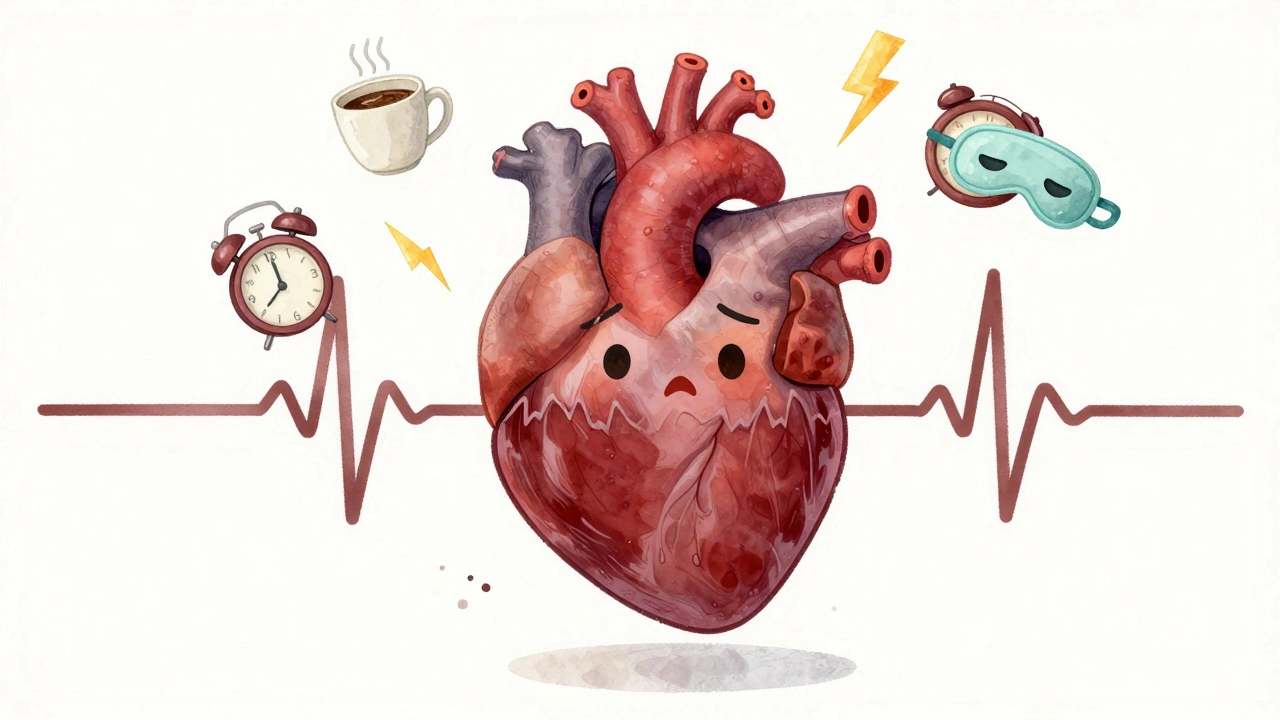
Everyone feels their heart skip a beat now and then. Maybe you were startled, had too much coffee, or ran up the stairs. But what if those skipped beats happen often? What if your chest feels like it’s fluttering, pounding, or racing for no reason? That’s not just nerves - it could be an irregular heartbeat, also known as arrhythmia.
What Exactly Is an Irregular Heartbeat?
Your heart doesn’t just beat - it beats in a rhythm. A normal heartbeat starts with an electrical signal from the sinoatrial (SA) node, the heart’s natural pacemaker. That signal travels through the heart, making the chambers contract in the right order. When that signal gets delayed, blocked, or starts from the wrong place, the rhythm goes off. That’s an arrhythmia.It’s not one thing. There are dozens of types. Some are harmless. Others can be dangerous. The most common kind is atrial fibrillation (AFib), where the upper chambers of the heart quiver instead of beating properly. Others include premature beats, bradycardia (too slow), and tachycardia (too fast).
Think of it like a faulty engine. Sometimes it misfires. Sometimes it idles too low. Sometimes it revs out of control. The heart isn’t broken - it’s just out of sync.
What Causes an Irregular Heartbeat?
It’s easy to blame stress or caffeine. And yes, those can trigger it. But the real causes are often deeper.- Heart disease - Past heart attacks, blocked arteries, or weakened heart muscle can damage the electrical system.
- High blood pressure - Makes the heart work harder, thickening the walls and messing with signals.
- Thyroid problems - An overactive thyroid (hyperthyroidism) can speed up your heart rhythm. An underactive one can slow it down.
- Electrolyte imbalances - Low potassium, magnesium, or calcium changes how heart cells send signals.
- Alcohol and stimulants - Even moderate drinking can trigger AFib in some people. Energy drinks and nicotine are big triggers too.
- Sleep apnea - When breathing stops at night, oxygen drops and stress hormones spike, throwing the heart off rhythm.
- Genetics - Some arrhythmias run in families, especially if they show up before age 50.
And yes - sometimes, no clear cause is found. That’s called idiopathic arrhythmia. It’s not rare, especially in younger, otherwise healthy people.
What Do Irregular Heartbeats Feel Like?
Symptoms vary wildly. Some people feel nothing. Others feel like their heart’s trying to escape their chest.- Palpitations - That fluttering, pounding, or racing feeling. Not everyone calls it that, but most know it when they feel it.
- Dizziness or lightheadedness - Especially when standing up. Your brain isn’t getting enough blood.
- Fatigue - Even after a full night’s sleep. Your heart isn’t pumping efficiently.
- Shortness of breath - Not just after exercise. Sometimes just walking to the kitchen.
- Chest discomfort - Not always sharp pain. Often a pressure, tightness, or odd ache.
- Fainting or near-fainting - A red flag. If you’ve passed out, even briefly, get checked.
Here’s the catch: some people with serious arrhythmias feel nothing at all. That’s why regular checkups matter - especially if you’re over 50, have high blood pressure, or a family history of heart trouble.
When Should You Worry?
Not every skipped beat is an emergency. But some signs mean you need help right away:- Palpitations with chest pain
- Shortness of breath that doesn’t go away
- Fainting or collapsing
- Heart rate over 120 beats per minute without exercise
- Confusion or trouble speaking
If you’re dizzy and your heart’s racing - don’t wait. Call 999. That could be a sign of ventricular tachycardia or another life-threatening rhythm.
For milder symptoms - like occasional fluttering after coffee - keep a log. Note when it happens, what you were doing, and how long it lasted. That info helps doctors spot patterns.
How Is It Diagnosed?
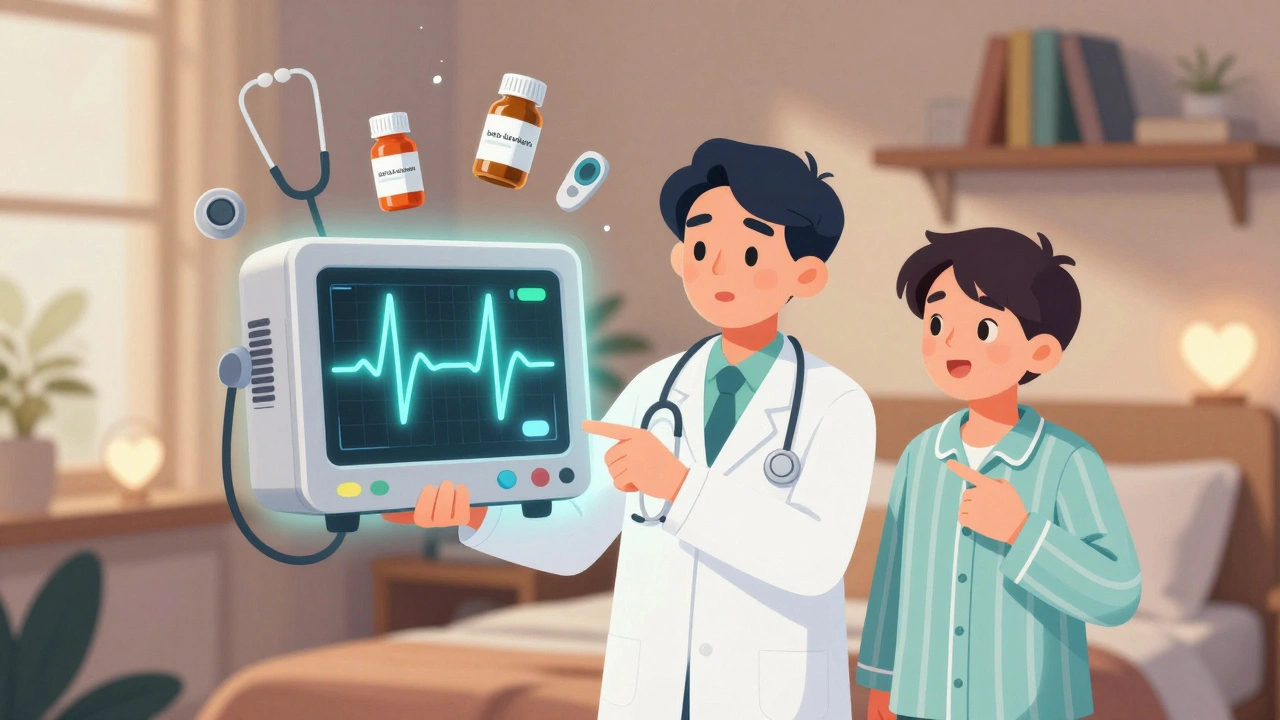
Your doctor won’t guess. They’ll test.- Electrocardiogram (ECG) - A quick 10-second test that records your heart’s electrical activity. It catches many arrhythmias on the spot.
- Portable monitors - If your symptoms come and go, you might wear a Holter monitor for 24-48 hours, or an event recorder for weeks.
- Echocardiogram - An ultrasound of your heart. Shows if there’s structural damage, like a leaky valve or thickened muscle.
- Blood tests - Checks thyroid levels, electrolytes, and signs of heart damage.
- Stress test - Monitors your heart while you walk on a treadmill. Some rhythms only show up under strain.
Don’t skip the monitor test just because your ECG looked normal. Many arrhythmias are intermittent. You might need to wear the device for days to catch it.
What Are the Treatment Options?
Treatment depends on the type, how often it happens, and how badly it affects you.- Lifestyle changes - Cut back on caffeine, alcohol, and nicotine. Manage stress. Sleep better. These alone can stop mild arrhythmias.
- Medications - Beta-blockers (like metoprolol) slow the heart. Antiarrhythmics (like amiodarone) help restore normal rhythm. Blood thinners (like apixaban) reduce stroke risk in AFib.
- Cardioversion - A controlled electric shock resets the heart’s rhythm. Done in a hospital under sedation. Often used for AFib.
- Catheter ablation - A thin tube is threaded to the heart. Heat or cold destroys tiny areas causing the bad signals. Success rates are 70-90% for common types like SVT.
- Pacemaker or ICD - For slow rhythms, a pacemaker delivers tiny pulses to keep the heart beating. For dangerous fast rhythms, an implantable cardioverter-defibrillator (ICD) can shock the heart back into rhythm.
There’s no one-size-fits-all. A 30-year-old with occasional palpitations might only need to cut coffee. A 70-year-old with AFib and a history of stroke might need a blood thinner and a pacemaker.
Can You Prevent It?
Yes - but not always completely. You can lower your risk.- Keep blood pressure under control - aim for under 120/80.
- Exercise regularly - 150 minutes of walking or cycling a week helps.
- Eat a heart-friendly diet - More vegetables, whole grains, fish. Less salt, sugar, and processed food.
- Maintain a healthy weight - Obesity increases AFib risk by 50%.
- Treat sleep apnea - If you snore loudly and feel tired during the day, get tested.
- Don’t self-medicate - Some herbal supplements (like ephedra or bitter orange) can trigger arrhythmias.
The biggest mistake? Ignoring symptoms because they’re "not bad enough." Arrhythmias don’t always get worse slowly. Sometimes they go from mild to dangerous in weeks.
Living With an Irregular Heartbeat
Many people live full lives with arrhythmias. They travel, work, exercise, and enjoy family. But it takes awareness.Keep a symptom diary. Know your meds. Tell your dentist and other doctors you have an arrhythmia - some procedures need special care. Avoid extreme heat or dehydration - both can trigger episodes.
If you have an ICD, avoid strong magnetic fields. Don’t stand too close to industrial motors. Carry your device ID card. And never ignore a shock from your ICD - even if you feel fine after.
Most importantly: don’t live in fear. With the right care, most arrhythmias are manageable. You don’t have to give up life - just adjust how you live it.
Can anxiety cause an irregular heartbeat?
Yes. Anxiety triggers adrenaline, which can make your heart race or skip beats. But that doesn’t mean it’s "all in your head." Stress can also make existing heart rhythm problems worse. If you have frequent palpitations and anxiety, both need to be treated - not one blamed for the other.
Is an irregular heartbeat the same as atrial fibrillation?
Atrial fibrillation (AFib) is one type of irregular heartbeat - the most common one. But not all arrhythmias are AFib. Other types include premature beats, supraventricular tachycardia (SVT), and ventricular fibrillation. AFib specifically means the upper chambers of the heart are quivering chaotically instead of contracting properly.
Can you exercise with an irregular heartbeat?
Usually yes - but it depends. If your arrhythmia is mild and controlled, regular exercise is encouraged. It strengthens the heart. But if you have uncontrolled AFib, severe bradycardia, or an ICD, you’ll need medical clearance. Avoid sudden intense bursts like sprinting or heavy weightlifting until your doctor says it’s safe.
Do I need blood thinners if I have an irregular heartbeat?
Only if you have atrial fibrillation or another type that increases stroke risk. Not all arrhythmias do. Doctors use a scoring system called CHA₂DS₂-VASc to decide. If your score is 2 or higher, you’ll likely need a blood thinner like apixaban or rivaroxaban to prevent clots. Never stop these meds without talking to your doctor - the risk of stroke rises quickly.
Can an irregular heartbeat go away on its own?
Sometimes. Occasional extra beats or brief episodes of fast rhythm can resolve without treatment, especially if triggered by caffeine, stress, or illness. But if it keeps coming back, lasts more than a few minutes, or causes symptoms like dizziness or chest pain, it’s unlikely to go away on its own. Left untreated, some arrhythmias can lead to heart failure or stroke.
What to Do Next
If you’ve noticed unusual heart rhythms - even once - write down what happened. Note the time, how long it lasted, what you were doing, and how you felt. Then make an appointment with your GP. Bring your notes. Ask for an ECG.If you’ve already been diagnosed, don’t skip follow-ups. Arrhythmias can change. Medications need adjusting. New treatments come out every year. Stay informed. Stay in touch. Your heart depends on it.
Lauryn Smith
December 2, 2025 AT 02:29Just wanted to say this article was so clear and helpful. I’ve been ignoring my palpitations for months thinking it was just stress, but now I’m scheduling an ECG. Thank you for explaining the difference between harmless skips and real danger.
Bonnie Youn
December 3, 2025 AT 12:29OMG YES THIS IS SO IMPORTANT I had AFib and thought caffeine was the only cause turns out my sleep apnea was the real villain no more ignoring snoring
Edward Hyde
December 4, 2025 AT 13:49This whole thing reads like a pharmaceutical ad disguised as medical advice. They never mention that most arrhythmias are overdiagnosed and overtreated. You’re scared into pills and procedures when a walk and some deep breathing would fix 80% of cases. Big Pharma loves your fear.
Charlotte Collins
December 5, 2025 AT 02:55Edward, you’re right about the fearmongering - but you’re also ignoring the data. The real danger isn’t the treatment, it’s the silence. People die quietly from undiagnosed VT because they dismissed fluttering as "just anxiety." The stats don’t lie. And no, deep breathing won’t fix a structurally damaged conduction system.
Margaret Stearns
December 5, 2025 AT 07:31I appreciate this post. I’m 68 and was diagnosed with occasional PVCs last year. My doctor said to cut back on coffee and get more sleep. I did both. No more episodes. Simple things work. Don’t overcomplicate it.
amit kuamr
December 6, 2025 AT 11:26in india we dont have access to all these tests most people just take ayurvedic herbs and pray if it dont go away they die quietly no one talks about this
Scotia Corley
December 7, 2025 AT 11:51While the article presents a comprehensive overview, it lacks sufficient emphasis on the role of autonomic nervous system dysregulation in idiopathic arrhythmias. Furthermore, the omission of vagal tone modulation as a therapeutic consideration is a notable oversight in the context of non-pharmacological management.
elizabeth muzichuk
December 8, 2025 AT 07:51Did you know the FDA approves most heart meds based on studies funded by the companies that make them? They’re not curing you - they’re keeping you dependent. Your pacemaker? Your blood thinner? All part of a system designed to make you a lifelong customer. Wake up.
Debbie Naquin
December 9, 2025 AT 00:02Arrhythmia as ontological dissonance - the heart’s electrical architecture fails to resonate with the body’s emergent homeostatic field. The SA node isn’t malfunctioning; it’s signaling a systemic misalignment. Pharmacological intervention is a Band-Aid on a ruptured epistemology. We need epigenetic recalibration, not ablation.
Karandeep Singh
December 10, 2025 AT 20:19afib is not a disease its a symptom of being old and lazy
Lauryn Smith
December 12, 2025 AT 14:28Thanks for the reply, Lauryn. I’m glad you’re taking action. I used to think my skipped beats were just anxiety too - until I passed out in the grocery store. Turns out I had paroxysmal SVT. Now I have a catheter ablation scheduled. It’s not fear, it’s responsibility.