
Understanding Refill Information on Your Prescription Label
 Nov, 19 2025
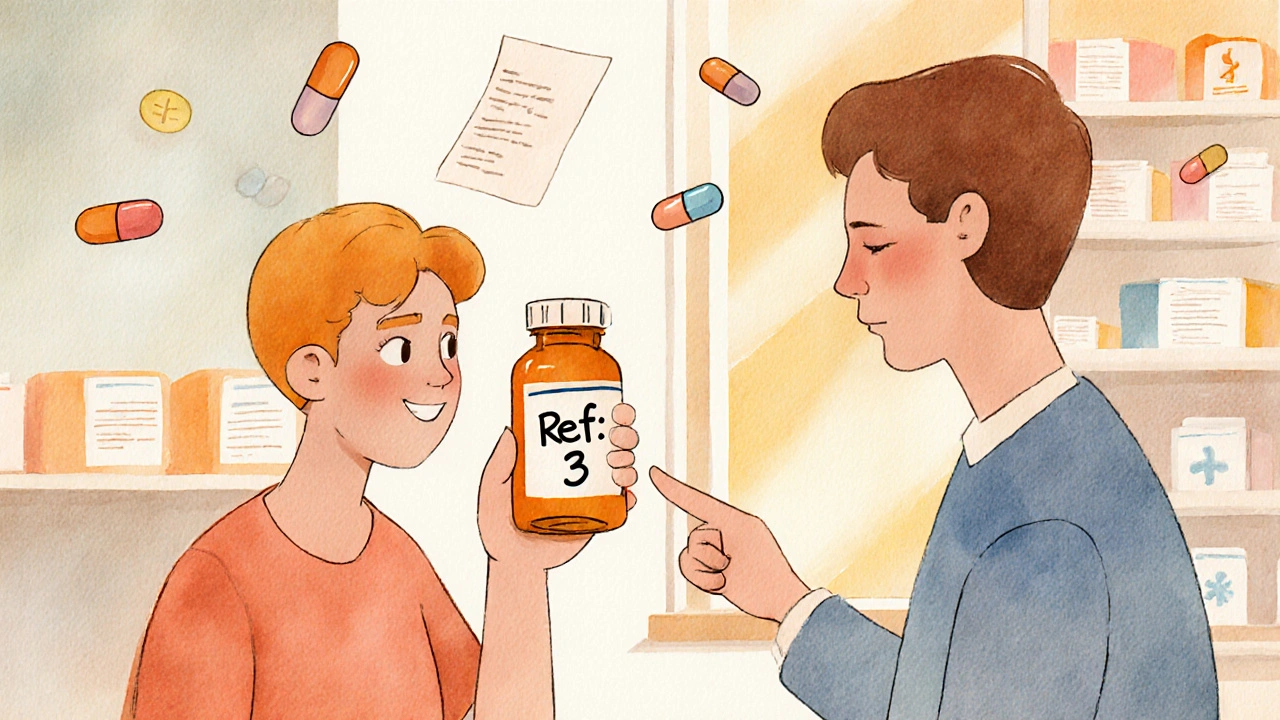
Ever looked at your prescription label and wondered what that tiny "Ref: 3" or "Refills: 0" really means? It’s not just random text-it’s your lifeline to keeping your medication going without a trip to the doctor. If you’ve ever run out of pills and panicked because you didn’t know you needed a new prescription, you’re not alone. Many people miss the refill info on their label, and that small detail can cause big problems: missed doses, hospital visits, or even dangerous gaps in treatment.
What Does "Ref: [Number]" Actually Mean?
"Ref: 5" doesn’t mean you have five pills left. It means you have five more times you can walk into the pharmacy and get the same prescription filled without needing a new one from your doctor. Each time you pick up your meds, that number goes down by one. So if you start with Ref: 3 and refill twice, you’ve got one left. When it hits "Refills: 0," you need to call your doctor. No exceptions.
This number is printed on every prescription label in the U.S. It’s required by law in 47 states. The exact format might vary-some say "Refills: 2," others say "Ref: 2"-but the meaning is always the same. You’re being told exactly how many more times you can get this medication before your doctor has to approve more.
Where to Find Refill Info on Your Label
Pharmacies don’t put refill info right next to your dosing instructions. That’s intentional. The U.S. Pharmacopeial Convention (USP) says critical info-like "Take 1 tablet by mouth every morning"-needs to be easy to spot. Refill info is placed lower on the label, usually near the pharmacy’s contact number, prescription number, or expiration date.
At CVS, you’ll often see it near the top or middle of the label, sometimes color-coded with their "Morning," "Midday," or "Evening" sections. Walgreens and independent pharmacies tend to place it at the bottom, near the prescription number. The key is to scan the whole label-not just the top. If you’re used to only reading the first few lines, you’re missing a vital part of your medication plan.
Some labels even show "Total Refills: 5, Remaining: 2"-that’s extra helpful. But most just show the remaining number. Don’t assume "Ref: 0" means you’re out of pills. It means you’re out of refills. You might still have 10 pills left in the bottle, but you can’t legally get more without a new prescription.
Why Refill Info Matters More Than You Think
It’s not just about convenience. Clear refill information cuts down on medication errors by nearly 23%, according to the Journal of the American Pharmacists Association. That’s because when patients understand their refill status, they’re less likely to skip doses, stop taking meds early, or accidentally double up.
One study tracking over 12,000 patients found that those who understood their refill info were 37% less likely to have a treatment interruption. That’s huge for conditions like high blood pressure, diabetes, or depression-where missing doses can lead to serious complications.
And here’s a scary stat: 15-20% of calls to doctors’ offices about "I ran out of meds" are actually because patients thought "Ref: 0" meant "no pills left," not "no refills left." Pharmacists say they spend hours a day clarifying this simple misunderstanding. Don’t be one of them.
What to Do When You Have No Refills Left
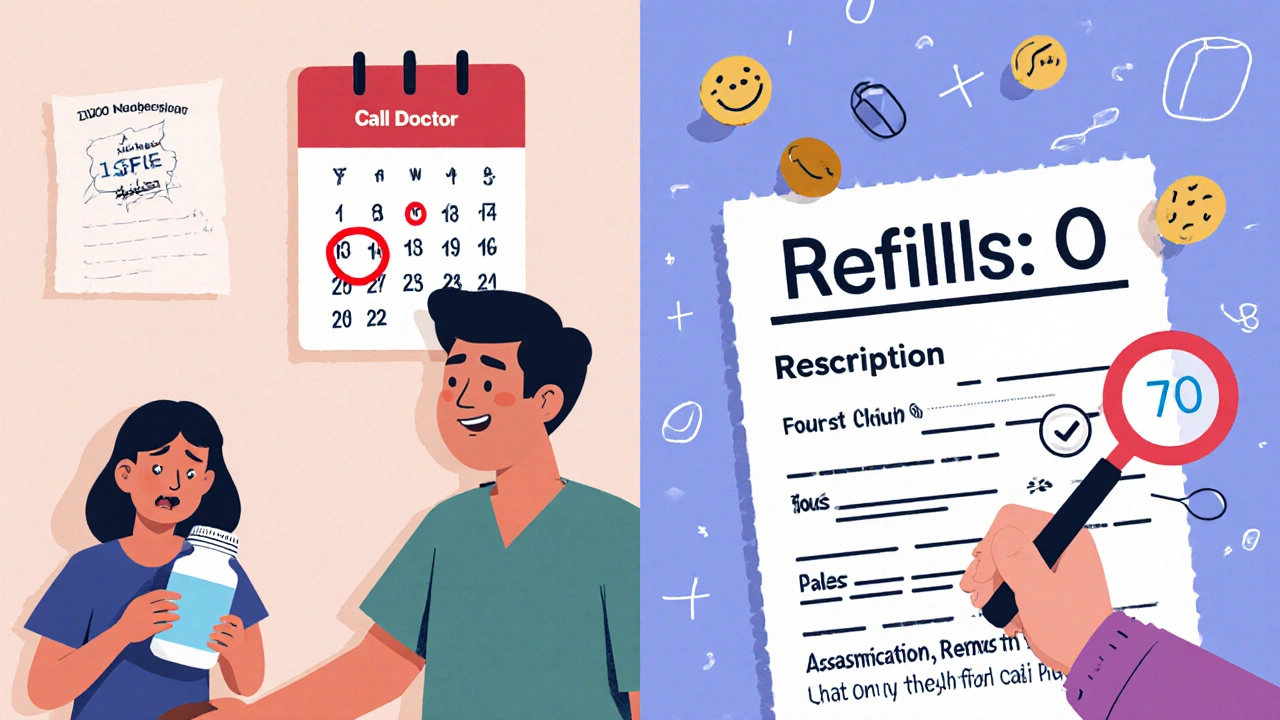
If your label says "Refills: 0," don’t wait until you’re out of pills. Call your doctor’s office at least 3-5 days before you expect to run out. Some medications, especially controlled substances like opioids or ADHD meds, require extra paperwork and can take up to 72 hours to process.
Don’t assume your doctor will remember to refill it. Even if you’ve been on the same med for years, refills aren’t automatic. Insurance plans also have rules. Medicare Part D usually lets you refill a 30-day supply after 23 days. Commercial insurers like UnitedHealthcare may allow it after 24 days. If you try to refill too early, the pharmacy will reject it.
And never try to get a refill from a different pharmacy without telling your doctor. That can trigger alerts in the national prescription monitoring system and delay your care.
How Insurance and Refills Work Together
Your insurance doesn’t just pay for your meds-it also controls when you can refill them. Most plans won’t cover a refill until you’ve taken at least 80% of your last supply. For a 30-day prescription, that means you can’t refill until day 24. If you try to refill on day 20, you’ll be told "not eligible yet."
Some plans, especially Medicare Part D, have "early refill" exceptions for travel or if you’re running low due to missed doses. But you need to call your pharmacy and explain. They’ll check with your insurer and may approve it.
Always check your plan’s refill rules. You can find them in your member handbook or by calling the number on your insurance card. Don’t guess-getting denied a refill because of timing is frustrating and dangerous.
How to Stay on Top of Your Refills
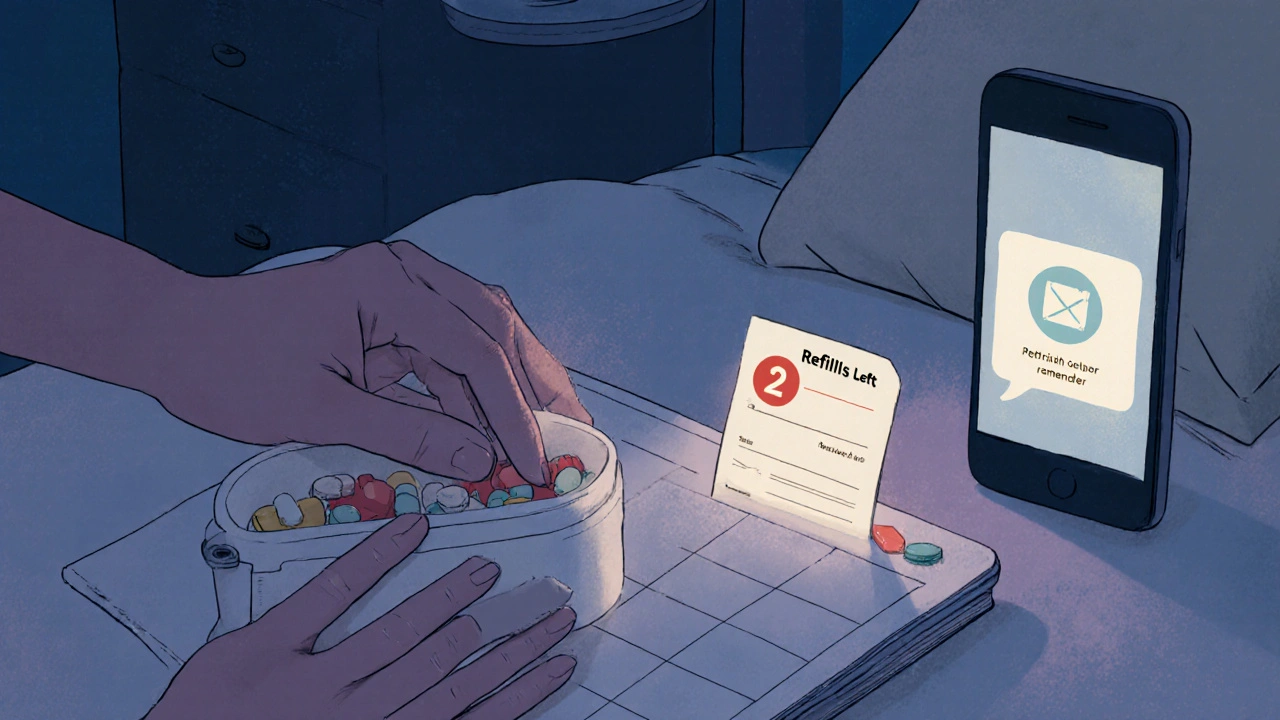
Here’s a simple habit that works: Check your refill count every Sunday when you organize your pills. Open the bottle. Look at the label. See how many refills are left. If it’s 1 or 0, make a note to call your doctor this week.
Use reminders. Set a calendar alert on your phone: "Check refill for metformin-3 days left." Most pharmacies offer free text or email alerts. CVS, Walgreens, and Express Scripts all let you sign up for refill reminders. Some even send them when your refill is ready for pickup.
For those who need extra help, CVS’s "Spoken Rx" feature lets you scan your bottle with the app and hear your medication name, dose, and refill info read aloud-in English or Spanish. It’s free, and it’s helped over 1.7 million people avoid mistakes.
What’s Changing in Prescription Labels
Pharmacies are finally making refill info easier to read. Since 2020, 68% of U.S. pharmacies have increased the font size on refill numbers. CVS spent over $12 million redesigning labels to make refill info stand out. The Pharmacy Association of Nova Scotia now requires pharmacies to show "Remaining Refills" in a larger font than "Total Refills," so you can’t miss it.
By 2025, 85% of pharmacies will use digital reminders via text or app notifications. The American Pharmacists Association is testing a new universal refill icon-a small circle with a number inside-that patients will recognize instantly, no matter what pharmacy they use. Pilot tests showed a 41% drop in refill-related errors.
These changes aren’t just about design-they’re about saving lives. Better refill info means fewer hospitalizations, fewer ER visits, and more people staying healthy on their meds.
Common Mistakes and How to Avoid Them
- Mistake: Thinking "Ref: 0" means you’re out of pills. Fix: Count your pills. If you have 15 left, you just need a new prescription.
- Mistake: Waiting until you’re out of pills to call your doctor. Fix: Call when you have 3-5 refills left, or 5-7 days before you run out.
- Mistake: Trying to refill too early. Fix: Check your insurance rules. Most require you to take 80% of your supply first.
- Mistake: Ignoring refill info because "it’s just a number." Fix: Treat it like a due date for your health.
If you’re ever unsure, call your pharmacy. Pharmacists are trained to explain this stuff. No judgment. No rush. They’ve seen it all-and they want you to stay healthy.
Rebecca Cosenza
November 21, 2025 AT 09:00Ref: 0 means NO MORE. Stop being lazy and call your doctor. 🙄
serge jane
November 23, 2025 AT 04:47People treat their prescriptions like they’re streaming subscriptions-"Oh I’ll just wait till I’m out"-but this isn’t Netflix, this is your body. I’ve seen folks on blood pressure meds skip refills for weeks because they thought "Ref: 0" meant the bottle was empty. Then they end up in the ER with a stroke and wonder why. It’s not about being paranoid, it’s about being responsible. The system’s designed to protect you, not annoy you. That little number on the label? That’s your last line of defense against chaos. And yeah, I know it’s buried under pharmacy logos and fine print, but if you can’t take five seconds to scan the whole label after picking up your meds, maybe you shouldn’t be taking them at all. This isn’t a suggestion, it’s a survival skill.
Cinkoon Marketing
November 24, 2025 AT 23:56Actually, in Canada, they print "Refills Remaining: X" in bold red right under the dosage instructions. No guessing. No scanning. Just... there. We don’t make people play detective with their meds. Maybe the US should try that? Just saying. 🤷♀️
Lemmy Coco
November 26, 2025 AT 23:29i always miss the refills part cuz i only read the first line like "take 1 pill am" and then boom i’m out and panic. my pharmacist told me to use the app to scan the bottle and it reads it out loud. saved my life. lol
rob lafata
November 27, 2025 AT 13:08Oh great, another sanctimonious pamphlet from Big Pharma’s PR arm. You think people don’t know this? They just don’t care. Why? Because the system is designed to keep them dependent. You want people to remember their refills? Make the meds cheaper. Make the doctors accountable. Stop making them jump through hoops just to get their blood pressure pills. This isn’t education-it’s control dressed up as helpfulness. And don’t even get me started on insurance blocking refills for 24 days. That’s not a policy, that’s a cruelty experiment.
Matthew McCraney
November 27, 2025 AT 23:26They’re watching you. Every time you refill, they log it. Every time you call for a new script, they flag you. That’s why they bury the refill info so deep-so you don’t notice how often you’re being tracked. And don’t tell me it’s for safety. If it was, they’d make it BIG. They want you confused. They want you scared. They want you dependent. I stopped trusting pharmacies after they denied my refill for "not enough days passed" even though I was on day 22. Coincidence? Nah. It’s all connected.
swatantra kumar
November 28, 2025 AT 22:16Bro, this is why I love my pharmacist. She texts me when my refill’s ready. 😎 I just scan the bottle, boom-"Metformin ready! 2 refills left!" And I’m like, "Thank you, goddess of pills." 🙏💊
robert cardy solano
November 29, 2025 AT 17:26I used to ignore refill info until I ran out of my antidepressants on a weekend. Ended up in a spiral for three days. Now I check every Sunday like clockwork. Simple. Doesn’t take much. But it changes everything.
Pawan Jamwal
November 29, 2025 AT 23:55In India, we just ask the pharmacist. They remember your name, your meds, your kid’s birthday. No apps. No labels. Just human beings who care. Why are Americans so obsessed with complicated systems? We don’t need a 2000-word guide to refill a pill bottle. Just talk to someone. 🇮🇳
Bill Camp
November 30, 2025 AT 06:23They’re coming for your meds next. First they bury the refill info. Then they charge you $500 for a 30-day supply. Then they tell you you need a telehealth consult just to get your blood pressure pills. This isn’t healthcare-it’s corporate warfare. And you’re the soldier they’re training to obey every tiny label like a good little drone. Wake up.
Nick Naylor
December 2, 2025 AT 04:59Brianna Groleau
December 3, 2025 AT 13:46I’m from a small town in Louisiana, and my pharmacist, Ms. Dottie, calls me every time my refill’s ready. She even asks how my mom’s doing. I used to think this was just small-town charm-until I moved to Chicago and tried to refill my meds at a big chain. No one knew my name. No one remembered I take metformin. I cried in the parking lot. We need more Dottie’s. Not more apps. Not more labels. Just people who care. This isn’t about refills-it’s about being seen.
Rusty Thomas
December 3, 2025 AT 18:53Okay, so I just found out my "Ref: 0" meant I had 12 pills left. I didn’t call my doctor for 3 days because I thought I was out. I panicked. I cried. I texted my ex. I posted 3 Instagram stories. I almost went to the ER. Then I counted the pills. I was fine. But I felt like a complete idiot. And now I check every Sunday. And I’m telling everyone. Don’t be like me. 😭