
Why You Should Never Skip Doses: Timing Your Prescription Medication
 May, 27 2026
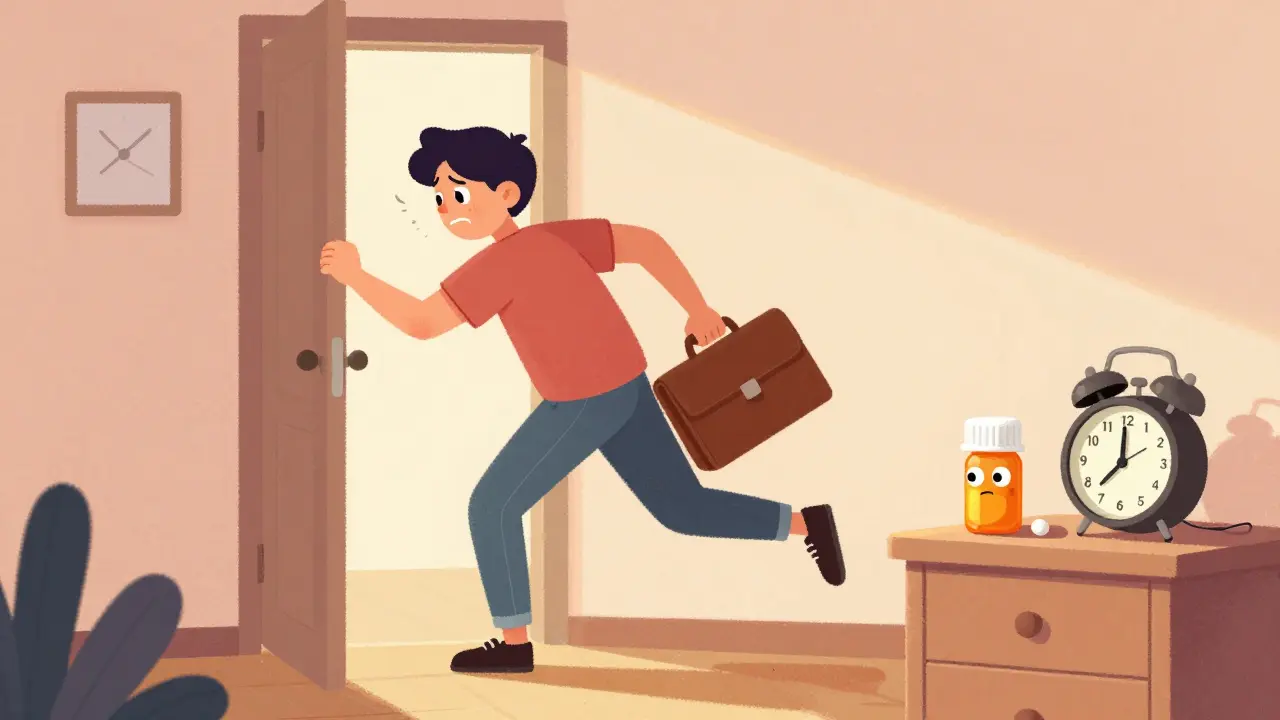
You take your morning pill. Then life happens. A meeting runs late, you forget lunch, and by the time you remember your evening dose, it’s past midnight. Do you take it then? Skip it? Double up tomorrow? Most people guess, but guessing with prescription medication is a dangerous game that can lead to treatment failure, severe side effects, or even hospitalization. It isn’t just about being disciplined; it’s about how your body processes chemicals. Skipping doses doesn't just pause your treatment-it actively disrupts the delicate balance your doctor tried to establish.
We often treat medicine like a switch: on when we feel sick, off when we don’t. But for most chronic conditions, that mindset is fatal. This guide breaks down exactly why timing matters, what happens biologically when you miss a beat, and practical ways to stay on track without letting your meds control your life.
The Biology of Timing: Why "Close Enough" Isn't Good Enough
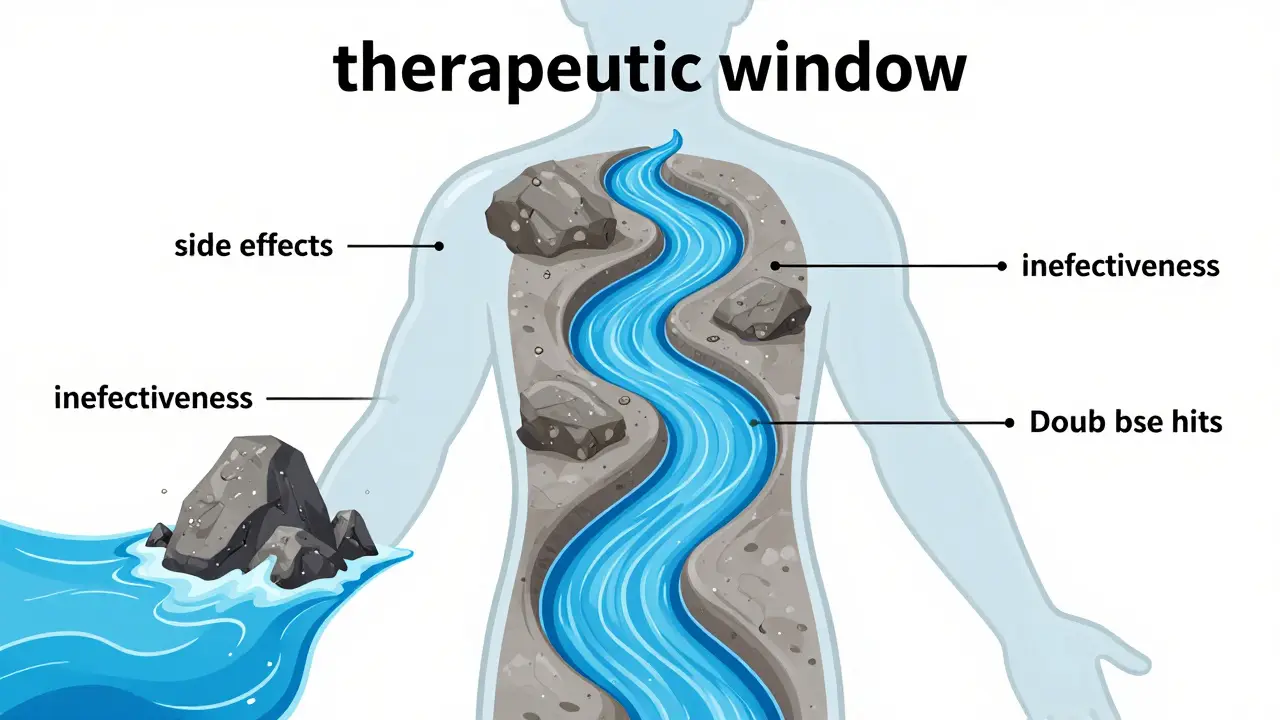
To understand why you can't just wing it, you have to look at pharmacokinetics, which is the study of how your body absorbs, distributes, metabolizes, and excretes drugs over time. When you take a dose, the drug enters your bloodstream. Its concentration rises until it hits a peak, then slowly falls as your liver and kidneys process it out. Doctors prescribe specific intervals to keep that concentration within a narrow band called the therapeutic window, which is the range of drug concentration in the blood where the medication is effective without causing toxicity.
If you skip a dose, that level drops below the therapeutic threshold. For some drugs, this means they simply stop working. For others, it creates a rollercoaster effect. When you finally take the next dose, your system spikes again. These fluctuations stress your organs and reduce effectiveness. Think of it like heating a house. If you turn the furnace off completely instead of keeping it on a low setting, the house gets cold, pipes might freeze, and turning it back on high later won't instantly fix the damage-it just wastes energy and risks overheating the system.
| Medication Type | Consequence of Missing Dose | Recovery Time |
|---|---|---|
| Antibiotics | Bacteria survive and mutate, leading to resistance | Days to weeks (infection may return stronger) |
| Blood Pressure Meds | Sudden spikes in pressure, straining heart and arteries | Hours to days (damage may be irreversible) |
| Insulin/Diabetes Meds | Dangerous highs (hyperglycemia) or lows (hypoglycemia) | Immediate risk of emergency |
| Anticoagulants (e.g., Warfarin) | Increased risk of clots or bleeding events | Weeks (requires INR monitoring) |
The Hidden Danger of Antibiotic Resistance
Let’s talk about antibiotics, because this is where skipping doses hurts everyone, not just you. The Centers for Disease Control and Prevention (CDC), which is the national public health institute of the United States responsible for disease control and prevention, emphasizes that you must finish the full course, usually 7-14 days. Why? Because the first few pills kill the weakest bacteria. The survivors are tougher. If you stop early because you "feel better," those tough bacteria multiply. They evolve into superbugs that resist standard treatments.
This isn't theoretical. It’s a global crisis. By skipping doses or stopping early, you contribute to antibiotic resistance, making future infections harder and more expensive to treat. The message from healthcare providers is clear: take every single pill, even if you’re feeling great by day three. Your comfort now shouldn't compromise your health-or society's-later.
Chronic Conditions: The Silent Killers
For conditions like hypertension (high blood pressure), diabetes, or heart disease, consistency is survival. The American Heart Association, which is a nonprofit organization dedicated to fighting heart disease and stroke through research and education, notes that non-adherence is a leading cause of preventable cardiovascular events. High blood pressure is often called the "silent killer" because you rarely feel it. So, when you take your meds and feel fine, it’s tempting to think, "I don't need this today." But that pressure is still damaging your arteries, heart, and kidneys silently.
Skipping a day of blood pressure medication can cause dangerous fluctuations. One day you’re controlled; the next, your pressure spikes. This variability is actually worse for your vascular system than steady, slightly elevated pressure. It puts mechanical stress on your blood vessels, increasing the risk of aneurysms, strokes, and heart attacks. Consistency keeps the pressure stable, protecting your organs from wear and tear.
When Timing Is Everything: Narrow Therapeutic Windows
Some medications have such a narrow margin between "helpful" and "harmful" that timing is critical. These include:
- Immunosuppressants: Used by transplant patients to prevent organ rejection. Missing a dose can trigger an immune response that destroys the new organ. There is no second chance here.
- Anticoagulants (like Warfarin): These thin your blood to prevent clots. Too little, and you risk a stroke or pulmonary embolism. Too much, and you risk internal bleeding. Patients must take these at the same time daily and undergo regular INR testing, which is a blood test that measures how long it takes for blood to clot, used to monitor warfarin therapy.
- Diabetes Medications: Insulin and other glucose-lowering drugs must align with meal times. Taking them too early can cause hypoglycemia (dangerously low blood sugar), leading to seizures or unconsciousness. Taking them too late leaves blood sugar dangerously high, damaging nerves and eyes over time.
Dr. Arif Nazir, Chief Medical Officer of Abode Care Partners, points out that older adults are particularly vulnerable. Many rely on these meds for day-to-day survival. A missed dose isn't an inconvenience; it’s a potential medical emergency.
Why We Miss Doses: It’s Not Just Forgetfulness
If it were just about memory, we’d all use alarms. But human behavior is complex. The Public Health Reports, which is a peer-reviewed journal published by the U.S. National Center for Biotechnology Information focusing on public health issues, highlights that many patients simply don’t understand their instructions. "Take twice daily" could mean every 12 hours or just morning and night. Ambiguity leads to errors.
Other barriers include:
- Skepticism: "If I feel fine, why am I taking this?" This is common with preventive meds like statins or blood pressure drugs.
- Fear of Side Effects: Patients may skip doses hoping to avoid nausea or dizziness, not realizing that consistent dosing often reduces side effects over time as the body adjusts.
- Complex Regimens: Managing five different pills at four different times is overwhelming. Research shows that each additional daily dose decreases adherence by about 16%.
- Cost: Financial constraints force some to ration meds, splitting pills or skipping days. This is incredibly dangerous and should be discussed with a pharmacist or doctor immediately.
Practical Strategies to Master Your Schedule
You don’t need perfect willpower; you need a system. Here’s how to build one that sticks:
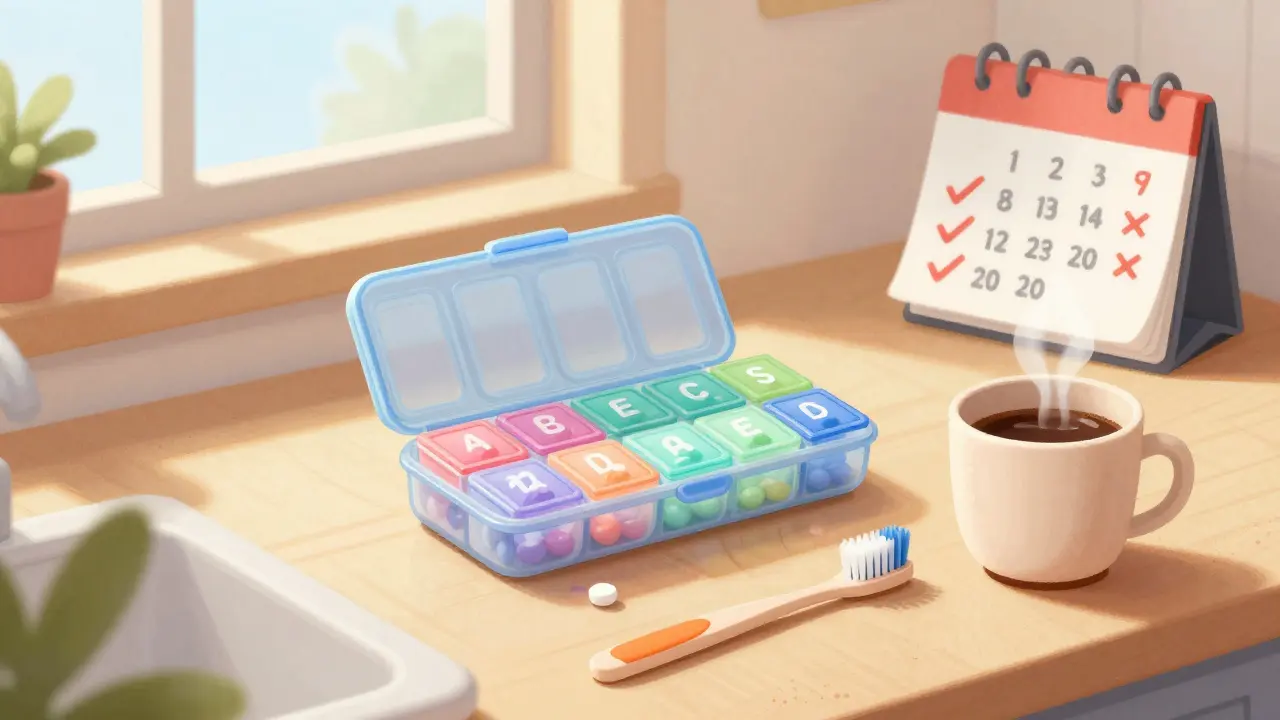
- Habit Stacking: Link your medication to an existing habit. Take your morning pill with your coffee. Take your evening pill while brushing your teeth. The cue triggers the action automatically.
- Use a Pillbox: Weekly pill organizers remove the guesswork. If a slot is empty, you know you’ve taken it. EmblemHealth offers free weekly pillboxes to help with this. It’s a simple tool with massive impact.
- Set Multiple Alarms: Don’t just set one. Set a "take now" alarm and a "did you take it?" alarm an hour later. Redundancy saves lives.
- The Teach-Back Method: At your next appointment, repeat your instructions back to your doctor. "So, I take this with food in the morning, and that one on an empty stomach at night. Is that right?" This catches misunderstandings before they become problems.
- Keep a Log: Use a notebook or app to mark each dose. Seeing a streak of checkmarks motivates you to keep going. Breaking the streak feels bad, which works in your favor.
Pharmacists are your allies. Ask them to simplify your regimen. Can two pills be combined? Can doses be aligned? Every reduction in complexity boosts your chances of success.
What To Do If You Miss a Dose
Mistakes happen. Panic doesn’t help. Follow these general rules, but always check your specific medication guide:
- If it’s close to the scheduled time: Take it as soon as you remember. If you realize you missed it within 1-2 hours, go ahead.
- If it’s almost time for the next dose: Skip the missed one. Do NOT double up. Doubling can lead to overdose or severe side effects.
- If you’re unsure: Call your pharmacist. They can tell you based on the drug’s half-life whether it’s safe to take late or if you should wait.
Never make up for missed doses by taking extra later. Your body isn’t a bank account where you can deposit interest later. Stick to the schedule moving forward.
Is it okay to skip a dose if I feel perfectly fine?
No, especially for chronic conditions like high blood pressure, diabetes, or depression. Feeling fine means the medication is working, not that you’re cured. Skipping doses causes fluctuations that can damage your body silently or trigger relapse. Always consult your doctor before stopping any medication.
What happens if I accidentally take my medication twice?
It depends on the drug. For some, it’s harmless. For others, like insulin or blood thinners, it can be dangerous. Monitor for symptoms like dizziness, nausea, or rapid heartbeat. Contact your pharmacist or poison control center immediately for advice specific to your medication. Do not induce vomiting unless instructed.
Can I change my medication time to fit my schedule better?
Sometimes, yes. Some medications are flexible, while others must be taken at specific times relative to meals or sleep. Ask your pharmacist if shifting your dose by a few hours is safe. Never adjust timing without professional guidance, as it can affect absorption and effectiveness.
Why do some medicines need to be taken with food?
Food can protect your stomach lining from irritation, slow down absorption to maintain steady levels, or enhance absorption for certain nutrients. Conversely, some drugs must be taken on an empty stomach because food blocks their absorption. Always follow the label instructions precisely.
How does medication non-adherence affect healthcare costs?
Non-adherence leads to worsened health outcomes, requiring more doctor visits, emergency room trips, and hospitalizations. Studies estimate it contributes to hundreds of thousands of deaths and billions in healthcare costs annually. Proper adherence is not just personal health; it’s economic sense.