
When your heart doesn’t beat in a steady rhythm, you’re dealing with arrhythmia, an abnormal heart rhythm that can be harmless or life-threatening. Also known as dysrhythmia, it’s not a disease itself but a symptom of something else—like heart damage, electrolyte imbalances, or side effects from medications. Think of your heart as a drum. Arrhythmia is when the beat is off—too fast, too slow, or skipping entirely. It’s common, especially as people age, and it shows up in everything from occasional skipped beats to full-blown atrial fibrillation that raises stroke risk.
Many cardiac medications, drugs designed to treat heart conditions can both fix and cause arrhythmia. For example, beta-blockers slow down a racing heart, but too much can drop the rate too low. Diuretics, often used for heart failure, can drain potassium and magnesium, throwing off the heart’s electrical signals. Even drugs like corticosteroids, anti-inflammatory drugs used for autoimmune and lung conditions, can trigger arrhythmias by altering electrolyte levels. Then there’s QT prolongation—a hidden risk from antibiotics, antipsychotics, and even some antihistamines—that can lead to a dangerous rhythm called torsades de pointes. It’s why doctors check your EKG before prescribing certain pills.
Not all arrhythmias need drugs. Some go away on their own. Others respond to lifestyle changes—cutting caffeine, managing stress, or fixing sleep apnea. But when meds are needed, the goal isn’t just to stop the irregular beat—it’s to prevent stroke, heart failure, or sudden death. That’s why treatments vary so much: some patients get blood thinners, others get pacemakers, and some need ablation to burn off faulty electrical pathways. What works for one person might be dangerous for another, especially if they’re on multiple drugs. That’s why tracking side effects matters. Your pill bottle doesn’t tell you if a drug might mess with your heart rhythm, but your doctor should.
What you’ll find below are real, practical posts about how medications interact with heart rhythm—not theory, not fluff. From how diuretics cause low potassium to why certain generics can trigger unexpected arrhythmias, these articles show you what to watch for, how to ask the right questions, and when to push back if something feels off. This isn’t about scary statistics. It’s about knowing what your body’s telling you—and what your pills might be hiding.
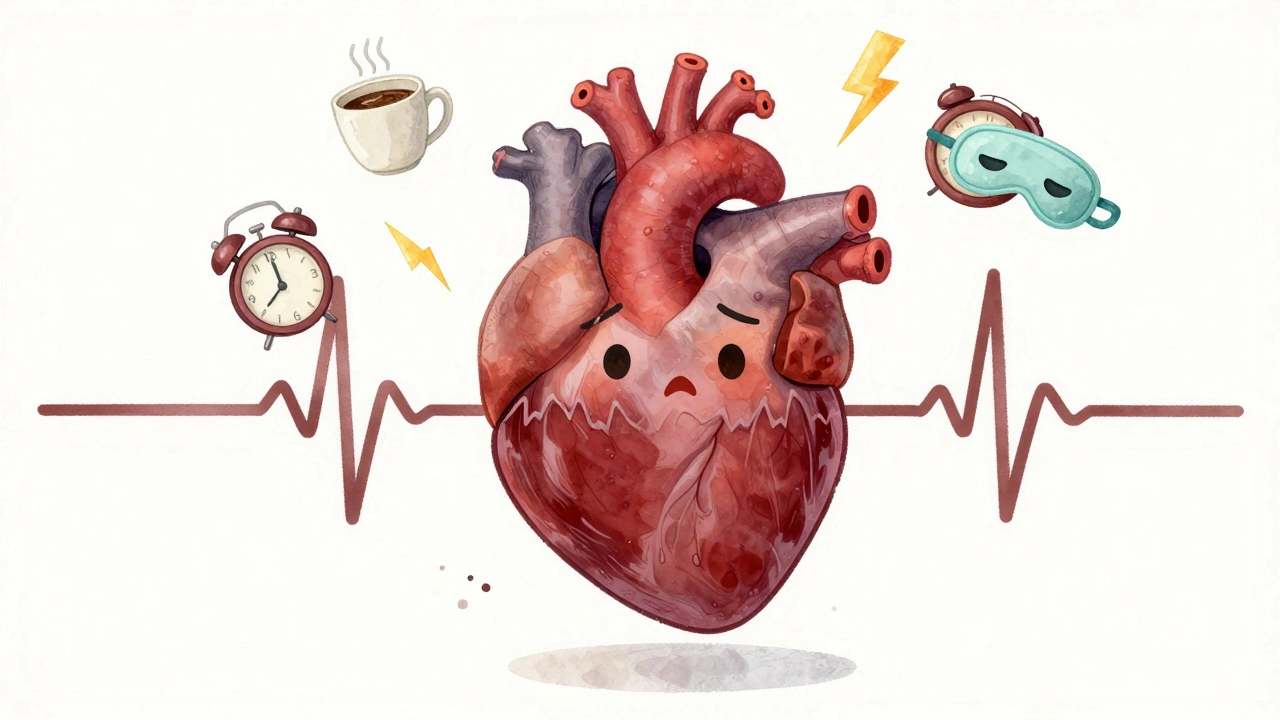
Learn what causes irregular heartbeats, how to recognize symptoms, and what treatments actually work. From common triggers like caffeine to serious conditions like atrial fibrillation, get clear, practical info to know when to act.
More