
When your heart’s upper chambers beat irregularly and too fast, you’re likely dealing with atrial fibrillation, a type of irregular heartbeat that can lead to blood clots, stroke, and heart failure. Also known as AFib, it’s not just a flutter—it’s a serious condition affecting over 12 million people in the U.S. alone. Unlike a normal heartbeat that follows a steady rhythm, atrial fibrillation scrambles the electrical signals, making your heart pump less efficiently. This lets blood pool in the heart, increasing the chance of clots forming—and if one breaks loose, it can travel to your brain and cause a stroke.
Atrial fibrillation often shows up with symptoms like palpitations, shortness of breath, or feeling tired for no reason. But many people don’t feel anything at all, which is why it’s sometimes called a silent threat. It’s more common as you age, especially if you have high blood pressure, diabetes, obesity, or a history of heart disease. And if you’re already on meds for heart failure or taking diuretics to manage fluid, AFib can sneak in as a side effect or complication. That’s why doctors often check for it during routine visits, especially for people over 65.
Managing atrial fibrillation isn’t about fixing the rhythm every time—it’s about reducing risk. That’s where anticoagulants, medications that prevent blood clots come in. Drugs like warfarin or newer options like apixaban keep your blood from thickening too much, lowering stroke risk by up to 70%. But they come with trade-offs: bleeding risks, dietary restrictions, and the need for regular blood tests. Then there’s heart failure, a condition where the heart can’t pump enough blood to meet your body’s needs, which often goes hand-in-hand with AFib. Diuretics help drain excess fluid, but they can also lower potassium, which makes AFib worse. It’s a balancing act.
What you’ll find here isn’t just theory. These posts show real ways people manage AFib alongside other chronic conditions—whether they’re switching to generics to save money, dealing with medication side effects, or learning how to monitor their heart health without constant doctor visits. You’ll see how people on blood thinners protect their privacy when disposing of old prescriptions, how automated refills help them stay on track, and why some need lockboxes for high-risk meds. This isn’t a one-size-fits-all guide. It’s a collection of practical, lived experiences that match the messy reality of living with atrial fibrillation—and how to take control, one pill, one test, one conversation at a time.
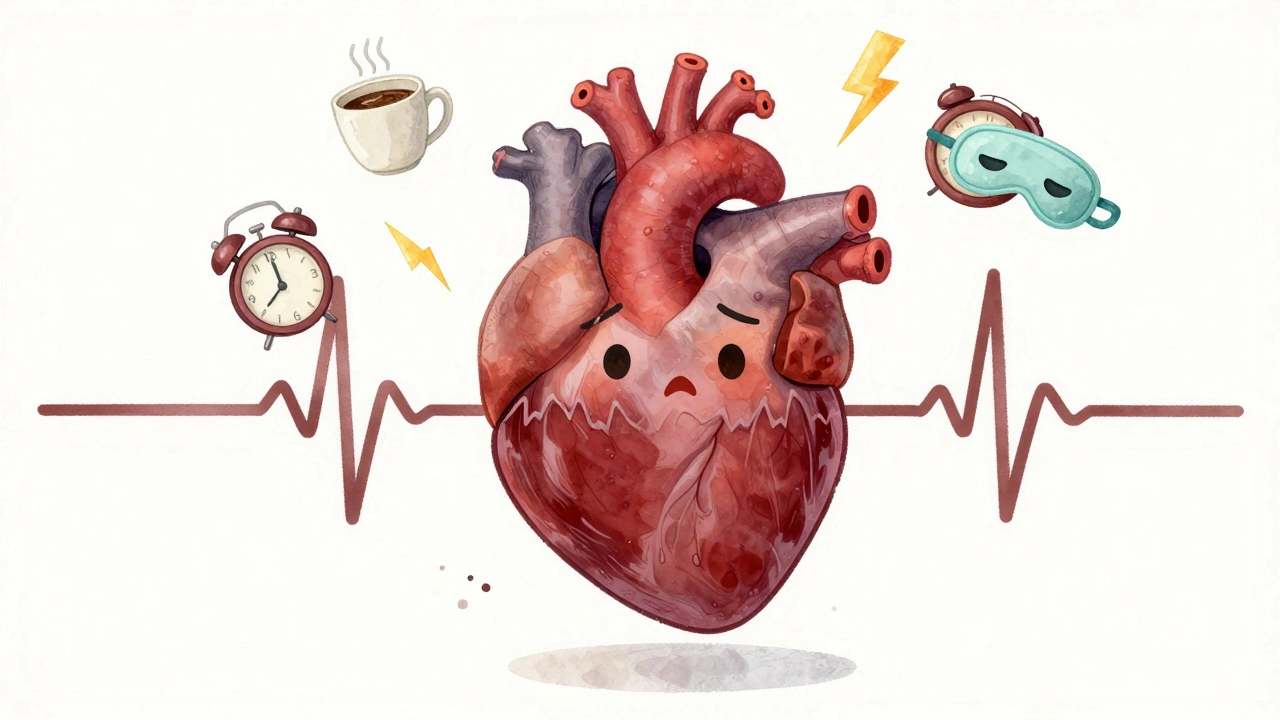
Learn what causes irregular heartbeats, how to recognize symptoms, and what treatments actually work. From common triggers like caffeine to serious conditions like atrial fibrillation, get clear, practical info to know when to act.
More